

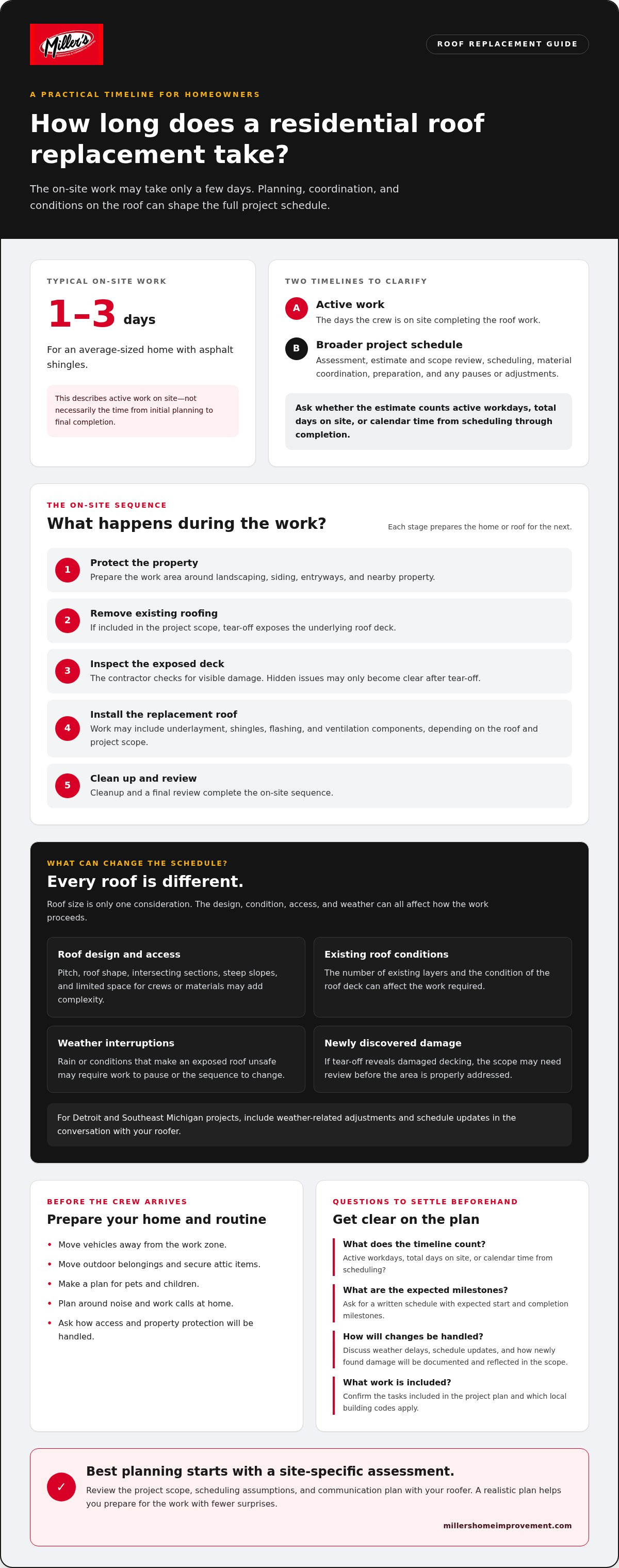
What if the roof work takes only a few days, but planning the full project takes several weeks? If you’re asking how long does it take to replace a residential roof, an average-sized home with asphalt shingles typically takes 1 to 3 days of on-site work. The schedule can stretch if rain interrupts installation, the roof has a complex layout, or the crew finds damage beneath the old shingles. It’s reasonable to want to know how long your driveway may be occupied and how to plan around noise, children, pets, or working from home.
This guide walks through the stages of a roof replacement, from assessment and material planning to tear-off, installation, and cleanup. You’ll learn what can affect the timeline in Detroit and across Southeast Michigan, and what to ask your roofer before work begins. Every roof is different, so a project-specific assessment is the clearest way to set expectations. With a practical schedule and a few preparations around your home, you can plan for the work with fewer surprises.
Key Takeaways
- To answer how long does it take to replace a residential roof, clarify whether the estimate covers active work, total days on site, or the broader project schedule.
- Knowing the order of property protection, tear-off, deck inspection, installation, and cleanup helps you understand what to expect.
- Roof shape, access, and changing weather can affect the schedule, so ask how delays and updates will be handled.
- Prepare by moving vehicles and outdoor belongings, securing attic items, and making a plan for pets, children, and work calls.
- A site-specific estimate can help you review the project scope, scheduling assumptions, and communication plan before work begins.
How long does it take to replace a residential roof? Start with a realistic timeline
If you’re asking how long does it take to replace a residential roof, the answer depends on the home and the work required. A straightforward shingle replacement is different from a steep, multi-section roof with difficult access or repairs to the roof deck. Before relying on a typical duration, ask the contractor to confirm the expected timeline for your project and explain what it counts: active workdays, total days on site, or calendar time from scheduling through completion.
A roof replacement timeline includes the active work needed to complete the project, plus any interruptions that affect when the crew can safely proceed. That distinction matters in Detroit, where a short installation can still be part of a longer process involving assessment, scheduling, material coordination, and weather-related adjustments.
What does a roof replacement timeline include?
The timeline starts before installation. It may include reviewing the estimate and scope, setting a start date, coordinating materials, and preparing the property. On site, the crew protects the work area, removes the existing roofing as needed, checks the exposed deck, installs the replacement roof, and completes cleanup and a final review. A roof’s design and roofing materials help determine the work involved, so confirm which tasks are included in your project plan.
Active workdays are not the same as elapsed calendar days. A crew may need a set number of days to complete the roof, while scheduling, coordination, or a pause in work extends the time between the planned start and finish. Ask for a written schedule that identifies expected start and completion milestones, along with how the contractor will communicate changes.
Why is there no single timeline for every home?
Roof size is only one consideration. Pitch, the number of existing layers, roof shape, access around the house, and the roof’s condition can all affect the work. A simpler roof may have fewer obstacles than one with intersecting sections, steep slopes, or limited space for crews and materials. That’s why a general day count shouldn’t be treated as a promise for every residential replacement.
Some conditions remain hidden until tear-off exposes the roof deck. If the crew finds damaged decking, the project scope may need to be reviewed before the area can be properly addressed. Ask how newly discovered damage will be documented, discussed, and reflected in the schedule. A site-specific assessment gives you a more useful basis for planning than a generic timeline.
What happens during a residential roof replacement, step by step?
A roof replacement follows a sequence, with each stage preparing the home and roof for the next. Knowing the order helps explain what the crew may be doing on a given day and why a pause may be necessary if conditions change.
Preparation happens before the active installation sequence begins. On-site work then moves from protecting the property and removing old roofing to installation, cleanup, and review. That distinction can help you make sense of the schedule when asking how long does it take to replace a residential roof.
From property protection to tear-off and deck inspection
Before work starts, the crew prepares the area around the home to help protect landscaping, siding, entryways, and nearby property from falling debris. Vehicles and outdoor belongings may need to be moved away from the work zone. If the project scope includes a complete tear-off, the crew removes the existing roofing materials to expose the underlying deck.
Next, the contractor checks the exposed decking for visible damage. That inspection doesn’t mean repairs will always be needed. If concerns are found, ask the contractor to explain what they’ve uncovered and discuss any change to the agreed scope before the work proceeds.
Installing roofing materials, flashing, and finishing details
Once the deck is ready, installation proceeds according to the roof’s design and project scope. This may include underlayment, shingles, flashing, and ventilation components where applicable. Valleys, roof edges, and areas around penetrations such as vents need careful attention because these transitions are important parts of the roof assembly. The International Code Council provides information on roof assembly requirements; confirm which local building codes apply to your project.
Weather can affect the sequence. Rain or conditions that make an exposed roof unsafe may require work to pause while the crew responds and protects the home. Ask in advance how the contractor will communicate a weather delay and when work can safely resume.
After installation, the crew removes roofing debris and clears the work area. A magnetic nail sweep may be used to help collect stray nails, depending on the cleanup process. The final review gives the contractor an opportunity to check the completed work and address questions about the jobsite closeout. Before work begins, ask what cleanup and review are included in your project.
For a schedule based on your home’s roof and agreed scope, you can request a residential roofing estimate from Miller's Home Improvement.
What can make a roof replacement take longer than expected?
A schedule can change because of the roof, the home’s condition, or conditions at the jobsite. A simple roofline with clear access gives a crew a different workflow from a steep roof with several dormers and limited space around the house. If you’re weighing how long does it take to replace a residential roof, ask the roofer which project-specific factors are built into the schedule and which could change it.
Roof and property conditions that affect the schedule
Roof area, pitch, and shape influence how crews move materials and complete each section. Valleys, dormers, and intersecting rooflines add details that require careful fitting, while difficult access can affect setup and debris handling. Existing layers may also affect the tear-off process. Once those layers are removed, concealed decking damage may become visible and require a discussion about the work scope.
Material coordination can affect scheduling, too. Confirm what materials are included and when they’re expected to be ready for the planned start. If tear-off reveals a concern or the project needs a scope change, ask for an explanation and revised expectations before additional work proceeds, where circumstances allow. Clear updates help you understand whether a schedule change reflects newly discovered conditions or a coordination issue.
Michigan weather and safe work pauses
In Southeast Michigan, rain, wind, and cold conditions can affect whether roofing work can proceed safely and appropriately. Rain can make exposed roof surfaces unsafe, while wind can complicate handling materials at height. Temperature may also matter depending on the roofing materials and installation requirements. Your contractor should assess actual conditions rather than rely on a fixed calendar date.
Protecting the roof and workers may take priority over keeping the original target date. Ask how the contractor plans to manage an interruption, secure the work area, and update you about next steps. The National Roofing Contractors Association (NRCA) guidelines offer technical roofing references, but your roofer should explain how the project’s materials and conditions shape the work plan.
A faster finish isn’t automatically proof of better workmanship. The goal is a sound, complete installation, not speed at the expense of preparation or detail. Give the crew room to follow the agreed scope, inspect the roof as work progresses, and complete the finishing steps. A realistic schedule accounts for the work required and allows for responsible adjustments when site conditions change.
How can you prepare your home for roof replacement day?
A little preparation can make a roof replacement easier to manage, especially when the driveway, outdoor areas, and household routines are affected. Before work begins, confirm the arrival expectations and ask what needs to be moved. That way, you can plan around the crew’s access needs, noise, and possible schedule changes without last-minute guesswork.
The day-before checklist for homeowners
Use the day before work to clear areas around your home and make a plan for everyone in the household. Follow any specific instructions from your roofing contractor, and consider this checklist:
- Move vehicles: Clear the driveway or other areas the crew needs for access, materials, or debris containers.
- Put away outdoor belongings: Move patio furniture, planters, toys, and other fragile items away from the work and cleanup area.
- Secure indoor items: Roof work can create vibration. Consider moving fragile valuables away from walls or shelves and securing wall-hung items.
- Plan for pets and children: Choose a safe indoor space away from exterior doors and work areas. Expect noise, and keep children clear of the active jobsite.
- Adjust your workday: If you work from home, plan for interruptions, noise, and possible changes to driveway access. Consider whether a quieter location would work better.
- Check the attic: Move or cover items stored below the roof if dust or debris could be a concern.
If your project includes removal of the existing roof, review this Michigan roof tear-off guide to understand what that part of the work may involve.
Questions to confirm with the roofing crew
Good communication helps keep household plans aligned with the work. Confirm who will share schedule updates, especially if weather or roof conditions change. Ask where materials and debris containers will be placed, which entrances or parts of the driveway need to stay clear, and how the crew will secure exposed areas if work has to pause.
Clarify the expected arrival window and how you’ll hear about a delayed start or change to the daily plan. Knowing how long does it take to replace a residential roof depends partly on how the work and interruptions are handled, so ask what updates to expect rather than assuming the original schedule cannot change.
For a project-specific plan and guidance on preparing your property, request a residential roofing estimate from Miller's Home Improvement.
How to plan a reliable residential roof replacement in Southeast Michigan
A useful schedule starts with the actual roof, not a generic promise. A project-specific assessment helps the contractor define the work, identify likely scheduling considerations, and explain how updates will be handled. If you’re asking how long does it take to replace a residential roof, use the estimate to clarify what the timeline includes and what could change it.
| Project type | What may affect planning | What to clarify |
|---|---|---|
| Straightforward | A simple roof shape, clear access, and no visible complications can make the work sequence easier to plan. | Confirm the anticipated start window, work sequence, and cleanup arrangements. |
| Complex | Steep slopes, dormers, valleys, multiple roof sections, or restricted access may add setup and installation considerations. | Ask how the roof’s design and access affect the scope and schedule assumptions. |
| Weather-sensitive | Rain, wind, cold, or other unsafe conditions may require work to pause or be rescheduled. | Agree on who will provide updates and how the crew will handle exposed areas during a pause. |
What a dependable project schedule should explain
Review whether the written plan describes the scope, anticipated start window, work sequence, cleanup, and communication if weather changes the schedule. Ask how the contractor will report conditions uncovered during the work, such as damaged decking, and how any proposed scope change will be discussed. Clear explanations matter more than an appealingly short timeline. The schedule should reflect the work your roof actually requires.
Plan your next step with a local roofing contractor
Miller's Home Improvement serves Southeast Michigan, including Detroit, with residential roofing and complete roof tear-offs. A free in-home estimate can help establish the project scope and scheduling assumptions for your home. The company also handles insurance claims when they’re relevant to the project. For additional local planning information, see the Detroit residential roof replacement guide.
Bring your questions about access, work milestones, and weather updates to the assessment. A clear conversation before work begins can help you plan household routines and understand how the contractor will keep you informed if conditions change.
Request a free in-home estimate to discuss your residential roof replacement.
Plan your roof replacement with clear expectations
A residential roof replacement is easier to plan when you know what the schedule includes. Active installation is only part of the picture: assessment, material coordination, cleanup, and weather-related pauses can also affect when the project is complete. Roof size, layout, access, and any conditions uncovered during tear-off all matter, so a site-specific schedule is more useful than a one-size-fits-all promise.
Before work begins, confirm the expected start window, work sequence, cleanup plan, and how the contractor will share updates if conditions change. Preparing your driveway, outdoor areas, and household routines can also make the workday more manageable. The answer to how long does it take to replace a residential roof depends on these project details, and a clear conversation can help you set realistic expectations.
Miller's Home Improvement serves Southeast Michigan with residential roofing and offers free in-home estimates. The company’s owner has over 25 years of experience, and the business has been operating for 13 years.
Take the next step with a project-specific assessment. Request a free in-home estimate to discuss your roof, review the scope, and plan for what to expect.
Frequently Asked Questions
How many days does it usually take to replace a residential roof?
There isn’t one day count that fits every Detroit home. If you’re asking how long does it take to replace a residential roof, the answer depends on roof size, slope, layout, tear-off scope, access, weather, and what the crew finds beneath the existing materials. Ask the roofer to confirm a typical duration for your specific project, and clarify whether the estimate means active workdays, days on site, or calendar time.
Can a roof be replaced in one day?
Yes, a roof replacement can sometimes be completed in one day, but don’t assume that timing will apply to your home. A straightforward roof and an agreed scope may be simpler to schedule than a roof with complex sections, difficult access, or unexpected repairs. Ask your contractor whether a one-day estimate includes tear-off, installation, cleanup, and review, and what conditions could require additional workdays.
What happens if it rains during a roof replacement?
Roofing work may pause if rain makes the roof or work area unsafe, or if the home needs protection before the crew can continue. The contractor should explain how exposed areas will be secured and how you’ll be updated about the schedule. Before work begins, ask who will contact you if weather changes the plan and how the crew will determine when it’s appropriate to resume.
Does replacing a roof include removing the old shingles?
Not necessarily. Whether old shingles are removed depends on the project scope, so confirm what the written estimate includes. A complete tear-off removes existing roofing materials before the roof deck is inspected and the new roofing is installed. Ask how many existing layers are included in the plan and how the contractor will discuss any change if conditions beneath the shingles affect the agreed work.
Can hidden roof damage extend the replacement timeline?
Yes. Damage to the roof deck may only become visible after the old roofing materials are removed. If the crew finds a concern, the contractor may need to explain the condition, discuss any added work, and update the schedule. Ask how discoveries will be documented and when you’ll be consulted about a change in scope. Not every roof has hidden damage, but it’s sensible to understand the process in advance.
How should I prepare my home for roof replacement day?
Move vehicles and fragile outdoor belongings away from the work area, and clear access to the driveway if the crew needs it. Consider securing wall-hung items, moving valuables stored in the attic, and making a plan for pets, children, noise, and work-from-home routines. Confirm the crew’s expected arrival, where materials or debris containers will go, and who will share updates if the schedule changes.
Does winter weather delay roof replacement in Detroit?
Winter weather can affect scheduling in Detroit. Snow, ice, wind, rain, cold temperatures, or other unsafe conditions may lead a contractor to pause or reschedule work, depending on the roof and materials involved. Ask how weather affects the planned work sequence and how the crew will protect the home if conditions change after work starts. Your contractor can assess the forecast and project details when setting expectations.


