
Storm damage doesn’t automatically mean your insurer will pay for a full roof replacement. The insurance process for roof replacement involves a series of documented decisions, from reporting damage and arranging inspections to reviewing the insurer’s estimate and planning approved work. Coverage depends on your policy and the insurer’s assessment, so understand each step before committing to a repair scope or replacement.
Roof damage, paperwork, and unanswered questions can make it difficult to know what to do next. Keep photos, inspection notes, claim correspondence, and estimates together. A simple timeline of what happened and when can help you track the process and ask clear, specific questions.
This guide explains the general path from storm inspection to roof replacement, what to document, and how to plan the work without assuming a claim is guaranteed. Miller’s Home Improvement assesses storm-damaged roofing, prepares project estimates, and coordinates with Michigan homeowners during insurance claims. With more than 25 years of owner experience, the team offers Detroit-area homeowners a local resource for understanding roof conditions and planning restoration while the insurer makes coverage decisions.
Key Takeaways
- The insurance process for roof replacement moves through policy review, damage assessment, an insurer’s decision, and restoration planning. Storm damage alone doesn’t guarantee coverage for a full replacement.
- Document visible damage from safe, accessible locations, and keep dated photos, policy details, and claim communications together.
- Compare the insurer’s written estimate with the contractor’s observations, then clarify differences before treating the scope as settled.
- Before scheduling work, record the agreed scope, materials, exclusions, and any changes to the project plan.
- A roofing contractor can assess roof conditions, prepare an estimate, and coordinate restoration planning, while the insurer determines coverage.
How the roof insurance process can lead to replacement in Michigan
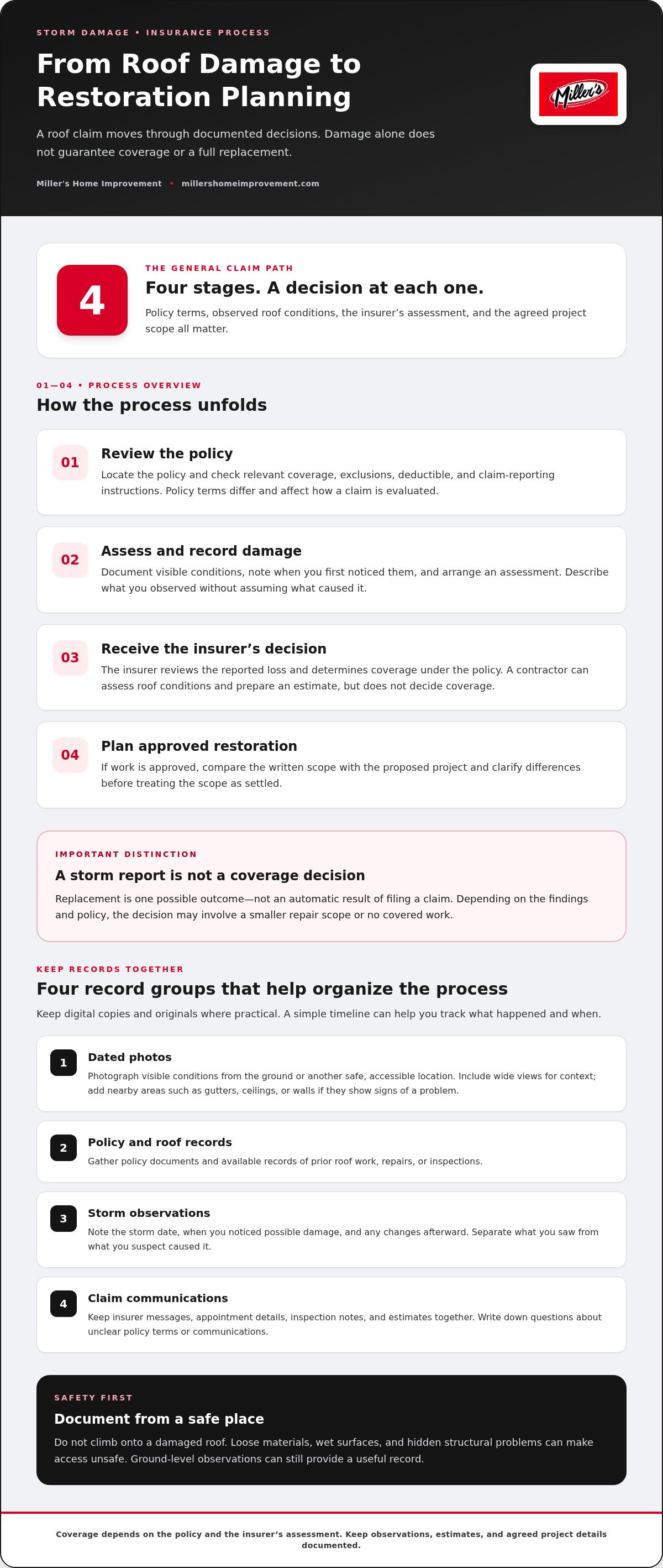
A roof claim involves several decisions, not a direct path from storm damage to a new roof. The insurance process for roof replacement generally includes reviewing the policy, assessing reported damage, receiving the insurer’s decision, and planning any approved restoration. Each stage helps establish what happened, what work may be covered, and what information or action is needed next.
Homeowners’ policies differ in covered events, exclusions, deductibles, and how a roof’s value is assessed. Those terms affect how an insurer evaluates a claim. A contractor can inspect roofing conditions and prepare an estimate, but that assessment is separate from the insurer’s coverage decision. Filing a claim or receiving an estimate alone doesn’t guarantee payment or full replacement.
It helps to think of the process in four parts:
- Policy review: Locate the policy and identify relevant coverage, exclusions, deductible, and claim-reporting instructions.
- Damage assessment: Record observed conditions and arrange an assessment of the roof.
- Insurer decision: The insurer reviews the reported loss and determines coverage under the policy.
- Restoration planning: If work is approved, compare the written scope with the proposed project before scheduling.
For a general overview of Homeowner's insurance policies, homeowners can review how these policies are designed to address property losses. The details of a particular roof claim, however, depend on the policy and the insurer’s assessment.
What does roof replacement through insurance usually mean?
The insurer evaluates reported roof damage against the homeowner’s policy and decides whether the loss falls within its terms. Replacement is one possible outcome, not an automatic result of filing a claim. Depending on the findings, the decision may involve a smaller repair scope or no covered work. A roofing contractor can document visible conditions and estimate restoration work, but cannot determine policy coverage.
Which roof events may prompt a claim review?
Michigan homeowners may report suspected roof damage after wind or hail. Shingles that appear lifted, missing, cracked, or marked are useful observations to record, but appearance alone doesn’t establish when damage occurred, what caused it, or whether it’s covered.
Sudden storm-related damage is distinct from gradual wear, aging, or maintenance concerns, though an inspection may consider more than one condition. Note when you first noticed a change, take photos from safe locations, and review your policy promptly for reporting instructions and terms. These records give you a clear starting point when describing what you observed to your insurer.
A careful assessment can help distinguish visible symptoms from questions that require policy review. Miller’s Home Improvement assesses storm-damaged roofing, prepares estimates, and coordinates with homeowners during insurance claims. The insurer remains responsible for deciding coverage. Clear records and communication help keep restoration steps organized for homeowners in Detroit and surrounding Southeast Michigan communities.
From roof damage documentation to the insurer’s inspection
Good records make it easier to describe what you observed and keep the inspection stage organized. Start with visible conditions from the ground or another safe, accessible location. Don’t climb onto a damaged roof. Loose materials, wet surfaces, and hidden structural problems can make access unsafe. You can preserve useful observations without going onto the roof.
As you document conditions, note when you first saw them and whether you noticed a change after a particular storm. The date you observed a problem may not establish when or how it occurred, but it gives you a timeline to share. Keep notes factual: for example, record that shingles appear displaced on one roof slope rather than concluding that wind caused the damage.
What evidence should homeowners organize?
A single, orderly record makes information easier to find as the insurance process for roof replacement moves from reporting to inspection. Save digital copies and keep originals where practical. Useful items include:
- Dated photos: Photograph visible roof conditions from the ground, along with related areas such as gutters, ceilings, or walls if they show signs of a problem. Include wide views for context and closer views only when you can take them safely.
- Policy and roof records: Gather your policy documents and any available records of prior roof work, repairs, or inspections. These can help answer questions about the property’s history.
- Storm observations: Note the storm date, when you noticed possible damage, and any changes you observed afterward. Separate what you saw from what you suspect caused it.
- Claim communications: Keep insurer messages, appointment details, inspection notes, and estimates together. A simple timeline can help you track who said what and when.
If a policy term or insurance communication is unclear, write down the question rather than relying on memory. Michigan homeowners can also find general insurance consumer information through the Michigan Department of Insurance and Financial Services (DIFS).
What happens during an insurer’s roof inspection?
The insurer may arrange for an adjuster to inspect the reported damage as part of its claim review. The adjuster assesses conditions under the insurer’s process and records findings for consideration. The inspection is not a negotiation in which the homeowner directs the coverage decision. Your photos and timeline can help explain what you noticed, while the insurer evaluates the claim under the policy.
During or after the inspection, note unfamiliar terms or findings. Ask the insurer to explain what its report describes, which areas were assessed, and what information it needs next. Keep the answers with your other claim records. If a roofing contractor has separately documented visible conditions, those observations and an estimate can help you compare assessments later, but they don’t determine coverage.
Miller’s Home Improvement assesses storm-damaged roofing and prepares project estimates to support restoration planning. To add a local roofing assessment to your records, request an in-home roofing estimate.
How to understand the insurer’s estimate, decision, and scope
An insurer’s estimate is a written description of the work it assessed for the reported damage. It helps you understand the proposed scope, but doesn’t by itself guarantee payment or mean the entire roof will be replaced. Under the policy terms, the insurer may approve the claim, approve only part of the requested work, or decline coverage. The decision belongs to the insurer, not the roofing contractor.
Read the estimate alongside the contractor’s observations. Compare specific areas and tasks rather than relying on a general impression that the documents “don’t match.” For example, note whether a roof area or repair item appears in one document but not the other. The Roofing Contractors Association of Washington also discusses claim documentation and estimates, though Michigan homeowners should rely on their own policy and insurer for claim-specific decisions.
A simple comparison can make follow-up questions more precise:
- Insurer’s approved scope: List the areas and work described in the written estimate.
- Contractor observations: Record relevant roof conditions or estimate items that appear different or aren’t addressed.
- Questions for the insurer: Identify unclear findings, omitted items, or policy terms you want explained.
What if the estimate and roof assessment differ?
Write down the exact differences, such as a roof section or line item that appears in the contractor’s assessment but not in the insurer’s estimate. Keep the description factual, attach relevant supporting documents, and send them to the insurer through its stated process. Ask what information would help clarify the discrepancy. The insurer decides whether its estimate or claim decision changes; a contractor’s assessment doesn’t revise coverage on its own.
What if the insurer approves only part of the work?
A partial approval defines a limited scope, so don’t assume it means the rest of the roof is covered. Ask the insurer to explain the decision and relevant policy language in writing. Keep the response with the estimate and any follow-up materials. For general information about insurance consumer resources in Michigan, consult the Michigan Department of Insurance and Financial Services (DIFS). It provides consumer information, but the insurer remains responsible for deciding an individual claim.
Written records help you track the decision and understand what is and isn’t included before planning repairs or replacement. In the insurance process for roof replacement, address unresolved scope questions before treating the estimate as a settled project plan. Clear notes make it easier to discuss differences with the insurer and coordinate restoration based on its decision.
Before roof replacement, align the approved scope and project plan
An insurer’s written scope and a contractor’s project estimate serve different purposes. The insurer’s document describes the work it assessed for the claim; the contractor’s estimate describes proposed work and project details. Before setting a start date, compare them carefully and resolve questions about what the restoration will include. Approval of an insurance scope doesn’t replace a written agreement with the contractor.
This comparison is an important handoff in the insurance process for roof replacement. If the insurer’s document describes work on one roof area but the contractor’s estimate includes additional areas or tasks, identify the difference and clarify what each document covers. Don’t assume that work absent from the insurer’s scope will be paid through the claim. The insurer determines coverage, while the contractor explains the proposed construction work.
What should be clear in the roof-replacement scope?
Review which roof areas are included, whether existing materials will be removed, what replacement work is proposed, and how related items are described. Ask the contractor to explain unfamiliar terms and clarify differences between the estimate and the insurer’s scope. Put agreed work, materials, exclusions, and changes in writing before scheduling. The written project agreement helps define the contractor’s responsibilities and should be reviewed alongside, not replaced by, the insurer’s estimate.
A clear record also helps prevent assumptions from turning into project disputes. Keep the insurer’s estimate, the contractor’s proposal, and any updated versions together. If something changes after you compare the documents, record what changed and make sure the relevant parties have the updated information. The replacement plan should reflect the agreed work, not an assumption that every item in one document appears in the other.
How should homeowners plan around timing and payment?
Before committing to work, ask the insurer about any claim requirements, documentation, or deadlines that apply to your policy. Confirm the deductible and how the insurer handles claim payments, since both depend on policy terms and its process. Then review the contractor’s payment schedule and project agreement so you understand your obligations before arranging the work. There’s no single timing or payment rule that applies to every claim.
Once the scope and project terms are clear, coordinate scheduling with the contractor and keep a copy of the confirmed plan. For additional installation-planning context, see Professional Roof Replacement in Detroit MI: The 2026 Property Owner’s Guide. If the scope changes, pause and document the change before proceeding, especially if the insurer’s decision or proposed work has changed.
Miller’s Home Improvement prepares roof-replacement estimates and coordinates with homeowners during insurance claims, while the insurer remains responsible for coverage decisions. Discuss your roof replacement project with Miller’s to plan the work around the documented scope.
Move from an insurance decision to careful roof restoration
Once you have the insurer’s decision and a written scope, turn the approved work into a clear roof-restoration plan. Miller’s Home Improvement assesses roofing conditions, documents visible damage, prepares project estimates, and coordinates restoration planning with you. This support helps organize questions about proposed work and differences between documents, but it doesn’t determine what your policy covers.
The insurer makes claim and coverage decisions. A contractor’s inspection or estimate can describe roof conditions and proposed work, but it can’t guarantee claim approval, insurer agreement, or a particular restoration outcome. Keeping those roles clear helps you use the estimate as a planning tool and direct coverage questions to the insurer.
How a roofing contractor supports restoration planning
A roofing assessment gives you a project-focused view of visible conditions and the work proposed to address them. Miller’s can explain its estimate in straightforward terms and help identify questions to resolve before planning the work. For example, if an observed roof area differs from the insurer’s written scope, clear notes can help you discuss the discrepancy with the insurer. The insurer decides whether its claim assessment changes.
Before work is arranged, use the insurer’s written decision and the contractor’s project documents together. Make sure you understand the proposed work, what is excluded, and how later changes will be recorded. This handoff keeps restoration planning grounded in documented decisions rather than assumptions about coverage.
What to expect when discussing a storm-damaged roof with Miller’s
Miller’s serves homeowners in Detroit and Southeast Michigan and is licensed and insured. A free in-home estimate gives you an opportunity to review the roof and discuss project needs. The company has been in business for 13 years, and the owner brings more than 25 years of experience. The team can help clarify observed roof conditions and prepare for restoration planning while leaving policy determinations to the insurer.
If hail is part of your concern, the article Hail Damage Roof Repair in Michigan: A Homeowner’s Restoration Guide offers related context on roof restoration. As you move through the insurance process for roof replacement, keep your claim decision, project estimate, and written work plan together. These records help track the transition from insurer review to the restoration work you and the contractor have documented.
When you’re ready to discuss your roof’s condition and project needs, request a free in-home estimate from Miller’s Home Improvement.
Take the next step with a clear roof plan
A storm-damaged roof can feel like one large problem, but the path forward is easier to manage when you treat each decision separately. Keep the insurer’s written response and the roofing project documents available as you plan. If questions come up, write them down and get clear answers before moving ahead. The insurance process for roof replacement doesn’t guarantee a particular outcome, but careful communication can help you make informed decisions about the work your home needs.
Miller’s Home Improvement is a licensed and insured roofing contractor serving Detroit and Southeast Michigan, with more than 25 years of owner experience and 13 years in business. A free in-home estimate helps you discuss your roof’s condition and potential project needs. The insurer, not the contractor, determines policy coverage.
When you’re ready to discuss your roof and plan the next step, request a free in-home estimate from Miller’s Home Improvement. Start with a clear assessment and a documented plan for your home.
Frequently Asked Questions
Is roof replacement covered by homeowners insurance after a storm?
Not automatically. Coverage depends on your policy, the reported cause of damage, the insurer’s inspection, and its claim decision. Storm damage may be considered, while ordinary aging or maintenance issues may be treated differently. For example, a leak noticed after a storm doesn’t by itself prove the storm caused it. Review the insurer’s written explanation and ask which policy terms apply. A roofer can assess roof conditions, but can’t decide coverage.
How does the insurance process for roof replacement work?
The insurance process for roof replacement typically moves from documenting damage and notifying the insurer to inspection, a claim decision, and planning any covered work. Your policy and insurer determine the specific requirements. Keep a simple timeline of when you noticed damage, insurer contacts, inspection dates, and documents received. This can help you spot unanswered questions or missing information without assuming that filing a claim means the full roof will be replaced.
Can I replace my roof before the insurance claim is approved?
It’s generally wise to let the insurer inspect the roof before permanent replacement begins, since completed work can make the original conditions harder to evaluate. If immediate protective measures are needed, contact the insurer for instructions on documenting them. Keep dated photos and receipts for any temporary work. Before scheduling full replacement, clarify inspection timing and any policy requirements directly with the insurer so you understand how work could affect its review.
What happens if the insurance estimate is lower than the roofing contractor’s estimate?
A difference doesn’t by itself mean the insurer’s estimate is wrong or that additional work is covered. Compare the documents item by item. For instance, note if they describe different roof sections or amounts of work. Ask the contractor to explain its observations in writing, then send relevant details to the insurer and request clarification. Only the insurer can determine whether it will revise its assessment, so don’t commit based on an assumed claim increase.
How long do I have to file a roof damage insurance claim in Michigan?
There isn’t one deadline that applies to every Michigan homeowner or policy. Review your policy’s notice and documentation requirements, then contact your insurer promptly after discovering possible damage. Ask the insurer to identify the applicable deadlines in writing and keep that response with your claim records. For general Michigan insurance consumer information, consult the Department of Insurance and Financial Services (DIFS). Don’t rely on another homeowner’s timeline as a substitute for your policy terms.
Do I have to use the roofing contractor recommended by my insurance company?
Review your policy and ask the insurer to explain its contractor-related process before making a decision. Keep the insurer’s estimate and any contractor proposal separate from the written agreement for roofing work, since they serve different purposes. In Detroit, a roofing contractor can assess conditions and explain proposed work, while the insurer determines coverage. Take time to understand the scope and terms of any agreement before authorizing work.
What should I do if my roof insurance claim is denied?
Start with the written denial. Identify the reasons and policy language the insurer cites, then ask for an explanation of terms or findings you don’t understand. Check whether the letter describes a review or appeal process and follow its instructions. Keep the denial with inspection records and claim correspondence. Michigan homeowners can consult current DIFS consumer resources for general guidance, but a roofing contractor cannot overturn or decide the insurer’s claim determination.


