
A useful starting point for a budget for new roof 2026 planning is a clear picture of your own roof, not a national average. Online estimates can offer general context, but they can’t account for your roof’s shape, existing layers, condition, or access. Those details affect the work involved and the estimate for your Detroit home.
It’s reasonable to want a dependable planning figure before comparing proposals, especially if insurance may be involved after storm damage. Start by defining the project scope, then account for the roof and property details that influence the work and your out-of-pocket costs.
This guide explains which details affect a roofing estimate, how to organize a practical budget, and what to consider when insurance is involved in storm restoration. Miller's Home Improvement provides free in-home estimates for Detroit and Southeast Michigan homeowners. An assessment of your property helps turn general planning into a defined project scope.
Key Takeaways
- Build a budget for new roof 2026 around your roof’s area and project scope, not a generic online figure.
- Separate visible roof features from condition-related work that may only become clear during an assessment.
- Compare proposals by the work included, materials, tear-off and disposal, and identified repairs.
- Organize your plan into confirmed work, possible concealed conditions, and optional upgrades.
- Use a free in-home estimate to move from broad planning to a property-specific scope in Detroit and Southeast Michigan.
Why a 2026 New Roof Budget Starts With Your Property
A useful budget for new roof 2026 begins with the roof you have, not a national average or an online calculator’s assumptions. Roof area, layout, materials, and condition all affect the work. Two Detroit homes that look similar from the street may have different roof areas, features, and replacement needs. Online estimates can’t account for those property-specific details.
A planning budget helps organize decisions, while a property-specific estimate reflects the roof and work assessed at your home. An online figure or general range is not a proposal for your project. Use broad information to identify questions, then refine your plan around the roof’s actual needs.
What does a new roof budget include?
A roof estimate may include roofing materials and installation labor, removal of existing layers, disposal, and preparation for the new system. The exact scope depends on the roof design, what is already installed, and the work needed to prepare the surface.
Replacing a roof involves more than choosing a surface material. The plan should specify what happens to the existing roof and how the property will be prepared for replacement. An online figure can help you frame early questions, but it can’t establish those details or replace a written, property-specific proposal.
Why can two Southeast Michigan roofs need different budgets?
Consider two Detroit-area homes. One might have a broad, simple roof with straightforward access. Another may have steep sections, several levels, dormers, or multiple penetrations such as vents and skylights. These features affect material quantities, access, and installation work. Existing roof layers matter as well because removal and disposal depend on what is already there.
Condition is another variable. A view from the ground can reveal some surface concerns, but an assessment helps clarify visible work and whether additional preparation or repairs are needed. This doesn’t mean a particular home has a defect. It means the estimate should reflect observed conditions rather than assumptions.
Detroit-area roofs also face changing seasonal conditions, including winter weather, wind, and rain. Those conditions provide context for an assessment, but they don’t establish a universal problem or repair for every home. Roof types and components vary, as described in this overview of types of roofs and their components.
Before comparing estimates, write down the roof’s basic layout, visible features, and known history. An in-person assessment can then connect those observations to a defined scope. This property-first approach is more useful than trying to make a general online figure fit a roof it hasn’t seen.
Which Factors Shape a New Roof Estimate in 2026?
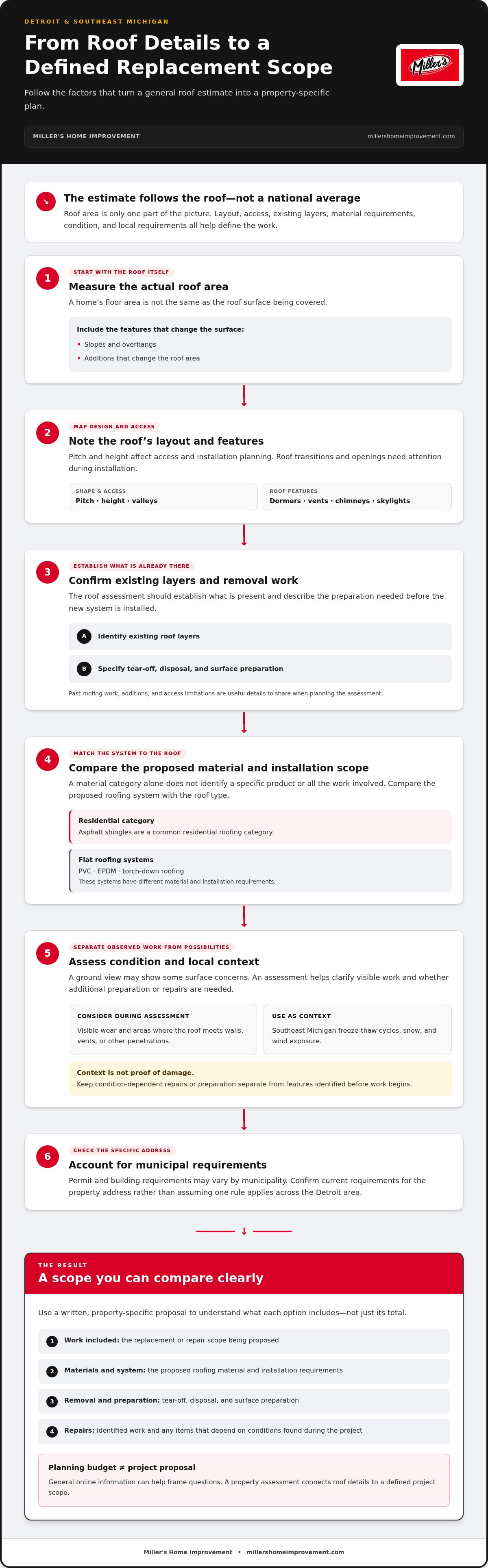
A complete replacement estimate reflects both measurable roof features and the work needed to prepare the surface. Roof area alone cannot determine the full replacement scope: pitch, access, existing layers, material requirements, and condition matter too. A property assessment brings those factors together instead of treating every home as the same job.
How do size, pitch, access, and tear-off affect scope?
Roof area is different from the home’s floor area. Slopes, overhangs, and additions change the surface being covered, so the roof itself needs to be measured. Pitch and height affect access and installation planning. Valleys, dormers, vents, chimneys, and skylights create transitions or openings that need attention during installation.
Existing layers also affect the scope. A tear-off may require removing one or more layers before the new roof can be installed. The assessment should establish what is present and describe removal, disposal, and preparation in the proposal. You can help by sharing information about additions, past roof work, or areas where access may be limited. These details support planning but don’t replace an on-site assessment.
How do material choice and local conditions affect planning?
Material selection should suit the roof design and property. Asphalt shingles are a common residential category, but the label alone doesn’t identify a specific product or installation scope. Flat roofing systems, including PVC, EPDM, and torch-down roofing, have different material and installation requirements. Compare the proposed system with the roof type, not just a material name.
In Southeast Michigan, freeze-thaw cycles, snow, and wind exposure are useful context when evaluating roof condition, but they don’t prove that a particular roof is damaged. An assessment can consider visible wear and areas where the roof meets walls, vents, or other penetrations. Keep condition-dependent repairs or preparation separate from features that can be identified before work begins.
Municipal permit and building requirements can also affect project planning. Requirements may vary by municipality, so don’t assume that one Detroit-area rule applies everywhere. Account for current requirements for the specific address rather than building a budget around an unverified code assumption.
To prepare, gather records of past roofing work, note visible concerns from the ground, and list features such as dormers or skylights. A property-specific assessment can clarify what is confirmed and what depends on conditions found during the work. For Detroit and Southeast Michigan homeowners, a free in-home roofing estimate connects those details to a defined scope.
How to Compare Roof Budget Options Without Missing Scope
Two roof proposals may have different totals because they describe different work. One might cover a complete tear-off and replacement, while another addresses a repair or limited section. For a useful budget for new roof 2026, identify what each option is meant to accomplish before comparing totals. A lower figure may leave out removal, disposal, or repairs included in another proposal.
Repair, partial replacement, and complete replacement are different scopes. Roof age, damage, recurring problems, and underlying conditions help determine which work is appropriate. A roof assessment clarifies what is visible and what scope fits the property, without assuming one option suits every home.
Tear-off is a separate scope detail. Existing layers and roof condition can affect whether removal is part of the proposed work. For background on when a roof tear-off is necessary in Michigan, consider removal alongside the replacement scope rather than treating “new roof” as a complete description.
For local context, a guide to roof replacement cost in Detroit can help frame early research. When comparing proposals, focus on the written details for your property. Use these scope categories to organize the comparison:
Repair: Compare the specific area or issue addressed, materials, installation work, and identified repairs. Note whether the proposal covers only that work or a broader scope.
Partial replacement: Check which roof section is included, what materials are specified, and whether removal and disposal apply to that area. Review any described transitions between new and existing roofing.
Complete replacement: Confirm that the proposal covers the full roof area, materials and installation, tear-off and disposal, and repairs identified during the assessment.
What should a homeowner compare in written estimates?
Read proposals side by side, matching the included work before focusing on the total. Mark differences and missing details. Clear assumptions and exclusions show where the estimates are not directly comparable.
- Materials: Compare the material description and the roof areas it applies to.
- Removal and disposal: Check whether tear-off is included and which existing layers are addressed.
- Installation: Review the work described, including the roof sections and relevant features.
- Identified repairs: Note which repairs are included, excluded, or listed as conditional.
If an item is unclear, treat it as an open scope question rather than assuming it is included. A narrower scope can have a lower total without representing the same work. Comparing like with like gives you a clearer basis for planning. For Detroit and Southeast Michigan homeowners, a free in-home roofing estimate helps connect the property’s condition to a written scope.
How to Build a Practical Roof Budget Before Work Begins
A practical budget for new roof 2026 takes shape in stages. Record what you can observe safely, use an on-site assessment to define the work, then separate confirmed needs from uncertain or optional items. This keeps a possible issue from being treated as a definite expense while helping you plan responsibly.
- Record what you’ve noticed. Note active or past leaks, missing or damaged shingles visible from the ground, recurring concerns, and previous repairs. If a storm prompted the assessment, record the date as accurately as you can.
- Gather available records. Collect basic property details and any roofing documents, photos, or insurance paperwork. These can provide context but don’t replace an assessment.
- Get the roof assessed. Leave close inspection to trained professionals. Don’t climb onto the roof to check shingles, penetrations, or other components. Falls can cause serious injury.
- Sort the scope into planning categories. Separate confirmed work, possible concealed conditions, and optional upgrades. Keep each category distinct as you review the written scope and organize your budget.
What information should you gather before requesting an estimate?
Keep your notes specific: where you’ve seen water indoors, which shingles appear damaged from the ground, and when repairs or storm events occurred. Gather roofing or insurance records if available. Don’t assume a visible symptom identifies its cause. An assessment helps establish what the roof needs and which work belongs in the proposed scope.
How can you plan for uncertainty and insurance involvement?
Some conditions may be concealed until work is underway. A planning contingency accounts for uncertainty; it does not predict that defects will be found. Keep it separate from confirmed work and optional upgrades. If an assessment identifies additional work, the written scope can distinguish it from the original plan so you can review the budget before deciding how to proceed.
Insurance is a separate consideration. Coverage depends on the policy and whether the damage is a covered loss, so don’t assume a storm-related roof project will be paid in full. For a possible storm claim, review the policy terms and deductible with your insurer. Keep claim documents and inspection findings together so you can refer to the same information throughout the process. If hail is a concern, information about hail damage roof repair in Michigan can explain what an assessment may consider, but it doesn’t determine coverage.
Once you’ve gathered records and separated confirmed work from uncertainties, a property-specific estimate can help define the scope. Detroit and Southeast Michigan homeowners can request a free in-home roofing estimate from Miller's Home Improvement to plan the next steps.
Plan Your 2026 Roof Budget With a Local Assessment
Broad planning helps identify the right questions. A local assessment ties the answers to your property. Instead of building your budget for new roof 2026 around a generic figure, use the roof’s observed condition and proposed work to build a more useful plan.
What happens during a property-specific estimate?
An in-home estimate gives the roofing professional an opportunity to assess the roof’s condition, dimensions, access, and overall project scope. This property-level view connects the proposed work to the actual roof rather than relying on assumptions about a typical home. It can also clarify which work is evident and what questions remain.
Bring notes about leaks, visible damage, past repairs, or other concerns. You can discuss material preferences and what you want the project to address. This information helps shape a scope around both the roof’s condition and your priorities. An estimate is a basis for planning, not a promise of a particular final price or outcome before the project is assessed.
Miller's Home Improvement provides free in-home estimates for property owners in Detroit and Southeast Michigan. The company is licensed and insured and has been in business for 13 years. An in-person assessment is a practical step toward a written, property-specific scope.
When does storm restoration change the budgeting conversation?
A planned replacement and storm-related restoration may start with different questions. For a planned project, the focus may be the roof’s condition, material preferences, and replacement scope. After a storm, the assessment also considers the reported event and observed damage. Keep those findings and any insurance documents together as you plan.
Insurance involvement doesn’t mean a claim will be approved or that a policy will cover all proposed work. Coverage depends on the policy and the covered loss. As part of storm restoration, Miller's Home Improvement assists with insurance claims. This support helps homeowners navigate the claim process while keeping the roofing scope and insurance decision distinct.
A local estimate gives you a clearer foundation for comparing proposed work, organizing confirmed needs, and deciding what questions to resolve. Detroit and Southeast Michigan property owners can request a free in-home estimate when planning a replacement or responding to storm damage.
Turn Your Roof Plan Into a Confident Next Step
A thoughtful budget for new roof 2026 is more than a number on a page. It gives you a way to make decisions in stages, starting with the work your home needs and moving to choices that fit your priorities. First get a clear understanding of the proposed scope, then use it to plan what comes next.
Miller's Home Improvement brings more than 25 years of owner experience to roofing projects. A conversation about your roof can move you from general planning toward a clearer path for your property, without treating an online estimate as the final word.
Ready to discuss your roof and the work it may need? Request a free in-home roofing estimate from Miller's Home Improvement. A practical plan starts with a closer look at your Detroit-area roof.
Frequently Asked Questions
How much should I budget for a new roof in 2026?
There isn’t one reliable figure for every Detroit home. Your budget for new roof 2026 planning depends on the roof’s measured area, material choice, removal needs, access, and repairs identified during an assessment. Treat online figures as general context, not a quote. A property-specific written estimate gives you a useful basis for setting aside funds and comparing the work proposed for your home.
Does a roofing estimate use my home’s square footage?
Your home’s measurements may provide background, but the roof surface needs to be assessed separately. Floor area doesn’t show the full roof layout, including overhangs, additions, or multiple sections. Two homes with similar interior space can have different roof designs. Keep building plans or records of past work handy as reference, while relying on roof measurements to define the roofing scope.
What is a roofing square, and why does it matter?
A roofing square is a unit of roof area equal to 100 square feet. Roofing professionals use squares to describe surface area and organize material and installation quantities. For example, a measured roof area of 2,000 square feet equals 20 roofing squares before accounting for project details such as layout and waste. The unit helps make estimates easier to read, but it doesn’t describe the full scope by itself.
Can homeowners insurance pay for a new roof?
It can if the roof damage is a covered loss under the homeowner’s policy, but approval and payment aren’t automatic. Coverage depends on policy language, the cause of damage, and the insurer’s claim decision. Review your policy and deductible, and keep photos, inspection notes, and claim correspondence together. In Detroit, storm-related roof restoration may involve both a roofing assessment and a separate insurance review.
Should gutters be included in a new roof budget?
Include gutters only if gutter work is part of the project you’re planning. Roof replacement and gutter replacement are separate scopes, so a roofing estimate may not cover gutter repairs or replacement unless those items are specifically included in writing. Note visible concerns, such as a loose section or poor drainage, and keep that work distinct while reviewing the roofing plan. This makes it easier to understand what the proposal covers.
Is winter a bad time to replace a roof in Michigan?
Not necessarily, but winter conditions can affect how a roofing project is planned. Cold temperatures, snow, ice, and changing weather may influence safe access and installation conditions. The right approach depends on the roof, proposed materials, and conditions at the property, so there isn’t one rule for every Detroit home. If a leak or storm damage needs attention, have the roof assessed rather than assuming the season alone determines the next step.
How long is a roof replacement estimate valid?
The validity period depends on the terms in the written estimate, so look for an expiration date and any assumptions tied to the scope. An estimate prepared for specific materials or observed conditions may need to be revisited if project details change. Before using an older proposal to plan, check that its scope, material descriptions, and stated terms still match the work you’re considering.


