
Could the most durable roofing material for Michigan weather still be the wrong choice for your home? Metal is often praised for its long service life, but a roof’s performance depends on more than its surface. Detroit-area roofs face snow, ice, freeze-thaw cycles, wind, and rain, while roof design and installation affect how well the complete system holds up. The goal is a roof that lasts and suits your home’s structure and exposure.
This guide compares common roofing materials against Michigan’s seasonal demands, including their strengths and trade-offs. You’ll learn how roof shape, attic ventilation, ice protection, workmanship, and routine maintenance can affect durability alongside material choice.
Use the practical questions below to assess your roof and compare replacement options, so you can weigh performance, appearance, and the specific needs of your home with greater confidence.
Key Takeaways
- Michigan’s snow, freeze-thaw cycles, wind, rain, and hail test the entire roofing system, not just the material on top.
- Compare asphalt shingles, metal, slate, and synthetic roofing by weather performance, structural demands, maintenance, and fit with your home’s design.
- The most durable roofing material for Michigan weather depends on your roof’s slope, structure, drainage, exposure, and maintenance needs.
- Before comparing replacement options, assess the roof’s condition, geometry, drainage, and visible signs of damage.
- Miller’s Home Improvement provides residential roofing, roof replacement, repairs, and storm restoration, with free in-home estimates to help plan your project.
What Makes a Roofing Material Durable in Michigan Weather?
A strong roofing material can still underperform on a particular home. Material durability is a product’s ability to resist weathering and damage; roof-system durability is the sustained performance of the material together with its underlayment, flashing, ventilation, drainage, and installation. That distinction matters in Michigan, where seasonal conditions place different stresses on different parts of a roof.
Snow adds weight, while thawing and refreezing can challenge vulnerable seams and edges. Wind can lift or loosen components, especially where attachment or detailing is weak. Hail creates a different risk: direct impact that may bruise, crack, or otherwise damage some surfaces. Rain tests how effectively the roof sheds water and how well transitions are sealed. The types of roofing materials vary in how they respond to these forces, but no material label alone describes how an installed roof will perform.
How Michigan’s seasons put roofing systems to the test
Repeated freezing and thawing can expose weaknesses around roof edges, valleys, penetrations, and other transitions. Water that reaches a vulnerable detail may freeze, expand, and put additional strain on it. Snow and ice also make roof pitch and drainage important: slopes, valleys, gutters, and downspouts affect how water moves off the roof or lingers. Exposure varies by property, too. A roof sheltered by nearby structures may face different wind and weather conditions from one in an open area.
These stresses affect roofs differently. Performance depends in part on whether the system suits the roof’s geometry and gives water a clear path away. Homeowners can also prepare for seasonal risks with practical steps in this Michigan winter roof preparation guide.
Why the whole roof system matters as much as the surface
The visible covering is only one part of the assembly. Underlayment provides a secondary layer beneath it; flashing directs water around joints and openings; ventilation supports airflow through the roof and attic; and drainage carries water away. These components work together. A flaw at a chimney, valley, or eave can create a vulnerable point even when the main roofing material is in sound condition.
Workmanship ties the system together. Poorly fitted flashing, misplaced fasteners, or details that don’t suit the roof can compromise performance, regardless of the material’s reputation. So the answer to “What is the most durable roofing material for Michigan weather?” starts with the home itself. Roof pitch, drainage, site exposure, and careful installation all help determine how a material performs over time.
How Common Roofing Materials Handle Michigan Conditions
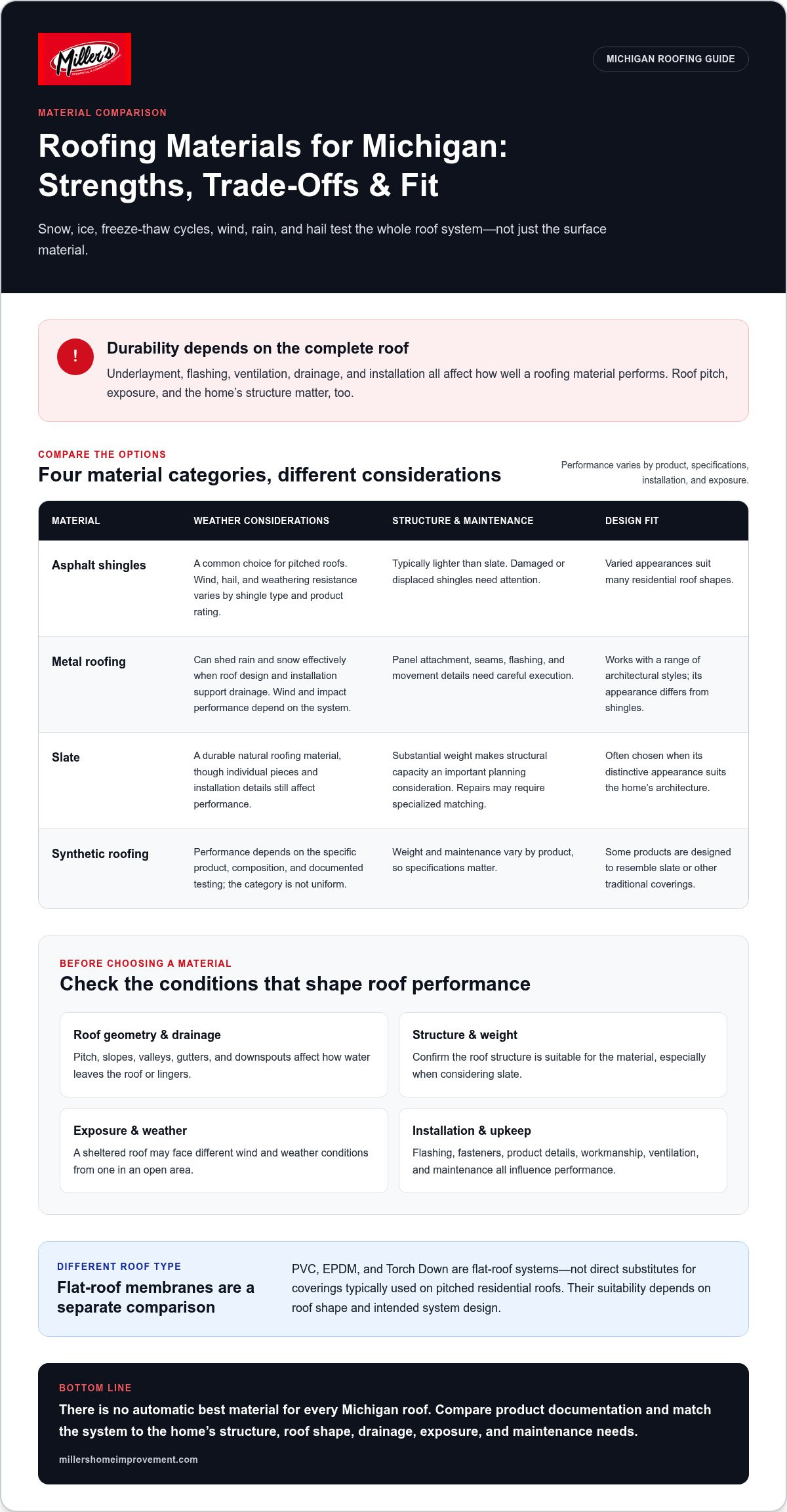
Each roofing category involves trade-offs. Compare how a material handles local weather, whether the roof structure suits it, what upkeep it may need, and whether it fits the home’s design. No option is automatically best for every Michigan roof. Performance can vary by manufacturer, product specifications, installation, and exposure.
| Material | Weather considerations | Structure and maintenance | Design fit |
|---|---|---|---|
| Asphalt shingles | A common pitched-roof option. Resistance to wind, hail, and weathering varies by shingle type and product rating. | Typically lighter than slate; damaged or displaced shingles need attention. | Available in varied appearances for many residential roof shapes. |
| Metal roofing | Can shed rain and snow effectively when the roof design and installation support drainage; impact and wind performance depend on the system. | Panel attachment, seams, flashing, and movement details need careful execution. | Works with a range of architectural styles, though its appearance differs from shingles. |
| Slate | A durable natural roofing material, but individual pieces and installation details still affect performance. | Its substantial weight makes structural capacity a key planning consideration; repairs may require specialized matching. | Often selected for homes where its distinctive appearance suits the architecture. |
| Synthetic roofing | Performance depends on the specific product, composition, and documented testing; the category is not uniform. | Weight and maintenance vary by product, so specifications matter. | Some products are designed to resemble slate or other traditional coverings. |
Asphalt shingles, metal roofing, and slate: distinct durability trade-offs
Asphalt shingles are familiar and adaptable, but their expected service life isn’t universal. Product grade, installation, ventilation, weather exposure, and upkeep all affect results. Metal roofing can suit homes where shedding precipitation is a priority, but seams, fasteners, edges, and flashing must be designed and installed correctly. Slate can provide long-lasting coverage, yet its weight means the home’s framing must be suitable. Check manufacturer documentation for specific wind, impact, or other performance ratings rather than assuming all products in a category perform alike.
Synthetic materials and commercial flat-roof membranes
Synthetic roofing can refer to products made from different materials for different applications. Compare the exact product’s tested performance and installation requirements, not a broad category label. PVC, EPDM, and Torch Down are flat-roof systems, distinct from coverings typically used on pitched residential roofs. Their suitability depends on the roof’s shape and intended system design, so they aren’t direct substitutes for shingles, metal, slate, or synthetic pitched-roof products.
The most durable roofing material for Michigan weather is the option that fits the home’s structure, roof design, exposure, and maintenance needs, as part of a compatible system installed carefully. Miller’s Home Improvement offers residential roof replacement and a free in-home roofing estimate to discuss project-specific options.
Which Durable Roofing Material Fits Your Roof and Exposure?
Material comparisons are most useful when matched to the roof they’ll cover. A steep, open roof with clear drainage presents different demands from a low-slope roof beneath overhanging trees. The home’s structure, existing roof condition, and the owner’s willingness to monitor and maintain the system also shape a sound choice.
Roof conditions should guide material comparisons because durability depends on how well a roofing system suits the roof’s geometry, structural capacity, drainage, exposure, and maintenance needs. Use these factors to focus your evaluation:
- Roof slope: Identify whether the roof is pitched or low-slope, then compare systems designed for that configuration and their installation requirements.
- Structure: Consider the roof framing and the weight of the proposed covering, particularly for heavier materials such as slate.
- Drainage: Note valleys, transitions, gutters, and areas where water may collect or move slowly.
- Exposure: Consider surrounding trees, open areas, and the roof’s orientation. Conditions can vary across different faces of the same home.
- Maintenance: Think about how readily the roof can be inspected and how you’ll address repairs when damage or wear appears.
Match material options to roof design and property conditions
Pitch affects how quickly water moves across a roof and which systems are suitable. Don’t assume a covering intended for a pitched roof will also suit a low-slope section. System requirements and transitions matter. Heavy materials also call for attention to structural capacity. Nearby trees may add debris and shade, while open exposure can leave a roof more directly affected by wind. Assess the conditions around the property rather than relying on a broad regional assumption.
Give drainage a close look. Valleys, roof-to-wall junctions, and changes in slope can concentrate water, so the design and detailing at these points need to work with the chosen system. If a roof has a low-slope extension beside a steeper main section, those areas may call for different roofing systems rather than one covering used everywhere.
Compare durability without overlooking maintenance and repair
Every roof benefits from periodic attention, but inspection and repair needs differ by material and layout. Look for loose or damaged components, worn flashing, debris buildup, and signs that water isn’t draining as intended. If deterioration is widespread or existing layers affect the work required, this Michigan roof tear-off guide explains why replacement planning may involve more than selecting a new surface.
The most durable roofing material for Michigan weather isn’t a universal winner. It’s a suitable system selected for the home’s structure and exposure, then maintained as its condition requires. Miller’s Home Improvement provides roof replacement assessments through a free in-home roofing estimate.
How to Evaluate Roofing Durability Before Replacing a Michigan Roof
A durable replacement starts with a clear picture of the roof’s condition, not a material shortlist. Use this sequence to compare options and understand what a proposed roofing system is designed to do. It keeps attention on the complete project, from existing damage to the details that support long-term performance.
A practical sequence for comparing roofing proposals
- Assess the existing roof. Note visible wear or damage, recurring leak areas, previous repairs, and deterioration around edges, valleys, and roof penetrations. A ground-level review can flag concerns, but a project assessment can establish the roof’s condition and scope more fully.
- Describe the roof’s geometry and exposure. Identify pitched and low-slope sections, valleys, drainage paths, and areas where water may collect. Consider nearby trees and whether parts of the roof are more exposed to wind or weather than others.
- Define the project scope. Compare whether the work addresses only the roof covering or includes removal of existing materials and attention to underlying system components. The existing roof’s condition can affect which work is appropriate.
- Compare complete systems, not just surfaces. Review proposed materials alongside underlayment, flashing, ventilation, drainage details, and installation requirements. Compare the same components across proposals so the material choice isn’t separated from the assembly that supports it.
A proposal is easier to evaluate when it explains how flashing and underlayment are addressed, how ventilation fits the roof, and what the work includes for cleanup. These details help clarify whether options are genuinely comparable. Manufacturer documentation can also provide context for stated material performance, installation requirements, and product-specific ratings.
Questions that reveal whether durability claims are well supported
Look for specific explanations rather than broad promises. What product documentation supports a performance claim? Does the proposed system suit the roof’s slope and structure? How does the plan account for drainage and the home’s exposure? Are flashing, ventilation, and other transitions included in the scope? Clear answers connect a material’s stated attributes to the conditions of the actual roof.
The most durable roofing material for Michigan weather is a project-specific decision. An in-home assessment can bring the roof’s condition, geometry, and replacement needs into the comparison. Miller’s Home Improvement provides residential roofing, roof replacement, and repair services. To discuss your roof and receive project-specific guidance, request a free in-home estimate.
Plan a Durable Michigan Roof Replacement with Miller’s Home Improvement
After comparing materials and reviewing the roof’s condition, consider the property itself. A roof-specific assessment connects the home’s design, existing wear, and drainage patterns to a replacement plan. Instead of choosing by material name alone, it considers how the system and the work required fit the building.
Turn the material comparison into a roof-specific plan
Roof pitch, transitions, visible damage, and the condition of existing materials all help define replacement needs. A plan for a steep residential roof may differ from one for a low-slope area, and a roof with worn flashing or drainage concerns may need attention beyond its main covering. Looking at the complete system keeps those details in the conversation.
Miller’s Home Improvement serves residential and commercial roofing needs in Southeast Michigan and surrounding communities, including Detroit. Its work includes roof replacement, repairs, storm restoration, and flat-roof systems. An in-home assessment considers the project’s conditions and scope, then helps shape options for the property rather than assuming one material fits every home.
For homeowners, this is an opportunity to discuss where damage is visible, whether concerns have recurred, and how the roof is shaped. For commercial properties, the roof’s function and configuration inform the planning conversation. In both cases, considering the complete assembly and installation details supports a more thorough replacement plan.
What homeowners can expect from the next conversation
Miller’s provides free in-home estimates for roofing projects. The conversation can focus on the roof’s condition, the work being considered, and the factors that matter to the property. If storm damage is part of the project, Miller’s also handles insurance claims, helping homeowners address that part of the process alongside their roofing needs.
An estimate helps bring roof condition and project scope into focus. It can clarify whether the next step involves repair or replacement and which details should inform the work. You don’t need to settle on a material before considering the roof itself. A careful assessment grounds the decision in the building and its needs.
If you’re planning a roof project in Southeast Michigan, discuss your roof’s condition and replacement needs with Miller’s Home Improvement. Request a free in-home estimate.
Take the Next Step Toward a Roof That Fits Your Home
Choosing the most durable roofing material for Michigan weather is less about finding a universal winner and more about making a sound decision for your home. Turn your observations into a project conversation: what needs attention, what matters most to you, and how the planned system can suit the property. This keeps the decision grounded in your roof, not just a material’s reputation.
Miller’s Home Improvement brings more than 25 years of owner experience to roofing projects. The company offers free in-home estimates for homeowners considering replacement or repair, with an assessment focused on the property’s needs. For a clearer path forward, plan your roofing project with Miller’s Home Improvement.
A well-considered plan can make a major home decision feel more manageable. Start with the roof in front of you and take the next step with confidence.
Frequently Asked Questions
Is metal roofing more durable than asphalt shingles in Michigan?
Metal roofing can offer greater resistance to some forms of weathering, but it isn’t automatically more durable on every home. Performance depends on the product, roof design, installation, and exposure. Asphalt shingles also come in different grades and specifications, so compare documented product details rather than treating either category as uniform. For a Detroit-area home, the roof’s condition and surroundings make the comparison specific to the property.
Can freeze-thaw cycles damage a roof in Michigan?
Yes. Repeated freezing and thawing can stress places where water reaches seams, edges, or roof penetrations. For example, a vulnerable flashing detail may let moisture beneath the surface, where freezing can worsen an existing weakness. Watch for new interior stains, loose roof components, or recurring leaks after winter weather. These signs don’t identify the cause on their own, but they’re useful reasons to arrange a closer roof assessment.
What roofing material handles Michigan snow and ice best?
There isn’t one material that handles snow and ice best on every Michigan home. Roof slope, drainage, structural capacity, and installation details all affect performance. The most durable roofing material for Michigan weather is a project-specific choice, not a statewide answer. A steep roof and a low-slope section, for example, may need different system planning even on the same property.
Does a durable roofing material prevent ice dams?
No. A durable surface alone can’t prevent ice dams, which are influenced by heat loss into the attic, ventilation, insulation, and how the roof manages melting and refreezing snow. A homeowner may notice uneven snow melt or ice building along the eaves, but those observations don’t establish the cause. Considering attic conditions and roof details together is more useful than expecting a material change alone to solve the problem.
Can hail damage affect metal and shingle roofs differently?
Yes. Hail may leave visible dents on some metal panels, while shingles may show granule loss, bruising, or cracking, depending on the product and impact. Damage can be difficult to judge from the ground, and appearance alone may not reveal whether performance is affected. After a hailstorm in Detroit, note visible changes from a safe location and arrange a roof assessment rather than walking on the roof.
How does roof pitch affect which roofing material is suitable?
Roof pitch affects how quickly water drains and which roofing systems are appropriate for a section. A low-slope porch addition, for example, may have different system requirements from the steeper main roof beside it. Transitions between the two deserve attention because they must manage water moving across the roof. Choose a material based on the roof’s actual slope and the product’s installation requirements, not just the home’s overall appearance.
What happens if a durable roofing material is installed incorrectly?
Incorrect installation can undermine a material’s performance and lead to loose components, leaks, or premature deterioration. For example, poorly fitted flashing around a vent may create a path for water even if the surrounding roof covering is sound. Improper fastening or details that don’t match product instructions can also affect how the roof handles wind and water. Manufacturer installation guidance and careful workmanship are essential parts of the system.


