
Could the cheapest roof repair become the most expensive choice? The long term cost of cheap roof repair depends on whether the work fixes the source of the leak or only covers the visible damage. A quick patch may make sense when the problem is limited, but recurring leaks can indicate that the underlying issue remains.
It’s reasonable to look for a repair that fits your budget, especially when water is coming in and the cause isn’t clear. The challenge is knowing what a low quote includes and whether the work addresses the roof’s condition. In Detroit and across Southeast Michigan, freeze-thaw cycles, snowfall, and heavy rain can put stress on shingles, flashing, and roof penetrations.
This article explains how to compare repair scope and durability, why roof problems return, and what to consider when underlying damage may be unresolved. You’ll also learn when repeated repairs may call for a broader assessment, so you can choose a practical next step for your Michigan roof based on more than price alone.
Key Takeaways
- The long term cost of cheap roof repair includes more than the first repair. If the cause remains unresolved, repeat work or related damage may follow.
- Compare quotes by repair scope, materials, and diagnosis to see whether they address the same problem.
- Document symptoms and keep repair records to track recurring issues and inform decisions about next steps.
- If water is actively entering the building, arrange a professional assessment promptly to help limit further damage.
- Miller's Home Improvement provides roof repairs across Detroit and Southeast Michigan, with free in-home estimates from a fully licensed and insured team.
The Long-Term Cost of Cheap Roof Repair Starts With What the Quote Covers
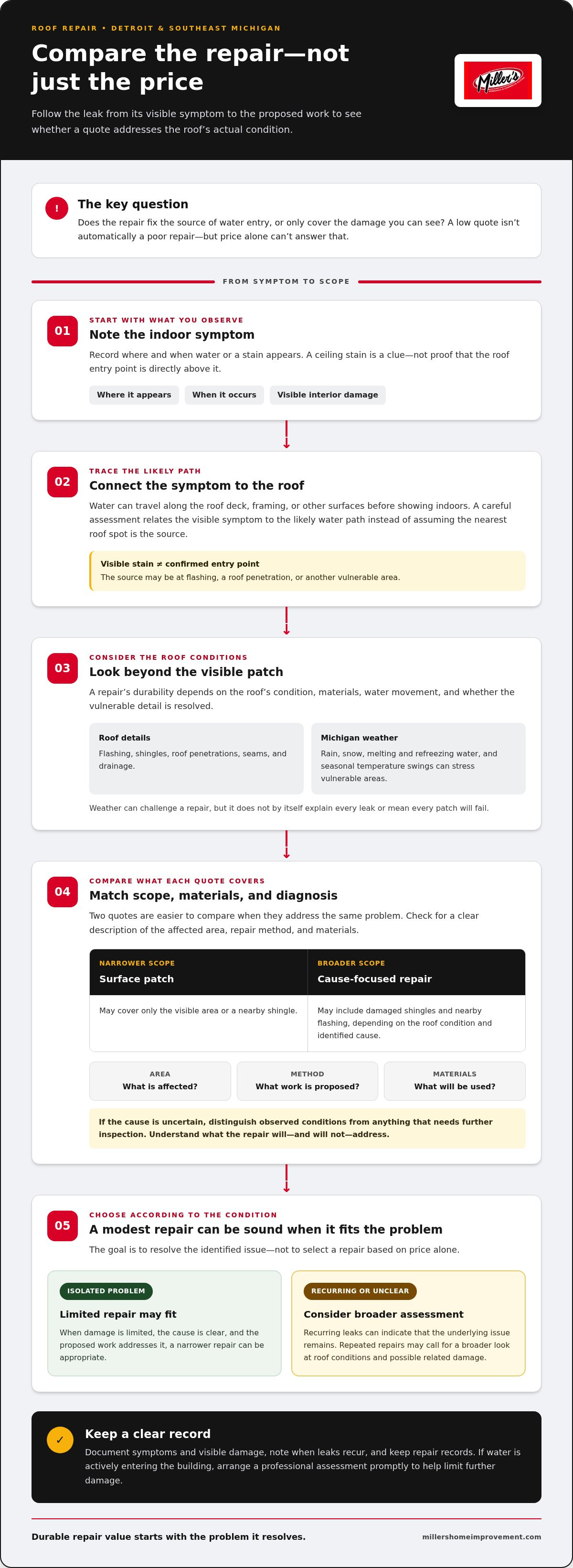
The long term cost of cheap roof repair includes the initial work plus any repeat repairs or related damage that may follow if the underlying problem remains. A modest repair can be a sound choice when the damage is limited and the work addresses its cause. Price alone doesn’t tell you that. Consider the scope: what area is being repaired, which materials are involved, and whether the source of the leak has been identified.
Water showing up on a ceiling doesn’t necessarily mean the roof entry point is directly above it. Water can travel along the roof deck, framing, or other surfaces before becoming visible indoors. A repair focused only on the stain or nearest shingle may miss a problem with flashing, a roof penetration, or another vulnerable area. A careful assessment connects the indoor symptom to the likely path of water.
A durable roof repair is defined by the problem it resolves, not by its initial price. That doesn’t mean every low quote signals poor workmanship. A small, clearly identified repair may require limited labor and materials. The useful comparison is whether the proposed work fits the roof’s actual condition.
What can a low roof repair quote leave out?
Repair scope, roof access, materials, and diagnosis all shape what a quote covers. One proposal may include replacing damaged shingles and addressing nearby flashing; another may cover only a surface patch over the visible area. You can’t fairly compare different approaches by total price alone. For background on types of roofing materials and their lifespan, consider how a roof’s material and construction affect the repair approach.
Look for a clear description of the affected area, repair method, and materials. If the cause is uncertain, an assessment should distinguish observed conditions from anything that needs further inspection. A narrower repair can be appropriate when the problem is isolated. The important thing is to understand what it will and won’t address.
Why a small leak can create a larger repair problem
Water that repeatedly enters through a vulnerable roof area can wet roof decking, underlayment, or nearby framing. Indoors, it may stain ceilings, damage drywall, or affect insulation. These are possible consequences, not automatic outcomes. The extent depends on how much water enters, how often it happens, and how long materials stay damp. Document visible damage, and have concealed damage assessed rather than assuming its extent.
A recurring leak can make it harder to distinguish the original defect from newer damage. Repairing the roof entry point may stop further water, but affected components or interior finishes may still need attention if damage is found. Unresolved water entry can turn one roof repair into additional work as moisture reaches other parts of the building. The goal is to establish what’s damaged now and what the proposed repair is intended to prevent.
How Michigan Weather Can Turn a Temporary Roof Patch Into Repeat Work
A patch has to withstand more than the conditions on repair day. In Michigan, roofs face rain, snow, melting and refreezing water, and seasonal temperature swings. These changes can put repeated stress on vulnerable seams and edges. A repair that covers a symptom without correcting the detail letting water in may hold for a while, then leak again when weather tests the same area.
Recurring moisture and freeze-thaw exposure can challenge a roof repair, especially where a vulnerable detail remains unresolved. That doesn’t mean weather alone caused a leak or that every patch will fail. The roof’s condition, repair materials, and the way water moves across its surface all matter.
Freeze-thaw cycles, ice dams, and vulnerable roof details
During freeze-thaw cycles, water can enter a small gap, freeze as temperatures drop, and melt as conditions warm. Repeated changes may stress a weak seam or poorly sealed area. At the eaves, ice dams may contribute to water intrusion by interfering with normal drainage, but they aren’t the automatic explanation for every winter leak. The roof and attic conditions need to be considered together.
A stain that appears after a cold spell is a clue, not a diagnosis. Note when it occurs and where it appears indoors, then leave roof access and close inspection to a professional. An assessment should consider the specific roof detail and nearby conditions rather than treating every seasonal leak the same way.
How flashing, shingles, and drainage affect repair durability
Flashing helps direct water away from transitions and penetrations, such as where a roof meets a wall or surrounds a vent. If flashing is loose, damaged, or poorly integrated with adjacent materials, a nearby patch may not stop water from getting underneath. For general background on professional roofing practices, the National Roofing Contractors Association guidelines offer a useful industry reference.
Shingles and drainage matter, too. Replacing one damaged shingle may be appropriate when the surrounding area is sound. But if nearby shingles are also worn or water isn’t draining properly around a roof feature, a repair limited to that spot may leave the area vulnerable. A practical assessment considers how the repair meets existing materials and where water will flow afterward.
When comparing repair approaches, focus on whether they address the vulnerable detail and surrounding roof conditions, not just the visible spot. Miller's Home Improvement provides roof repair assessments and free in-home estimates for Detroit-area property owners weighing their next step.
Compare Roof Repair Value by Scope, Materials, and Repeat-Work Risk
A useful comparison starts with what each repair includes. Quotes can differ because they cover different areas, use different materials, or address different roof conditions. The lowest figure may be appropriate for a limited, clearly diagnosed repair. It may also exclude work included in another proposal. Comparing scope alongside price helps show what you’re paying for and which risks may remain.
Comparable repair quotes must describe comparable work. Use this framework to check whether the proposals address the same issue:
| Factor | What to compare |
|---|---|
| Price | The total for the work described, not a stand-alone number separated from its scope. |
| Repair scope | The roof area and details included, plus any stated exclusions. |
| Materials | The material type and where it will be used in the repair. |
| Diagnosis | The identified cause of the problem and any limits on what could be inspected. |
| Follow-up | What to monitor afterward and how further findings or repeat symptoms will be handled. |
What to compare when two repair quotes differ
Start with location and extent: does each scope describe the same roof plane, seam, flashing, or penetration? Then compare how the proposed materials connect with the existing roof. A quote that identifies a damaged section and specifies the repair method is easier to evaluate than one that describes only a general patch. Differences in access or the area examined may also explain why the scopes aren’t alike.
Read exclusions and follow-up expectations closely. Work beyond the stated repair area may not be included, and a quote may distinguish visible conditions from concealed ones. That distinction isn’t necessarily a flaw; it clarifies what the price covers. The long term cost of cheap roof repair is harder to judge if you don’t know what falls outside the scope.
When repair, repeat repair, or replacement deserves consideration
A repeat repair is a reason to reassess, not proof that the roof must be replaced. Review the repair history: whether leaks return in the same location, whether separate areas are now affected, and whether the roof’s broader condition supports another targeted repair. A localized problem on an otherwise serviceable roof may call for a different response than multiple recurring issues. Decisions should reflect the observed condition, not a fixed rule based on the number of repairs.
If an assessment points to broader deterioration, compare the repair option with a replacement assessment. A guide to when a roof tear-off is necessary in Michigan can help explain why the roof’s existing layers and condition matter. Keep records of completed work and new symptoms so the discussion reflects the roof’s history.
A Practical Michigan Checklist for Avoiding Repeat Roof Repair Costs
A few consistent habits can make roof decisions clearer and help you spot recurring problems before choosing the next repair. Keep a simple record, understand the proposed work, and treat active water intrusion as a priority. These steps can’t predict every roof issue, but they give you useful information for a professional assessment.
Document the problem and the work being considered
Record what you can safely observe from indoors or from the ground. Note the date, the room or area affected, visible stains or drips, and whether the symptom appeared during rain, snowmelt, or another weather change. Take dated photos from a safe location. Don’t climb onto the roof to investigate; damaged, wet, or icy surfaces can be hazardous.
Keep estimates, invoices, and repair descriptions together, along with your notes and photos. Records can help show whether water has appeared in the same place after previous work or whether a new area is affected. They’re useful for tracking the roof’s history, but they don’t guarantee a particular insurance decision or outcome.
Use a clear repair scope to make a sound decision
Before approving work, make sure the proposed scope describes the area being addressed, the repair approach, and the materials involved. Note any stated exclusions or conditions that may require further assessment. A clearly defined scope helps you compare options and understand what the work is intended to resolve, without assuming every low-cost repair is inadequate.
Miller's Home Improvement assesses roof conditions and provides repair and replacement options. The appropriate scope depends on the assessment and the property’s needs. If the roof has a history of recurring issues, bring your records so that repair history can inform the discussion. Seasonal maintenance also matters in Michigan; these winter roof preparation tips provide related context for planning ahead.
Act promptly when water is entering
If water is actively coming into the building, arrange a professional assessment promptly to help limit the chance of further damage. If it’s safe, move belongings away from the affected area and document what you see, but don’t delay addressing an active leak to build a complete record. Share the location and timing of the intrusion, along with any past repair details.
These steps help turn uncertainty into a more informed decision about the long term cost of cheap roof repair. With symptoms, repair history, and a clearly explained scope in hand, you can better weigh whether a targeted repair fits the roof’s condition. To discuss your property’s needs, request a free in-home estimate.
How Miller's Home Improvement Helps Detroit-Area Owners Weigh Repair Value
A roof decision is easier when an assessment connects the visible concern to the roof details and the proposed work. Miller's Home Improvement provides residential roof repairs and replacements, helping Detroit-area owners consider whether a focused repair fits the roof’s condition or whether a broader assessment is appropriate. The goal is to make a decision based on the property, not to assume every recurring issue calls for replacement.
What a property-focused roof assessment should clarify
An assessment should explain what was observed, which roof area or detail is affected, and how the proposed work addresses it. Miller's considers the property’s condition when discussing repair or replacement options, rather than treating a leak symptom as the whole problem. Your priorities matter, too: a useful discussion should make the scope understandable so you can weigh the work against your budget and the roof’s repair history.
Connecting the roof’s condition to the proposed work can help put the long term cost of cheap roof repair in perspective. A low initial price isn’t the only measure of value, and a broader project isn’t automatically the right answer. The recommendation should reflect what the assessment finds and what work is needed to address it.
Take the next step with a local roofing team
Miller's Home Improvement is a Michigan-based residential and commercial roofing contractor serving Detroit and Southeast Michigan. The company is fully licensed and insured, has been in business for 13 years, and brings more than 25 years of owner experience to roofing work. This local experience provides context for discussing roof conditions shaped by Michigan’s seasons, while keeping the focus on the specific property.
If storm damage is involved, Miller's also assists with insurance claims. That support can help homeowners navigate the claim process, but coverage and claim decisions are made by the insurer and aren’t guaranteed. A roof assessment and clear repair information can help you understand the work being considered without promising a particular insurance result.
Whether you’re weighing another repair or want to understand the roof’s broader condition, a free in-home estimate is a practical way to discuss the property and its options. Bring any relevant repair history or questions you’d like addressed. Request a free in-home estimate to talk through your roof’s condition and possible next steps.
Choose the Next Step With Confidence
The right roof decision isn’t about choosing the lowest number or assuming a larger project is necessary. It’s about understanding what the roof needs now and choosing a plan that fits your property. If the cause of a leak or the durability of a past repair is still uncertain, a clear assessment can help you move forward before another season puts that area to the test.
Keep your questions practical: What condition needs attention? What work addresses it? What should you watch for afterward? Clear answers make it easier to weigh the long term cost of cheap roof repair against the value of a repair scoped to the actual problem.
Miller's Home Improvement can help you discuss your roof’s condition and repair options through a free in-home estimate. Request a free in-home estimate to take an informed next step for your property.
Frequently Asked Questions
Does a cheap roof repair always end up costing more?
No. A low-cost repair can be economical if the problem is limited and the work corrects it. The long term cost of cheap roof repair rises when the same issue keeps returning or causes additional damage, not simply because the first quote was inexpensive. For example, replacing a single damaged component may be sufficient if the surrounding roof is sound. Consider the repair history and what happens after the work, not price alone.
How can I tell whether a roof repair addressed the source of a leak?
Look for a repair description that explains the diagnosed cause and the work done to address it. Afterward, note whether water appears again during similar conditions, such as wind-driven rain, and whether it shows up in the same or a different interior area. A dry ceiling after one rainfall is encouraging, but it doesn’t confirm how the repair performs in every condition. If symptoms return, share the repair details and dates during a follow-up assessment.
Can a roof repair fail again after heavy Michigan weather?
Yes. Strong winds, driven rain, snow, and shifting temperatures can expose a weakness that wasn’t apparent during a previous inspection. A leak after a storm doesn’t automatically mean the repair was defective; new storm damage or a separate roof issue may be involved. From indoors, note when water appears and which areas are affected. A professional can compare those observations with the roof’s condition and past repair work.
What happens if water gets under the roof shingles?
Water beneath shingles may reach underlayment or roof decking, and continued moisture can affect those components. Depending on how much water enters and how long it remains, nearby insulation, framing, or interior finishes may also be affected. Damage isn’t inevitable, and the visible stain may not show the full extent. If you see active dripping or a spreading ceiling mark, protect belongings if safe and arrange an assessment rather than opening the roof yourself.
Is it safe to inspect a roof myself after noticing a leak?
Climbing onto the roof isn’t a safe way to investigate a leak, especially if surfaces are wet, icy, steep, or damaged. You can gather useful information from indoors or the ground instead: photograph ceiling marks, note dripping, and record the weather conditions when symptoms occur. Don’t enter an attic if access is unsafe or there are electrical hazards. Give your observations to a roofing professional so the roof can be assessed safely.
Does homeowners insurance cover repeat roof repairs?
Coverage depends on your policy, the cause of the damage, and the insurer’s review. A repeat leak may be treated differently depending on whether it relates to a covered event, an ongoing maintenance issue, or another cause described in the policy. Review your policy and contact your insurer for guidance about your situation. Miller's Home Improvement assists with insurance claims, but the insurer determines coverage and claim outcomes.
When should I consider roof replacement instead of another repair?
Consider a broader assessment if problems recur in several areas, repairs no longer address the roof’s overall condition, or an inspection identifies widespread deterioration. These signs don’t automatically mean replacement is necessary. The roof’s age, materials, repair record, and condition all help frame the decision. A roofing professional can explain whether another targeted repair is reasonable or whether replacement deserves consideration for your Detroit-area property.


