
The biggest roofing risk isn’t always the damage overhead. It may be agreeing to work before you understand what’s included. Knowing the mistakes to avoid when hiring a roofer can help protect your home and keep a major decision grounded in facts, not pressure. In Detroit and across Michigan, storm damage and insurance paperwork can make the next steps feel even less certain.
It’s reasonable to expect a clear estimate, straightforward answers, and time to consider your options. Vague proposals, rushed decisions, or confusion about how storm-related work fits with an insurance claim can leave homeowners unsure about what happens next.
This checklist will help you spot common hiring missteps before you sign an agreement. You’ll learn what to look for in a roofer’s scope of work, how to assess communication and project expectations, and why written details matter. We’ll also cover warning signs that deserve a closer look, including high-pressure sales tactics. With a documented estimate and a clear understanding of the work, you can make a more confident roofing decision.
Key Takeaways
- Learn the mistakes to avoid when hiring a roofer, including feeling pressured to sign or accepting vague promises.
- Use the written scope to understand what roof work, materials, removal, and cleanup are included.
- Compare proposals by scope, exclusions, communication, and documentation, not just by the total.
- For storm or replacement work, keep visible damage, contractor observations, proposed repairs, and insurance decisions distinct.
- See how Miller's Home Improvement's Detroit-area experience, licensing, and insurance support an informed roofing process.
Mistakes to Avoid When Hiring a Roofer: Start With the Warning Signs
Roof work is a significant decision about your property. After a storm, it can feel more urgent: you may be worried about leaks, visible damage, or what an insurance claim will cover. Take time to review the proposal so you can distinguish a clear project recommendation from a sales pitch that leaves important details unresolved.
As you consider the mistakes to avoid when hiring a roofer, watch for signs such as:
- Pressure to sign immediately, before you’ve had time to review the written terms.
- Broad promises about results without an explanation of the work proposed.
- An unclear scope that doesn’t say what will be removed, installed, or cleaned up.
A warning sign is a reason to pause and seek clarity, not proof of misconduct on its own. A roofer may have a valid reason to recommend prompt repairs, particularly if water is entering the home. The important question is whether the recommendation is explained in practical terms and recorded clearly, so you understand the proposed work before committing.
A useful roofing proposal is specific, documented, and understandable, so you can see what work is planned and what the agreement covers. Familiarity with types of roofs and roofing materials can help you follow the discussion, but the proposal should explain the choices relevant to your home in plain language.
High-pressure sales and promises that sound too certain
Urgency can make it harder to compare options, read terms carefully, or notice that a promise hasn’t been put in writing. A clear recommendation explains the observed concern, the proposed response, and why it may need attention. Pressure is different: it pushes for an immediate commitment without room to understand the work. Keep written records of proposed work, promises, and any changes agreed to during the process.
Vague estimates and missing project details
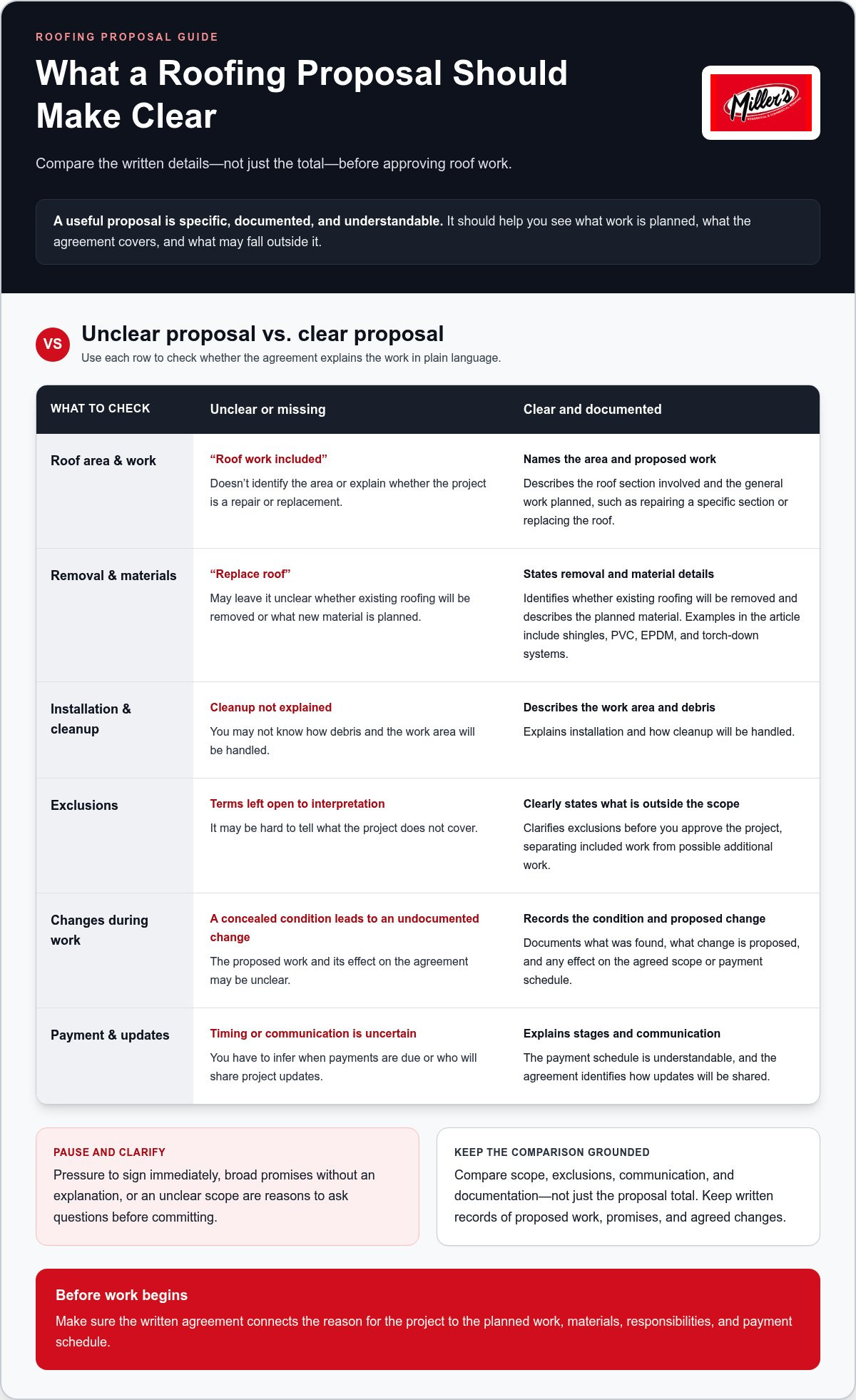
Broad phrases such as “replace roof” may not tell you whether existing material will be removed, what materials are planned, or how debris and the work area will be handled. Unclear exclusions can also create different expectations about what the project covers. Before approving the work, read the scope in plain language and check that it addresses the parts of the job that matter to you.
For example, “remove existing roofing and install new roofing” still leaves questions if the proposal doesn’t identify the material or describe cleanup. You don’t need to interpret technical jargon alone. A dependable explanation connects each project term to the work being proposed, whether the roof needs repair, replacement, or storm-damage work. If a phrase could reasonably mean more than one thing, ask for the agreement to spell out the intended work and exclusions before signing.
Avoid Scope, Materials, and Contract Mistakes Before Roofing Work Begins
A proposal should help you picture the work before anyone starts on the roof. The written scope connects the reason for the project to the planned removal, installation, materials, and cleanup. If those details are missing, you may not know what you’re approving or how to compare proposals. Clear documentation also gives both sides a shared reference if questions come up during the job.
A clear written scope helps align homeowner and contractor expectations by putting the planned work, materials, and responsibilities in understandable terms.
What a clear roofing scope should help you understand
Look for a description of the roof area involved and the general work proposed, whether that means repairing a specific section or replacing the roof. The scope should tell you whether existing roofing will be removed, what new material is planned, and how the work area and debris will be handled. Broad phrases such as “roof work included” don’t offer the same clarity.
Exclusions matter, too. If the proposal identifies conditions or tasks outside the stated scope, their meaning should be clear before you approve the project. This helps you distinguish the work already described from possible additional work that may require a separate discussion.
Material and change-order misunderstandings to prevent
Material descriptions make proposals easier to compare than a total alone. A shingle proposal, for example, should identify the roofing material being proposed rather than simply say “new roof.” A flat-roof proposal might describe a PVC, EPDM, or torch-down system. These examples aren’t interchangeable recommendations; the appropriate approach depends on the building and project.
If work uncovers a concealed condition, written documentation can record what was found, what change is proposed, and how it affects the agreed scope. Before approving a change, make sure its description and any effect on the payment schedule are clear in writing.
Review the agreement’s payment schedule before work begins. The amounts or stages of payment should be understandable, with no need to infer when payments are due. Also look for how changes will be documented and who will communicate project updates. A brief written record of decisions can prevent different recollections later.
- Confirm the roof area and work being proposed.
- Check how removal, materials, installation, and cleanup are described.
- Read exclusions and clarify how proposed changes will be recorded.
- Understand the payment schedule and how project updates will be shared.
These details make the mistakes to avoid when hiring a roofer easier to catch before they become misunderstandings during the work. Miller's Home Improvement provides roofing estimates for Detroit-area projects that help homeowners understand the work being considered.
Compare Roofing Proposals Without Choosing on Price Alone
A lower total can look appealing, but it may describe a different amount of work, different materials, or different responsibilities. One proposal might include removing existing roofing and cleanup, while another leaves those details unclear. Treat each estimate as a description of a project, not just a number. Compare what’s written before deciding whether the proposals cover the same work.
Compare like with like in each written estimate
Use the same criteria for each proposal. Check the work area, removal assumptions, material descriptions, installation, cleanup, and exclusions. If a detail is missing, mark it as unresolved rather than assuming it means poor workmanship. This keeps your comparison fair and shows which differences need clarification before you decide.
A simple side-by-side review can make gaps easier to spot:
| Scope item | What to compare |
|---|---|
| Scope clarity | Is the roof area and proposed work described specifically? |
| Materials | Are the material types described clearly enough to compare? |
| Exclusions | Does the proposal identify work or conditions outside its scope? |
| Communication | Is there a clear process for updates and project questions? |
| Documentation | Are approvals and changes recorded in writing? |
For example, when evaluating estimates from contractors like Miller's Home Improvement, two proposals may both describe a roof replacement, yet differ in whether removal of existing layers or disposal and cleanup are included. Those are not equivalent scopes until the written details show what each covers. Avoid filling in blanks based on assumptions or verbal impressions.
Look for a dependable communication process
Clear communication gives you a practical way to follow decisions as the project moves forward. A designated point of contact and written updates can help keep questions, approvals, and proposed changes organized. Save the estimate and revised documents together, and keep a written record of decisions. This creates a shared reference without promising that every project will proceed exactly as planned.
Separate verifiable company facts from sales claims and personal impressions. Experience, licensing, and insurance are facts that can be documented. Statements about what a project will accomplish should be understood in the context of the proposed work and recorded terms. A confident presentation may feel reassuring, but it doesn’t replace a clear scope or written documentation.
This measured approach helps you avoid common mistakes to avoid when hiring a roofer, especially treating the lowest total as the best comparison by itself. A proposal that clearly explains its scope, materials, exclusions, and communication process gives you a stronger basis for a decision and clearer project expectations.
Use This Michigan Roofer-Hiring Checklist for Storm and Replacement Projects
A steady process can make storm repairs or roof replacement easier to manage. Keep four things distinct as you move forward: what you observed, what the roofing contractor observed, what work is proposed, and what the insurer determines about coverage. They relate to the same roof, but they’re not the same decision. Keeping them separate helps prevent confusion about what damage has been documented and what work has actually been approved.
A practical checklist before approving roofing work
Before signing, work through these steps and keep the paperwork together. The goal is to create a clear record of the concern and the decisions made, not to make assumptions about what a repair or claim will involve.
- Define the concern. Note what you can see, such as a ceiling stain or missing roofing material, and when you noticed it. Don’t treat visible damage as a complete assessment of the roof.
- Review the proposed scope. Record the roof area discussed and the work described in the written proposal. Make sure the material descriptions, exclusions, and cleanup responsibilities are understandable.
- Document decisions. Review payment terms and how proposed changes will be recorded. Keep written approvals and updated scope documents with the original estimate.
- Prepare for the work. Save project updates and note any questions that need an answer before work begins. For replacement planning, the Detroit roof replacement guide offers additional context for homeowners considering that type of project.
For hail concerns, Miller's Michigan hail-damage roof repair guide can help you understand the restoration process while you organize your observations and project records.
Storm damage and insurance: keep the decisions distinct
A roofing assessment describes a contractor’s observations and the repairs or replacement being proposed. An insurer’s coverage decision addresses the claim under the policy. One does not determine the other. Keep photographs or notes of visible concerns, assessment details, claim correspondence, and written project decisions in separate, clearly labeled records. For more focused claim and restoration context, see the Michigan storm-damage roof restoration guide.
Don’t describe a suspected cause as a confirmed finding unless it has been established. Instead, record what you observed and attribute assessment details to the person or document they came from. Careful recordkeeping supports clear conversations without promising claim approval or a particular outcome.
Rules for licensing and permits can depend on the work and location, so avoid relying on outdated summaries. Before treating a Michigan requirement as a rule for your project, verify it through current authoritative state or local government information. Keeping the process organized is one of the practical mistakes to avoid when hiring a roofer. For help planning storm-damage repair or replacement work, discuss your roofing project with Miller's Home Improvement.
How Miller’s Home Improvement Helps Detroit-Area Owners Avoid Hiring Mistakes
Once you know how to review a proposal, look for a roofing conversation that gives you room to understand the work. Miller’s Home Improvement is a Michigan-based roofing contractor serving Detroit and Southeast Michigan. The company has been in business for 13 years, with more than 25 years of owner experience, and is licensed and insured.
That experience informs practical discussions about residential and commercial roofing, roof repairs, replacement, and storm-related restoration. The team helps you understand the concern and the work being considered, so you can make decisions with clearer expectations rather than feeling rushed.
What homeowners can expect from a local roofing conversation
A free in-home estimate gives homeowners an opportunity to discuss project needs and proposed work at the property. Bring questions about the roof area, materials, scope, exclusions, and how changes will be documented. A clear discussion can help you understand the estimate and identify details to address before approving work.
For storm concerns, Miller’s handles insurance claims and provides storm-damage restoration. A roofing assessment and an insurer’s coverage decision are separate matters, and no contractor can promise a claim outcome. Keep observations, estimate details, and claim correspondence organized to follow the decisions involved.
Take the next step with a clear project starting point
Before requesting an estimate, gather a short description of the concern and any relevant project documents. For example, note where a leak appeared, when you first noticed it, or which roof area you want discussed. If the project involves storm damage, keep related photos and insurance correspondence with your notes. These records provide useful context without assuming what caused the issue or what an insurer will cover.
The checklist in this article helps you look beyond the proposal total: understand the written scope, compare materials and exclusions, record decisions, and keep project communication organized. Those habits can reduce uncertainty and help you recognize the mistakes to avoid when hiring a roofer, whether you’re considering a repair or a larger replacement.
Miller’s Home Improvement offers residential and commercial roofing services in Southeast Michigan, along with free in-home estimates. If you’re ready to discuss your roofing needs, request a free in-home estimate and take the next step with a clear understanding of the project.
Make Your Next Roofing Decision With Confidence
A roofing project doesn’t have to begin with a rushed yes or no. Turn what you’ve learned into a useful starting point: note the concern, gather relevant records, and decide what you need explained before work moves forward. A thoughtful conversation can help clarify the project and make the next decision feel manageable.
The mistakes to avoid when hiring a roofer are easier to spot when you focus on clear expectations rather than pressure or assumptions. Take your time, ask for straightforward explanations, and make sure you understand the proposed work before choosing how to proceed.
If you’re ready to discuss your roof, Miller’s Home Improvement can help you consider the work and the questions that matter to your property. Request a free in-home roofing estimate and take your next step with a clearer picture of the project ahead.
Frequently Asked Questions
What is the biggest mistake to avoid when hiring a roofer?
A common mistake is approving roofing work without understanding what the agreement authorizes. Before signing, make sure you can explain in your own words which areas will be addressed and what would require a separate decision. Save the proposal version you approved, especially if it changes after a discussion. This record can help resolve confusion later and keep the project focused on the work you intended.
How can I tell if a roofer’s estimate is too vague?
An estimate may be too vague if you can’t tell what work is planned or what the material descriptions mean for your roof. For instance, a proposal that says “repair leak” without identifying the area or describing the planned repair may leave you unsure what to expect. A short estimate isn’t automatically inadequate. The key is whether you understand the work and can identify which questions still need clear written answers.
Should I choose the lowest roofing estimate?
No, not based on the total alone. Check whether the proposals cover the same roof area and comparable work. A difference may reflect removal, disposal, material choices, or an exclusion rather than a better deal. Note what differs and consider how each detail affects your priorities. The lowest or highest figure by itself doesn’t establish the quality of materials or workmanship.
What should a roofing contract include?
A roofing agreement should clearly describe the work, materials, payment terms, exclusions, and how changes will be recorded. Check that the written terms match the proposal you reviewed, rather than relying on a previous draft or verbal discussion. Requirements can vary with the project and applicable rules. Detroit homeowners should verify current permit or contract requirements through authoritative state or local government sources before treating a general checklist as legal guidance.
Can a roofer help with an insurance claim for storm damage?
A roofer can assess roof conditions and help coordinate restoration work, while the insurer decides coverage under the policy. Keep the contractor’s observations separate from the insurer’s determination. Miller’s Home Improvement handles insurance claims and storm-damage restoration, but an assessment does not guarantee claim approval. If you’re organizing a Detroit-area claim, retain dated photos and correspondence so you can refer to the same record during project discussions.
What should I do if a roofer pressures me to sign immediately?
Pause and review the agreement before committing. Ask yourself whether you understand the work, payment terms, and what happens if the scope changes. If an active leak or storm has raised immediate concerns, separate steps to protect the property from approval of a larger repair or replacement. Keep messages and revised documents together. A clear record helps you make a considered decision without confusing urgency with consent.
Does hiring a licensed and insured roofer matter in Michigan?
Yes, licensing and insurance are important factors to consider, alongside the scope and communication process. Requirements can depend on the work, so verify the rules that apply to your project through current authoritative Michigan sources. Miller’s Home Improvement is fully licensed and insured. For a Detroit roofing project, review those credentials alongside the written proposal, so you understand both the company’s qualifications and the work being offered.


