
What if the roof financing offer with the smallest monthly payment costs more over time? When a replacement can’t wait for household savings to catch up, it’s tempting to focus on what fits this month’s budget. Comparing new roof financing in Detroit means looking beyond the payment to total repayment, fees, and the length of the agreement.
An urgent roof project can put pressure on a household budget, and an insurance claim can add another layer of decisions. Insurance may address eligible storm damage, but it isn’t a borrowing option for ordinary wear or a replacement you’re paying for yourself. Detroit homeowners may also be eligible for the city’s 0% interest home repair loan program, subject to its requirements.
This guide compares common ways to fund a roof replacement, explains which financing terms deserve a closer look, and outlines what to prepare before requesting an estimate. A clear project scope helps you plan with better information. Miller's Home Improvement provides free in-home estimates and coordinates storm-damage restoration with insurance claims, giving you a clearer picture of the work involved as you consider next steps.
Key Takeaways
- Compare savings, personal loans, home-equity borrowing, credit cards, and contractor-arranged financing by repayment structure and potential security.
- For new roof financing Detroit, look beyond the monthly payment to total repayment, fees, lender conditions, and how long you’ll be paying.
- Set a maximum affordable payment before reviewing offers, then check whether the terms fit your household budget.
- Keep borrowing options separate from insurance claims, which apply to eligible storm damage rather than ordinary financing needs.
- Gather your property address, roof concerns, estimate, and preferred timing to make project planning more informed.
Why Detroit Homeowners Consider New Roof Financing
An aging or storm-damaged roof can create a difficult choice: address the work the home needs while keeping enough money available for everyday expenses. For Detroit homeowners, new roof financing Detroit may be one way to manage a large project without paying the full amount upfront. Financing means borrowing money for project costs and repaying it under the lender’s terms, including the payment schedule, interest, and any applicable fees.
Borrowing is only one part of the decision. Savings can avoid a new debt obligation, while available cash flow may help cover some or all of a project over time. Eligible storm damage may involve an insurance claim, but that process is governed by the policy and damage assessment, not a lender’s repayment terms. These options serve different purposes and shouldn’t be treated as interchangeable.
Detroit’s four-season weather, including cycles of freezing and thawing, snow, and ice, makes it sensible to pay attention to roof condition and project timing. That doesn’t mean every roof concern calls for immediate replacement. A clear assessment can help distinguish work that needs attention from work that can be planned around household finances. A roof estimate defines the proposed scope; it doesn’t approve a loan or determine whether insurance will cover damage.
When financing may help, and when it may not
Financing may help when a needed roof project is too large to pay for comfortably from savings or current cash flow. It can spread repayment over a period set by the lender, but the cost and commitment depend on the specific offer. Borrowing may be a poor fit if the required payments would compete with housing costs, utilities, food, or other essential expenses. Weigh the roof’s condition and timing against what your household can reliably afford.
Before considering an offer, decide what payment would leave room for routine bills and unexpected needs. Don’t use a lender’s approval amount as a measure of what’s comfortable for your household. The practical question is whether the payment fits your budget for the full repayment period.
Financing, savings, and insurance are different
Financing creates a repayment obligation to a lender under agreed terms. Savings are funds already available, so using them doesn’t create a new loan, though it can reduce the reserve left for other needs. Insurance is different from both: coverage depends on the policy and whether the damage is eligible. Ordinary wear from an aging roof isn’t the same as covered storm damage.
Government-backed borrowing can also be easy to misunderstand. An FHA-insured loan describes a mortgage category; it shouldn’t be assumed to be a dedicated roof loan. Keep the paths distinct: an estimate describes the roof work, a lender sets borrowing terms, and an insurer evaluates a claim under the policy. Miller's Home Improvement provides free in-home estimates and coordinates storm-damage restoration with insurance claims, helping homeowners understand the project scope as they plan next steps.
Roof Financing Options Detroit Homeowners Can Compare
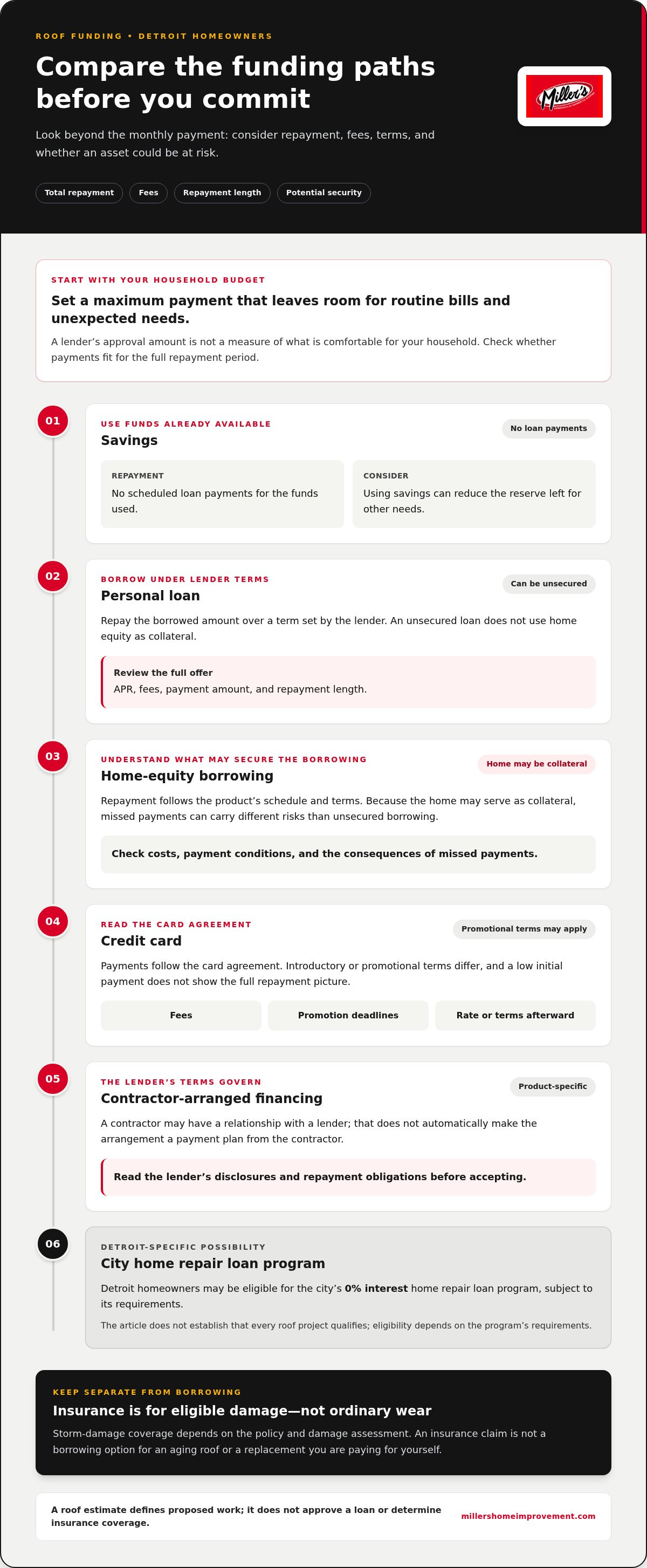
There isn’t one funding route that suits every household. For new roof financing Detroit, compare how each option is repaid, whether your home or another asset could be at risk, and what the written terms require. Rates, fees, eligibility, and available products vary by lender and borrower. Use the overview below as a starting point, then review each offer’s actual terms.
| Option | Typical repayment structure | Potential security | Terms to review |
|---|---|---|---|
| Savings | Use available funds without scheduled loan payments. | No lender collateral for the funds used. | Consider how using savings affects your remaining household reserve. |
| Personal loan | Repay the borrowed amount over a term set by the lender. | Unsecured loans don’t use home equity as collateral. | Review APR, fees, payment amount, and repayment length. |
| Home-equity borrowing | Repay under the product’s schedule and terms. | The home may serve as collateral. | Understand costs, payment conditions, and the consequences of missed payments. |
| Credit card | Make payments under the card agreement; promotional terms may apply. | Typically not secured by home equity. | Check fees, promotion deadlines, and the rate or terms afterward. |
| Contractor-arranged financing | A lender’s terms govern repayment when financing is arranged through a contractor relationship. | Depends on the lender and specific product. | Read the lender’s disclosures and repayment obligations before accepting. |
Unsecured loans and credit cards
An unsecured personal loan doesn’t use your home equity as collateral, but the lender sets its own eligibility rules, rate, fees, and term. Credit cards can offer another way to pay, but promotional periods and conditions differ. Before using either, check the total cost, due dates, fees, and what happens when an introductory period ends. A low initial payment alone doesn’t show the full repayment picture.
Home-equity borrowing and contractor-arranged plans
Home-equity products may use the home as collateral, so missed payments can carry different risks than unsecured borrowing. Contractor-arranged financing generally means a contractor has a relationship with a lender; it isn’t automatically a payment plan from the contractor. In either case, rely on the lender’s written disclosures for rates, fees, repayment schedule, and conditions. Take time to understand the obligation before agreeing.
Whichever route you consider, compare it against the same roof project scope so you’re evaluating offers consistently. A clear estimate can define the work for household planning, but it isn’t a lender decision. Miller's Home Improvement provides free in-home estimates for residential roofing, giving you a clearer basis for budgeting. Arrange a roof estimate as you organize the project details.
How to Compare Detroit Roof Financing Offers Beyond the Monthly Payment
A payment that looks manageable can still come with a longer repayment period or added costs. For new roof financing Detroit, compare each offer against the same project scope and read the lender’s written disclosures. The goal is to understand the full obligation, not just the amount due each month.
Use these five steps to make a fair comparison:
- Confirm the project scope. Use the same roof work and estimate when reviewing offers. If one option is based on a different project amount, the payment comparison won’t be like for like.
- Compare total repayment. Total repayment is the full amount repaid over the borrowing term, as shown in the lender’s disclosures. A lower monthly payment may reflect a longer term, not a lower total borrowing cost.
- Inspect fees. Look for origination charges, late fees, and other costs disclosed by the lender. Include them in your comparison instead of treating the advertised payment as the full cost.
- Check conditions. Review the rate, repayment schedule, promotional deadlines, and any terms that could change what you owe. Confirm how the lender describes deferred interest or other special conditions.
- Test budget fit. Compare the scheduled payment with a realistic household budget, including essential expenses and a reserve for unexpected costs. An offer that strains the budget may not be workable, even if it has attractive features.
A simple comparison sheet can keep the details clear. For each offer, record the same categories: project scope; monthly payment; repayment term; total repayment shown in lender disclosures; fees; promotional conditions and deadlines; collateral; and budget fit. Use the lender’s actual figures and terms after reviewing its documents. If an item isn’t clearly explained, don’t treat an estimate or headline as a confirmed term.
Read promotional terms and fees carefully
Promotional periods have conditions and end dates set by the lender. Check what payment is due during the offer, what happens when it ends, and whether deferred interest applies under the disclosed terms. Review origination and late fees, too. A headline offer may leave out details that affect the total cost, so use the written agreement and disclosures as the basis for comparison.
Check repayment fit and home-related risks
Test the payment against an ordinary month, not an unusually easy one. Account for essential bills and other debt payments before deciding what remains affordable. Secured borrowing may put collateral, including a home, at risk if repayment obligations aren’t met. Read the lender’s disclosures closely, and consider independent financial guidance if you’re uncertain about the terms or their effect on your household.
Prepare Your Roof-Financing Budget and Application
Before reviewing offers, decide what your household can comfortably pay each month. Start with take-home income, regular bills, existing debt payments, and routine savings needs. Set a maximum payment that leaves breathing room for unexpected expenses, rather than basing it on the amount a lender might approve. This gives your search for new roof financing Detroit a practical starting point.
Next, organize the information that describes the roofing project. A written estimate helps define the work and supports a realistic budget, but it isn’t a loan offer or approval decision. For background on what can shape the work involved, consult this Detroit roof replacement guide.
- Property address: Have the project location ready for estimate and application records.
- Roof concerns: Note visible issues, leaks, storm-related concerns, or other details you’ve observed.
- Written estimate: Keep the project scope available so you can compare it with any borrowing amount under consideration.
- Preferred project timing: Record your planning window to help organize household and project decisions.
Build a budget that accounts for the full project
Use the written roof estimate as a reference for the proposed scope, not as confirmation of what a lender will provide. Compare any lender’s disclosed fees and repayment obligations with your affordable monthly limit. Consider whether the payment leaves enough room for regular expenses and unexpected household needs. A budget that works only if every month goes perfectly may be too tight.
Keep your notes consistent across offers. For each one, record the payment, term, disclosed fees, and any conditions that could affect repayment. If the borrowing amount or project scope differs, note that as well. This makes it easier to see whether a payment looks lower because the terms differ, rather than because the offer is a better fit.
Gather documents without assuming approval
Lenders determine their own application process, credit review, and decisions. They may request identity, income, or debt information, but prepare those documents as the lender asks. Follow its application checklist and use its stated secure submission process. Don’t send sensitive records through an unverified channel or assume every lender needs the same paperwork.
Submitting an application or supporting documents doesn’t guarantee approval, a particular rate, or specific repayment terms. Wait for the lender’s written decision and disclosures before treating an offer as final. If the terms exceed your budget limit, pause and reassess rather than stretching essential household spending to make the payment fit.
A clear project scope can make household planning more straightforward. Miller’s Home Improvement provides free in-home estimates for residential roofing, helping you understand the work to include in your budget. Arrange a free in-home roof estimate as a step toward organizing your project information.
Plan Your Detroit Roof Project With Miller’s Home Improvement
A useful financing decision starts with a clear understanding of the roof work itself. Miller’s Home Improvement provides free in-home estimates for residential roofing, including roof replacement. An in-home assessment helps define the project scope and gives you a written estimate to use in household planning. You can compare that project information with lender terms separately, without treating the estimate as a loan offer or approval.
Use a clear roof scope to make informed decisions
Replacement scope depends on the roof’s condition and the work needed. If you’re weighing whether existing materials need to be removed, the Michigan roof tear-off guide offers useful context. A defined scope grounds project planning in the work proposed, while the lender’s disclosures determine any borrowing terms you may consider.
Storm-related concerns call for a separate distinction. Miller’s handles storm-damage restoration and coordinates with insurance claims. The insurer determines coverage under the policy; an estimate or restoration discussion doesn’t guarantee a claim decision or payout. For background on hail-related restoration, see the Michigan hail-damage restoration guide. Keeping the project scope, insurance process, and borrowing decision separate helps clarify which questions belong to each step.
Once the scope is clear, use the estimate to organize your household budget and compare it with any lender’s written terms. The estimate describes the roofing work, while the lender sets application requirements, repayment conditions, and any credit decision. Neither determines the other. This distinction keeps your roof plan focused on the actual work rather than a payment amount that may not match the project.
Take the next step with a local roofing team
Miller’s Home Improvement serves Detroit and Southeast Michigan. The company has been in business for 13 years, with more than 25 years of owner experience, and is fully licensed and insured. Its residential roofing and storm-restoration work gives homeowners a local point of contact for understanding roof needs and planning the project scope.
If you’re considering new roof financing Detroit, begin by clarifying the work before deciding how to fund it. A free in-home estimate can help you understand the project and build a more informed household budget. It’s a practical first step, without assuming a particular financing route or insurance outcome.
Request a free in-home roof estimate and review your project scope before choosing how to proceed.
Take Your Next Step With a Clear Plan
A roof project can feel more manageable when you separate decisions that don’t need to be made at the same time. Start by defining the work, then set a household payment limit before considering borrowing. If storm damage is involved, keep the insurance process distinct from any loan application, and make decisions based on the information each process provides.
As you evaluate new roof financing Detroit options, let the written project scope guide your planning, not a tempting payment figure or an assumption about insurance. Take time to compare terms and decide what fits your circumstances. A well-defined project gives you a steadier foundation for that choice.
Miller’s Home Improvement brings more than 25 years of owner experience, 13 years in business, and a fully licensed and insured team. Free in-home estimates and storm-claim support can help clarify the roofing work ahead. Request a free in-home roofing estimate to take the next step with a clearer plan.
Frequently Asked Questions
Can I finance a new roof in Detroit with less-than-perfect credit?
Possibly. Credit history is one factor, and lenders set their own eligibility rules and terms. For new roof financing Detroit, review a lender’s stated criteria before applying rather than assuming approval or a particular rate. If you’re comparing options, note which criteria you meet and consider whether the proposed payment would remain manageable if household expenses change. A roofing estimate defines the work, not your borrowing eligibility.
Does applying for roof financing affect my credit score?
It can, depending on the lender’s application process and whether it makes a hard credit inquiry. Before submitting an application, read the credit-check disclosure and find out whether an initial review is a soft inquiry or could affect your score. Don’t assume every lender handles inquiries the same way. If you’re considering more than one application, understand the potential credit impact first and track which lenders you’ve authorized to review your information.
Can I pay off roof financing early?
That depends on the lender’s agreement. Look for any prepayment penalty and check how extra payments are applied, including whether they reduce the balance or affect future scheduled payments. If the offer includes a promotional period or deferred-interest condition, read how early payoff interacts with those terms. Ask the lender to clarify anything unclear in writing, then use the signed agreement and account information to guide your payoff plan.
Does homeowners insurance cover a new roof in Detroit?
Coverage depends on the cause of damage, the policy’s terms and exclusions, and the insurer’s assessment. A policy may treat sudden covered storm damage differently from aging, ordinary wear, or deferred maintenance, so a leak or an old roof doesn’t automatically mean replacement will be covered. Miller’s handles insurance claims for storm restoration, but the insurer decides coverage under the policy. Keep claim communications and inspection records together for reference.
Should I finance a roof before an insurance claim is decided?
Don’t count on an insurance claim as guaranteed funding. If storm damage may be involved, document what you’ve observed and follow the insurer’s claim process. If work may need to proceed before a decision, keep the roofing scope and any financing agreement separate, and review the lender’s obligations before signing. The insurer controls coverage decisions, while the lender controls its application and repayment terms; neither decision determines the other.
What information should I have before requesting roof financing?
Have a written project scope, your planned payment range, and a clear picture of your household obligations before starting an application. A lender may request identity, income, debt, or property details, but each lender sets its own requirements. Use its checklist and secure submission method, and provide only what it requests through the appropriate channel. An estimate helps describe the roofing work; it doesn’t guarantee approval or set loan terms.


