
What if the most expensive part of your new roof isn't the roofing material at all? While many facility managers focus on the top layer, the true commercial roof replacement cost Michigan businesses face is often driven by what lies beneath: insulation R-values, structural deck integrity, and the labor required to meet 2026 Michigan energy codes. You're likely feeling the pressure of fluctuating material prices and wondering if a PVC or EPDM system is better suited for a decade of harsh Michigan winters. It's a valid concern, especially when you're trying to avoid the "hidden" expenses that often surface during a full tear-off.
This guide provides a transparent breakdown of current market factors to help you build a realistic budget. We'll examine how the Michigan Building Code affects your project requirements and why local energy standards play such a large role in your final estimate. You'll learn the practical differences between various flat roof systems and gain the technical insight needed to choose a contractor with genuine commercial expertise. Our goal is to move you from a state of uncertainty to a state of informed resolution, ensuring your facility remains protected for the long term.
Key Takeaways
- Understand how Michigan's freeze-thaw cycles and lake-effect weather dictate the specific grade of PVC or EPDM membrane required for your facility.
- Identify the core variables that influence commercial roof replacement cost Michigan projects, ranging from roof footprint complexity to 2026 energy code compliance.
- Learn to account for "unseen" expenses like multi-layer tear-offs and mandatory R-value insulation upgrades before they impact your bottom line.
- Follow a structured, step-by-step approach to calculating a realistic budget that includes parapet walls and structural decking assessments.
- Discover why a comprehensive site assessment is more valuable than a simple quote when planning for long-term industrial property protection.
Factors Driving Commercial Roof Replacement Costs in Michigan
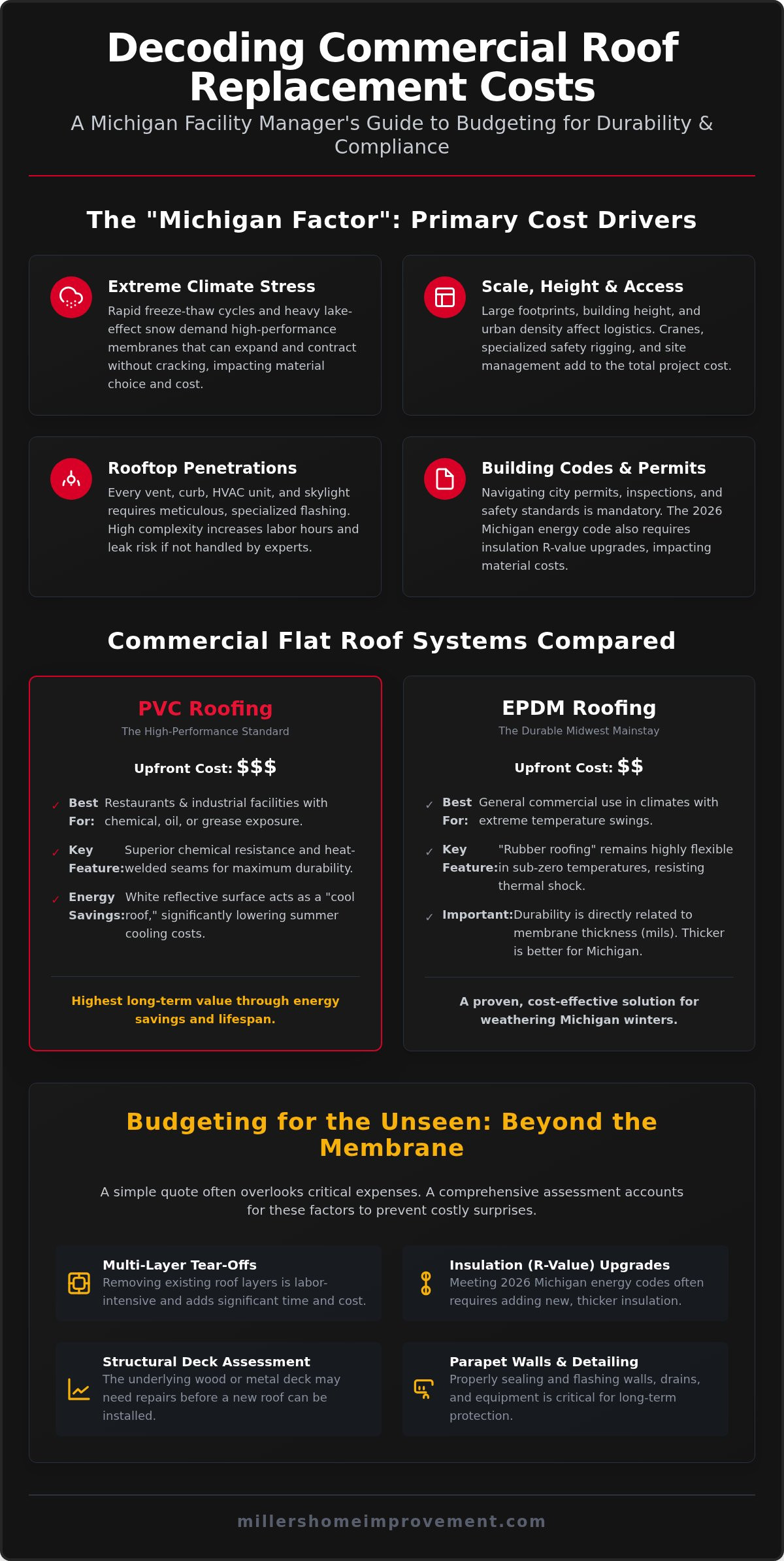
Michigan's climate is a primary driver of your long-term roofing budget. The "Michigan Factor" isn't just a local phrase; it describes the extreme thermal stress caused by rapid freeze-thaw cycles and heavy lake-effect snow loads. These conditions demand high-performance types of commercial roofing membranes that can expand and contract without cracking. Choosing a thinner, lower-grade material often leads to premature failure when the temperature swings 40 degrees in a single afternoon. A seasoned master craftsman knows that durability in the Great Lakes region depends on material thickness and the integrity of the seams.
Commercial projects are measured in "squares," which represent 100 square feet. While a larger footprint might offer some economies of scale on raw materials, the volume of a commercial project complicates the logistics. A massive industrial warehouse in Southeast Michigan requires a different staging strategy than a small retail strip. Handling thousands of pounds of membrane and insulation requires heavy equipment and disciplined site management. Building height and urban density also impact the commercial roof replacement cost Michigan business owners pay. In areas like downtown Detroit, limited alleyway access or high-rise heights necessitate the use of cranes and specialized safety rigging. It's not just about the roof itself. It's about the cost of getting the crew and materials safely to the workspace.
The Impact of Rooftop Penetrations and Equipment
Every curb, vent, and HVAC unit on your roof adds a layer of labor complexity that many generic estimates overlook. These rooftop penetrations are the most common source of leaks, requiring meticulous, specialized flashing to ensure a watertight seal. If your facility has dozens of skylights or complex drainage systems, the labor hours required to detail these areas will rise. Staging materials around existing heavy equipment also slows the installation timeline. We treat these details as the most critical part of the project because a single poorly flashed vent can compromise an entire new system.
Local Permitting and Michigan Building Codes
Navigating the legal requirements in Detroit and surrounding municipalities is a mandatory part of the replacement process. Permit fees vary by city, and 2026 standards often require specific professional inspections at various stages of the tear-off and installation. Modern safety codes also dictate strict fall-protection measures. Budgeting for these safety standards is non-negotiable for a legitimate, licensed contractor. Meeting the 2026 Michigan energy code requirements for insulation R-values might increase the initial material cost, but it provides a significant return through reduced heating and cooling expenses for your facility.
Comparing Systems: PVC vs. EPDM vs. Torch Down Costs
Choosing a membrane involves more than picking the lowest bid. Each system offers a distinct balance of durability, chemical resistance, and maintenance requirements. While the initial commercial roof replacement cost Michigan owners see on a quote matters, the lifecycle cost over 20 years tells the real story. High-quality installations following guidelines from the National Roofing Contractors Association ensure that your investment doesn't turn into a recurring expense. We focus on providing a solution that matches your building's specific usage rather than a one-size-fits-all material.
PVC Flat Roofing: Performance for Industrial Facilities
PVC membranes are the gold standard for facilities with specific environmental challenges. If you operate a restaurant or a manufacturing plant, PVC's superior resistance to chemicals, oils, and animal fats is essential. These white, reflective membranes also serve as "cool roofs," significantly lowering cooling costs during humid Michigan summers. While the upfront material cost is higher than other options, the energy savings and long lifespan often make it the most economical choice for larger warehouses. It's a premium product that pays for itself through performance.
EPDM and Torch Down: Durable Alternatives
EPDM, often called "rubber roofing," is a mainstay in the Midwest for a reason. It remains flexible even in sub-zero temperatures, which helps it survive the thermal shock of Michigan winters. When calculating the commercial roof replacement cost Michigan businesses should expect for EPDM, remember that thickness matters. The membrane's thickness, usually measured in mils, directly impacts its puncture resistance and price. A 60-mil EPDM roof provides a solid baseline. Moving to a 90-mil system can add years of service life for a relatively small increase in the total project budget.
Torch Down, or Modified Bitumen, offers traditional multi-layer protection. It's particularly effective for specific low-slope areas where standing water might occur. However, the labor intensity is higher due to the fire-safety protocols required when using open torches on a commercial site. This process demands a crew that understands meticulous seam welding and safety standards. If you're unsure which system fits your building’s footprint, we can help you evaluate the best commercial roofing options for your specific needs.
Warranty lengths also vary across these systems. A properly installed PVC or EPDM roof can often carry a 20 to 30 year manufacturer warranty, provided the installation meets strict technical criteria. Choosing the "cheapest" system often results in a shorter warranty and higher maintenance costs down the road. Peace of mind comes from knowing your roof was built to last, not just built to be inexpensive. We prioritize your property's safety by recommending systems with proven track records in our local climate.
The 'Hidden' Costs: Tear-offs, Insulation, and Codes
The quote you receive for a new roof covers more than just the top layer. The true commercial roof replacement cost Michigan facility managers encounter often lies in the preparation phase. It's common to find older buildings with two or even three layers of roofing material already in place. Michigan building codes typically limit the number of allowable layers, meaning a complete roof tear-off is often a legal and structural necessity. Removing these layers involves significant labor and disposal fees, especially when dealing with heavy, saturated materials that have trapped moisture over several seasons.
Addressing ponding water is another critical factor during the restoration process. We often find that older flat roofs have settled, creating low spots where water sits for days. Correcting these drainage issues during the replacement process might involve installing tapered insulation systems. While this adds to the initial quote, it eliminates the primary cause of membrane degradation and leaks. Fixing the slope now prevents 20 years of avoidable repairs and structural damage.
Michigan Energy Code and R-Value Requirements
The 2026 Michigan Energy Code has established strict R-value requirements for commercial buildings. Most older roofs simply don't meet these modern standards. To comply, we must install thicker layers of high-quality insulation. This doesn't just impact the material price; it also changes the geometry of your roof. Thicker insulation requires us to raise the height of perimeter flashing, gravel stops, and equipment curbs to maintain a watertight seal. Although the upfront cost is higher, the long-term ROI is clear. You'll see a noticeable reduction in your building's heating and cooling loads, which is vital given our local utility rates.
Structural Integrity and Decking Restoration
We can't fully assess the structural integrity of your building until the old materials are gone. We look for "soft spots" or corrosion in the decking, whether it's plywood or corrugated metal. Repairing a metal deck requires specialized welding or mechanical fastening, whereas wood deck restoration involves replacing rotted sections to ensure a solid substrate for the new membrane. A full tear-off is the only way to guarantee a commercial warranty in 2026. Without a clear view of the deck, no reputable manufacturer will stand behind the installation, and no seasoned master craftsman would recommend building over an unverified foundation.
How to Calculate Your Michigan Commercial Roofing Budget
Calculating a commercial roof replacement cost Michigan business owners can rely on requires a methodical approach that goes beyond a simple square-foot estimate. Commercial projects involve unique architectural demands and operational requirements that residential calculators simply don't account for. To build a realistic budget for 2026, you must look at your facility as a complete system rather than just a surface area. Following a structured auditing process ensures you aren't surprised by change orders once the project begins.
- Step 1: Determine Total Square Footage. This calculation must include the flat field and the vertical surfaces of parapet walls. These walls require extra membrane and meticulous flashing, which increases both material and labor totals.
- Step 2: Identify the Existing System. We've established that the number of existing layers dictates the tear-off complexity. Use a core sample to verify what lies beneath the surface before finalizing your budget.
- Step 3: Choose Your Membrane Based on Building Use. Your facility's daily operations should drive this choice. A warehouse may be perfectly served by cost-effective EPDM, while a manufacturing plant or restaurant needs the high-performance chemical resistance of PVC.
- Step 4: Audit Rooftop Penetrations and Drainage. Count every HVAC curb, exhaust fan, and skylight. Each penetration requires specialized detailing that adds to the labor hours.
- Step 5: Factor in Seasonal Timing. Michigan's roofing window is relatively narrow. Your placement in the contractor's queue can influence the overall project timeline and logistics.
Estimating Material and Labor Ratios
Reading a commercial roofing quote like a master craftsman means understanding the split between materials and specialized labor. In the commercial sector, labor often accounts for a significant portion of the total investment due to the technical skills required for seam welding and equipment flashing. High-slope commercial areas or buildings with limited street access command a premium because they require more complex safety rigging and material handling. A transparent quote should clearly distinguish between the cost of the membrane and the professional hours required to install it correctly the first time.
Seasonal Pricing and Timing in Michigan
Summer and fall represent peak production months for Michigan roofers. During these high-demand periods, crews are often booked weeks or months in advance. Scheduling your project during "shoulder" months, such as late spring or early November, might offer more flexibility, but these periods come with a higher risk of weather delays. Our local climate is unpredictable, and commercial contracts should always include clear language on how rain or snow delays are handled. Planning your budget at least six months in advance allows you to secure a slot during the most favorable weather windows. Ready to get a precise budget for your facility? Request a comprehensive site assessment from our commercial roofing experts today.
The Miller’s Difference: Expert Commercial Restoration
Miller's Home Improvement brings over 25 years of owner experience to every commercial project across Southeast Michigan. We've built our reputation on a foundation of technical mastery, specializing in the specific flat-roof systems that industrial properties rely on most. Whether your facility requires the high-performance chemical resistance of PVC, the proven cold-weather flexibility of EPDM, or the multi-layer protection of Torch Down, we apply a craftsman's precision to every seam. Our team doesn't rely on high-pressure tactics. Instead, we offer the quiet confidence that comes from knowing how to solve complex structural challenges correctly the first time.
We operate as a "Proactive Guide" for our clients. This means we don't just install a membrane and leave; we take the time to educate facility managers on identifying risks and implementing long-term maintenance strategies. We want you to understand exactly how your roof is performing and what it needs to reach its full service life. If your project is the result of recent weather events, we also provide direct insurance coordination for storm-related commercial roof replacements. We handle the technical documentation and communication required to ensure your claim is processed accurately, allowing you to focus on your daily operations.
Why Local Expertise Matters for Detroit Businesses
Detroit and the surrounding municipalities have specific industrial requirements and building codes that a distant corporate entity might overlook. We're a local fixture, deeply familiar with the 2026 Michigan energy codes and the structural demands of our regional climate. Our team uses high-quality materials designed specifically to withstand the brutal freeze-thaw cycles that define Michigan winters. Being a licensed and insured Michigan contractor is more than a legal checkbox for us. It's a commitment to our community and our reputation for integrity. We understand the local landscape because we've been working in it for decades.
Schedule Your Free Commercial Roof Assessment
Getting an accurate commercial roof replacement cost Michigan estimate starts with a thorough physical inspection. We provide a comprehensive on-site evaluation that examines deck integrity, current insulation R-values, and existing drainage patterns. Our estimates are detailed and transparent, stripped of "sales fluff" so you can make an informed decision for your facility's budget. We believe in providing a clear roadmap from your current state of concern to a state of informed resolution. You can expect a professional, no-nonsense assessment that prioritizes the long-term protection of your property.
Request your free commercial roofing estimate from Miller's Home Improvement
Secure Your Facility’s Future with Informed Budgeting
Protecting your industrial or commercial property requires a proactive approach to replacement. We've explored how 2026 energy codes, material choices like PVC and EPDM, and the complexity of your building's footprint all converge to determine your final budget. Understanding the various factors that influence the commercial roof replacement cost Michigan businesses encounter is the first step toward a successful project. It's about looking past the initial membrane price to the long-term integrity of your facility. A well-planned roof isn't just an expense; it's a strategic investment in your property's safety.
Our team brings over 25 years of master craftsmanship to every site, specializing in the technical nuances of PVC and EPDM flat roofs. As a fully licensed and insured Michigan contractor, we prioritize transparency and durability above all else. We're here to guide you through the complexities of tear-offs and code compliance with quiet confidence. Taking the time to plan today ensures your property remains a stable asset for decades to come. When you're ready for a thorough assessment that puts your building's needs first, we're ready to help.
Get Your Free Commercial Roof Replacement Estimate
Frequently Asked Questions
What is the average cost per square foot for commercial roofing in Michigan?
The total commercial roof replacement cost Michigan facility managers pay is determined by several variables rather than a single fixed rate. Your investment per square foot fluctuates based on the membrane thickness, the complexity of rooftop equipment, and the current cost of specialized labor. While material prices vary, the final estimate typically reflects the long-term durability required to survive our local climate and meet 2026 state requirements.
How long does a commercial flat roof replacement take for a Detroit business?
Most commercial projects in Detroit and Southeast Michigan take between one and three weeks to complete. The exact timeline depends on the building's total square footage and the number of existing layers that require a full tear-off. Urban logistics, such as limited alleyway access or specific municipal work hours, can also influence the schedule. We prioritize a methodical pace to ensure every seam is perfectly welded.
Does the Michigan Energy Code require me to add more insulation during a replacement?
Yes, the current Michigan Energy Code requires specific R-value insulation levels that are often higher than those found in older buildings. When you perform a full roof replacement, you must bring the insulation up to these modern standards to comply with state law. This upgrade doesn't just satisfy legal requirements; it also significantly improves your building's thermal efficiency and reduces monthly utility expenses for your facility.
Can I install a new commercial roof over my existing one to save money?
You can only install a new membrane over an existing roof if there is currently only one layer in place. Michigan building codes typically limit commercial structures to a maximum of two roofing layers to prevent structural overload. However, a full tear-off is almost always the better long-term choice. Removing the old material allows us to inspect the deck for hidden damage and ensures your new system qualifies for a full manufacturer warranty.
Which commercial roofing material is best for Michigan's heavy snow loads?
PVC and EPDM are both excellent choices for handling Michigan's heavy snow loads and freeze-thaw cycles. EPDM is a durable rubber membrane that remains flexible in sub-zero temperatures, while PVC offers incredibly strong heat-welded seams that resist moisture penetration. Both systems provide the structural integrity needed to support snow accumulation. The best choice for your building often depends on your specific industrial needs and chemical exposure.
How do I know if my commercial roof needs a full replacement or just a repair?
A full replacement is usually necessary if more than 25 percent of the roof surface is damaged or if moisture has saturated the underlying insulation. We use core samples to check for trapped water that isn't visible from the surface. If your roof is approaching the end of its 20-year service life and leaks are becoming frequent, a replacement is more cost-effective than continuous, expensive patch jobs.
Will my business need to close during the roof replacement process?
Most businesses do not need to close while we replace the roof. We manage the project in phases to minimize disruptions to your daily operations and ensure the safety of your employees and clients. Noise is a factor during the tear-off phase, but we coordinate with facility managers to handle the loudest work during off-peak hours. Proper staging and clear communication allow your business to remain productive throughout the installation.
What kind of warranties are available for commercial flat roofs in 2026?
In 2026, most reputable manufacturers offer 20 to 30 year warranties for commercial flat roofs that meet their strict installation criteria. These warranties typically cover the membrane's performance and the integrity of the heat-welded or glued seams. It's important to distinguish between these manufacturer-backed material warranties and your contractor's workmanship warranty. We provide the technical documentation needed to ensure your investment is fully protected by both.


