
A roofing pitch at your door isn’t proof that your roof needs work. To learn how to avoid roofing scams in Detroit, don’t sign on the spot: document any visible damage, get 2-3 written estimates, and compare the proposed work, not just the price. Take time to review the agreement, especially after a storm or an unsolicited visit.
It’s understandable to feel pressured when someone points out possible damage and offers to handle an insurance claim. A sound decision starts with evidence and clear terms, not urgency. A contractor should be able to explain what an inspection found and what the proposed work involves.
This guide explains how to spot inspections that exaggerate damage, risky insurance tactics, and payment demands that merit scrutiny. You’ll also learn how to respond to storm chasers and door-to-door pitches, what to put in writing before work begins, and how to proceed calmly when your roof needs attention.
Key Takeaways
- Ask for clear photo or video evidence of claimed roof damage before approving repairs.
- Keep insurance decisions and claim discussions directly between you and your insurer, and understand any document before signing.
- Treat large upfront or cash-only payment demands as warning signs; look for a written schedule tied to project progress.
- Don’t let an unsolicited pitch or deadline rush you into a contract. Take time to review the proposed work and terms.
1. Free inspections that exaggerate or fabricate roof damage
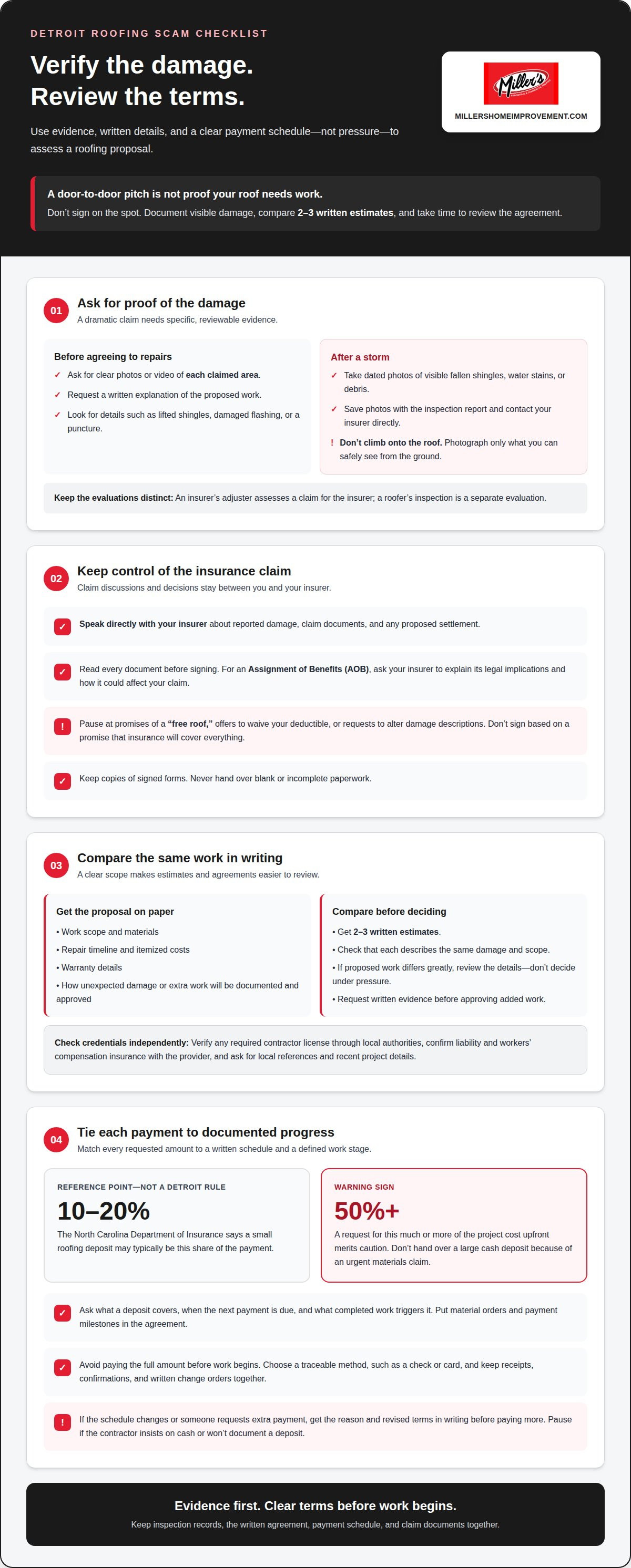
A free roof inspection can be useful, but a dramatic claim needs evidence. Be cautious if an inspector says the entire roof is damaged but can’t point to specific areas. Ask to see suspected damage from the ground or in clear photos. Look for details such as lifted shingles, damaged flashing, or a puncture. Knowing how to avoid roofing scams in Detroit starts with asking for proof before accepting a broad claim. Don’t climb onto the roof yourself; photograph only what you can safely see from the ground.
After a storm, document visible damage before repairs begin. Take dated photos of fallen shingles, water stains, or debris, and save them with any inspection report. Contact your insurer directly to ask how to report possible storm damage. An insurance adjuster assesses the claim for the insurer; a roofer’s inspection is a separate evaluation. Be wary of anyone who insists their inspection alone proves what your policy should cover.
Ask the inspector for photos or video of each claimed area, along with a written explanation of the proposed work. If they say they found more damage during the inspection, request evidence of those specific locations before approving additional repairs. Compare written estimates, making sure each describes the same damage and scope. A large difference in proposed work calls for review, not an automatic decision under pressure.
For a roofing contract in Michigan, ask for the work scope, materials, repair timeline, itemized costs, and warranty details in writing. These terms help you compare the agreement with inspection findings and spot vague promises before signing. The contract should explain how unexpected damage or extra work will be documented and approved. If you’re learning how to avoid roofing scams in Detroit, keep evidence on file to distinguish necessary repairs from unsupported claims. Don’t approve added work based only on a verbal explanation; request photos or video and a written description of the change first.
2. Insurance claim manipulation and signing away claim rights
Keep your insurance claim under your control. Communicate directly with your insurer about reported damage, claim documents, and any proposed settlement. A roofer can explain repair needs, but shouldn’t pressure you to alter damage descriptions or promise a free roof through insurance loopholes. If a contractor offers to waive your deductible, pause and ask your insurer how your policy handles it. Don’t sign paperwork based on a promise that insurance will cover everything.
Read every document before signing, especially an Assignment of Benefits (AOB). Don’t sign an AOB unless you understand its legal implications. Ask your insurer to explain how it could affect your claim and who may communicate about it. Keep copies of signed forms, and don’t hand over blank or incomplete paperwork. A rushed signature can create confusion about who controls claim-related decisions.
Check credentials independently. Verify any required contractor license through local authorities, and confirm general liability and workers’ compensation insurance directly with the insurance provider. Ask for local references and details about recent projects. A reference should be able to describe the work and how the contractor handled questions or changes. Compare the written scope with the damage described in your claim, and keep those records together.
To avoid insurance claim fraud and high-pressure roofing sales, discuss the claim directly with your insurer, reject requests to exaggerate damage, and understand every document before signing. Treat urgency, “free roof” promises, and deductible-waiver offers as reasons to pause. Before agreeing to work, review the payment schedule, the process for unexpected damage, and written warranty terms. If someone proposes extra work, ask for the explanation and supporting evidence in writing. These steps help separate necessary repairs from pressure tied to your insurance claim.
3. Large upfront deposits and cash-only payment demands
Before paying, match each requested amount to a written schedule and defined work stage. The North Carolina Department of Insurance says a small roofing deposit may typically be 10-20% of the payment. Treat that as a reference point, not a universal Detroit rule. Ask what the deposit covers, when the next payment falls due, and which completed work triggers it. If the schedule changes after signing, get the revision in writing before paying more.
A request for 50% or more of the project cost upfront is a warning sign. Don’t hand over a large cash deposit simply because a contractor says materials must be ordered immediately. Ask for the material order and payment milestone to appear in the written agreement. A contractor should explain how each payment connects to work completed, such as material delivery or an agreed installation stage. Vague answers leave you without a clear way to track progress.
Avoid paying the full amount before work begins. Choose a traceable payment method, such as a check or card, so you have a transaction record. Cash can leave you with little documentation if a dispute arises. Keep the receipt, agreement, payment confirmations, and any written change orders together. Make sure each record identifies the payment date, amount, recipient, and purpose.
Before signing, read the payment schedule alongside the work scope. Confirm that it states when each installment is due and which project milestone it covers. A schedule tied to progress gives both sides a shared record of completed work. Don’t pay an added amount based only on a phone call or verbal request. Ask for the reason and revised terms in writing, then compare them with the original agreement. If a contractor insists on cash, demands full payment before starting, or won’t document a deposit, pause and keep your records.
4. Storm chasers and unsolicited door-to-door pitches
After a Detroit storm, an uninvited roofer may appear before you’ve noticed any damage. A doorstep pitch isn’t proof that repairs are needed. Warning signs include claims of urgent, widespread damage without clear evidence, pressure to sign immediately, or promises of a free roof through insurance. Don’t sign a roofing contract on the spot, even if the visitor says the offer expires that day.
Take control of the conversation. Ask the visitor to leave written information, then end the discussion without making a commitment. Note the company name and the specific damage they claim to have seen. If they point to a lifted shingle or damaged flashing, ask where it is and how they observed it. Compare the claim with photos you can safely take from the ground. Don’t let a stranger climb onto your roof without your consent.
A storm chaser may use a recent storm to create urgency, but any damage still needs a clear explanation. Be cautious if someone asks you to sign an insurance form immediately, offers to handle every claim decision, or urges you to exaggerate damage. Keep your insurer involved directly. An insurance adjuster evaluates a claim for the insurer; a door-to-door roofer can’t promise what your policy will cover.
Before considering any proposal, get the visitor’s claims in writing and take time to review them. Compare the suggested repairs with independent written estimates, and check that each estimate describes the same roof areas and work. A contractor who refuses to provide details or keeps returning after you decline is giving you a reason to end contact. Keep notes of repeated visits and any documents left at your door.
For help assessing storm-related roof damage, discuss your roof concerns with a roofing professional. A calm review of the evidence is a better starting point than a doorstep deadline.
Miller's Home Improvement: Residential Roofing
Miller's Home Improvement provides residential roofing for homeowners planning repairs or a roof replacement in Detroit. Once you’ve documented your concerns and reviewed your options, a clear roofing assessment can help you understand the work your home needs. Miller's also handles commercial roofing, including PVC and EPDM flat roofing, for different building and roof-system needs.
For a residential project, use inspection findings and a written scope to guide a practical discussion about next steps. Share your concerns and any relevant documentation, then review the proposed work before deciding. This keeps the focus on your property’s needs rather than pressure from an unsolicited pitch.
Contact Miller's Home Improvement to discuss residential roofing for your home in Detroit.
Make your next roofing decision on your terms
A roof decision doesn’t need to happen at the doorstep or during a stressful insurance call. Give yourself time to assess the evidence, understand the proposed work, and choose a next step that fits your home. That steady approach is central to knowing how to avoid roofing scams in Detroit: stay involved, ask for clear explanations, and make decisions without pressure.
If your roof needs attention, Miller's Home Improvement can help turn concern into a defined project. Share what you’ve observed and what work has been proposed, then discuss your property’s roofing needs. A straightforward conversation can help you identify a practical next step without relying on a stranger’s urgent pitch.
Contact Miller's Home Improvement to discuss your roofing project and take the next step with confidence.
Frequently Asked Questions
How do I verify a roofing contractor’s license and insurance in Detroit, Michigan?
Verify any applicable license through the relevant local authority, and confirm insurance directly with the insurance provider. Match the contractor’s name on the license and insurance documents to the name on the written estimate and contract. Check that the insurance information covers the proposed work. If the business name differs across documents, ask for a clear explanation before signing or allowing work to begin.
How can Detroit homeowners check roofing contractor complaints and reviews?
Read reviews for specific details about communication, workmanship, and how concerns were handled, rather than relying only on star ratings. Look for recurring reports of unfinished work, unexplained charges, or difficulty reaching the contractor. Compare those accounts with references and recent project examples from the roofer. One negative review doesn’t establish a pattern, but repeated, similar complaints deserve careful consideration.
How can I verify a roofer’s identity and local business address in Detroit?
Ask for the contractor’s full business name and address in writing, then compare them across the estimate, contract, insurance paperwork, and payment instructions. Make sure the person signing the agreement identifies their role in the business. A mismatch between documents, a request to pay an unrelated person, or reluctance to provide a business address calls for clarification before proceeding.
Should I pay a roofing contractor upfront, and what payment schedule is safe?
Avoid paying the full amount before work begins, and use a written schedule that ties payments to project progress. The agreement should explain which work stage makes each installment due and how changes affect the balance. Keep payment records with the contract and receipts. Don’t pay an added amount based only on a verbal request; get the reason and revised terms in writing.
Where can Detroit residents report roofing fraud or contractor complaints?
For a contractor complaint, contact the relevant Michigan or local consumer-protection office and provide the contract, estimates, receipts, messages, and photos. If the concern involves an insurance claim, notify your insurer directly. For suspected theft, threats, or other immediate criminal conduct, contact local law enforcement. Keep copies of every report and note when you submitted it so you can track follow-up.


