
A leaking roof doesn’t always need replacing. Whether it’s better to repair or replace a roof depends on how widespread the damage is, the condition of the roofing system, and whether moisture has reached the materials beneath it. A single, localized problem may be repairable, while recurring leaks or widespread deterioration can signal a larger issue.
It’s sensible to compare the immediate repair with the longer-term value of replacement, especially when leaks return or flashing fails. Look beyond the visible water stain: consider the roof’s age, repair history, surface condition, and the state of the underlying decking or insulation.
This guide explains which signs point toward repair or replacement, what can limit a repair’s effectiveness, and how to compare estimates without relying on the total alone. Use the practical decision points to match the work to your roof’s actual condition.
Key Takeaways
- A single leak or isolated flashing failure may call for a targeted repair; recurring problems and old patches can point to broader wear.
- Compare the roof’s age, the spread of damage, and the condition of the shingles before deciding whether a partial repair is likely to hold.
- Look beyond the upfront cost: repeated repairs can add up, while replacement addresses a larger area of deterioration.
- Soft spots, sagging, or moisture beneath the roof can change the decision, especially when insulation or decking is affected.
Localized leaks and flashing failures
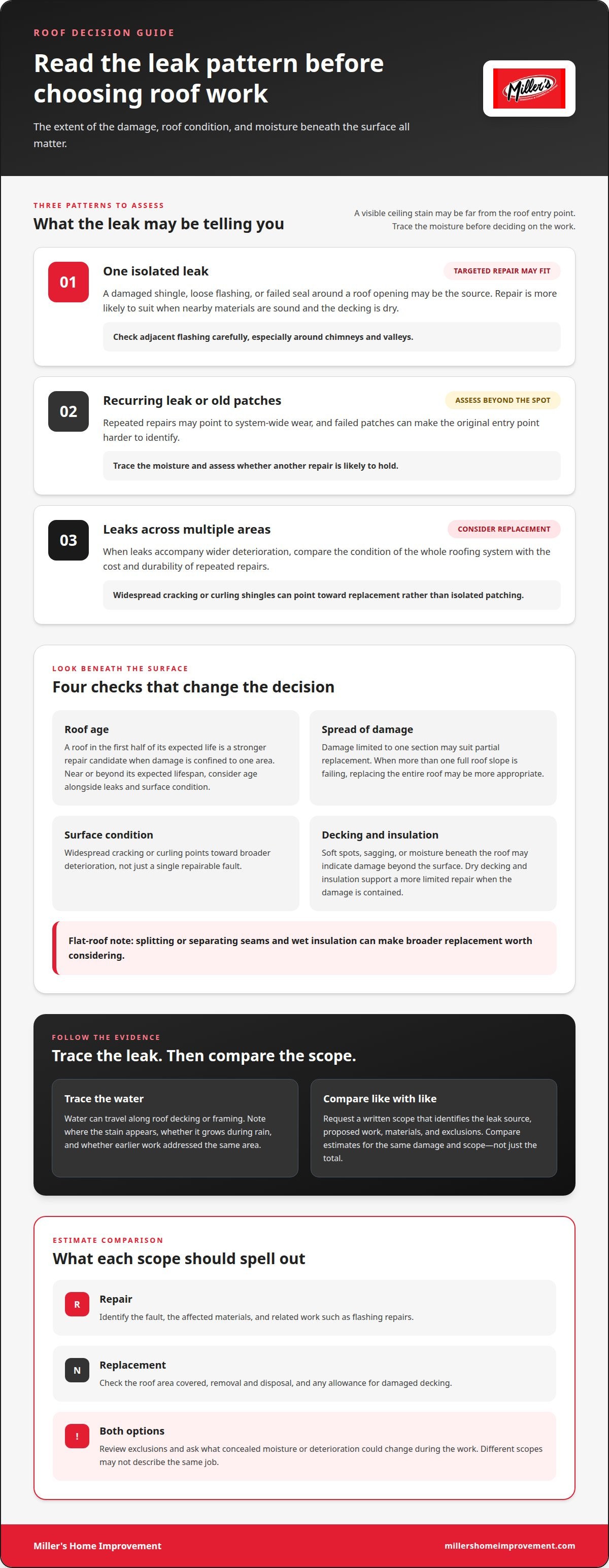
Whether it’s better to repair or replace a roof depends partly on where the water is entering. A small leak may come from a damaged shingle, loose flashing, or a failed seal around a roof opening. If nearby shingles are sound and the decking is dry, a targeted repair may address the source. Because flashing directs water away from joints, areas around chimneys and valleys need careful inspection beyond the visible stain.
Trace the leak before deciding on the work. Water can travel along roof decking or framing, so an indoor stain may appear far from the entry point. A ceiling mark below a chimney, for example, may point to chimney flashing rather than the shingles directly above it. Note where the stain appears, whether it grows during rain, and whether previous repairs addressed the same area. The U.S. Department of Energy notes that moisture entering building assemblies through small openings can gradually degrade materials and increase mold-growth risk if not addressed promptly.
| Option | Leak pattern | Roof condition | Likely direction |
|---|---|---|---|
| Targeted repair | One isolated leak | Nearby materials remain sound | Repair the source and inspect adjacent flashing |
| Further assessment | Recurring leak or old patches | Damage may extend beyond one spot | Trace moisture and assess repair durability |
| Replacement consideration | Leaks across multiple areas | Roof shows wider deterioration | Compare whole-system condition with repeated repairs |
Recurring leaks change the calculation. If a roof needs repeated repairs within a few years, it may have system-wide wear, particularly when earlier patches fail. Multiple patches can also make the original entry point harder to identify. A repair may still suit localized damage, but recurring leaks warrant an assessment of the surrounding roof, not just another seal over the latest stain.
For a useful estimate, request a written scope identifying the leak source, proposed work, materials, and exclusions. Compare estimates based on the same damage and scope, not pressure or vague promises. Repair is a better fit when inspection finds one contained failure; replacement merits consideration when recurring leaks accompany broader deterioration.
Roof repair vs replacement: what is the difference?
A repair addresses a defined damaged area; replacement renews the roofing system across its full extent. Age, how widely the damage has spread, and structural condition help guide the decision. Permit requirements depend on local rules and project scope, so Detroit homeowners should consult the city’s building department before work begins.
Roof Age, Leaks, and Structural Damage
A roof in the first half of its expected life, with damage confined to one area, is generally a stronger candidate for repair. A roof near or beyond its expected lifespan may need replacement if leaks appear in several areas or shingles are deteriorating. Widespread cracking or curling also points toward replacement rather than isolated patching.
Partial replacement may suit damage limited to one section, but the condition of the affected area matters. When more than one full roof slope is failing, replacing the entire roof may be more appropriate than replacing only part. On a flat roof, splitting or separating seams and wet insulation can indicate that broader replacement deserves consideration.
Structural condition is another key test. Soft spots or sagging may indicate a problem beyond the surface materials. If damage is contained, the roof is within its expected lifespan, and the decking or insulation is dry, repair may make sense. Age alone does not settle the decision: consider it alongside leak patterns and the condition beneath the roof surface.
Questions Before Choosing
Before choosing the work, ask where the damage starts, how far it extends, and whether previous repairs held. Then consider the roof’s age, material condition, moisture beneath the surface, and how long you expect to keep the property. Together, these factors give a fuller comparison than the visible damage alone.
For partial replacement, ask whether the proposed section covers the full damaged area and whether the neighboring slopes remain sound. A failing full slope changes the scope, while isolated damage on a healthy roof supports a more limited approach. Also ask what findings could change the plan, such as concealed moisture or deterioration discovered during the work.
Permit requirements depend on local rules and project scope, so there isn’t one answer for every replacement. Detroit homeowners can consult the city’s building department about requirements for their specific project.
Repair and replacement cost comparisons
A repair addresses a defined fault, such as damaged shingles around one roof opening. Replacement covers a much larger scope, including removing the existing roofing and installing new roofing across the roof. That difference is why comparing totals alone can mislead. A small repair may cost less now, but repeated work can add expense without resolving wider deterioration.
Compare estimates by matching the work included, not just the final figure. For a repair, check whether the scope identifies the damaged area, replacement materials, and any related flashing work. For replacement, look for the roof area covered, removal and disposal, and any allowance for damaged decking. If one estimate includes decking work and another excludes it, the totals do not describe the same job.
- Repair scope: identify the fault, affected materials, and related work.
- Replacement scope: compare removal, new roofing coverage, and decking provisions.
- Both options: note exclusions that could change the final work.
The price depends on the project and is provided after a quote request. Key factors include roof size, material, access, installation complexity, and the extent of underlying damage. A localized shingle repair and a replacement involving deteriorated decking, for example, need different labor and materials. A written estimate should explain those differences so you can compare like with like.
Then weigh the immediate expense against the likelihood of repeat work. If a repair addresses one isolated problem on an otherwise sound roof, it may avoid replacing materials that remain serviceable. If failures are widespread, repeated repairs may leave the underlying system unchanged. Consider how long you plan to keep the property, too: a short-term repair and a full renewal serve different ownership plans.
Use the estimate to confirm that the proposed scope matches the observed damage. Ask what could change the work, such as concealed decking damage found during removal. A clear comparison ties each task to a specific roof condition, rather than treating the lowest total as the best value.
Roof decking and structural moisture damage
Surface damage does not reveal the full condition of the roof decking. A roof within its expected lifespan may suit repair when the damage is localized and the underlying decking or insulation is dry. For example, isolated storm damage on an otherwise healthy roof often supports repairing just the affected area. The key question is whether moisture has spread beneath the roofing materials.
Soft spots and sagging can signal damage beneath the shingles. These signs call for assessing the decking, not simply covering the visible opening. If inspection finds widespread deterioration, replacement may be more appropriate than patching separate sections. Cracking or curling across the roof also suggests broader material failure, while one damaged section on sound roofing presents a more contained repair.
Flat roofs need particular attention to concealed moisture. Surface repair alone may not address wet insulation beneath a flat roof, making replacement worth considering. Splitting seams can also let water reach insulation and decking. The decision should account for the extent of moisture, the roof’s condition, and whether a repair can address both the source and affected materials.
After storm damage, photograph visible changes and note where the damage appears. A healthy roof with isolated storm damage may still be a candidate for repair. If shingles are deteriorating across broad areas or the decking feels soft, the damage may extend beyond what the storm’s visible impact shows. For an insurance claim, keep records of observed damage and repair estimates, then review your policy terms. Coverage and claim decisions depend on the policy and documented circumstances.
For localized storm damage, arrange an assessment of storm-related roof damage to help identify whether the problem is limited to a repairable area or extends beneath the roof surface.
Miller's Home Improvement: Residential Roofing
Miller's Home Improvement can help you connect your roof’s condition with a practical repair or replacement plan. Turn to the team when leaks keep returning, storm damage affects multiple areas, or visible deterioration makes the scope unclear. Residential Roofing addresses home roofing needs, while Commercial Roofing, PVC Flat Roofing, and EPDM Flat Roofing serve commercial and flat-roof projects in Southeast Michigan, including Detroit.
For a roof assessment, note where leaks appear, what repairs have already been made, and any visible sagging or shingle damage. These details help clarify whether the problem seems localized or involves a broader roofing system. A clear scope explains what work is being considered and why.
Contact Miller's Home Improvement to discuss your roofing concerns and next steps.
Make the Next Roof Decision with Confidence
Use your inspection findings to set a clear next step. Keep photographs, notes about interior staining, and repair records together so the roof’s condition is easier to discuss and track. These records can also help you compare the recommended scope with what you’ve observed at home.
Before work begins, make sure the proposed plan addresses the source of the problem, not just its visible effect. You should understand what work is proposed and how it relates to your roof’s condition. If new damage appears or a leak changes, update your notes so the decision reflects the current situation.
Deciding whether it’s better to repair or replace a roof becomes more manageable when you base the choice on its actual condition and a clearly explained scope. Miller's Home Improvement provides residential and commercial roofing in Southeast Michigan, including PVC flat roofing, to address different project needs.
Contact Miller's Home Improvement to discuss your roof and take the next step toward a sound plan.
Frequently Asked Questions
What is the biggest sign I should replace instead of repair?
Widespread roof failure is a strong sign that replacement may be more suitable than patching. Cracking or curling across many shingles, for example, indicates broader deterioration rather than one isolated defect. Several failing areas may call for a whole-system solution. In Detroit, consider the roof’s overall condition, age, and repair history before deciding on the scope.
How long do common roofing materials last?
Asphalt shingle roofs are designed to last a few decades under ideal conditions, but actual lifespan varies with installation, maintenance, weather exposure, and roof condition. Roofing materials also have different service lives, so identify the material before estimating how much useful life may remain. An inspection can reveal whether wear is concentrated in one area or spread across the roof.
What signs indicate a roof needs repair versus replacement?
A localized issue, such as one damaged section with sound surrounding materials, can point toward repair. Repeated leaks, widespread shingle deterioration, or damage in several areas suggest a broader problem. One damaged area after a storm, for example, differs from cracking across multiple slopes. Include the roof’s age and the results of previous repairs in your comparison.
What is the average cost to repair a roof in the United States?
Roof repair costs depend on the damage, materials, access, and work needed beneath the roofing surface. A small shingle repair and work involving flashing or concealed decking require different scopes, so a national average may not reflect what a Detroit home needs. The price depends on the project and is provided after a quote request, based on those factors.
What is the average cost to replace a roof in the United States?
Replacement costs vary with roof size, material, removal needs, access, and the condition of the decking. A straightforward replacement differs from a project that also uncovers damaged underlying materials. The price depends on the project and is provided after a quote request; the scope and material choices shape the estimate. For a Detroit property, compare estimates that include the same work.
How much roof damage can be repaired instead of replaced?
No single measure of damage determines whether repair will work. The key is whether the problem is contained and the surrounding roof remains serviceable. Damage limited to one area with dry, sound decking, for instance, may be suitable for repair. If deterioration extends across a full slope or moisture affects underlying materials, a broader scope may be appropriate.


