
A denied roof claim isn’t necessarily the end of the process. To understand how to handle a denied roof insurance claim, appeal in writing with evidence of storm damage and a clear response to the insurer’s stated reasons. For a Detroit homeowner, the next step is to connect the roof’s condition, the reported storm, and the policy terms.
It’s frustrating when roof damage looks clear from the ground but the insurer reaches a different conclusion. The decision may depend on whether the evidence links the damage to a covered storm or whether the insurer considers it wear, a pre-existing condition, or excluded damage.
This guide explains common reasons for denial, how to prepare a written appeal, and how to distinguish storm impacts from gradual deterioration. It also covers documenting roof conditions and organizing claim communications so you can make informed decisions about the dispute and necessary repairs.
Key Takeaways
- Read the denial letter closely and match each reason to evidence of storm-related roof damage.
- Build a written appeal with clear documentation, then submit it within the deadline in your policy.
- Separate sudden storm damage from aging or maintenance issues when explaining why the loss should be covered.
- If the insurer’s handling remains disputed, keep your claim records organized and consider the next steps for your Michigan claim.
Q1: Why did my roof claim get denied if the storm clearly damaged it?
Visible storm damage alone doesn’t establish whether your policy covers the loss. To understand how to handle a denied roof insurance claim, compare the insurer’s stated reason with the policy and evidence related to the storm.
-
Identify the Stated Denial Reason
List each reason in the denial letter and match it to the damage described. Common disputes involve wear and tear, prior damage, insufficient evidence, or a policy exclusion. Hail marks may be visible, yet the adjuster may conclude they reflect aging rather than a recent storm.
For a Detroit claim, focus on the insurer’s explanation and inspection findings. A neighbor’s approved claim doesn’t establish coverage for your roof. Roof condition, policy language, and claim evidence can differ from one home to another.
-
Review the Denial Letter and Policy
Read the denial letter alongside the policy sections the insurer cites. Identify the explanation, relevant exclusion or condition, and evidence used to reach the decision. Comparing these details can show whether the insurer addressed the reported damage and applicable policy wording.
When deciding how to handle a denied roof insurance claim, check the policy’s roof settlement terms, deductible, and provisions for prior damage. Some homeowners policies switch roof coverage from replacement cost value to actual cash value after 10-15 years. Actual cash value accounts for depreciation; replacement cost value pays to replace the roof without that deduction.
-
Request an Independent Roof Review
Arrange an independent roof inspection if the insurer’s findings conflict with visible damage. Ask the inspector to document affected shingles, flashing, and other roof areas with photographs and written observations. Share the denial letter and storm details so the inspector can address the specific findings.
You can also request another inspection by the insurer’s adjuster. Attend, point out areas of concern, and keep copies of reports. A roofing contractor’s findings are most useful when they distinguish recent storm damage from existing wear.
- Preserve evidence before repairs change the roof. Photograph damaged areas, save inspection reports, and record temporary repairs and their dates. Keep the denial letter and insurer correspondence together. An organized file can help connect the reported storm, observed damage, and repair work in later claim communications.
Filing a written appeal
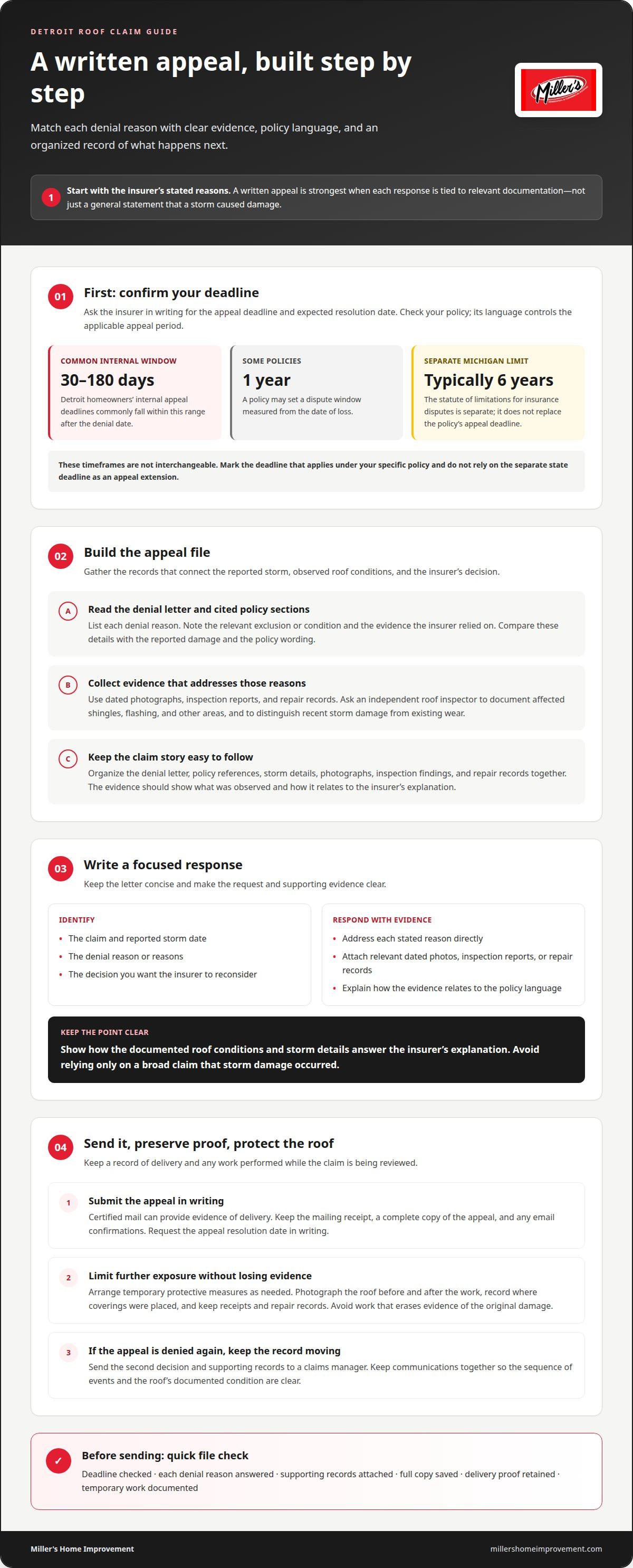
To appeal a denied roof insurance claim, send a written response addressing the denial reasons and include supporting documents. First, ask the insurer in writing for the appeal deadline and expected resolution date.
- Mark the deadline before drafting. Detroit homeowners’ internal appeal deadlines commonly range from 30 to 180 days after the denial date, while policy language controls the applicable period. Some policies set a dispute window of one year from the date of loss. Michigan’s statute of limitations for insurance disputes is typically 6 years, but that separate state deadline should not replace the policy’s appeal deadline.
- Build a concise appeal letter. Identify the claim, storm date, denial reason, and decision you want the insurer to reconsider. Address each point with evidence, such as dated photographs, an inspection report, or repair records. Explain how the evidence relates to the policy language rather than relying on a general statement that storm damage occurred.
- Send the appeal in writing and preserve proof. Certified mail provides evidence of delivery; keep the mailing receipt, a complete copy, and any email confirmations. Ask for the appeal resolution date in writing. Review your specific policy guidelines, and address the insurer’s stated reasons with relevant documentation.
- Protect the roof while the review proceeds. Arrange temporary measures to limit further exposure, and photograph the roof before and after the work. Keep repair receipts and records of any new damage. For example, document where a temporary covering was placed and which area it protected. Make sure protective work doesn’t erase evidence of the original damage.
- Escalate a second denial through the insurer. If another adjuster rejects the appeal, send the decision and your supporting records to a claims manager. Keep communications together so the department handling the claim can follow the sequence of events. Clear records also help a storm damage roof assessment document roof conditions during the dispute.
Covered damage versus wear and tear or neglect
Roof age and maintenance can affect how an insurer interprets damage, but wear and tear alone is not an insured peril. A five-year-old roof damaged by a tornado presents different evidence from an aging roof with long-term deterioration.
-
Distinguish Storm Damage from Wear
Compare reported storm damage with signs of gradual deterioration. Look for localized impacts or displaced materials that align with the storm, and note existing deterioration separately. Normal aging alone doesn’t justify asking an insurer to replace a roof, but sufficient wind or hail damage may support a replacement request despite ordinary wear.
Use the roof’s condition as context, not as a substitute for identifying the cause. For example, a 30-year-old composite-shingle roof may have reached the end of its lifespan; that fact alone doesn’t establish storm damage or rule it out.
-
Document the Damage
Record each affected area with clear photographs and written observations. Include close-ups of damaged shingles and wider images showing their location on the roof. Note when you observed the damage and which areas correspond to the reported storm. A dated record helps distinguish visible damage from older wear during an appeal.
Keep inspection findings and repair records together. Ask the inspector to describe observed conditions and distinguish storm impacts from deterioration, rather than making unsupported conclusions. Homeowners can use that evidence to respond to the insurer’s specific assessment; a written comparison is more useful than a general claim of damage.
- Match requested repairs to the documented extent of damage. Localized damage may call for a focused repair, while broader storm impacts may support a replacement request. The insurer’s decision should address the evidence and applicable policy language, not just the roof’s age. If the dispute turns on policy interpretation, an attorney can review the issue alongside the inspection record.
Organize evidence by roof area, storm-related observation, and repair need. This structure clarifies whether the claim concerns partial repairs or a full replacement, and gives each point a place in the appeal.
Complaints to the Missouri Department of Commerce and Insurance
After an appeal, a complaint can ask state insurance regulators to review how the insurer handled the claim. Organize the record before contacting the department.
- Call the Missouri Department of Commerce and Insurance consumer helpline at 800-726-7390 for questions about policy language, according to the Missouri Department of Commerce and Insurance. Have the disputed policy section and denial letter ready. For example, identify the wording you believe applies to the storm damage and the insurer’s explanation for rejecting coverage.
- Prepare a concise complaint file. Include the policy, claim number, denial letter, written appeal, insurer responses, and a timeline of key events. Add dated photographs and the roof inspection report if they address the insurer’s findings. Describe the specific handling concern, such as an unanswered request or a denial reason that conflicts with the documents.
- Explain what you want regulators to examine. A state insurance department can review whether an insurer handled a claim properly, but it cannot force the insurer to pay. Keep your request focused on process and evidence. For example, show where the insurer’s decision overlooks a roofing contractor’s inspection or fails to address documented weather damage.
- Keep copies of every submission and response, and record when each item was sent. If an inspection is arranged during the review, attend and point out the areas shown in your photographs. A public adjuster may help organize claim evidence, while an attorney can assess legal questions. Neither role replaces the department’s review of claim handling.
For help with roofing work after documenting the dispute, explore residential roofing services as a next step for your property.
Miller's Home Improvement: Residential Roofing
Miller's Home Improvement provides residential roofing for homeowners who need repairs or a replacement after storm damage. Once you’ve documented the roof’s condition and understood the insurer’s decision, roofing work can address physical damage and help protect your home from further exposure.
For flat roofs, available systems include PVC and EPDM. The right roofing approach depends on the property and the roof’s condition, not just the insurance outcome. Keep inspection records and claim documents organized as you plan the work.
Contact Miller's Home Improvement to discuss your residential roofing needs.
Move Forward With a Clear Roof Plan
Knowing how to handle a denied roof insurance claim can help you separate the insurance dispute from decisions about protecting your home. Keep preserving relevant records as you plan the roof’s next steps, and make repair decisions based on the documented condition of the property. An organized record can also be a useful reference for future roofing work.
Miller's Home Improvement provides residential roofing, commercial roofing, and PVC flat roofing in Southeast Michigan, including Detroit. If your next step involves roof work, consider the property’s needs and the roofing system involved. A sound plan focuses on the roof itself, rather than assuming an appeal will produce a particular outcome.
For help considering roofing work for your property, get in touch with Miller's Home Improvement. You can move forward thoughtfully, with a clear record and a practical plan.
Frequently Asked Questions
Q6: Should I hire a public adjuster if my claim is denied?
A public adjuster may help if you need someone to represent your interests in documenting and presenting the claim. Public adjusters typically charge 10-15% of an insurance settlement, and homeowners pay that expense themselves. Consider whether the claim’s complexity and disputed amount justify the fee. A public adjuster’s involvement doesn’t guarantee the insurer will change its decision.
Can a roofing contractor help with a denied claim?
Yes. A roofing contractor can assess physical roof conditions, document damage, and explain the repairs those conditions may require. For example, a written inspection can identify which roof slopes or components show storm impacts and which need repair. That technical record may help clarify the dispute, but it doesn’t determine what your policy covers or replace a written appeal to the insurer.
Does filing an appeal delay my repair timeline?
Filing an appeal doesn’t itself set a repair schedule, so coordinate the claim review with necessary roof work. Document conditions before permanent repairs alter them, and keep records of protective work and subsequent repairs. Some policies require damaged property to be replaced within 365 days of the damage. Read your policy’s timing terms while the insurer reviews your appeal.
Q10: Can a roofer help me challenge a denial?
A roofer can support a challenge with technical findings, especially when the disagreement concerns the extent of damage or repair scope. Ask for observations tied to specific roof areas, not simply a broad conclusion that the roof needs replacement. The insurer still evaluates coverage under the policy. Use the roofer’s report to address technical points in the denial, and handle policy arguments directly with the insurer.
Q2: What does “wear and tear” mean in an insurance denial?
“Wear and tear” describes gradual deterioration from age, exposure, or use, rather than damage attributed to a specific storm. For example, a shingle that deteriorated over time differs from one documented as displaced after a windstorm. Compare the insurer’s explanation with inspection findings, maintenance records, and photographs showing the roof’s condition before and after the reported weather.
Q5: Does roof age affect whether my claim gets paid?
Roof age can affect how a claim is evaluated and how payment is calculated, but age alone doesn’t establish the cause of damage. Some Missouri homeowners policies shift roofs over 15 to 20 years old to actual cash value coverage. Review your policy’s roof provisions and settlement basis so you can distinguish a coverage decision from depreciation applied to an approved claim.


