
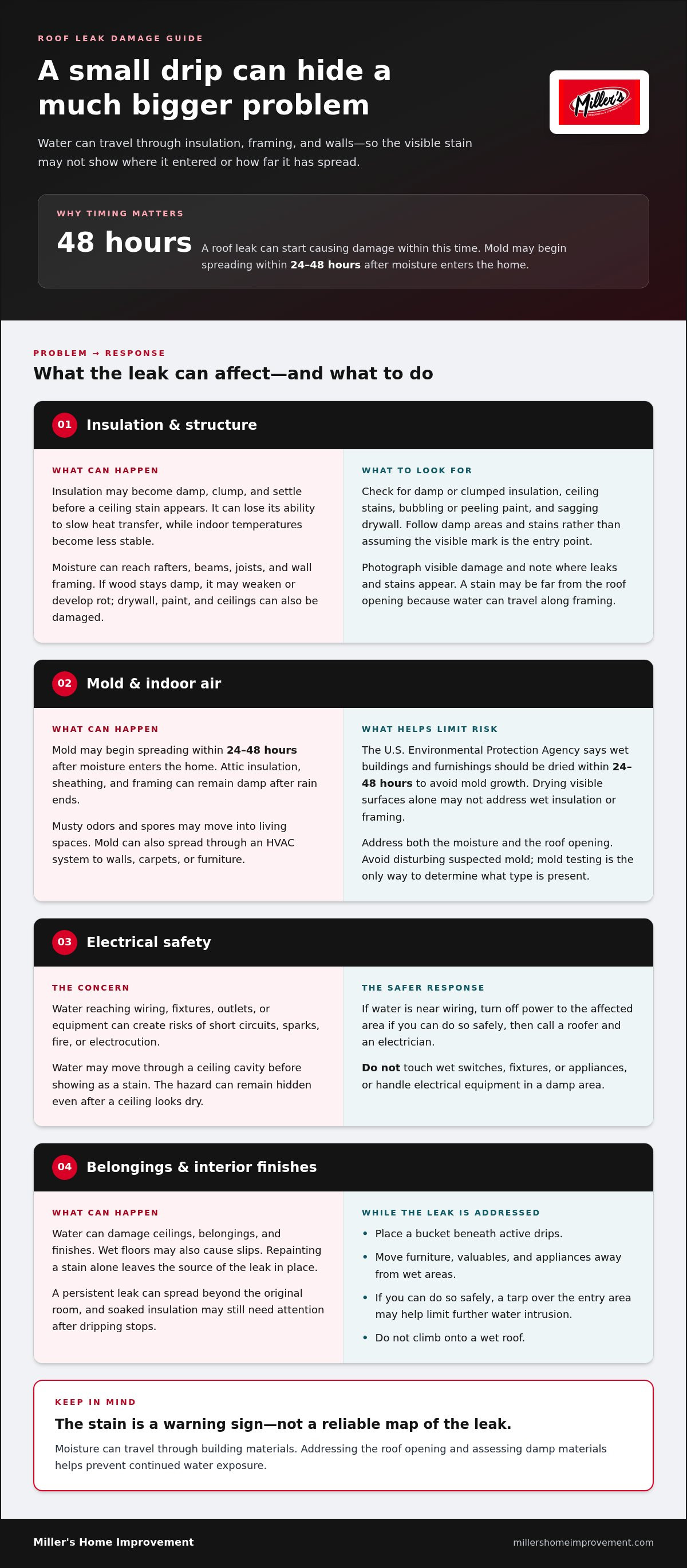
A roof leak can start causing damage within 48 hours, so waiting for a convenient time to deal with it can make a small problem harder to contain. The dangers of a leaking roof include soaked insulation, conditions that encourage mold, and water reaching electrical systems. Damage can spread beyond the visible drip as moisture travels through building materials.
It’s easy to assume a leak can wait if the water is only dripping slowly or the stain looks small. But damp materials can deteriorate while the entry point stays hidden, and mold can begin spreading within 24 to 48 hours after moisture intrusion. A ceiling mark may be only the first sign of a problem above it.
This guide explains how quickly a roof leak can affect insulation, indoor air, electrical safety, and a home’s structure, and why delays can increase the damage. You’ll learn which warning signs need prompt attention and how a roof repair can address the source before the problem spreads.
Key Takeaways
- Water may show up far from the roof’s entry point, so follow stains and damp areas rather than assuming the visible spot marks the source.
- Wet insulation can lose effectiveness, while hidden moisture may affect nearby framing and finishes.
- If water is near wiring, treat it as a safety concern: turn off power to the affected area and call a roofer and an electrician.
- Containing drips, moving valuables, and documenting damage can help limit further loss while the leak is addressed.
- Repair needs depend on how far moisture has spread and whether the roof damage is isolated or part of a wider problem.
Insulation damage and energy inefficiency
A roof leak can soak insulation before a ceiling stain appears. In an attic, damp insulation may clump, settle, and lose its ability to slow heat transfer. Indoor temperatures can become less stable, and heating or cooling systems may have to work harder. Water can travel beneath roofing materials, along framing, and into walls, so the wet area may extend beyond the visible drip.
The effects can reach structural wood. Rafters, beams, ceiling joists, and wall framing may remain damp after rain stops, with moisture weakening materials over time. If a leak goes untreated, wood rot may develop. A compromised roof assembly can then face further damage, while wet drywall, peeling paint, and ceiling stains harm interior finishes.
Does homeowners insurance cover damage caused by a leaking roof? Coverage depends on the policy wording and the documented cause of the damage. Don’t assume repairs to the roof and damage inside the home will be treated the same way.
What are the immediate dangers of a leaking roof? Water can damage insulation, ceilings, and belongings, while wet floors can cause slips. The dangers of a leaking roof also include water reaching electrical wiring, where it may contribute to short circuits, sparks, or fire.
Are roof leaks dangerous near electrical wiring or fixtures? Yes. Water near electrical systems can create fire and electrocution risks. If a leak is near wiring, turn off power to the affected area if you can do so safely, then call a roofer and an electrician.
How can you tell whether a roof leak has caused hidden damage? Look for damp or clumped insulation, musty odors, bubbling paint, ceiling stains, or sagging drywall. Water can travel along framing, so a stain may appear far from where it entered the roof.
While waiting for repairs, place a bucket beneath active drips and move furniture, valuables, and appliances away from wet areas. If you can do so safely, a tarp over the entry area may help limit further water intrusion. Don’t climb onto a wet roof or handle electrical equipment in a damp area. Photograph visible damage and note where leaks and stains appear.
Hidden moisture can also affect resale. Stained ceilings, damaged wall paint, or deteriorating materials may concern prospective buyers, while a persistent leak can spread beyond the original room. Addressing the source promptly matters: repainting a water stain alone leaves the cause in place, and soaked insulation may still need attention after the drip stops.
Mold and mildew in damp areas such as attics
Roofing leaks can leave attic insulation, sheathing, and framing damp after rain ends. Yes, roof leaks can cause mold, which may begin spreading within 24 to 48 hours after moisture enters the home.
Mold Growth and Indoor Air Quality
Mold can affect indoor air quality when spores and musty odors move from damp materials into living spaces. It may also spread through an HVAC system to walls, carpets, or furniture. People with asthma, allergies, environmental sensitivities, or compromised immune systems can be more vulnerable to its effects. A musty smell near an attic hatch can signal hidden moisture, even when no growth is visible.
Moisture control is central to limiting mold. Wet buildings and furnishings should be dried within 24-48 hours to avoid mold growth, according to the U.S. Environmental Protection Agency. Drying a room’s visible surfaces alone may not address wet insulation or framing above the ceiling. If roofing materials, such as shingles or flashing, still allow water in, damp areas can remain wet or become wet again.
Mold and Mildew Risks
Mold and mildew can damage organic materials, create persistent odors, and reduce indoor air quality. In an attic, growth may affect insulation and nearby wood before it becomes visible from below. A ceiling stain or peeling paint may appear far from where water entered because it can travel along structural materials. The visible stain alone may not show how far moisture has spread.
After a leak, look for damp insulation, musty odors, and discoloration around attic sheathing and framing. Avoid disturbing suspected mold, as this can spread particles. Mold testing is the only way to determine what type is present. Dampness can also make people with asthma or other respiratory issues uncomfortable, even if mold or mildew hasn’t developed.
Addressing both the moisture and its source matters. Drying materials can reduce mold risk, but it won’t stop a roof leak. A careful assessment should consider:
- Whether insulation or wood remains damp after the leak stops.
- Whether stains, odors, or visible growth appear in nearby rooms.
- Whether damaged shingles, flashing, or another roofing detail still admits water.
If water has reached attic materials, document affected areas and arrange to address the roof opening. Roof repairs can address the entry point, helping prevent continued moisture exposure while affected materials are assessed and dried.
Electrical hazards and fire risk
A roof leak becomes an electrical concern when water reaches wiring, fixtures, outlets, or equipment. Water may move through a ceiling cavity before appearing as a stain, so the wet patch may not show which electrical components are exposed. A drip near a ceiling light, for example, calls for more caution than a stain far from visible wiring.
Moisture near electrical systems can create risks of short circuits, sparks, fire, or electrocution. A short circuit may interrupt power or damage connected equipment. If water enters a fixture or reaches wiring behind drywall, the hazard may remain hidden even after the ceiling looks dry. Don’t touch wet switches, fixtures, or appliances.
Warning signs may include flickering lights, repeatedly tripping circuit breakers, or appliances behaving unusually. Abnormal electrical odors or sounds can also signal a problem near water intrusion. These signs don’t identify the leak’s location, but they mean you should treat the affected area as unsafe and stop using the circuit.
If you suspect a roof leak near wiring, turn off power to the affected area only if you can do so safely. Keep people away from wet fixtures and equipment, and call an electrician to assess the electrical system. A roofer can locate and address the roof opening. Both problems matter: restoring power won’t stop water entering, and stopping the leak won’t confirm that wiring is safe.
Pay close attention to these examples:
- A ceiling light drips during rain. Avoid touching the switch or fixture, and keep people clear of the wet area.
- A breaker trips after water appears on drywall. Don’t repeatedly reset it, because the cause may still be present.
- A refrigerator or other appliance malfunctions near a leak. Move away from wet equipment and avoid handling its plug.
- A burning or unusual electrical odor occurs near a ceiling stain. Leave the area and seek help from an electrician.
Water can also damage appliances without causing an obvious fire. A damp outlet, wiring connection, or equipment casing may disrupt operation, while ongoing moisture can complicate the assessment. Keep valuables and portable electronics away from the affected space. Use a bucket beneath a drip only if you can place it without approaching wet electrical fixtures.
Once the immediate hazard is controlled, document the ceiling stain, leak location, and any electrical symptoms. Photos can help show whether damage spreads or returns after rain. Don’t paint over a stain or replace drywall before the water source and affected electrical components have been assessed. A clean-looking ceiling alone can’t show whether hidden wiring has been exposed.
Electrical hazards from water intrusion
An electrical inspection matters when roof water stains appear near outlets, ceiling fixtures, or an appliance. Water can travel along framing before reaching drywall, so the visible mark may be away from wet wiring. A dry-looking ceiling beside a stain doesn’t prove the cavity above is dry. Treat the area as a hazard if water has reached electrical components.
Watch for changes after rain. Flickering lights, repeatedly tripping breakers, equipment malfunctions, and unusual electrical odors or sounds can signal water near electrical systems. If a breaker trips again after being reset, don’t keep trying. Stop using affected equipment, keep people away from wet fixtures, and arrange an electrician’s assessment.
If you suspect water near wiring, turn off power to the affected area only if you can reach the breaker safely without entering a wet space. Don’t touch a damp switch, outlet, fixture, or appliance. Contact an electrician to assess the electrical hazard and arrange a roof inspection to locate the entry point. Both concerns need attention: electrical work alone won’t stop the leak.
Document what you observe while staying clear of wet electrical equipment. Photograph water stains, note which lights or appliances behave unusually, and record whether symptoms appear during rain. Include areas where ceiling or wall finishes look swollen, stained, or damaged. These details can help an electrician understand the symptoms and help a roofer trace water intrusion beyond the visible mark.
- Flickering ceiling light: Keep clear of the fixture and avoid its switch.
- Tripping breaker: Don’t repeatedly reset it; report the repeated trips to an electrician.
- Wet appliance: Don’t handle its plug or controls while the surrounding area is damp.
- Unusual odor or sound: Leave the affected area and seek electrical assessment.
A roof inspection should look beyond the stain. Water may have moved along framing, soaked insulation, or reached wiring before becoming visible indoors. Missing or damaged roofing materials, compromised flashing, or another opening can continue to let water in. Finding the source helps prevent repeat exposure, while an electrician can assess whether affected components need attention.
Delays can increase damage if moisture continues to affect finishes, equipment, or building materials. Don’t paint over water stains or replace drywall before the leak source and nearby electrical areas are assessed. If water pools near a fixture or drips from it, keep clear and treat the situation as urgent. Clear records and a focused inspection help distinguish visible damage from hidden concerns.
Repair costs compared with neglect
A leaky roof rarely remains a roofing-only problem. Water can pass through flashing, underlayment, and decking, then damage insulation, drywall, and framing. Each affected layer adds work, so an early roof inspection can help determine whether the leak is isolated or spreading. The cost of repairs often depends on how much of the home gets wet before work begins.
A small ceiling stain may point to a contained issue, but it doesn’t reveal the full extent. Water can travel along rafters and ceiling joists, leaving damage away from the entry point. If moisture continues, insulation may need replacement, drywall can sag, and wood may rot. These added repairs create a larger scope than addressing the roof opening alone.
These figures describe restoration work, not a quote for roof repairs. The difference illustrates how delays can add interior work to the original problem.
Time matters because moisture can keep affecting materials even when dripping slows. A leak left untreated for weeks to months may lead to spreading mold, wood rot, and structural compromise, sharply increasing repair costs. For example, damaged flashing can let water soak insulation before a ceiling stain appears. Repairing only the stain leaves the entry point active, so damage may return with later rain.
The final repair scope depends on where the water traveled and what it reached. A roof inspection should trace stains toward their source and assess nearby materials, not stop at the visible mark. Relevant factors include:
- Whether the leak is isolated or reflects wider roof-system failure.
- How much insulation, drywall, and framing became wet.
- Whether wood shows deterioration or mold has spread.
- Whether the decking, underlayment, or flashing also needs attention.
Document the first visible stains with photos and notes, including their location and any changes after rain. Move belongings away from active drips and use a container to catch water where it’s safe. These steps can limit further damage while the leak is assessed, but they don’t repair the roof. Arrange a roof inspection promptly to identify the source and the repairs needed before the affected area grows.
Miller's Home Improvement: Residential Roofing
Miller's Home Improvement helps homeowners address roof damage with residential roofing services, including roof repairs and replacement work. Turn to the team when water stains return, shingles are damaged, or the leak’s source needs attention before moisture spreads into insulation, ceilings, or framing. For buildings with flat roofs, the company also installs PVC and EPDM flat roofing systems.
Share what you’ve observed, including where water appears and whether it follows rain. This context can help guide a discussion about the roof’s condition and the next steps. Acting promptly may limit further water damage, though an electrician should handle electrical hazards.
Contact Miller's Home Improvement to discuss your roofing concerns or visit millershomeimprovement.com.
Make the Next Roofing Decision with Confidence
The dangers of a leaking roof call for a clear plan, not a guess at the repair. Keep your notes and photos together, then use them to explain what you’ve observed and what concerns you most. A focused conversation can help clarify whether the next step involves residential roofing, commercial roofing, or a PVC flat roofing system.
Miller's Home Improvement can discuss roofing needs and the appropriate path forward for your property. If you’re ready to talk through the roof’s condition, contact Miller's Home Improvement today. Taking that first step can help you move from uncertainty toward a considered plan for protecting your building.
Frequently Asked Questions
How Long Can You Leave a Roof Leak Before Things Go Wrong?
A roof leak can start causing damage within 48 hours, so don’t treat a slow drip as safe to ignore. Even if rain stops, moisture may remain inside insulation or behind a ceiling. The time and extent of damage depend on how much water enters and where it travels. In a Detroit home, arrange an assessment as soon as you notice a leak rather than waiting for another storm.
What Happens When You Ignore a Roof Leak?
Ignoring a roof leak lets water continue affecting materials beyond the visible stain. Over weeks to months, an untreated leak may contribute to spreading mold, wood rot, and structural compromise. Damage can also reach belongings or interior finishes, and damp areas may create slip hazards. A small-looking mark doesn’t reveal the full extent: persistent moisture can expand the affected area and make repairs more involved.
Why might your roof be leaking?
A roof may leak because of damaged or missing shingles, loose roofing nails, or deteriorated flashing. Clogged or damaged gutters can let water back up, while ice dams, hail, or fallen branches may damage roofing materials. Other possible entry points include cracked pipe boots, skylight seals, and holes left by removed fixtures. Indoor water stains don’t necessarily appear directly below the roof opening.
Can a roof leak cause ceiling collapse or structural damage?
Yes, prolonged water exposure can weaken ceilings and structural wood. Drywall may sag, buckle, or deteriorate, and saturated ceiling tiles can become unstable. Continued leakage can also damage rafters, beams, joists, or wall framing. A stain alone doesn’t show whether a ceiling is at risk, but if material is visibly sagging or falling, keep people out of the area and arrange a prompt assessment.
What health problems can mold from a roof leak cause?
Mold exposure can aggravate asthma, allergies, and environmental sensitivities. People with compromised immune systems may face additional risks, and indoor mold can be associated with coughing or a sore throat. Mold spores may also travel through an HVAC system into other rooms. Symptoms alone can’t identify the mold type; testing is the way to determine which type is present in a home.
What should you do immediately when you discover a roof leak?
First, keep people away from water near electrical fixtures or wiring. If you can safely reach the breaker without entering a wet area, shut off power to the affected area. Place a container under drips, move furniture and valuables, and photograph the damage with notes about its location. Then arrange a roofing assessment to locate the entry point, not just repair the interior stain.
How can you safely contain a roof leak until repairs are made?
Indoors, place a bucket or other container beneath drips and move belongings away from the wet area. If water collects on the floor, keep people clear to reduce slipping risks. A tarp may help cover the entry area only if you can do so safely. Don’t climb onto a wet or damaged roof, and don’t handle wet electrical fixtures or appliances.
When should you call an emergency roofer for a leak?
Call a roofer promptly if water is actively dripping, pooling indoors, or damaging building materials. A leak near electrical wiring or fixtures also needs urgent attention: keep clear, shut off affected power only if it’s safe, and contact an electrician as well. Don’t wait for a routine roof check while water is entering the home. If a ceiling is sagging, keep people out from underneath it.


