
What if postponing a roof replacement doesn’t avoid the expense, but changes what the work may need to address? The cost of not replacing an old roof can go beyond worn shingles: if water gets past the roofing system, it may affect the attic, insulation, roof decking, or other parts of the home. That damage isn’t inevitable, but it’s a reason to understand what’s happening before deciding to wait.
It’s reasonable to hesitate when replacement is a major home expense, especially if the problem seems limited or you’re unsure how serious it is. A clear assessment can help distinguish a repair for a specific issue from a roof that may need more extensive work.
This article explains how roof deterioration can lead to additional repairs, what signs and records to gather, and how to weigh repair against replacement without relying on one-size-fits-all rules. You’ll also find a practical next step for a Michigan home: arrange a professional assessment to clarify the roof’s condition and appropriate scope of work. With more than 25 years of owner experience, Miller's Home Improvement serves Detroit and surrounding Southeast Michigan communities.
Key Takeaways
- The cost of not replacing an old roof can include more than roofing work, but additional damage is possible, not inevitable.
- Water intrusion can affect roof layers and interior areas. Where it spreads depends on the leak’s location and extent.
- Compare localized problems with signs of widespread deterioration. An inspection can help clarify whether repair or replacement fits the roof’s condition.
- Document concerns and look for interior signs from a safe location. Don’t climb onto the roof or disturb suspected damaged materials.
- Miller’s Home Improvement helps Detroit-area homeowners assess aging roofs and consider project-specific repair, replacement, or storm restoration options.
What Is the Real Cost of Not Replacing an Old Roof?
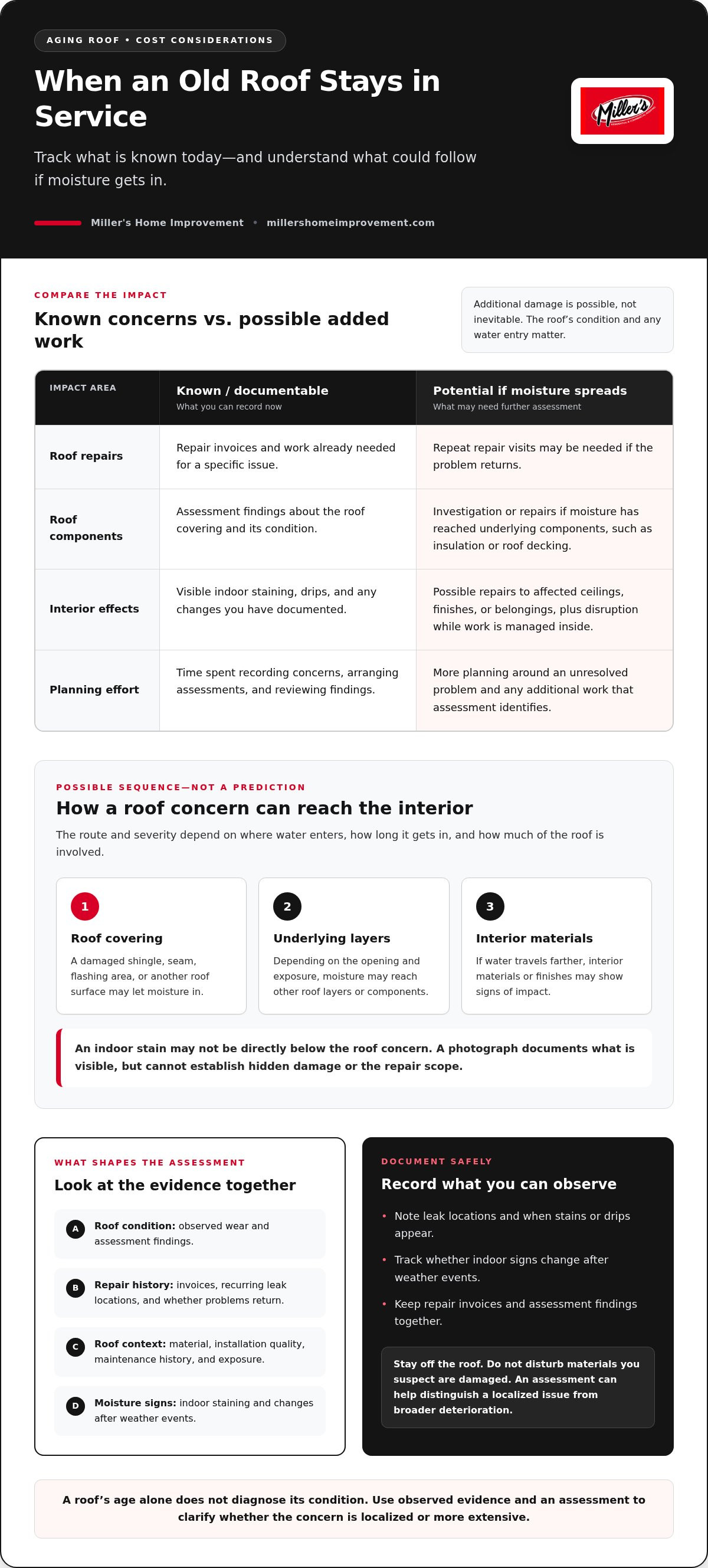
The cost of not replacing an old roof may include repeat repairs, investigation or work on affected roof components, interior restoration, household disruption, and the effort of planning around an unresolved problem. These aren’t costs every homeowner will face, and an aging roof won’t necessarily fail suddenly. Known costs are the repairs and assessments already needed. Future damage is possible, depending on the roof’s condition and whether water is getting in.
This distinction matters. A recurring leak may mean more repair visits, while moisture that reaches underlying materials could require additional investigation and work. If water reaches interior finishes or belongings, restoration and disruption may also become part of the picture. Consider these possibilities, but don’t treat them as guaranteed outcomes.
Which costs can accumulate while a roof remains in service?
Start with what you can document: repair invoices, recurring leak locations, visible indoor staining, and assessment findings. These are known concerns. A professional inspection can help determine whether moisture has affected the roof covering or underlying components. A roof is a system of connected parts. This overview of the components of a roof provides useful context for understanding what may need attention.
Keep different kinds of impact separate as you weigh the decision:
- Direct repair costs: Work to address a specific issue, with repeat repairs possible if the problem returns.
- Additional roof work: Investigation or repairs if moisture has reached other roof components.
- Interior effects: Possible repairs to affected areas, plus the inconvenience of managing work inside the home.
- Planning burdens: Time spent documenting concerns, arranging inspections, and deciding how to proceed.
Only some of these may apply to your home. The goal is to understand the scope, not assume the worst.
Why an old roof does not automatically mean replacement today
Age provides context, but it can’t diagnose a roof on its own. Condition, roofing material, installation quality, maintenance history, and exposure all affect how a roof performs. Two roofs of a similar age may show different wear or need different repairs. An assessment can clarify whether the concern is localized and repairable or part of broader deterioration.
Consider the evidence together: the roof’s observed condition, its repair history, and any signs of moisture inside. A professional assessment can help establish an appropriate scope of work without treating replacement as the automatic answer. For more context on evaluating a replacement project in the area, see this roof replacement guide for Detroit homeowners.
How Delaying Roof Replacement Can Let Damage Spread
A roof problem doesn’t always stay where it starts. If a damaged shingle, seam, flashing area, or another part of the roof covering lets water through, moisture may reach the layers beneath it. If the leak continues, nearby materials or parts of the home’s interior could be affected. This is a possible sequence, not a prediction. The path and severity depend on where water enters, how long it gets in, and how much of the roof is involved.
A prompt roof assessment can clarify whether damage appears localized or whether the findings point to a broader concern. That distinction helps homeowners make decisions based on observed conditions. Not every leak requires full replacement, and a small visible mark may not reveal the whole story.
From a roof opening to possible interior repairs
Water doesn’t necessarily drip straight down from where it enters. It can travel along roof components before reaching a ceiling, so an interior stain may not be directly below the roof concern. Depending on the route and duration of moisture entry, insulation, roof decking, ceilings, or interior finishes could be affected. A photograph can document a stain or visible roof concern, but it can’t establish the extent of hidden damage or determine the needed repair scope.
Keep the possible sequence in mind, but treat each step as something to assess, not assume:
- A damaged area in the roof covering may allow moisture to enter.
- Depending on the opening and exposure, moisture may reach underlying roof layers.
- If water travels farther, interior materials or finishes may show signs of impact.
Record when a stain or drip appears and whether it changes after weather events. Don’t climb onto the roof to investigate. A professional assessment can connect what’s visible inside with the roof’s condition and help determine whether the issue is contained.
Why Southeast Michigan weather makes inspection timing matter
Southeast Michigan roofs face changing seasonal conditions, including freeze-thaw shifts, snowfall, wind, and storms. These conditions don’t mean damage will occur, but exposure can reveal or aggravate an existing vulnerability. A concern that isn’t actively leaking during one period may become noticeable after a change in weather, so take new signs seriously and document when they appear.
Note when leaks occur, whether indoor staining changes, and any visible effects after a storm. Avoid trying to clear snow or inspect roof surfaces yourself. The Michigan winter roof preparation guide offers additional seasonal context for understanding the conditions a roof may experience.
If you’re seeing signs of a leak or are concerned about how your roof is holding up, Miller's Home Improvement provides residential roof assessments, repairs, and replacement work for Detroit and surrounding Southeast Michigan communities. An assessment can help clarify the roof’s condition and appropriate scope before you decide on next steps. Explore residential roofing support for your home.
Repair Now or Replace Later? Compare the Risks Before You Wait
Putting off replacement can feel like a way to avoid a major expense, but it doesn’t automatically save money. A targeted repair may be sensible for a limited problem, while delaying a broader project could leave unresolved concerns in place. The reverse is also true: replacement isn’t always the right answer simply because a roof is old. Let the roof’s condition and the scope of needed work guide the decision.
A targeted repair may be reasonable when damage is isolated and surrounding materials remain serviceable. Recurring problems or widespread deterioration call for a broader assessment before you decide. Use the table as a discussion guide, not a diagnosis.
| Condition | Possible response | What remains uncertain | What an inspection should clarify |
|---|---|---|---|
| One localized area of damage | Assess whether a targeted repair can address it. | Whether the visible issue has a separate or hidden cause. | The source, extent, and condition of nearby materials. |
| Recurring leak in the same area | Investigate the cause before repeating a patch. | Whether the previous repair addressed the underlying issue. | Where water enters and what work is appropriate. |
| Problems in multiple areas | Review the roof as a whole, including repair and replacement options. | How much of the roof is affected. | Whether issues are related or independent. |
| Widespread material deterioration | Consider a broader scope of work based on observed condition. | Whether localized work can provide a suitable response. | The condition of the roof system and appropriate next steps. |
When a repair may address a limited roof problem
If damage appears isolated and the surrounding roofing materials remain serviceable, a repair may be worth considering. The appropriate scope depends on access to the affected area, the cause of the problem, and the roof’s overall condition. A visible defect alone may not show whether the issue is limited, so an assessment should connect the proposed repair to its cause and nearby materials.
When repeated repairs signal a need for a broader assessment
Leaks that return, damage in separate areas, or deterioration across a wider section are reasons to look beyond the latest repair. A new patch may address one opening without resolving a different underlying issue. Reviewing repair history alongside current findings can help show whether the roof needs another localized fix or a larger project. A Michigan roof tear-off decision guide can provide added context.
The cost of not replacing an old roof is difficult to predict without knowing its condition and how its problems may change. Compare the immediate repair scope with the findings from a full assessment, and ask what each option is intended to address. Miller's Home Improvement provides roof repairs and complete tear-offs and replacements for Detroit and surrounding Southeast Michigan communities. A roof assessment from Miller's Home Improvement can help clarify the project scope before you decide.
What to Check Before Deciding Whether to Replace an Old Roof
A sound decision starts with evidence, not guesswork. Record what you’ve observed, understand what an assessment finds, and compare the appropriate options. This helps separate a current water-entry concern from the larger question of whether the roof needs repair or replacement. You don’t need to inspect the roof yourself to gather useful information.
Document visible concerns without creating new risk
From inside the home or a safe location outdoors, note ceiling stains, active drips, and missing shingles you can see from the ground. Take photos that show both the detail and its location, then record when you noticed it. Don’t climb onto the roof, walk on it, or disturb materials that may be damaged.
- Record your concerns. Describe what you’ve seen, where it is, and when it appeared. Note whether a ceiling mark is new, changing, or returning.
- Observe interior signs safely. Look for stains or active drips from inside the home. Photograph them without opening ceilings or touching suspect materials.
- Gather the history. Collect prior repair records and note where work was done. If a symptom returned, record when it happened and whether it followed snowfall, wind, or a storm.
- Arrange a professional assessment. Share your notes and photos so the roof’s observed condition can be considered alongside the problem’s history.
- Compare findings, then decide. Review identified repair needs and any replacement considerations. Use the evidence to choose a project scope that fits the roof’s condition and your property priorities.
Use an assessment to turn uncertainty into a decision
A useful assessment should explain observed conditions in plain language, identify the proposed repair scope, and describe why broader replacement is or isn’t being considered. It should also help distinguish an active water-entry concern that needs attention from a planned replacement decision. A photograph can help document a concern, but it can’t establish the full condition of roof materials that aren’t visible.
Keep insurance questions separate from the roof-condition assessment. Whether a policy applies depends on its terms, the cause of damage, and the circumstances of a claim. Don’t assume that an aging roof or a recommended replacement will be covered. The cost of not replacing an old roof also can’t be calculated from age alone. Compare known repair needs with the assessment’s findings and the uncertainty that remains.
Miller’s Home Improvement provides roof assessments, repairs, and replacement work for Detroit and surrounding Southeast Michigan communities. Arrange a roof assessment with Miller’s Home Improvement to clarify your next step.
How Miller's Home Improvement Helps Detroit-Area Owners Address an Aging Roof
Deciding what to do with an aging roof is easier when the recommendation reflects the home’s actual condition. Miller's Home Improvement serves Detroit and surrounding Southeast Michigan communities with residential roofing work, including roof repairs, complete tear-offs and replacements, and storm-damage restoration. The right scope depends on the findings, so homeowners can consider a project based on the roof in front of them rather than an assumption based on age alone.
What a project-specific roof assessment can clarify
An assessment can help explain visible roof conditions, identify areas that need attention, and clarify whether repair or replacement merits consideration. Miller’s provides free in-home estimates and explains proposed work in straightforward terms, so homeowners can understand what the project is intended to address. Findings are considered in relation to the property’s condition, not used to make a blanket recommendation.
That distinction matters when you’re weighing another repair against a larger project. A localized concern may call for a focused repair, while broader deterioration or storm damage may lead to a different scope. The assessment connects observed conditions to the proposed work, giving you a clearer basis for planning without promising a particular outcome.
Depending on the findings, project-specific options may include:
- Roof repair to address a limited problem that can be handled with targeted work.
- Complete tear-off and replacement when the roof’s condition supports a broader project.
- Storm-damage restoration when weather-related damage calls for restoration work.
These options aren’t interchangeable. The goal is to understand what each proposed scope addresses and how it fits the roof’s condition and the homeowner’s priorities.
A measured next step for Detroit-area homeowners
If you notice a leak or visible damage, arranging an assessment can clarify the concern without creating artificial urgency. For storm-related damage, Miller’s offers storm restoration and insurance-claim assistance. Claim assistance doesn’t mean a claim or roof replacement will be approved. Coverage depends on the policy, cause, and circumstances. Miller’s Home Improvement is licensed and insured.
The cost of not replacing an old roof depends on its condition and what, if anything, develops over time. A clear assessment gives you practical information for deciding what to address now and what to plan for. With more than 25 years of owner experience, Miller’s Home Improvement offers Detroit-area homeowners an informed next step.
Request a free in-home roofing estimate to discuss your roof’s condition and possible scope of work.
Make Your Next Roof Decision With Confidence
You don’t have to settle the replacement question all at once. A practical next step is to turn what you’ve noticed into a clear plan: identify what needs attention now, understand which options fit the roof’s condition, and decide what can reasonably wait. That approach gives you a better basis for managing the cost of not replacing an old roof without assuming every concern will lead to extensive damage.
Keep your observations and repair records together so you can refer to them during an assessment. Then consider the recommendation alongside your home’s needs, your priorities, and the work involved. A measured decision is more useful than ignoring a concern or committing to a larger project without understanding its scope.
Miller’s Home Improvement serves homeowners in Detroit and surrounding Southeast Michigan communities. If you’re ready to discuss what your roof may need, plan a roof assessment. A clear starting point can make the decision ahead feel more manageable.
Frequently Asked Questions
What happens if you do not replace an old roof?
Possible outcomes depend on the roof’s condition and exposure. A small defect might remain localized, while ongoing water entry could lead to repeat repairs or affect roof materials and interior finishes. For example, a leak that appears only during wind-driven rain may point to a different concern than a persistent drip. The cost of not replacing an old roof isn’t fixed. An assessment helps distinguish current issues from risks that may or may not develop.
Can you keep repairing an old roof instead of replacing it?
Yes, if repairs can address the cause of a limited problem and the surrounding roof remains serviceable. Ask whether the repair resolves the identified issue or only covers a visible symptom. For example, a leak that returns near a previous repair deserves a closer look at how water is entering. There’s no universal repair-count rule. The roof’s condition and the findings behind each repair matter.
Is it dangerous to wait until spring to replace a roof in Michigan?
It can be risky to wait if the roof is actively letting water into the home, but the season alone can’t determine whether replacement should happen now. If you’re considering waiting, note any interior changes and have the roof assessed so you understand what’s known before winter or spring weather shifts. Don’t climb up to check it. A professional can help separate a current leak concern from a planned replacement decision.
Does homeowners insurance pay to replace an old roof?
Coverage depends on your policy, the cause of damage, the roof’s condition, and the circumstances of the claim. Age alone doesn’t establish that replacement is covered. Review your policy and follow your insurer’s claim process, keeping relevant records together. Miller’s Home Improvement assists with insurance claims, but that assistance can’t guarantee approval or a particular coverage decision. The insurer determines coverage under the policy terms and the details of the claim.
Can an old roof cause damage inside the house?
Yes, if a roof issue allows moisture to reach interior materials, though the location and extent can vary. A ceiling mark in one room, for example, doesn’t necessarily identify the exact roof entry point. Note whether the mark changes or reappears, and avoid opening the ceiling to investigate. A roof assessment can help connect interior symptoms with the roof’s condition and clarify what further evaluation or work may be appropriate.
Should I replace an old roof before selling my house?
Not necessarily. Consider the roof’s observed condition, repair records, and your plans for the sale before deciding. An assessment can give you a clearer description of the roof and the scope of any recommended work, which may help you plan conversations with prospective buyers. Replacement doesn’t guarantee a higher sale price, and leaving the roof in place doesn’t guarantee a smooth transaction. Market conditions and each sale are different.


