
A roof can look sound from the driveway while hiding worn shingles, damaged flashing, or signs of moisture in the attic. A roof inspection before buying a house Detroit buyers can use should look beyond curb appeal and put visible concerns in context.
A general home inspection can flag roof concerns, but its report may not explain the extent of a repair or whether the roof needs closer evaluation. That distinction matters when your purchase timeline is moving quickly. The report is useful evidence, but it may not provide a detailed scope of work.
This checklist covers what to look for on the roof and inside the home, which findings deserve follow-up, and what an inspection can and can’t tell you. You’ll also learn how a roofing estimate can help clarify potential repairs or replacement. The goal is to make an informed decision before committing, not to rush past uncertainty.
Key Takeaways
- A roof inspection before buying a house Detroit buyers arrange should distinguish visible observations from concerns that need further evaluation.
- Use the home inspection report and a roofing estimate for different purposes: one records property findings, while the other can help outline indicated roofing work.
- Review roof surfaces, flashing, attic conditions, and signs of water entry. Note any areas the inspection couldn’t access.
- Resolve questions about roof condition and potential repair scope before closing so you can plan your next step with clearer information.
- Miller's Home Improvement offers residential roofing, repairs, complete roof tear-offs, storm-damage repair, and free in-home estimates to discuss roofing work indicated by property findings.
Why a Roof Inspection Before Buying a House in Detroit Deserves Special Attention
Buying a home is a major commitment, and the roof can affect the maintenance and repair decisions you face after closing. A roof that appears sound from the ground may still show wear or have details worth a closer look. For buyers searching “roof inspection before buying a house Detroit,” the key is to treat the roof review as one source of information, not a verdict on the entire property.
A roof inspection is a focused review of accessible, observable roof components; a whole-home inspection considers the property’s major systems and conditions, including the roof. A roof-focused review can draw attention to roof surfaces and related details, while a Home Inspection Overview describes the broader purpose of a general property inspection. Either review reflects what could be observed at the time. It can inform a decision, but it can’t guarantee how the roof will perform in the future.
What a roof review can tell a Detroit homebuyer
Observations may flag worn, lifted, cracked, or missing shingles, visible damage, deteriorated flashing, or signs that maintenance may be needed. Use those details to form practical questions: Does this appear to be a localized repair concern? Is more evaluation needed to understand the scope? Should you account for roof work in your ownership plans?
A finding is a reason to understand the condition, not proof that replacement is necessary. A few damaged shingles, for example, may need attention without establishing that the whole roof has reached the end of its service life. The significance depends on the wider condition, the location and extent of the concern, and what was visible during the review.
Why the Detroit property itself matters
Evaluate the home in front of you rather than assuming every Detroit roof has the same risks. Roof exposure varies with a building’s layout and surroundings, and condition and maintenance history differ from one property to another. A roof with visible signs of upkeep may raise different questions than one showing wear or signs of water entry.
Seasonal exposure is useful context, too. Snow, ice, and freeze-thaw cycles can prompt questions about drainage, flashing, and the attic, but those conditions alone don’t establish that a specific roof is damaged. Look for evidence on the property and note what the inspection could and couldn’t access.
Keep the findings tied to decisions. Record the observed concern, its location, any access limitation, and whether the report recommends further evaluation. That gives you a clearer basis for deciding what needs follow-up before closing, without treating a brief visual review as a promise of future performance.
What a Detroit Roof Inspection Can, and Cannot, Reveal
A roof review records conditions that are accessible and observable at the time of inspection. It can help you understand what was visible, where concerns appeared, and whether the findings point to another step. It isn’t a guarantee that every part of the roof has been assessed or that no problems will develop later.
A visual roof review describes what can be seen on inspection day; it cannot guarantee how the roof will perform in the future. This distinction matters when you’re weighing a report during a purchase. A note about a visible condition is an observation. A conclusion about its cause, how far it extends, or what work is needed may require additional evaluation. The InterNACHI Roof Inspection Guidelines provide a general reference for components a roof inspection may cover.
Visible components and common observations
Depending on access and visibility, a review may include the roof covering, such as shingles or another material, along with flashing, roof edges, and drainage components like gutters and downspouts. The inspector may note lifted or missing shingles, visible wear, damaged flashing, debris, or drainage concerns. These descriptions identify what was observed; appearance alone may not establish the cause or full extent of a problem.
If an attic is accessible, observable clues such as staining or damp-looking areas may also be documented. A stain can prompt questions about moisture, but it doesn’t by itself confirm an active roof leak or pinpoint its source. Note the location and wording of each observation so you can compare it with any further assessment.
How to read limitations in a report
Pay close attention to statements about areas that couldn’t be accessed or clearly seen. A steep or obstructed section, for example, may limit the view of certain components. That limitation is important information, not evidence that the area is either sound or defective. It defines what the report can reasonably say.
Read recommendations carefully, too. “Further evaluation recommended” means the observation needs clarification; it isn’t the same as a confirmed repair diagnosis. Similarly, a report that notes no visible concern shouldn’t be read as proof that concealed layers or inaccessible areas are defect-free, or as a prediction of the roof’s remaining life.
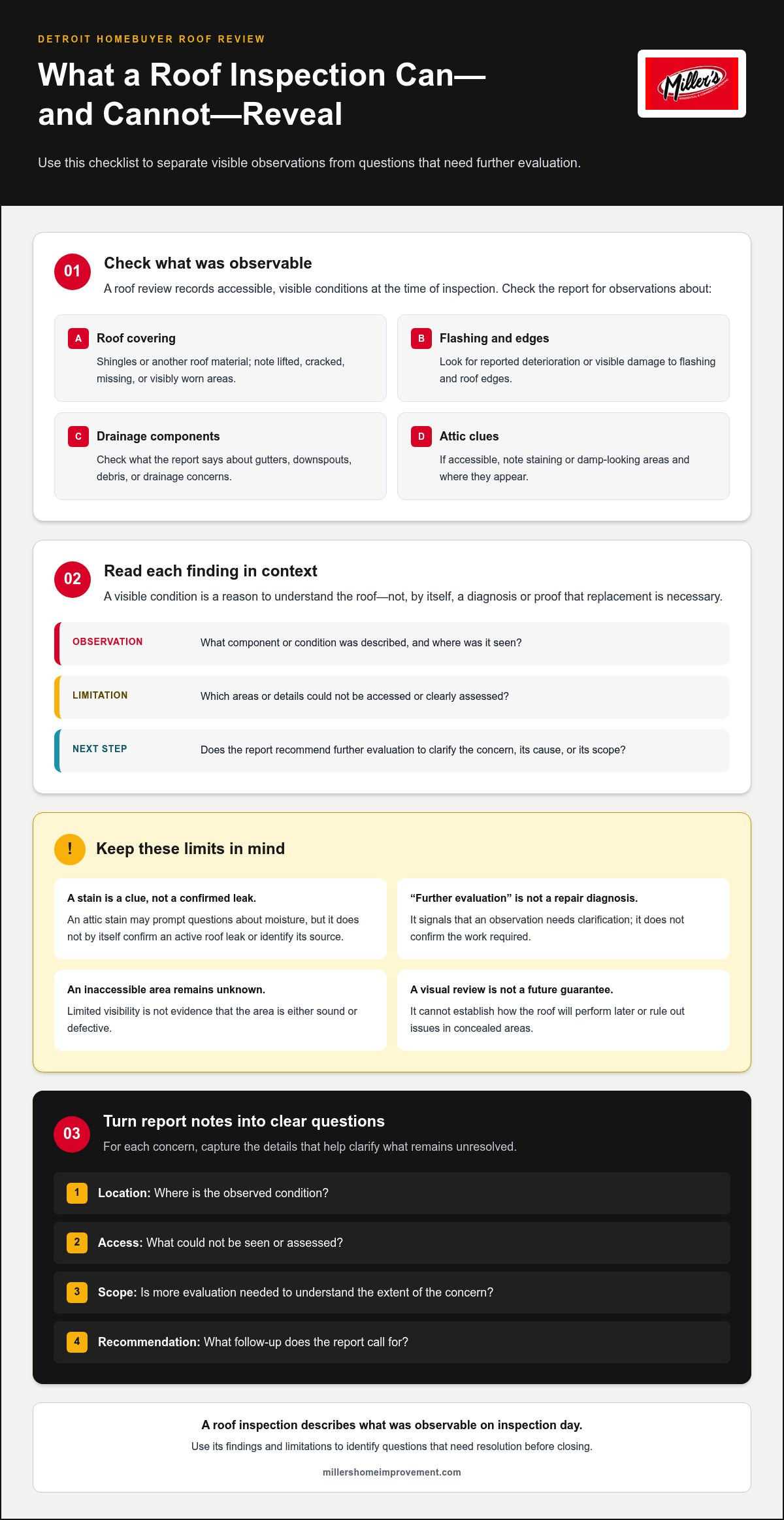
- Observation: What component or condition did the report describe, and where?
- Limitation: Which areas or details couldn’t be accessed or assessed?
- Next step: Does the report recommend additional evaluation to clarify scope or cause?
For a roof inspection before buying a house Detroit buyers should use these distinctions to identify what remains unresolved, rather than treating every note as a diagnosis. If a report points to possible roofing work, a free in-home roofing estimate can help discuss the indicated repair or replacement scope.
How to Compare a Home Inspection Report With a Roofing Assessment
A whole-home inspection report and a roofing project estimate can both help clarify roof concerns, but they answer different questions. The home inspection places visible roof observations in the context of the property as a whole. A roofing estimate focuses on potential roofing work and its scope. Neither document substitutes for the other, and a roofing estimate doesn’t certify the condition of the entire home.
Whole-home findings and roof-focused project details
Think of the home inspection report as a broad record of observed conditions. It may note a roof concern alongside findings about other parts of the house. A roofing estimate focuses on the indicated roof work and can add practical project context. Comparing them helps you see what was observed, what work is being considered, and what questions remain unresolved.
| Document | Main purpose | What it can help clarify |
|---|---|---|
| Whole-home inspection report | Records visible observations across the property, including roof-related concerns. | Which roof conditions were noted, where they were observed, and whether the report recommends further evaluation. |
| Roofing project estimate | Outlines potential roofing work based on the concerns being addressed. | Whether the proposed scope involves a repair or replacement, and which roofing components the work addresses. |
For example, a home report might mention a leak or visible roof wear without defining the work needed. A roofing estimate can help translate that concern into a proposed scope, such as a repair to an identified area or consideration of broader replacement work. The estimate is project information, not a determination of the home’s purchase value or an assessment of unrelated systems.
When an estimate adds useful context
Consider a roofing estimate when the inspection report identifies a leak, visible damage, or a recommendation for roof follow-up and you need more clarity about potential work. Share the relevant observations and note any areas the inspection couldn’t access. That context helps keep the discussion focused on the concern recorded in the report, rather than assuming the entire roof needs replacement.
If replacement is being considered, Miller’s Home Improvement can provide a free in-home estimate to discuss roofing work indicated by the property findings. A proposed scope can help you understand the work under consideration as you weigh next steps before closing. For additional background on the replacement process, see this Detroit roof replacement guide.
For a roof inspection before buying a house Detroit buyers should compare documents by purpose: use the inspection report to understand recorded observations, then use roofing project details to explore the scope of indicated work. Keeping those roles separate makes the findings easier to interpret and supports a more informed purchase decision.
Detroit Homebuyer Roof Inspection Checklist: Questions to Resolve Before Closing
Use this checklist alongside the property inspection report to turn roof notes into specific questions. Start with signs of current water entry or visible damage, then review other observations and any limits on what could be assessed. Keep immediate concerns separate from routine maintenance so you can see what needs clarification and what can be planned over time.
Review the roof findings in a practical order
Work from the most pressing observations to the less urgent details. For each note, record its location, the report’s wording, and whether the inspector could see the area clearly. This simple record keeps follow-up focused on the property’s actual findings.
- Water entry or active leaks: Note reported leaks, interior water stains, or other signs of water entry, including where they appear.
- Visible roof damage: Record missing, cracked, lifted, or otherwise visibly damaged covering without assuming it proves replacement is needed.
- Flashing and roof edges: Review notes about flashing, edges, or places where roof components meet walls, chimneys, or vents.
- Drainage: Check reported observations about gutters, downspouts, or water flow away from the roof.
- Attic clues: If accessible, note any reported staining or moisture-related observations in the attic.
- Access limitations: List roof or attic areas the inspector couldn’t access or evaluate clearly.
Turn report notes into clear follow-up questions
Once you’ve organized the observations, separate what the report directly describes from what still needs clarification. Ask focused questions about the recorded condition and the next step suggested. If the report mentions possible hail or storm impact, the Michigan hail damage roof guide offers additional context on storm-related roof concerns.
- What condition was directly observed, and where on the property?
- Which areas were inaccessible or difficult to assess?
- Does the report suggest monitoring, a repair evaluation, or additional assessment?
- What information would help clarify the scope of any recommended roofing work?
Keep immediate questions distinct from longer-term upkeep. A reported leak or visible damage may call for prompt clarification about the condition and potential work. Notes about debris, drainage, or routine maintenance can be recorded separately for future planning. This distinction helps prevent a maintenance observation from being treated as a confirmed major repair.
For a roof inspection before buying a house Detroit buyers can use this written list to keep findings organized as they consider next steps. If the report indicates roofing work, a free in-home roofing estimate can help discuss the indicated repair or replacement scope.
Roof Findings Before Buying? How Miller's Home Improvement Can Help
A property inspection report can identify a roof concern without explaining the work it may involve. Miller's Home Improvement provides residential roofing, roof repairs, complete roof tear-offs, and storm-damage repair. A free in-home estimate gives buyers a practical way to discuss roofing work indicated by the property findings and understand a potential project scope.
From a reported concern to a clear roofing scope
Bring the inspection report and point out the specific observations, such as a reported leak, visible damage, or a recommendation for further evaluation. The estimate can focus the conversation on relevant roofing work and help clarify whether the concern appears to involve a repair or broader replacement. It is project-planning information, not a certified home inspection or a guarantee about hidden conditions.
If the findings point toward complete roof removal, the Michigan roof tear-off guide can help explain when a tear-off may be relevant. The report and estimate serve different purposes: one records observed property conditions, while the other discusses roofing work connected to those findings. Neither determines the home's purchase value or replaces the buyer's broader due diligence.
A local roofing conversation built on clear communication
Miller's Home Improvement brings 25+ years of owner experience and 13 years in business to roofing projects. The company is licensed and fully insured, with a focus on workmanship, high-quality materials, and clear communication. Its 5.0 Google rating is another point of reference for buyers learning about the company.
A useful conversation starts with the report, the areas it identifies, and any limits on access or visibility. From there, an estimate can help outline the roofing work under consideration, giving you more context as you plan next steps. It won’t predict future roof performance, settle every question about concealed materials, or make the purchase decision for you. Its value is a clearer discussion of the work indicated by the available findings.
If a roof inspection before buying a house Detroit has surfaced concerns that deserve a roofing project discussion, bring the report’s relevant notes to Miller's. Request a free in-home roofing estimate to discuss the indicated work for a Detroit-area property and plan your next step with clear information.
Make Your Next Roof Decision With Clarity
A home purchase doesn’t require every roof question to be settled at once. It does require a clear understanding of what’s known, what remains uncertain, and which roofing concerns may affect your plans as a homeowner. Use the inspection findings as a starting point for a focused conversation about the property, not as a reason to make a rushed decision.
If a roof inspection before buying a house Detroit has raised questions about repair or replacement, Miller's Home Improvement can discuss the roofing work indicated by the available findings through a free in-home estimate. This provides useful project context as you consider your next move, while leaving the final purchase decision in your hands.
Request a free in-home roofing estimate from Miller's Home Improvement to discuss the roof work under consideration for a Detroit-area property. A measured decision starts with good information.
Frequently Asked Questions
Is a roof inspection included in a home inspection?
Usually, a general home inspection includes a visual review of the roof as part of the broader property assessment. The exact scope depends on what is accessible and observable during the visit. A report may describe visible roof conditions without providing a detailed work plan. Read the scope and limitations carefully, especially if the inspector couldn’t view a roof section or related component closely.
Can a roof look fine from the ground but still have problems?
Yes. A ground-level view may not reveal lifted shingles, worn flashing, or conditions near a chimney or vent. Some concerns may also be visible only from another vantage point or inside an accessible attic. For example, a roof surface can appear uniform from the street while a closer view shows a damaged edge. A roof inspection before buying a house Detroit buyers arrange can provide more detail than appearance alone.
How long does a roof inspection take?
There isn’t one set duration for every roof review. The time can vary with the size and layout of the roof, the number of visible areas, access conditions, and whether an accessible attic is part of the review. A complex roof or limited access may require a different amount of time than a straightforward visual check. Focus on whether the review’s scope and findings are clearly documented, not just how quickly it ends.
What happens if a home inspection report finds roof damage?
First, identify exactly what the report says and where the concern was observed. A note about a damaged shingle, for instance, doesn’t establish the condition of every roof section. If the report recommends more evaluation, a roofing estimate can help clarify potential repair or replacement work. Keep the report and any estimate separate: one records property observations, while the other describes proposed roofing work.
Should I attend the roof inspection when buying a house?
If you can attend the property inspection, being present may help you understand where an observation was made and ask questions while the inspector is on site. Take notes on terms or locations you want to revisit in the written report. Don’t climb onto the roof or enter an unsafe area yourself. If you can’t attend, review the report and request clarification about any unclear notes or access limits.
Can a roof inspection tell me how many years the roof has left?
No visual inspection can reliably give an exact number of years remaining. The roof’s age, material, installation, exposure, and maintenance history may all affect its condition, and those details may not be fully known to a buyer. An inspection can describe visible wear or concerns, but it shouldn’t be treated as a precise lifespan forecast. Past invoices or installation records may provide useful context alongside the observations.
Does a roof inspection include the attic?
It may, if the attic is accessible and falls within the inspection’s scope. An inspector might note visible staining, daylight, or other observable conditions from the accessible area, but stored belongings, limited clearance, or other barriers can restrict the view. If the report doesn’t mention the attic, don’t assume it was assessed. Check the report’s scope and note whether access was limited or the area was excluded.


