
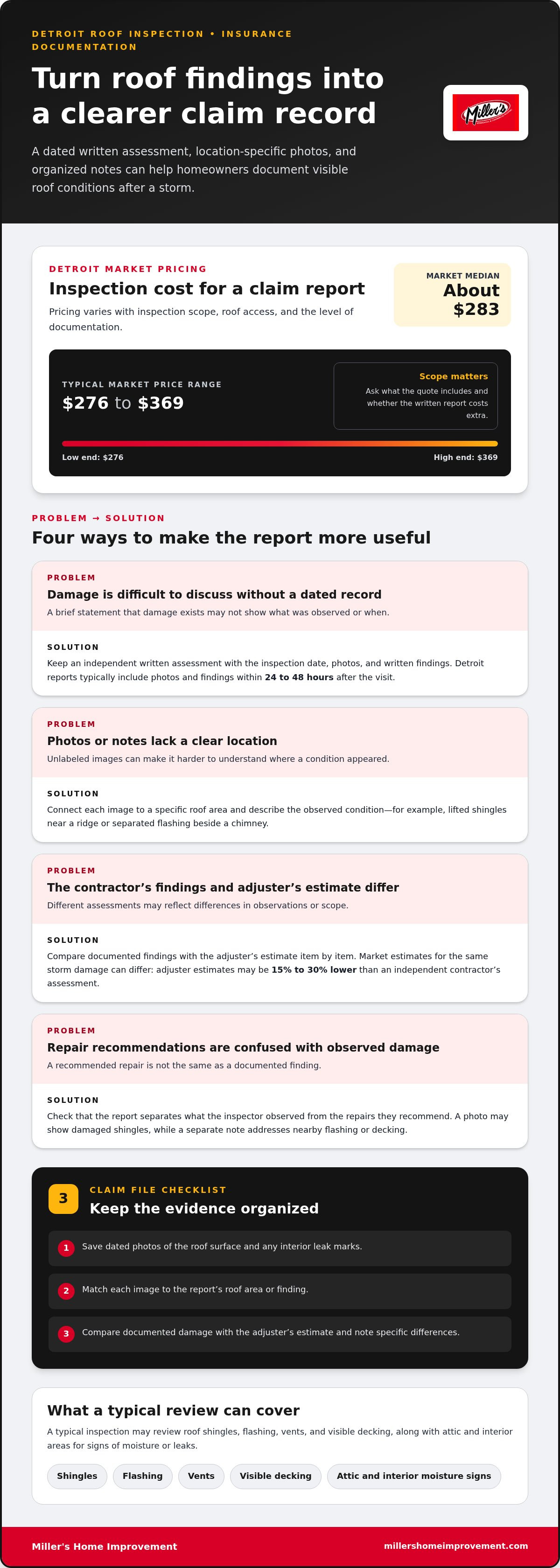
A Detroit home roof inspection cost typically falls between $276 and $369 on the market, with a median of about $283. The final price can vary with the roof’s size, access, inspection method, and the detail required in the report.
It’s reasonable to want a clear idea of the Detroit home roof inspection cost before scheduling, especially if a leak or storm has raised concerns. The cost depends on factors such as roof size, access, inspection method, and the detail included in the report. This guide explains what inspectors examine, what to clarify before booking, and how an assessment may help document visible roof conditions for an insurance claim.
Key Takeaways
- Inspection pricing varies with roof size, pitch, access, and whether the review uses physical, drone, or infrared methods.
- Learn which roof and attic details an inspection can uncover, from damaged shingles and flashing to signs of moisture indoors.
- A clear written report with photos can help document storm damage and support conversations with your insurer.
- Most residential roof inspections take about one to two hours on site, though roof complexity affects the visit.
- Understand when an inspection connected to a roofing estimate may make sense, and how that differs from an independent report.
Inspection reports and insurance claims
A written roof assessment gives Detroit homeowners a dated record of visible conditions after a storm. Photos and notes can help organize information about roof damage for an insurance claim.
For an insurance claim, a residential roof inspection on the market typically costs between $276 and $369, with a median of about $283. A report’s price depends on the inspection scope, roof access, and level of documentation.
Independent Written Reports
An independent written report records a roofing professional’s observations separately from the insurance adjuster’s estimate. It gives homeowners another documented assessment to use when discussing storm damage, repair needs, or differences in scope. Detroit reports typically include photos and written findings within 24 to 48 hours after the visit. That timing helps keep the observed roof condition close to the inspection date.
Inspection Scope and Report Details
The inspection scope describes which roof areas and related conditions are examined; the report records the findings. A typical review covers shingles, flashing, vents, and visible decking, with attic and interior checks for moisture or leaks. Notes can distinguish visible surface damage from signs inside the home, making clear what was inspected and where evidence appeared.
Photos make findings easier to understand than a brief statement that damage exists. A useful photo report connects each image to a specific roof area, such as lifted shingles near a ridge or separated flashing beside a chimney. It should describe the observed condition and note any visible moisture or insulation concerns. Together, images and written notes create a clearer record.
For a claim discussion, keep the report, inspection date, and storm-related photos together. Compare the contractor’s documented findings with the adjuster’s estimate, item by item. Market estimates for the same storm damage can differ: insurance adjuster estimates may be 15% to 30% lower than an independent contractor’s assessment. A detailed report makes the differing observations easier to identify and discuss.
Check that the report separates observations from recommended repairs. A photo might show damaged shingles, while a separate note explains whether nearby flashing or decking also needs attention. This distinction helps prevent a repair recommendation from being mistaken for a documented finding.
- Save dated photos of the roof surface and any interior leak marks.
- Match each image to the report’s roof area or finding.
- Compare documented damage with the adjuster’s estimate and note specific differences.
Most reputable Detroit contractors provide a written report with photos within 24 to 48 hours after inspection. A focused record gives homeowners a practical basis for discussing roof condition and claim documentation.
Roof size, pitch, access, and attic review
A Detroit roof’s size, shape, pitch, and accessibility affect the work involved in an inspection. A roof inspection itself does not require a permit; an inspection during a home sale is separate from permits for roof work.
Roof Size, Pitch, and Geometry
Roof size describes the surface being assessed, while pitch and geometry describe its steepness and layout. These details matter because a large roof, multiple slopes, dormers, or intersecting rooflines can take more time to examine than a simple shape. A roofing square equals 100 square feet of roof surface, helping translate house dimensions into roof area. A 1,200-to-1,600-square-foot home may have 15 to 18 roofing squares.
Inspection prices vary by property size. These ranges illustrate how a home’s floor area can help frame an estimate, but the roof’s actual surface area and layout matter too. Living area and roof area are not the same measurement.
Pitch and materials shape what an inspector can safely assess and how much detail the review requires. Steep slopes and complex roof geometry may call for closer assessment of shingles, valleys, and flashing. In Detroit, roofs steeper than a 6:12 pitch typically incur a replacement surcharge. That relates to replacement work, not automatically to the inspection price, so keep the two estimates distinct.
Access and Attic Review
Access describes how readily the inspector can reach and examine roof sections; an attic review checks accessible interior areas for clues such as moisture. Both matter because a clear view of the roof surface may not reveal every leak path. For example, staining beneath a roof valley can help connect an interior moisture mark with a specific exterior area.
Detached garages, upper roof sections, and limited access can change the inspection scope. Some Detroit home inspectors charge extra for detached garages, while others include them with the house. An attic review can add context by revealing damp areas or visible insulation concerns. If snow covers the shingles, the roof surface may be hidden, making a complete assessment harder.
Home-size-based replacement estimates use roof area as a starting point, not a complete description of the work. A medium Detroit home measuring 1,800 to 2,500 square feet is estimated to need 20 to 28 roofing squares. Roof geometry, pitch, access, and visible decking condition add important context. Together, those details make inspection findings and later replacement planning more accurate.
Detroit roof inspection price range and average
The Detroit home roof inspection cost depends on the inspection method, roof size, access, and report detail. A separate market price band falls between $276 and $369, with a median of about $283. These figures describe market pricing, not a specific contractor’s quote.
Inspection method can affect the estimate. Added equipment and analysis make advanced methods a different scope from a visual roof review. Ask which method the quote covers and whether the written report costs extra.
Compare quotes by scope, not just by the total. One contractor may assess visible shingles and flashing, while another may include attic checks, drone imaging, or a detailed photo report. A written estimate should identify the roof areas covered, inspection method, report format, and any separately priced additions. Those details help explain differences between quotes.
Ask for evidence of the roofing contractor’s license and insurance, then clarify what the inspection includes. Michigan lists roofing as a trade category for a Maintenance and Alteration Contractor license; state licensing applies to home roofing contracts above a threshold set by law. Ask whether the report includes photos, attic observations, and repair recommendations, and whether detached structures are included.
For routine maintenance, a common Detroit approach is to inspect the roof once a year and after any major storm. Snow can hide shingle damage, so a full surface inspection is advised after it melts. After severe weather, timing matters: Detroit-area contractors can typically schedule inspections within 24 to 72 hours after a hail or windstorm.
A Detroit estimate can differ from a statewide average by 10 to 20 percent. Local roof conditions, access, and inspection detail help explain that variation. Use the quote to understand the work being assessed, not as a roof replacement estimate. An inspection documents condition; replacement pricing covers materials, labor, and project scope.
- Compare the method and report details included in each quote.
- Ask whether attic checks, detached garages, or photo documentation are included.
- Plan an annual inspection and another after a major storm.
After a storm, a documented assessment can help identify whether storm damage repair is needed.
Inspection components and duration
A Detroit residential roof inspection typically takes 1 to 2 hours on site. A paid third-party visit commonly lasts 60 to 120 minutes, depending on the roof and requested review.
A standard free roof inspection covers 5 to 7 components. The exact review can vary, but homeowners can expect attention to visible roofing conditions and signs of water entry. A practical inspection follows the roof from its broad surface to vulnerable connections, then checks accessible interior areas for related clues.
On the roof, the inspector reviews shingles for curling, cracking, displacement, or missing sections. Flashing around chimneys, vents, and roof intersections deserves close attention because gaps can let water past the roof surface. The inspector also checks visible vents and decking. These observations help distinguish isolated wear from damage that may affect a larger area.
Drainage and roof transitions matter in Detroit’s changing climate. Valleys and edges collect water and debris, while freeze-thaw conditions can expose weak seams or loosened materials. Snow can hide shingle damage, so a full surface review is best completed after it melts. An inspection identifies visible concerns; it does not complete repairs.
An attic and interior review adds another layer of evidence. Inspectors look for signs such as damp decking, water staining, or moisture near roof penetrations. Where accessible, they may also observe insulation and ventilation conditions. For example, a ceiling stain beneath a chimney can draw attention to nearby flashing, though the stain alone does not establish its source.
Inspection time depends on how much of the roof is accessible and how many areas need closer assessment. A simple roofline may take less time to review than one with several levels, dormers, or numerous penetrations. Detached sections, concealed areas, or visible structural concerns can also expand the work. The report should distinguish observed conditions from recommended next steps.
- Surface: shingles, visible decking, roof edges, and areas with apparent wear.
- Connections: flashing and seals around chimneys, vents, and roof intersections.
- Interior clues: attic moisture, staining, insulation, and ventilation observations.
Ask which components the inspection includes and whether the written findings cover each area. This helps you understand the scope before the visit, especially when storm damage or a leak prompted the assessment. A clear record can also help prioritize repairs, from a localized flashing concern to broader roof-surface damage.
Are roof inspections free when bundled with a roofing estimate in Detroit?
Some Detroit roofing estimates include a free on-site inspection, while independent written inspections are typically billed. The purpose differs: an estimate visit helps define potential roofing work, while an independent assessment documents roof condition for a purchase, claim, or other decision.
A free inspection can help when you’ve noticed a leak, missing shingles, or storm damage and want to understand possible repairs. The contractor can examine visible roof areas and prepare an estimate based on the observed work. Homeowners considering residential roofing can use the assessment to understand whether the issue appears localized or may involve broader replacement work.
A free visit does not necessarily provide every form of documentation. An estimate may focus on the work being priced, while a paid independent report can be commissioned to document roof condition. If you need claim documentation, the purpose and report scope matter. A roofing estimate and an insurance adjuster’s assessment serve different roles.
Before scheduling, clarify the scope and expected deliverable. Ask whether the inspection covers only the main roof, includes an attic review, and provides photos with the written estimate. A visit focused on a visible leak might examine nearby shingles and flashing, while a broader assessment may document multiple roof sections.
- Estimate visit: examines conditions relevant to proposed roofing work.
- Independent report: records roof condition for a separate purpose, such as a purchase or insurance discussion.
- Additional documentation: may include photos, attic observations, or more detailed findings.
When reviewing the estimate, separate inspection findings from repair recommendations. A photo of a damaged shingle documents an observed condition; a recommendation to replace a larger roof area describes proposed work. This distinction helps you understand what the inspection established and what the contractor is pricing.
The cost depends on the case and is provided after a quote request. Roof size, access, inspection method, attic review, and report detail all shape the scope. If the visit is bundled with an estimate, make sure the estimate describes the recommended work and its basis. This helps distinguish a no-charge assessment from a comprehensive independent report.
Choose the type of visit based on your immediate need. For a repair estimate, an on-site roofing assessment can connect visible problems with potential work. For a purchase or insurance dispute, an independent written report may better match the documentation purpose. Homeowners seeking an estimate for roofing work can request a residential roofing estimate.
Miller's Home Improvement: Residential Roofing
Miller's Home Improvement helps homeowners act on inspection findings with residential roofing, roof repairs, and replacement work. If a report identifies damaged shingles, worn flashing, or broader roof concerns, these services can address the next step: evaluating the roofing work needed to protect your home. The company also offers PVC and EPDM flat roofing.
Turn to Miller's Home Improvement when inspection findings point to repair or replacement needs, or when storm damage raises concerns about your roof. Clear findings provide a practical starting point for discussing the condition and potential work. For roofing help tailored to your home, contact Miller's Home Improvement or visit millershomeimprovement.com.
Turn Inspection Findings Into a Clear Roofing Plan
Understanding the factors behind your Detroit home roof inspection cost is most useful when it helps you decide what to do next. Use the findings to separate immediate concerns from work that can be planned, and keep the report as a reference when discussing the project scope. A sound decision starts with knowing which roof areas need attention and why.
Miller's Home Improvement helps homeowners move from documented roof concerns to a practical roofing project. Its services include residential and commercial roofing, as well as PVC flat roofing. If your inspection points to repair or replacement, discuss your roof’s condition and the work it needs with the company.
Take the next step at a pace that suits your home and priorities. Contact Miller's Home Improvement to discuss your roofing needs and move forward with clarity.
Frequently Asked Questions
Does the Right Roofing Contractor Affect What You Pay?
Yes. A contractor’s inspection scope and reporting approach can affect the quote. A basic visual review differs from an assessment that includes attic access, drone imaging, or detailed documentation. Compare written quotes by asking which roof areas and structures are included, whether photos are provided, and what the report covers. This makes it easier to compare the work rather than choosing by the total alone.
How Does Roof Geometry Affect the Price?
Roof geometry affects inspection effort because intersecting slopes, dormers, valleys, and multiple roof levels create more areas to assess. A simple gable roof, for example, has fewer transitions than a roof with several hips and valleys. Steepness and access can also affect how the inspector examines each section. The roof’s shape does not determine the quote by itself; the inspection and documentation needed matter too.
What Is the Average Cost of a Roof Inspection in Detroit, Michigan?
That spread reflects differences in inspection methods, property size, access, and report detail. Treat the average as a general market reference, not a guaranteed quote for a particular home. A quote is more useful when it clearly states the inspection scope and any added documentation.
How Much Do Detroit Roof Inspectors Charge for a Basic Visual Inspection?
This range applies to a physical review, not drone or infrared methods. When comparing quotes, look for the inspection type, roof areas covered, and whether the price includes a written summary. A visual inspection focused on a leak area, for instance, may have a different scope from a full-roof assessment.
What Is Included in a Professional Roof Inspection in Detroit?
A professional inspection typically reviews shingles, flashing, vents, and visible decking, with attic and interior checks for moisture or leaks. The inspector may document findings with written notes and photographs. Ask the report to identify each concern’s location, such as loose flashing beside a chimney, and distinguish observed damage from recommended work. That detail gives you a practical record for planning repairs or discussing the roof’s condition.
How Much Do Drone, Infrared, or Other Specialized Roof Inspections Cost in Detroit?
Drone imaging can help document roof areas that are difficult to view closely. Infrared assessment uses a specialized method and falls into a higher price range. Before comparing these options, consider what information you need: a visual record, a closer assessment of hard-to-access areas, or added diagnostic detail.


