
What if an older roof isn’t enough to get a replacement approved? For Michigan homeowners wondering how to get insurance to pay for a new roof, the key question is usually whether the damage came from a covered event, such as wind or hail, rather than age or ordinary wear. That distinction can shape the insurer’s decision, but approval for a full replacement is never guaranteed.
It’s understandable to feel uncertain when you’re facing roof damage, policy language you don’t use every day, and a deductible that could leave you paying out of pocket. A careful record of what you see, when the damage occurred, and what an inspection finds can help you understand your options and discuss the claim clearly.
This guide explains how to assess visible storm damage, document conditions before repairs, and review an insurer’s inspection and coverage decision. You’ll also learn which policy terms to check and how a Detroit-area roofing contractor can help document conditions and prepare a restoration estimate, without promising an insurance outcome. Then you can choose a sensible next step based on the evidence and your policy.
Key Takeaways
- Compare the reported damage with your policy’s terms. Roof age alone doesn’t establish whether a loss is covered.
- Build a dated record of the storm, visible damage, leaks, temporary protections, and related repair documents.
- During the inspection process, keep notes and ask the insurer to explain how its findings support the coverage decision.
- To understand how to get insurance to pay for a new roof, review your policy, document conditions, contact your insurer, and track each conversation.
- Use a written roofing scope to compare repair and replacement recommendations. A contractor can’t guarantee an insurer’s decision.
When will homeowners insurance pay for a new roof in Michigan?
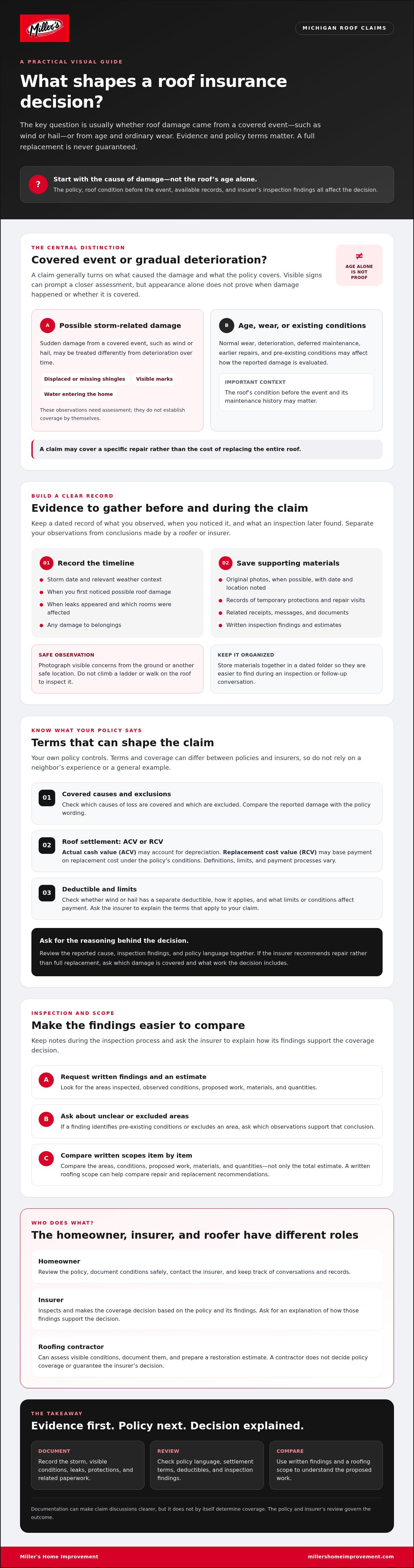
A roof claim generally turns on what caused the damage and what the policy covers. Sudden damage from a covered event, such as wind or hail, may be treated differently from deterioration that develops over time or problems linked to deferred maintenance. The policy wording, the roof’s condition before the event, available records, and the insurer’s inspection findings all matter. A claim may cover a specific repair rather than the cost of replacing the entire roof.
An aging roof alone doesn’t establish that insurance covers a new one. The claim must be supported by evidence of damage from a covered cause under the policy. Understanding basic homeowners insurance terms can help, but your own policy controls. If you’re considering how to get insurance to pay for a new roof, start by distinguishing storm-related damage from age-related wear.
Storm damage versus normal wear and tear
After a storm, you might notice displaced or missing shingles, visible marks, or signs of water entering the home. These observations can point to areas that need closer assessment, but appearance alone doesn’t prove when damage occurred or whether it’s covered. The roof’s age, earlier repairs, maintenance history, and pre-existing conditions may also affect how the insurer evaluates the reported damage.
Look from the ground or another safe location, and note what you can see. Don’t climb onto the roof to inspect it. A qualified roofer can assess visible conditions and document them, while the insurer makes its own coverage decision.
What the policy and deductible mean for a roof claim
Read the policy sections on covered causes of loss, exclusions, roof settlement terms, and deductibles. Check whether wind or hail has a separate deductible, and confirm how the policy says it applies. Terms and coverage can differ between policies and insurers, so don’t rely on a neighbor’s experience or a general online example to interpret your own contract.
Your policy may describe roof settlement as actual cash value (ACV) or replacement cost value (RCV). In broad terms, ACV may account for depreciation, while RCV may base payment on replacement cost under the policy’s conditions. Definitions, limits, and payment processes vary. Ask your insurer to explain the applicable terms and how the deductible affects the claim.
Review the insurer’s decision against the reported cause, inspection findings, and policy language. If the findings support repair rather than full replacement, ask which damage is covered and what work the decision includes. That gives you a clearer basis for considering next steps without assuming the claim will pay for an entirely new roof.
What evidence helps support a new roof insurance claim?
A clear, organized record helps show what you observed and when. Start with the storm date, then note when you first saw possible roof damage or noticed water inside. Separate what you personally observed from what a roofer or insurer later concluded. That timeline can make inspection and claim discussions more specific, though documentation alone doesn’t determine whether the policy covers the damage.
Document roof and interior damage safely
Take photos from the ground or another safe location. Don’t walk on the roof or climb a ladder to get a closer view. Photograph visible concerns such as displaced shingles, flashing, gutters, or interior ceiling stains. Keep original image files when possible, and record the date, location, and relevant weather context.
For leaks, write down when they appeared, which rooms were affected, and whether belongings were damaged. Save records of temporary protective measures, repair visits, messages with the insurer or contractors, and related receipts. Keep the materials together in a dated folder so you can find them during an inspection or follow-up conversation.
Before an inspection, organize the storm date, original photos, leak timeline, temporary repair records, receipts, and related messages.
Compare inspection findings and repair estimates
Ask for written inspection findings and a written estimate, then review what each document says. Look for descriptions of the areas inspected, observed conditions, proposed work, materials, and quantities. If a finding identifies pre-existing conditions or excludes an area, ask which observations support that conclusion. A roofing contractor’s assessment can document visible conditions and outline repair or restoration work, but it doesn’t decide policy coverage.
Compare estimates item by item rather than relying only on the total scope. Check whether both documents address the same roof areas and describe the same work. If they differ, mark the specific items and ask the insurer or contractor to clarify the discrepancy. A higher estimate can help identify questions to resolve, but it doesn’t guarantee claim approval or full roof replacement.
If you want another set of eyes on visible roof conditions and a clear restoration estimate, learn about roofing claim assistance from a local contractor. Keep the estimate and any supporting observations with your claim records, and use them to ask focused questions about the insurer’s findings.
How to respond when the insurer inspects or questions roof damage
A roof inspection is a chance to clarify what was observed, not a guarantee of coverage. Where practical, be present or arrange access, and keep a brief record of the visit: the date, who attended, which areas were inspected, and any questions or explanations. If you can’t attend, ask how to receive the inspection findings afterward.
Compare the insurer’s written notes with your photos and a contractor’s itemized observations. Note specific differences, such as a roof area shown in your photos but not addressed in the inspection report. A contractor can describe visible conditions and proposed work, but the insurer interprets the policy and makes its own coverage determination. Keep discussions factual and ask for clarification rather than assuming a disagreement will change the outcome.
Questions to ask after the roof inspection
Ask which conditions the inspector observed, which were attributed to the reported event, and which were excluded or considered pre-existing. Request the relevant policy language and a written explanation of the coverage decision. If the insurer considers repair sufficient, ask what damage the proposed repair addresses and what evidence would support considering replacement. Clear answers can help you understand the decision and identify any specific information that may be missing.
What to do if the claim is denied or underpaid
Start with the written decision. Read it alongside the policy, inspection findings, photos, and contractor observations. Identify the exact points in dispute, such as a roof section omitted from the scope or a difference in how damage was characterized. Then follow the insurer’s stated process to provide relevant additional documentation or request another review. Keep copies of what you send and note the dates of conversations.
If the explanation remains unclear, ask the insurer to address the disputed items in writing. For unresolved concerns, consult current guidance from the Michigan Department of Insurance and Financial Services (DIFS) about consumer options. Check the department’s official resources directly, since guidance and procedures can change. A roofing contractor may help document roof conditions and explain a repair or restoration estimate, but isn’t a substitute for an insurance or legal adviser.
For homeowners researching how to get insurance to pay for a new roof, steady follow-up is more useful than pressure. Keep communication professional, provide evidence tied to specific inspection findings, and avoid treating a contractor’s assessment as a promise of approval or full replacement.
How to get insurance to pay for a new roof in Michigan, step by step
A steady process helps keep the claim organized and reduce avoidable confusion. Start by reviewing your policy for reporting instructions, documentation expectations, and any deadlines that apply. Then record the damage, contact your insurer using the policy’s stated process, and keep a log of every follow-up. Act promptly, but verify the requirements in your own policy rather than relying on a general timeline or someone else’s claim experience.
Organize claim records and communications
Keep your policy, claim number, photos, inspection notes, estimates, and messages together in one folder, whether digital or printed. After each call, note the date, the representative’s name, the questions you asked, and any agreed next steps. Send requested information through the insurer’s stated channel and retain a copy. For more detail on the filing sequence, see the related guide, How to File a Roof Insurance Claim in Michigan.
This record makes it easier to track what the insurer has received and spot unanswered questions. If new information changes your understanding of the damage, add it to the file with its date and source. Clear records also help you explain the claim consistently if you speak with different representatives.
Coordinate repair decisions with the coverage review
Before starting non-emergency replacement work, ask the insurer what documentation or inspection steps it expects. That gives you a chance to preserve evidence and understand how the proposed work relates to the claim. If water is entering the home, take reasonable temporary steps to limit further damage, provided it’s safe to do so. Photograph conditions before and after the work, and keep related messages, invoices, and receipts.
Don’t assume temporary protection or other work will be reimbursed. Check the policy and ask the insurer how those expenses should be documented and whether they may be considered under your coverage. If a contractor uncovers additional damage or proposes work beyond the original estimate, ask the insurer how to submit the new findings or a supplement before proceeding, when practical. Coverage and claim procedures depend on the policy and insurer.
Understanding how to get insurance to pay for a new roof starts with careful records and clear communication, not a promise of approval. A roofing contractor can assess visible conditions, prepare a restoration estimate, and assist with claim documentation, but the insurer decides coverage. If you’d like help reviewing roof conditions and documenting a restoration scope, learn more about Miller's Home Improvement.
Choosing a Michigan roofer for insurance-related roof replacement
The right roofer should help you understand the roof’s condition and the work being proposed, not pressure you toward a predetermined outcome. Compare written scopes, materials, and repair-versus-replacement recommendations. Check whether the estimate identifies the affected roof areas and explains the work, and whether the contractor communicates clearly when a finding or scope changes.
A contractor can inspect and restore a roof, document visible conditions, and assist with claim materials. The insurer decides coverage, however, and no roofer can guarantee approval or payment for a full replacement. Keep that distinction clear as you compare estimates and plan the project.
Questions to ask a roofer assisting with an insurance claim
Ask how the contractor will record observations, share photographs, and document estimate revisions. Clarify who will communicate with you and what the contractor can or can’t control in the claim process. Then compare the proposed work with the insurer’s documentation. If the scopes differ, ask the roofer to explain the specific items and request clarification from the insurer rather than assuming one estimate will determine coverage.
Miller's Home Improvement provides residential roofing, storm-damage restoration, and claim assistance in Detroit and Southeast Michigan. The company is licensed and insured, and its owner has more than 25 years of experience. Claim assistance can help organize roofing information, but it doesn’t make Miller's a public adjuster or guarantee an insurer’s decision.
Plan the replacement only after understanding the approved scope
Before work begins, make sure the written agreement explains the materials, work scope, scheduling expectations, and each party’s responsibilities. Compare it with the insurer’s written decision, and ask how any difference will be handled. If additional damage is found, clarify the documentation and submission process with the insurer before treating added work as approved.
For broader project-planning considerations, consult a Detroit roof replacement guide alongside your estimate and claim documents. Miller's Home Improvement offers free in-home estimates. If you’d like to discuss your roof and review a written scope, request a free in-home estimate from Miller's Home Improvement.
Take the Next Step With Clear Information
Insurance decisions depend on the documented cause of damage, your policy terms, and the insurer’s findings. A dated record of roof conditions, leaks, inspections, and repair estimates can help you ask focused questions and understand whether the proposed scope is for repair or replacement. Knowing how to get insurance to pay for a new roof means building a clear claim record, not assuming coverage or full replacement is guaranteed.
Miller's Home Improvement is a Michigan roofing contractor offering residential and commercial roofing, storm-damage restoration, and insurance-claim assistance. The company has more than 25 years of owner experience and 13 years in business, and is licensed and insured. A roofer can assess roof conditions and prepare an estimate, while the insurer makes the coverage decision.
If you’d like a professional assessment and a clear estimate for your roof in Detroit or Southeast Michigan, request a free in-home roof estimate from Miller's Home Improvement. Take the process one step at a time, and use the information you gather to make a practical decision for your home.
Frequently Asked Questions
Is roof replacement covered by homeowners insurance?
Roof replacement may be covered if a covered event caused damage and the policy’s terms support replacement. Certain wind or hail damage may qualify for repair or replacement, while age-related deterioration or maintenance issues may not. The insurer considers the policy, roof condition, cause of damage, and evidence. Visible damage alone doesn’t establish coverage, and an approved claim doesn’t automatically mean the entire roof will be replaced.
Can I get a new roof through insurance if my roof is old?
An old roof alone generally doesn’t qualify for insurance-funded replacement. The key issue is whether a covered event caused damage that meets your policy’s terms. Roof age, prior repairs, and pre-existing conditions may affect the insurer’s assessment or settlement. If you suspect recent storm damage to your Detroit home, document what you can safely observe, review your policy, and ask the insurer to explain its findings before making replacement plans.
How do I prove storm damage to my roof for an insurance claim?
Build a dated record of visible damage and when related problems began. Take photos from the ground or another safe location, note when leaks appeared, and keep repair records and relevant messages. A roofer may provide written observations and an estimate, but that doesn’t decide coverage or guarantee approval. Ask your insurer what documentation it needs, preserve original records, and don’t climb onto a damaged or slippery roof to take pictures.
What happens if the insurance company denies my roof claim?
A denial isn’t the end of the review process, but your next step should follow the insurer’s stated procedure. Read the written decision alongside your policy, inspection findings, and supporting records. Ask for clarification on disputed damage or exclusions, then submit relevant additional evidence or request another review as directed. Keep copies of what you send and notes from conversations. If concerns remain, check current Michigan Department of Insurance and Financial Services guidance.
Does homeowners insurance pay for a full roof replacement or only repairs?
Coverage may apply to repairs or replacement, depending on your policy, the cause and extent of damage, the roof’s condition, and the insurer’s findings. A claim may cover specific damaged areas without supporting full replacement. Ask for the written inspection findings and explanation of the approved scope. If a roofer’s estimate differs, request clarification about the specific work or areas in question rather than assuming the estimate changes the insurer’s decision.
Should I get a roofer’s inspection before filing a roof insurance claim?
A roofer’s assessment can help you understand visible conditions and prepare documentation, but it doesn’t replace the insurer’s inspection or determine coverage. If you suspect storm damage in Detroit, review your policy’s reporting instructions, record what you can safely see, and contact your insurer to ask about its process. A local roofing contractor may provide written observations and an estimate for you to consider alongside the insurer’s findings.
Can a roofing contractor guarantee that insurance will pay for my new roof?
No contractor can guarantee an insurer will cover a roof claim or pay for full replacement. The insurer applies the policy to its assessment, while a roofer can inspect visible conditions, document observations, and explain a proposed restoration scope. Miller's Home Improvement is a Michigan-based residential and commercial roofing contractor that offers insurance-claim assistance. That support can help organize roofing information, but the insurer makes the coverage decision.


