
A durable EPDM membrane can’t make up for a poorly planned roof system. With epdm flat roofing, the membrane matters, but so do drainage, seams, roof penetrations, and how the assembly is attached to the building.
If you’re considering EPDM for a commercial property in Detroit or elsewhere in Southeast Michigan, you may be weighing it against other flat-roof systems and wondering how it will suit your building’s drainage and seasonal conditions. EPDM can work for some roofs, but the right choice depends on the roof’s design, condition, and project requirements.
This guide explains how EPDM roofing is constructed, where it’s commonly used, and how it compares with PVC and Torch Down roofing. It also covers Michigan planning considerations and questions to ask a roofing contractor, so you can evaluate the complete roof system rather than the membrane alone.
Key Takeaways
- Evaluate epdm flat roofing as part of a complete roof assembly, not as a standalone membrane.
- Compare EPDM’s potential benefits and limitations with your building’s needs before choosing a flat-roof system.
- Ask how the project will address drainage, transitions, and maintenance for Michigan conditions.
- Use a contractor checklist to review building conditions, materials, project scope, licensing, insurance, and written details.
- Compare EPDM with other flat-roof systems to see which option best fits your commercial roof project.
What Is EPDM Flat Roofing, and Where Is It Used?
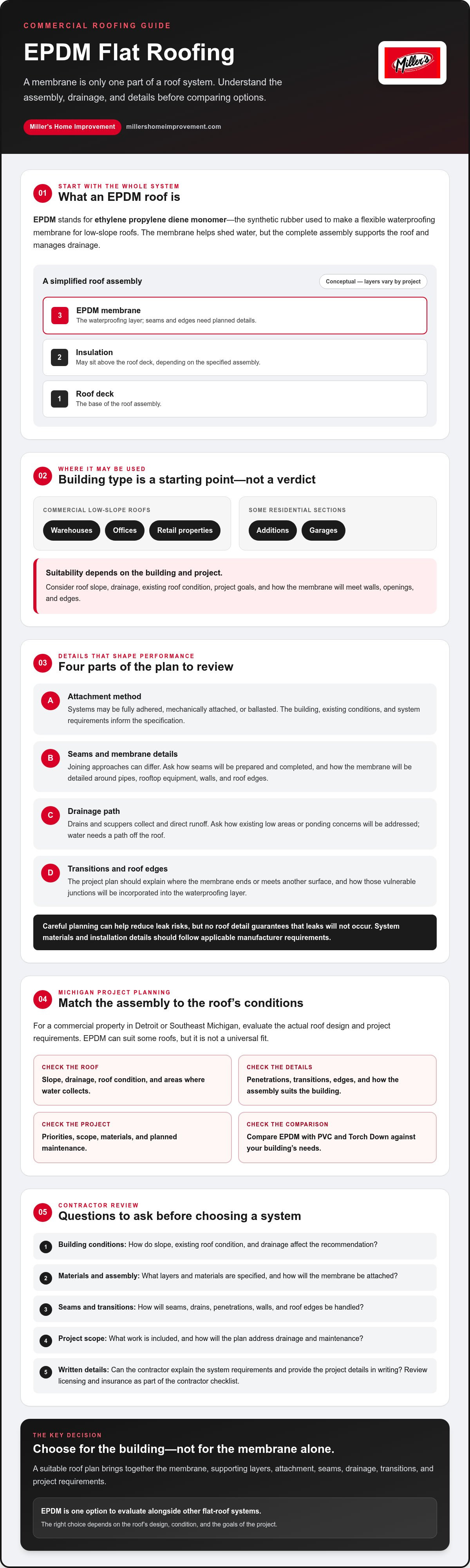
EPDM flat roofing is a low-slope roof system that uses a flexible synthetic rubber membrane as its waterproofing layer. The membrane helps shed water, while the complete assembly beneath and around it supports the roof and manages drainage. EPDM is one option, not a universal fit. Roof slope, drainage, existing conditions, and project goals all matter.
What does EPDM stand for in roofing?
EPDM stands for ethylene propylene diene monomer, the name of the synthetic rubber used to make the membrane. For a plain-language overview of the material, see Ethylene propylene rubber. The membrane is only one part of a roof assembly, which may also include the roof deck, insulation, and other layers selected for the building.
EPDM systems can differ in how the membrane is made, attached, and integrated with the rest of the roof. The term “EPDM” alone doesn’t describe every installation. Seams, roof edges, penetrations, and transitions should be included in the system design from the start.
Which buildings commonly use EPDM flat roofing?
EPDM is used on low-slope commercial buildings such as warehouses, offices, and retail properties. Some homes also have low-slope or flat-roof sections, including roofs over additions or garages. Building type can help frame the discussion, but it doesn’t determine suitability by itself.
A contractor should assess the roof’s slope and drainage, the condition of the existing roof, and the project’s priorities before recommending a system. If water collects in certain areas, ask how the project plan will address the drainage conditions. The proposed membrane also needs suitable detailing where it meets walls, roof openings, and edges.
For a commercial property owner in Detroit, a useful first question is not simply whether EPDM can be installed. Ask how the proposed assembly will suit the building’s actual conditions and how drainage and roof transitions will be handled. A property-specific assessment can help establish whether EPDM is a reasonable option to compare with other flat-roof systems.
How an EPDM Flat Roof Works: Membrane, Seams, and Roof Layers
An EPDM roof is an assembly, not just a sheet of rubber. The roof deck provides the base, insulation may sit above it, and the EPDM membrane forms the waterproofing layer. The specified assembly depends on the building and project requirements. EPDM performance depends on suitable materials, compatible attachment and seam details, sound roof conditions, and careful installation around drainage points, penetrations, and edges.
The EPDM Roofing Association (ERA) describes EPDM as a roofing membrane system. For building owners, the important point is that the membrane must work with the layers beneath it and the details around it. Even a suitable membrane needs an assembly planned for the actual roof.
How are EPDM membranes joined and secured?
EPDM systems may be fully adhered, mechanically attached, or ballasted, depending on the design. Seams may also use different joining approaches. No single method suits every commercial building. The roof structure, existing conditions, and system requirements inform the specification. Ask the contractor to explain the proposed attachment method and how seams will be prepared and completed.
The membrane also needs careful detailing where it meets rooftop equipment, pipes, walls, and roof edges. These junctions interrupt the broad membrane surface, so the project plan should explain how each will be incorporated into the waterproofing layer. The selected materials and installation details should follow the applicable manufacturer requirements for the system.
Why do drainage and roof details matter?
Water needs a path off the roof. Drains and scuppers collect and direct runoff, while edges and transitions manage where the membrane ends or meets another surface. Inadequate drainage or poorly executed details can leave water in low areas or expose vulnerable points. Careful planning can help reduce leak risks, but no roof detail guarantees that leaks will not occur.
Ask how the proposed work will address existing drainage conditions, roof penetrations, and transitions. If ponding is already a concern, see the existing guide to flat-roof ponding repair in Detroit for related considerations. Miller's Home Improvement offers commercial EPDM flat roofing. A project-specific discussion can help clarify how the assembly and details would be planned for your building.
EPDM Flat Roofing Benefits and Limitations for Michigan Buildings
EPDM can be a practical option for some low-slope roofs, but its suitability depends on the building and the planned roof assembly. Its flexibility may help it conform to roof surfaces and details. Good results still depend on sound preparation, appropriate attachment, carefully completed seams, and attention to penetrations and edges. Choosing a membrane alone won’t resolve drainage or existing-roof problems.
The Whole Building Design Guide emphasizes evaluating roofing as part of the building envelope. For owners, that means considering how the roof will be used, the condition of the deck and insulation, drainage needs, appearance, and maintenance alongside the membrane itself.
What advantages can EPDM offer a flat-roof project?
EPDM’s flexible membrane may suit projects where a rubber membrane system fits the roof design and the owner’s priorities. Evaluate its suitability alongside the planned attachment method and the contractor’s approach to seams, drains, rooftop equipment, and edges. These decisions shape the complete system and its expected performance.
Appearance can also affect the decision, particularly if the roof is visible from occupied areas or neighboring properties. Ask which membrane options are included in the proposal and how the finished roof will look. Have the contractor explain the inspection and maintenance the specific system may require.
What limitations should owners weigh against PVC or Torch Down?
EPDM, PVC, and Torch Down are different flat-roof system options, but no one system is automatically best for every Michigan property. The right comparison depends on the building’s conditions, project goals, detailing needs, and proposed scope. Ask the contractor to explain why the recommended system fits and what trade-offs apply to the alternatives.
| Decision factor | Potential benefit or trade-off | Question to verify |
|---|---|---|
| Membrane and roof design | EPDM’s flexibility may suit some low-slope roof layouts. Fit depends on the complete assembly. | How does the proposed system suit this roof’s slope and existing conditions? |
| Seams and penetrations | These details require careful planning and installation. | How will seams, drains, equipment, and edges be addressed? |
| Appearance and upkeep | Finish and ongoing inspection needs may influence the choice. | What appearance options and maintenance expectations should we plan for? |
| Other systems | PVC and Torch Down may involve different project considerations. | Why is the recommended option a better fit for our building and intended use? |
Use these questions to compare proposals on more than membrane type. A broader commercial roof replacement guide can also help frame system planning, project scope, and sequencing before you decide.
Michigan EPDM Roof Planning: Weather, Drainage, and Inspection Questions
Michigan’s changing seasons make it useful to plan how a commercial roof will be checked and maintained. Rather than assume a membrane will resolve weather-related concerns on its own, ask for a property-specific review of roof transitions, water movement, and visible conditions. Keep the discussion focused on the building’s needs and the maintenance plan for its particular roof assembly.
Before an assessment, note any interior water stains, recurring concerns, or changes you’ve observed from accessible areas. Don’t walk on a roof that may be unsafe. A qualified roofing professional can review areas that aren’t safe to reach and explain what needs attention.
What should Michigan owners ask about drainage and ponding?
Ask how the contractor will evaluate roof slope and the condition of drains or scuppers. If water appears to collect, ask what the assessment indicates about the cause and whether the proposed work addresses it. Ponding is a site-specific concern, so changing the membrane alone may not resolve it. Request an explanation of how the recommended scope relates to the roof’s existing water-management conditions.
For seasonal upkeep, consult the existing Michigan winter roof preparation guide and ask which maintenance steps apply to your specific roof.
What should a flat-roof inspection cover?
Ask for a review of the visible membrane condition, seams, penetrations, edges, transitions, and drainage points. The contractor should explain what was observed and why a repair or replacement is recommended. If replacement is proposed, ask how the scope accounts for the existing roof and any conditions that could affect the project.
Keep a record of your concerns and the inspection findings. Photos taken from a safe location, notes about when issues appear, and copies of written recommendations can help you track changes and compare proposals. Request clear project details so you understand the recommended work.
For a building-specific discussion of epdm flat roofing and your commercial roof’s condition, contact Miller's Home Improvement about its commercial EPDM roofing service.
Choosing an EPDM Flat Roofing Contractor in Southeast Michigan
A sound proposal should explain how the contractor’s plan fits your building, not just name a membrane. Before comparing bids, confirm the contractor’s licensing and insurance, ask for references, and review the written scope. For epdm flat roofing, clear details about preparation, drainage, and roof junctions help you understand what the work includes.
Which questions help assess an EPDM roofing proposal?
Ask the contractor to walk you through the proposed work, from preparing the existing roof to completing the membrane and cleaning up. Clarify what happens if the crew finds unexpected deck conditions, and how any scope change will be explained and documented. Request project-specific material details and confirmation that the proposed system will be installed according to applicable manufacturer requirements.
- Does the written scope explain preparation, membrane work, edges, penetrations, and cleanup?
- How will the plan address known drainage concerns?
- How will unexpected conditions or changes to the work be communicated?
- What materials are proposed, and what manufacturer requirements apply to this system?
- What is the anticipated project sequence, and how will the work affect building access?
- Can the contractor provide references for comparable roofing projects?
Compare proposals line by line. If an item is unclear or missing, ask for clarification in writing before work begins. Confirm who your point of contact will be and how progress updates will be shared.
What should you expect from Miller's Home Improvement?
Miller's Home Improvement serves Southeast Michigan and surrounding communities, including Detroit, and offers commercial EPDM flat roofing alongside PVC and Torch Down systems. The company has more than 25 years of owner experience and 13 years in business, and is fully licensed and insured.
Discuss your building’s condition, drainage concerns, project goals, and proposed scope. Ask for written details so you can understand the recommendation and compare it with other options. Miller's Home Improvement offers free in-home estimates. For a commercial project, ask whether an estimate is available and what the assessment would cover.
If you’re planning a commercial roof project in Detroit or Southeast Michigan, contact Miller's Home Improvement to discuss your building and request an estimate. A careful conversation can help you identify what to evaluate next without assuming EPDM is the right fit for every roof.
Make Your Next Roof Decision with a Clear Plan
EPDM can suit some commercial roofs, but the membrane is only part of the decision. The roof’s condition, drainage, seams, edges, and project scope all need careful assessment. Compare EPDM with other flat-roof systems based on your building’s needs, then ask contractors to explain their recommendations in writing.
For a Detroit or Southeast Michigan property, start with clear answers about the existing roof and how the proposed system will address its specific conditions. Miller's Home Improvement is a licensed and insured Michigan roofing contractor offering commercial EPDM flat roofing, with more than 25 years of owner experience and 13 years in business.
Ready to discuss your building’s needs? Contact Miller's Home Improvement about your flat-roof project and request an estimate.
Frequently Asked Questions
What is EPDM flat roofing?
EPDM flat roofing uses a synthetic rubber membrane as the waterproofing layer in some low-slope roof systems. The membrane is one part of a larger assembly that may include a roof deck, insulation, attachment components, and detailed edges and penetrations. Not every EPDM system is the same. Have a qualified roofer assess the entire roof, including its slope and drainage, rather than choosing a system by membrane name alone.
Is EPDM a good choice for a commercial flat roof in Michigan?
EPDM may suit some Michigan commercial roofs, but it isn’t automatically right for every building. Roof design, drainage, existing conditions, planned use, and installation details all affect the recommendation. For a Detroit property, ask a qualified contractor how the proposed assembly addresses the roof’s water-management needs and seasonal conditions. The contractor should explain why EPDM fits the project and identify concerns that could affect the scope.
How long does an EPDM flat roof last?
There isn’t one service-life figure that applies to every EPDM roof. Materials, installation, roof traffic, drainage, maintenance, and weather exposure can all affect how a particular system performs over time. Ask the contractor to identify the proposed materials and explain the maintenance they may require. If a lifespan estimate is provided, verify it against the specific product documentation and your building’s conditions, including its roof design and use.
Can EPDM roofing handle snow and freeze-thaw weather?
EPDM is used on low-slope and flat roofs, but that alone doesn’t establish how a specific roof will perform during Michigan snow and freeze-thaw conditions. The full assembly, drainage, seams, edges, and penetrations matter. Ask a contractor to explain how the proposed system suits your building and its site conditions. For a Detroit property, request a project-specific assessment rather than relying on broad claims about how a membrane handles winter weather.
How do you maintain an EPDM flat roof?
Maintain an EPDM roof according to the requirements for its specific system. Arrange professional inspections and ask that the visible membrane condition, seams, penetrations, edges, and drainage points be reviewed. Keep records of inspection findings and repairs to help track changes over time. Don’t walk on a roof unless access is confirmed safe and appropriate. Ask the installer for written, project-specific maintenance guidance rather than assuming every EPDM assembly needs the same care.
Is EPDM better than PVC or Torch Down roofing?
EPDM, PVC, and Torch Down are different flat-roof system options, and none is universally best. The right fit depends on the building, existing roof conditions, drainage, project goals, and installation plan. Ask a contractor to compare suitable options using the same criteria and explain the trade-offs in writing. Miller's Home Improvement offers commercial EPDM, PVC, and Torch Down roofing, giving Detroit-area property owners options to discuss for their project.
What should an EPDM roofing estimate include?
An EPDM roofing estimate should clearly describe the proposed work and what it excludes. Ask for written details covering preparation, materials, membrane work, edges, penetrations, drainage considerations, cleanup, and how unexpected conditions will be handled. Confirm the contractor’s licensing and insurance, and ask which product requirements apply to the proposed system. If any scope item is unclear, request an explanation before approving the work. For a Detroit building, make sure the proposal reflects its actual roof conditions.


