
A storm moves through Michigan, and by morning you notice lifted shingles, scattered debris, or a water stain indoors. Before arranging permanent repairs, it’s natural to wonder what may be covered and what evidence your insurer will need. If you’re searching “how to file roof insurance claim,” start by protecting your home, documenting what you can safely see, and reviewing your policy.
It can be hard to tell whether damage came from a covered event, how to prepare for an inspection, or what to do if an estimate seems incomplete. A roofer can document visible roof conditions and explain repair needs, but your insurer determines coverage under your policy. Clear records and timely communication can help you keep the process organized, though they can’t guarantee a particular outcome.
This guide covers the practical steps after possible storm damage: recording conditions before repairs, contacting your insurer, preparing for an inspection, and reviewing the estimate and next steps. You’ll also find questions to ask and ways to make an informed repair decision if your claim is delayed, partially approved, or denied.
Key Takeaways
- Learn how to file roof insurance claim by following an organized sequence, from checking your policy to comparing inspection findings.
- Keep roof photos, interior damage records, dates, claim details, and insurer communications together so key evidence is easy to find.
- Understand the difference between an insurer’s coverage decision and a roofer’s observations about visible damage and repair needs.
- Review the written decision, deductible, and proposed work, then note any differences or questions that need clarification.
- Use a clear plan to move from the claim decision to documented repair work while keeping relevant records.
How to File a Roof Insurance Claim After Storm Damage
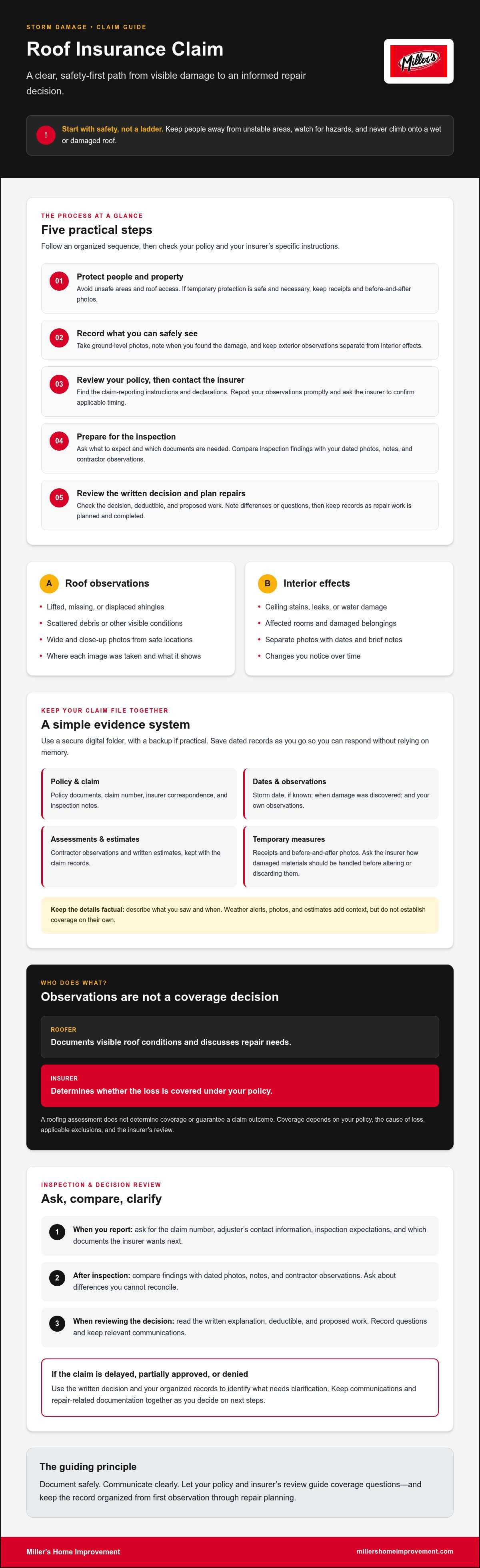
Start with safety, not a ladder. Keep people away from unstable areas, watch for hazards such as fallen branches or sagging ceilings, and don’t climb onto a wet or damaged roof. From a safe location, note what you can see and take the process one step at a time. There’s no single answer to how to file roof insurance claim, because coverage depends on your policy, the cause of loss, applicable exclusions, and the insurer’s review.
A practical sequence is to review your policy, record visible damage, contact your insurer, arrange its inspection, and compare the findings with your records. For background on how a claim generally fits into homeowners coverage, see this overview of the homeowners insurance claims process. Your policy and insurer are the sources for your specific requirements.
What to do before contacting your insurer
Document what you can safely observe before temporary work or permanent repairs change the evidence. Photograph exterior damage from the ground and record the date you first noticed it. Save relevant storm dates, weather alerts, and your own observations as context, not as proof that a loss is covered. If temporary protective measures are safe and necessary, keep receipts and take before-and-after photos. Don’t attempt roof work that puts you at risk.
Keep exterior observations separate from interior effects. For example, record a missing or displaced shingle, then separately photograph and date any ceiling stain or water-damaged belongings. This helps you explain what you found without assuming the cause.
How to start the claim conversation
Before calling, find your policy declarations and claim-reporting instructions. Policies can have different notice requirements, so report what you’ve observed promptly and ask your insurer to confirm the applicable timing. Don’t rely on a general online deadline instead of your policy or the insurer’s directions.
Describe the damage plainly. Say what you saw and when you noticed it. Avoid guessing whether wind, hail, or another cause created a particular condition, or stating a repair scope before it’s assessed. Ask for the claim number, the adjuster’s contact information, what to expect during the inspection, and which documents the insurer wants next. Write down the answers and keep copies of correspondence.
A roofer can assess and document observed roof damage, but only the insurer decides whether the loss is covered under your policy. A roofing assessment can help you describe physical conditions and discuss repair needs, but it doesn’t determine coverage or guarantee a claim outcome. After the insurer’s inspection, compare its findings with your dated photos, notes, and any contractor observations. Ask about differences you can’t reconcile.
What Documents and Roof Damage Evidence Should You Gather?
An organized claim file helps you explain what you observed and respond to requests without relying on memory. Create a secure digital folder, with a backup if practical, and save dated records as you go. Keep exterior roof observations separate from interior leaks, water stains, and damaged belongings. For example, photograph and date a bedroom ceiling stain in an interior record, even if you suspect it relates to roof damage.
A practical roof insurance claim documentation checklist
Take wide and close-up photos from safe locations. Never climb onto a damaged roof to get a better view. Add brief captions describing where each image was taken and what it shows. Record the storm date, if known, when you discovered the damage, which rooms are affected, and any changes you notice over time.
- Save your policy documents, claim number, insurer correspondence, and inspection notes.
- Keep contractor assessments and written estimates with the claim records.
- Retain receipts for reasonable temporary protective measures, and photograph conditions before and after work.
- Ask the insurer how damaged materials should be handled before altering or discarding them.
These records can clarify the sequence of events, but photos, weather alerts, and estimates don’t establish coverage on their own. Coverage and payment depend on the policy and the insurer’s review. For general information about how insurance companies pay out claims, consult the Consumer Financial Protection Bureau, then confirm your claim’s payment details directly with your insurer.
Why a professional roof inspection can add useful detail
A roofing professional can document visible conditions, where they occur, and what repairs may be appropriate. Ask for a written assessment that separates observed damage from proposed work. This gives you a clearer document to compare with the insurer’s inspection, without treating a contractor’s opinion as a coverage decision. For help recognizing possible hail-related signs, see this Michigan hail damage roof repair guide.
If you’re documenting repair needs in Detroit or Southeast Michigan, Miller’s Home Improvement can provide a roofing assessment and estimate to help you discuss observed conditions with your insurer. Keep the written findings with your claim file, and direct coverage questions to the insurer.
What Happens During the Insurer’s Roof Inspection?
After you report roof damage, the insurer will arrange its own review to evaluate the reported loss and decide how your policy applies. The inspection may include roof areas and related damage you’ve reported. Ask what the appointment will cover, and be ready to point out locations you’ve documented. If practical, attend the inspection, take notes, and ask how and when you’ll receive the written findings.
A roofing contractor can provide a separate assessment of visible conditions and recommended repairs. That perspective may help you discuss specific areas with the insurer, but a contractor’s estimate doesn’t guarantee the insurer will approve the same repair scope. The insurer makes the coverage decision under the policy. Keeping those roles clear is an important part of understanding how to file roof insurance claim and respond to the review.
Questions to ask the adjuster during a roof inspection
Use the appointment to clarify what the insurer is reviewing and what happens next. You might ask:
- Which roof areas and reported interior damage are included in the inspection?
- How can I receive the written findings, and are any documents still outstanding?
- If additional damage is identified, how should I submit photos, estimates, or other information for review?
Write down the answers, the adjuster’s name and contact details, and any follow-up steps. If you can’t attend, ask the insurer how to share your questions and receive inspection updates.
What to do if inspection findings differ
When you receive the insurer’s written scope, compare it with the contractor’s documented observations. Look for specific differences, such as a roof area noted in one assessment but not the other, or a repair item that appears in only one scope. A difference may need clarification, but it doesn’t automatically mean the claim decision is incorrect. Ask the insurer how to submit supporting photos, a written estimate, or a request for further review. Keep the communication factual and retain copies of what you send.
Check your policy for any review or dispute procedures, and consult current consumer guidance from the Michigan Department of Insurance and Financial Services (DIFS) if you need help understanding your options. DIFS guidance can inform your questions, but it doesn’t replace your policy or the insurer’s claim review.
A documented roofing assessment can give you a clearer basis for discussing observed damage and repair needs. If you’d like a contractor’s perspective, Miller’s Home Improvement offers a free in-home roofing estimate. Use it as repair information to compare with the insurer’s findings, not as a promise of coverage or approval.
How to Review a Roof Claim Decision and Plan Repairs
Read the insurer’s written decision before scheduling permanent work. Check which damage and repairs are included, which items are excluded or unresolved, how your deductible is applied, and how the payment is explained. Policy terms and claim outcomes vary, so don’t treat a contractor’s estimate as a promised insurance payment. If any part of the decision is unclear, ask the insurer to explain it in writing.
How to compare the insurer’s scope with a roofer’s estimate
Compare the documents item by item. Look at the roof areas, materials, quantities, and related repairs each one describes. A difference may reflect the insurer’s coverage decision, a repair recommendation, or details that need clarification. It doesn’t automatically mean the claim decision is incorrect. Record each question and refer to the specific document or item when you ask for an explanation.
| Review item | What to compare or clarify |
|---|---|
| Insurer’s scope | Included roof areas, repairs, materials, quantities, exclusions, and deductible. |
| Contractor observations | Documented conditions and recommended work, noting differences from the insurer’s scope. |
| Supporting documents | Photos, inspection notes, written estimates, and relevant receipts. |
| Questions to resolve | Ask what explains each difference and how to submit additional information. |
Keep the insurer’s written decision, the estimate, and your supporting records together. This side-by-side review can make conversations more precise and help you plan repairs based on documented information, rather than assumptions about what will be paid.
What to do after a partial approval or denial
If the insurer approves only part of the reported damage or denies the claim, read the explanation and any policy provisions it cites. Request the reasons in writing if they aren’t clear. Then follow the insurer’s stated review process and submit relevant records, such as dated photos or a contractor’s written observations. Keep copies of everything and note when you sent it.
For unresolved coverage questions, consider qualified independent advice and check current Michigan Department of Insurance and Financial Services (DIFS) consumer resources. Your policy and the insurer’s instructions are central to the next steps. Don’t rely on general guidance as a substitute for either.
If documented repair needs point to a full replacement, this Detroit roof replacement guide can help you understand the roofing work involved. For a contractor’s perspective on roof repairs or replacement planning, request a roofing estimate. Use it to clarify proposed work, not to assume coverage or a particular claim outcome. Careful review is an important part of how to file roof insurance claim and make an informed repair decision.
How Detroit-Area Homeowners Can Move from Claim to Roof Restoration
The claim decision is a planning point, not a repair plan by itself. Before work begins, make sure you understand the insurer’s written decision and any instructions that apply to repairs or additional documentation. Then compare the approved scope, if any, with the contractor’s written proposal. Coverage decisions and repair responsibilities can vary, so confirm unresolved questions with your insurer rather than assuming a particular cost or payment will be covered.
For Detroit and Southeast Michigan homeowners, weather and contractor availability may affect when work can be scheduled. Plan around safety and the insurer’s instructions as well. If temporary protection is needed to reduce further exposure, ask the insurer how to document it and keep records of the work. The steps for how to file roof insurance claim should lead to careful coordination, not a rushed commitment.
Preparing for storm-damage roof work in Southeast Michigan
Before scheduling, get the proposed work, materials, expected schedule, and responsibilities in writing. Confirm that the contractor’s scope matches the work you intend to authorize, and ask the insurer about any unresolved differences. Keep the claim decision, contractor documents, photos, and receipts together. If workers uncover unexpected conditions, ask how to record and communicate those findings to both the contractor and insurer before changing the work scope.
As work progresses, retain relevant completion records and updated documentation. A clear paper trail helps you track what was observed, agreed to, and completed. Keep copies in the same secure claim folder so they’re available if the insurer requests further information.
When local roofing support can help
A licensed and insured roofing contractor can assess roof conditions, document observed damage, and explain repair options. That information can help you discuss the physical work with your insurer, but it doesn’t decide coverage. Miller’s Home Improvement serves Detroit and Southeast Michigan with residential roofing and storm-damage restoration, and can help coordinate roofing work involving insurance claims.
Once you’ve reviewed your claim steps and are ready to discuss the roof itself, discuss a roof assessment with Miller’s Home Improvement. The company offers a free in-home estimate. An assessment can clarify proposed roofing work, without promising claim approval, coverage, or payment.
Move Forward with a Clear Roof Repair Plan
A steady process makes a difficult situation easier to manage. The essentials of how to file roof insurance claim are straightforward: keep clear records, ask your insurer to explain its decision, and compare the documented repair scope before authorizing work. Coverage depends on your policy and the insurer’s review, so base repair plans on confirmed details rather than assumptions.
For Detroit and Southeast Michigan homeowners, a roofing contractor can help document roof conditions and explain repair options, while the insurer remains responsible for coverage decisions. Miller’s Home Improvement handles residential storm-damage restoration and helps coordinate insurance-related roofing work. The company reports that it’s licensed and insured, with more than 25 years of owner experience and 13 years in business. Confirm current company details when evaluating a contractor.
If you’re ready to discuss your roof’s condition, request a free in-home roofing estimate. With careful documentation and clear communication, you can take the next repair step with greater confidence.
Frequently Asked Questions
How soon should I file a roof insurance claim after a storm?
Contact your insurer promptly after discovering possible storm damage, and check your policy for notice requirements. Policies can set different timelines, so don’t rely on a general deadline or wait for a contractor’s assessment before asking the insurer how to report the loss. You can document visible conditions safely while preparing to call. Describe what you observed and when, without guessing at the cause or assuming the damage is covered.
Should I get a roof inspection before filing an insurance claim?
You can ask a qualified roofing contractor to assess and document visible roof conditions, but you don’t need to treat that assessment as a prerequisite to contacting your insurer. Report possible damage promptly and follow the policy’s claim instructions. A contractor’s written observations may help you describe repair needs or compare findings later. The insurer arranges its own review and determines coverage under your policy, so a roofer’s assessment does not decide the claim.
Can a roofing contractor file a roof insurance claim for me?
A roofing contractor can document observed damage, provide repair information, and help coordinate roofing work involving an insurance claim. That support isn’t the same as making the insurer’s coverage decision or acting as your insurance representative. As the policyholder, contact your insurer to report the loss, confirm its process, and keep track of claim communications. If you’re researching how to file roof insurance claim, begin with your policy’s instructions and your insurer’s guidance.
What should I do if my roof insurance claim is denied?
Read the denial letter carefully and ask the insurer for its reasons in writing if they aren’t clear. Review any policy provisions it cites, then follow the insurer’s stated process for submitting additional information or requesting another review. Relevant photos, inspection notes, or a contractor’s written observations may help clarify disputed roof conditions, but they don’t guarantee a different decision. For unresolved questions, consider qualified independent advice and check current Michigan DIFS consumer resources.
Does homeowners insurance cover every type of roof damage?
No. Whether roof damage is covered depends on the policy, the reported cause of loss, exclusions, and the insurer’s review. A storm-related condition and damage attributed to ongoing wear may be treated differently, but the policy and claim circumstances control. Don’t assume visible damage means a claim will be approved, or that an older roof automatically rules out coverage. Ask your insurer to explain how the relevant policy terms apply to the damage you reported.
What documents should I submit with a roof insurance claim?
Follow your insurer’s instructions for required documents. Depending on the request, useful records may include dated photos taken from safe locations, the date you noticed damage, notes about affected rooms, inspection findings, contractor observations, and receipts for temporary protective measures. Keep your policy information, claim number, and insurer correspondence organized as well. Separate interior leaks or damaged belongings from exterior roof observations, and ask before altering or discarding damaged materials.
Can I choose my own roofing contractor for an insurance claim?
Ask your insurer whether your policy or claim process includes contractor requirements, then review any proposed work and responsibilities before authorizing repairs. A contractor can assess roof conditions and provide a written scope or estimate, but that estimate doesn’t guarantee the insurer will approve the same work. In Detroit, Miller’s Home Improvement provides residential roofing, storm-damage restoration, and free in-home estimates. Confirm repair details with the contractor and coverage questions with your insurer.


