
Michigan freeze-thaw cycles expose every vulnerability in a flat roof, turning tiny seam separations into frustrating interior leaks. If you own or manage a property with low-slope sections, you have likely dealt with standing water, winter ice dams, and the headache of premature surface failures. When evaluating torch down roofing Michigan property owners often wonder whether an open-flame modified bitumen system can truly outlast single-ply alternatives under intense snow loads and shifting temperatures.
Multi-ply torch down assemblies provide exceptional puncture resistance and thermal durability, heat-welding seams into a cohesive, watertight barrier rather than relying on adhesives that can degrade over time. In this comprehensive guide, you will discover how modified bitumen performs in our local climate, compare it directly against EPDM and PVC, and learn how to verify vital contractor standards like open-flame insurance and post-installation fire watch procedures. Here is the straightforward guidance you need to protect your building with confidence.
Key Takeaways
- Understand how heat-welded modified bitumen creates a seamless, monolithic membrane that actively prevents leaks caused by ponding water and ice dams.
- Discover why torch down roofing Michigan properties rely on delivers superior puncture resistance and flexibility across harsh winter freeze-thaw cycles.
- Compare torch down directly against single-ply alternatives like EPDM and PVC to pinpoint the right balance of lifespan, durability, and maintenance for your building.
- Learn the critical stages of a correct installation, from substrate preparation and base sheet attachment to meticulous cap sheet detailing.
- Identify the exact contractor qualifications to look for, including specialized open-flame insurance riders and required post-installation fire watch safety protocols.
What Is Torch Down Roofing and How Does It Work on Low-Slope Roofs?
Torch down roofing is an asphalt-based modified bitumen membrane system engineered specifically for flat and low-slope structures. Modern modified bitumen evolved directly from traditional asphalt roll roofing and hot-mop built-up systems, delivering significantly improved strength and elasticity. During application, a certified installer uses an open-flame propane torch to heat the underside of the sheet. This process melts the modified asphalt compound, allowing it to fuse directly to the substrate and overlapping rolls. As the material cools, the seams weld together into an impervious, continuous barrier that eliminates the adhesive vulnerabilities common in other systems.
Unlike single-ply rubber (EPDM) or thermoplastic (PVC) membranes that rely on glued seams or specialized tape, multi-ply torch down systems offer redundant protection across several bonded layers. For property owners evaluating torch down roofing Michigan residential extensions, detached garages, covered porches, and commercial flat roofs benefit immensely from this heavy-duty barrier. It handles foot traffic and debris better than thinner single-ply sheets, giving building owners long-term peace of mind.
The Multi-Layer Anatomy of Modified Bitumen
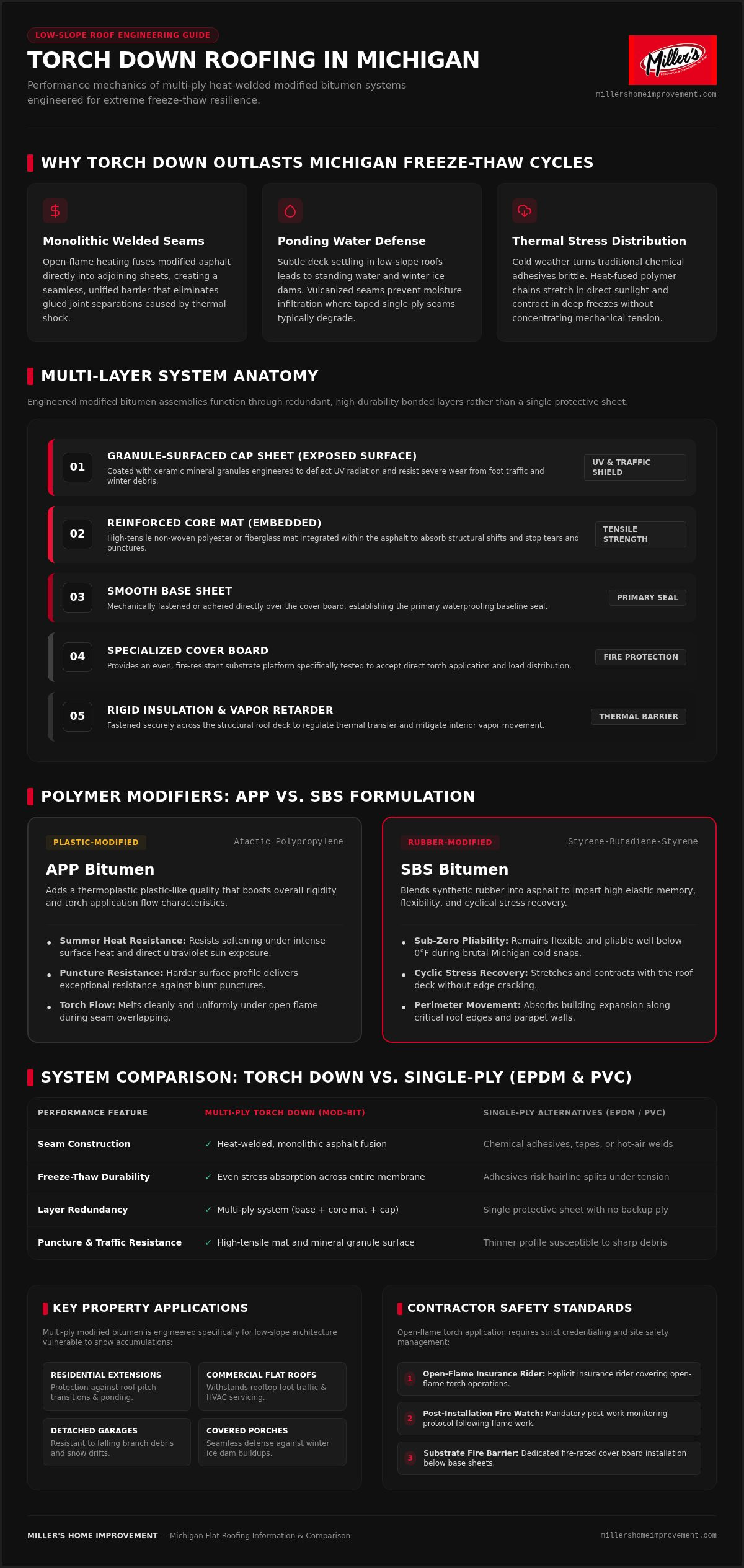
A resilient flat roof functions as an engineered system rather than a single sheet of material. The assembly begins with a sturdy substrate, followed by a vapor retarder and rigid insulation boards fastened securely to control thermal transfer. Above that base, a specialized cover board provides an even, fire-resistant foundation for waterproofing plies.
The waterproofing assembly itself includes distinct layers designed for structural durability:
- Reinforced Core Mat: Embedded within the asphalt is a high-tensile fiberglass or non-woven polyester mat that stops tears and punctures.
- Smooth Base Sheet: Mechanically fastened or adhered over the cover board, creating the initial moisture seal.
- Granule-Surfaced Cap Sheet: The final exposed layer, coated with ceramic mineral granules that deflect ultraviolet radiation and resist foot-traffic wear.
APP vs. SBS: Understanding Polymer Modifiers
Modified bitumen sheets rely on specific polymers blended into the asphalt to dictate performance. Atactic Polypropylene (APP) adds a plastic-like quality, boosting puncture resistance and allowing the membrane to flow smoothly under a torch flame. Styrene-Butadiene-Styrene (SBS) blends synthetic rubber into the asphalt, imparting outstanding flexibility and recovery under cyclic stress.
When selecting torch down roofing Michigan properties face severe sub-zero winter cold and summer heat waves. While APP resists high surface temperatures during humid summers, SBS modified bitumen remains pliable well below freezing, absorbing thermal movement without cracking along critical edge transitions.
Why Torch Down Roofing Withstands Michigan's Extreme Freeze-Thaw Climate
Michigan winters present a punishing test of endurance for low-slope roofing systems. Rapid transitions from sunny daytime thaws to sub-zero nighttime freezes trigger severe expansion and contraction cycles that pull glued joints apart. With torch down roofing Michigan properties gain an exceptionally durable shield against these seasonal extremes. Instead of depending on chemical adhesives or seam tapes that can degrade over time, heat-welded seams fuse adjacent modified bitumen sheets into a continuous, monolithic barrier. For older commercial buildings and residential additions throughout Detroit and Macomb County, where subtle deck settling leads to standing water, this vulcanized seal prevents moisture infiltration far better than taped seams.
Thermal Expansion, Contraction, and Seam Integrity
During brutal cold snaps, flat roofing materials contract sharply, placing intense mechanical tension on every joint and edge transition. Cold weather causes standard sealants to turn brittle, creating hairline splits where melting snow can seep inside. Because torch down membranes melt together at the seam, stress distributes evenly across the entire surface rather than concentrating on weak adhesive lines. The embedded polymer chains provide flexible recovery, allowing the roof to stretch under direct afternoon sun and contract during deep freezes without fracturing. Adhering strictly to recognized protocols, including OSHA safety standards for torch-down roofing during installation, ensures the material achieves this durable fusion without compromising property safety.
Resistance to Standing Water, Ice Dams, and Heavy Snow
Low-slope roofs frequently suffer from ice damming when escaping building heat melts snow unevenly. The runoff flows toward colder outer drains or unheated overhangs, freezes solid, and backs up into standing ponds across the roof deck. Multi-ply modified bitumen stops this ponding water in its tracks due to its redundant asphaltic barriers.
Heavy winter snow loads also require periodic clearing, introducing a risk of punctures from tools and equipment:
- Puncture Protection: Tough ceramic granules and asphalt plies resist tears from shovels or foot traffic far better than thin rubber sheets.
- Weight Bearing: High-tensile reinforcement mats carry the load of heavy, wet Michigan snow without stretching out of shape.
- Drainage Protection: Reinforced base flashing holds tight against vertical parapet walls, even when packed beneath heavy snow drifts.
Understanding seasonal maintenance, such as performing proper winter roof preparation in Michigan, keeps drainage channels clear throughout the coldest months. If you suspect an aging flat surface is struggling with drainage issues, consulting Miller's Home Improvement provides a clear evaluation of whether a reinforced torch-applied system can permanently resolve your ponding concerns.
Torch Down vs. EPDM and PVC: Selecting the Right Membrane for Your Property
Choosing the best low-slope system requires matching material properties to your building's specific architectural layout and everyday exposure. Across Southeast Michigan, property owners primarily weigh three proven systems: torch down modified bitumen, EPDM synthetic rubber, and PVC thermoplastics. A two-layer torch down roof typically provides around 15 years of reliable protection, while a heavy-duty three-layer installation often reaches 20 to 25 years. Single-ply membranes like EPDM and PVC boast similar service windows, but they perform quite differently when subjected to foot traffic, falling tree limbs, and rooftop servicing. Examining these functional differences helps clarify which solution protects your investment best.
Torch Down vs. EPDM Rubber Roofing
EPDM rubber remains widely recognized for its natural elasticity, stretching easily as cold winter nights set in. However, its primary vulnerability lies in how those wide black sheets join together. EPDM relies on chemical primers, adhesive glues, or specialized seam tapes. Over years of standing water and thermal movement, these chemical bonds can dry out and peel open.
When comparing single-ply rubber to torch down roofing Michigan owners notice sharp contrasts in physical resilience:
- Seam Structure: Torch down seams fuse into a solid, vulcanized joint that cannot peel apart, unlike taped rubber edges.
- Puncture Resistance: The thick asphaltic core and ceramic mineral shield easily withstand dropped maintenance tools and windblown branches that could puncture a 45-mil or 60-mil rubber sheet.
- Solar Heat Retention: Dark mineral cap sheets absorb solar heat during clear winter days, accelerating the melting of rooftop snowpack.
Torch Down vs. Single-Ply PVC Membranes
PVC roofing utilizes hot-air-welded seams and offers exceptional resistance to grease, harsh chemicals, and animal fats. Its bright white surface excels at deflecting harsh summer sunlight, reducing cooling loads on wide commercial facilities. Property managers weighing flat systems on larger sites often consult our guide on commercial roof replacement in Macomb County to assess how single-ply cooling compares against multi-ply longevity.
Where PVC delivers clean chemical resilience for restaurants and industrial bakeries, multi-ply torch down systems remain the preferred choice for properties demanding brute mechanical toughness. A multi-layer modified bitumen assembly creates a rugged, forgiving envelope around rooftop mechanical equipment, skylights, and residential porch tie-ins where regular foot traffic would quickly scuff or cut delicate single-ply plastics.
Professional Installation Standards: The Torch Application and Safety Process
Applying an open-flame membrane requires seasoned craftsmanship and strict site discipline. When installing torch down roofing Michigan properties demand a methodical process where every step, from structural deck evaluation to final seam inspection, leaves zero margin for error. A rushed or careless application risks moisture entrapment and fire hazards, whereas a disciplined process guarantees decades of watertight performance.
Substrate Preparation and Base Sheet Installation
Before lighting a torch, crews must thoroughly inspect the structural roof deck. Moisture damage, rotted plywood, or sagging framing requires immediate repair to provide a stable foundation. Reviewing our resource on when a roof tear-off is necessary in Michigan helps owners understand when deteriorated wood decks require full replacement. Once the deck is sound, polyisocyanurate insulation and dense cover boards are fastened securely. Next, technicians install a mechanically attached or self-adhering base sheet, completely isolating combustible wood substrates from direct flame exposure.
Open-Flame Welding Techniques and Flashing Details
With the base sheet fully secured, the cap sheet is slowly rolled out while applying controlled heat with a propane torch. The craftsman sweeps the torch steadily across the roll's underside, liquifying the asphalt compound so it fuses completely to the base layer.
Key markers of expert execution include:
- Consistent Bleed-Out: A continuous bead of melted asphalt, roughly one-quarter to three-eighths of an inch wide, along seam edges verifies an airtight seal.
- Seam Rolling: Installers use weighted steel rollers immediately behind the flame to eliminate air voids and press the plies firmly together.
- Vertical Flashing: Cap sheets wrap tightly up parapet walls, skylight curbs, and pipe penetrations to prevent water entry behind the membrane.
Critical Fire Watch and On-Site Safety Protocols
Open-torch roofing demands uncompromising safety controls from start to finish. Dedicated, fully charged portable fire extinguishers must stay directly within reach of the applicator on the roof. After daily torch work finishes, safety protocols remain active. MIOSHA standards mandate a dedicated fire watch for at least 30 minutes following hot work, but experienced craftsmen monitor the area even longer using thermal imaging cameras to inspect perimeter flashings, eaves, and overhangs for hidden heat buildup. To ensure your low-slope replacement is handled with rigorous craftsmanship and safety, schedule an inspection with Miller's Home Improvement.
How to Choose a Qualified Michigan Flat Roofing Contractor
Hiring a contractor for low-slope work requires far more scrutiny than vetting a standard shingle roofer. While many residential crews nail shingles competently on pitched roofs, torch down applications require specialized hot-work handling, precise thermal management, and commercial-grade liability protections. Entrusting an unqualified crew with an open flame risks catastrophic structural fires or hidden seam defects that leak during the first winter freeze. When vetting contractors for torch down roofing Michigan property owners must demand documented credentials, clear safety protocols, and proven flat-roof experience.
Verifying Open-Flame Insurance and State Licensing
A standard general liability policy is rarely enough for torch work. Most off-the-shelf contractor insurance policies contain strict "open-flame" or "torch-applied" exclusions. If an uninsured roofer sparks a fire, their insurer will deny the claim immediately, leaving the building owner personally responsible for structural repairs. Always request a Certificate of Insurance issued directly from the broker that explicitly includes torch-applied roofing operations.
Licensing is equally important. Michigan law mandates that any roofing work valued at $600 or more requires a licensed builder or maintenance and alteration contractor through the Department of Licensing and Regulatory Affairs (LARA). Verify that the license is active, in good standing, and issued in the contractor's legal business name.
Key Evaluation Questions for Prospective Contractors
Before signing an agreement, conduct a direct interview to assess the roofer's technical depth:
- System Volume: How many multi-ply modified bitumen projects does your dedicated flat-roof crew complete each year?
- Safety Equipment: Do you monitor completed sections using infrared thermal imaging cameras to spot subsurface hot spots?
- Detail Work: How do you fabricate perimeter edge metal terminations, scupper boxes, and expansion joints to ensure long-term stability?
- Maintenance Support: Do you perform professional inspections and minor seam touch-ups, such as those detailed in our guide to torch down roof repair in Michigan?
Partnering with Miller's Home Improvement for Lasting Protection
Miller's Home Improvement approaches low-slope projects with the disciplined precision of seasoned craftsmen. Backed by over 25 years of owner experience and 13 years in business, our team specializes in low-slope residential extensions and complete commercial installations across Southeast Michigan. We carry full licensing and insurance specifically tailored to commercial flat applications, enforcing strict on-site safety controls on every project.
We believe property owners deserve honest, pressure-free assessments. Rather than pushing a single material, we evaluate whether Torch Down, EPDM, or PVC best suits your building's slope, foot traffic, and budget. Contact Miller's Home Improvement today to schedule your comprehensive on-site consultation and receive a free in-home estimate from a local master craftsman.
Secure Your Property with Proven Low-Slope Protection
Safeguarding a low-slope roof against Michigan's unpredictable weather requires durable materials and uncompromising craftsmanship. Multi-ply modified bitumen delivers exceptional resistance against ponding water, winter freeze-thaw stress, and foot traffic. By melting seams into a monolithic, watertight barrier, this system eliminates the common failure points found in glued or taped alternatives. However, the lasting performance of your roof relies directly on the training, insurance, and meticulous safety protocols of your installation crew.
When you need reliable guidance on torch down roofing Michigan property owners can count on Miller's Home Improvement for honest answers. With over 25 years of owner experience in Southeast Michigan, our team brings seasoned expertise, full licensing, and specialized insurance to every project. We provide transparent evaluations tailored specifically to your building's architecture, helping you choose between torch down, EPDM, or PVC with complete confidence. Schedule your free flat roof assessment with Miller's Home Improvement today to ensure your property remains protected through every season.
Frequently Asked Questions
How long does a torch down roof typically last in Michigan?
A standard two-layer torch down roof typically lasts around 15 years, while a professionally installed three-layer system can last 20 to 25 years. In Detroit and across Southeast Michigan, actual longevity depends heavily on routine maintenance, prompt drainage clearing, and proper installation. Choosing SBS rubber-modified bitumen helps the assembly withstand repetitive winter freeze-thaw cycles without premature surface cracking.
Can you install torch down roofing directly over existing shingles or rubber?
No, torch down roofing should never be installed directly over asphalt shingles, old EPDM rubber, or deteriorated existing membranes. Applying an open torch over old shingles creates a severe fire hazard and traps destructive moisture beneath the new roof. Building codes require removing degraded materials or securing approved cover boards over clean decking before rolling out the new base sheet.
Is torch down roofing safe for residential homes with wood framing?
Yes, torch down roofing is completely safe for wood-framed homes when installed by experienced craftsmen following strict safety protocols. Technicians mechanically fasten fire-resistant insulation and a heavy-duty base sheet over the wood deck before introducing any flame. This protective barrier completely isolates combustible structural framing. When installing torch down roofing Michigan crews also keep charged fire extinguishers on hand and enforce dedicated post-work fire watches.
What is the difference between two-ply and three-ply torch down systems?
The primary difference lies in the number of waterproofing layers protecting the building deck. A two-ply system consists of an anchored base sheet covered by a granulated cap sheet, delivering solid protection for standard roofs. A three-ply system adds an intermediate modified bitumen ply between the base and cap. This extra layer significantly improves puncture resistance, extends overall lifespan, and provides redundant waterproofing against stubborn standing water.
Can a torch down roof be repaired if it develops a puncture or leak?
Yes, torch down roofs are relatively simple to repair if a leak or puncture occurs. A qualified technician cleans the damaged area, cuts away loose or saturated membrane, and primes the surface. They then heat-weld a new modified bitumen patch directly over the damaged section, extending several inches beyond the breach. The melted asphalt bonds permanently to the existing plies, restoring a monolithic watertight seal without replacing the entire roof.
Does cold winter weather prevent contractors from installing torch down roofing in Michigan?
Cold weather does not necessarily halt installation, but it requires specialized materials and winter-grade application practices. Modified bitumen rolls must be stored in heated trailers prior to rolling so they stay pliable. In Detroit winter conditions, contractors often prefer SBS modified membranes because they retain elasticity in freezing temperatures. Extreme sub-zero temperatures, active snowfall, or icy decks, however, require delaying work until dry, stable weather returns.
Why is open-flame insurance so critical when hiring a torch down contractor?
Open-flame insurance protects property owners from catastrophic financial losses in the rare event of a fire during installation. Standard contractor liability policies almost always exclude torch-applied operations. If an uninsured roofer causes fire damage, their carrier denies the claim, leaving the building owner on the hook. When investing in torch down roofing Michigan property owners should always demand a Certificate of Insurance confirming specific, unexcluded coverage for open-torch hot work before work begins.


