
What if the biggest threat to your Michigan home this winter isn't actually the weight of the snow on your shingles, but the heat escaping from your attic? Most property owners spend the autumn months worrying about a sudden roof collapse, yet it's often the subtle failures in thermal management that lead to the most expensive emergency repairs. Effective winter roof preparation Michigan requires more than just a quick visual check of your shingles. It demands a proactive, holistic strategy that addresses insulation, ventilation, and structural integrity before the first freeze settles in for the season.
We understand the anxiety that comes with a heavy February snowfall, especially when you're unsure if your drainage system or aging shingles can handle the pressure. It's common to feel frustrated by recurring ice dams or rising heating bills while the wind howls outside. This guide provides a clear roadmap to safeguard your property, ensuring your roof meets the updated 2026 Michigan Residential Code requirements for ice shields and attic R-values. We will walk you through essential maintenance steps, from inspecting critical flashing to optimizing your attic's ventilation ratio, so you can enjoy a leak-free winter with total peace of mind.
Key Takeaways
- Understand why Michigan’s unique climate zones and 2026 building codes require a specialized approach to roofing to prevent structural failure.
- Discover how to identify and mitigate the primary causes of ice dams, which remain the leading source of winter roof leaks in Southeast Michigan.
- Learn the essential steps for winter roof preparation Michigan homeowners must take, including gutter maintenance and sealing critical flashing points.
- Recognize the limitations of ground-level visual checks and why a professional 13-point inspection is necessary to find hidden vulnerabilities.
- Gain confidence in your property's ability to handle heavy snow loads by optimizing your attic's thermal envelope and ventilation.
Why Michigan Winters Require Specialized Roof Preparation
Michigan property owners face a unique set of meteorological challenges that standard roofing advice often overlooks. In Southeast Michigan, the transition from autumn to winter is rarely a straight line. We experience erratic temperature swings that put immense stress on building materials. Effective winter roof preparation Michigan depends on understanding how our local climate, specifically the humidity and "Lake Effect" moisture from the Great Lakes, transforms a simple snowfall into a structural burden. Attempting a reactive repair in the middle of a January blizzard is often three times more difficult and dangerous than addressing vulnerabilities in the mild days of October or November.
The Impact of Heavy Snow Loads on Michigan Structures
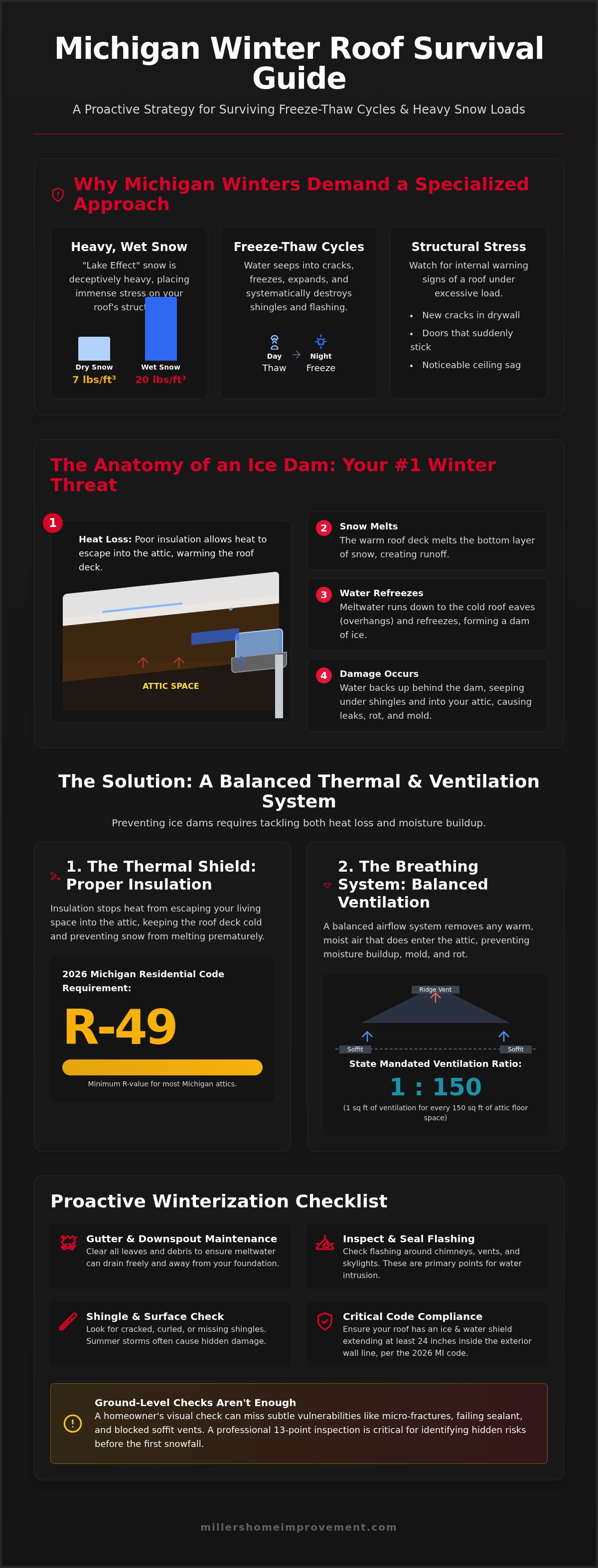
Not all snow is created equal. While fresh powder might look light, Michigan's "Lake Effect" often delivers wet, heavy snow that packs a significant punch. A single cubic foot of saturated snow can weigh up to 20 pounds, whereas dry snow might only weigh 7 pounds. In cities like Detroit, where annual snowfall typically ranges from 30 to 50 inches, this cumulative weight settles into the valleys of your roof. This puts pressure on residential trusses and large commercial spans alike. You should watch for internal warning signs of excessive structural stress, such as new cracks in drywall, doors that suddenly stick in their frames, or a noticeable bowing in the ceiling.
The Freeze-Thaw Cycle: A Shingle’s Worst Enemy
The late-autumn cycle of daytime rain followed by overnight flash freezes is particularly destructive. Water seeps into tiny fissures in aging shingles or compromised flashing. When that water freezes, it expands with enough force to lift shingles and widen existing gaps. This process is the primary catalyst for what an ice dam is, a ridge of ice that forms at the edge of a roof and prevents melting snow from draining. When water backs up behind these dams, it finds its way under the shingles and into your attic. What starts as a minor drip in November often evolves into a major structural flood by February once the snowpack begins to melt. Under the updated 2026 Michigan Residential Code, having a proper ice and water shield that extends at least 24 inches inside the exterior wall line is no longer just a recommendation; it's a critical requirement for long-term safety.
Identifying the Most Common Winter Roofing Hazards
Many property owners assume their roof is ready for December simply because it survived the summer without a visible leak. This is a dangerous misconception. Summer storms often leave behind micro-fractures in shingles or loose flashing that don't reveal themselves until the first heavy freeze. Wind-driven snow is another overlooked hazard; it can penetrate ridge vents that aren't properly baffled, leading to moisture accumulation in your attic that remains hidden until the spring thaw. Identifying these vulnerabilities early is the most critical step in effective winter roof preparation Michigan.
The Science Behind Ice Dams and Thermal Loss
Ice dams are frequently misunderstood as a simple gutter problem, but they are actually a symptom of poor thermal management. When heat escapes from your living space into the attic, it warms the roof deck and melts the bottom layer of snow. As that meltwater runs down to the colder eaves, it refreezes instantly. An ice dam is a ridge of ice that forms at the edge of a roof and prevents melting snow from draining. To prevent this, the Michigan Residential Code update from April 2026 requires a minimum of R-49 insulation in most attics. This thermal barrier keeps the heat where it belongs, ensuring the roof deck remains at a consistent, cold temperature that won't melt the snowpack prematurely.
Ventilation: The Unsung Hero of Roof Longevity
Proper ventilation is the second half of the equation for protecting your structure. A balanced system uses soffit vents to pull in cool air and ridge vents to exhaust warm air, maintaining a 1:150 ventilation ratio as mandated by state code. This constant airflow prevents the moisture buildup that leads to mold and wood rot during the damp winter months. A common mistake occurs when property owners add extra insulation that accidentally blocks the soffit intake vents. Without that fresh air, your attic becomes a heat trap, accelerating the very ice dams you're trying to avoid. If you're unsure if your ventilation is balanced, having a professional roofer check your intake and exhaust points can save thousands in structural repairs.
Clogged gutters exacerbate these issues by providing a physical foundation for ice to build upon. When gutters are filled with autumn debris, they trap water that should be diverted away from the foundation. This standing water freezes solid, adding immense weight to your fascia boards and providing a bridge for ice to climb back up onto the roof deck. Integrated winter preparation means looking at the roof as a complete system of insulation, ventilation, and drainage rather than just a collection of shingles.
Professional Roof Inspection vs. Homeowner Visual Checks
Every seasoned homeowner knows the urge to grab a ladder and clear the gutters as soon as the first frost hits the grass. However, safety must remain your top priority. Michigan winters bring unpredictable ice patches and high winds that make ladder work exceptionally dangerous for anyone without professional safety equipment. A thorough winter roof preparation Michigan routine begins with a safe, ground-level assessment. While your own observations are valuable for catching obvious problems, they can't replace the trained eye of a master craftsman who understands the subtle structural cues of a failing system.
What to Look for During a Ground-Level Walkthrough
You don't need to leave the ground to spot several red flags. Start by walking the perimeter of your property with a pair of binoculars. Look for "fish-mouthing," which occurs when shingles curl upward in the middle, or edges that have begun to lift away from the roof deck. These gaps are prime entry points for wind-driven snow. Next, examine your downspout outlets. If you find a heavy accumulation of ceramic granules, it's a sign that your shingles have lost their protective coating and are becoming brittle. Finally, check the alignment of your gutters and the flashing around your chimney; any visible sagging or gaps suggest that the hardware is pulling away from the fascia.
While these steps are essential for winter roof preparation Michigan, they only reveal half the story. An amateur check often misses the "silent" issues that occur beneath the surface. A professional inspector looks for technical details like improper nail patterns or failing sealants that only become apparent upon close physical contact with the roofing materials. Investing in a professional assessment before the first blizzard is a logical choice that prevents the high costs of emergency repairs during a snowstorm.
The Value of an Internal Attic and Roof Deck Assessment
The most critical part of an inspection often happens inside your home. Many homeowners overlook the attic, yet this is where the earliest signs of failure appear. A professional will turn off the lights to look for "daylight" peeking through the roof deck, which indicates a hole or a significant gap in the sheathing. They also look for rusty nails or dark water stains on the rafters. These are clear indicators of slow leaks or poor ventilation that has allowed moisture to condense and rot the wood from the inside out.
Insulation health is another factor that amateurs frequently misjudge. Over time, attic insulation can become compressed or damp, causing it to lose its rated R-value. When insulation fails, heat escapes, leading to the thermal imbalances that cause ice dams. A professional ensures your insulation hasn't blocked the soffit vents, maintaining the necessary airflow to keep your roof deck cold. This meticulous internal check provides the confidence that your home’s thermal envelope is intact and ready to handle the heavy snow loads common in Southeast Michigan.
Critical Steps to Winterize Your Residential or Commercial Roof
Transitioning from inspection to action is the most vital phase of winter roof preparation Michigan property owners must undertake. Once you have identified potential vulnerabilities, the focus shifts to reinforcing the building envelope. This involves meticulously checking the points where your roof is most likely to fail: the flashing and the pipe boots. These seals often expand and contract at different rates than your shingles or membrane, creating tiny gaps that invite moisture. Ensuring these penetrations are watertight before the first freeze prevents the slow, destructive seepage that leads to structural rot.
Gutter Clearances and Downspout Diversion
Your drainage system is your first line of defense against the freeze-thaw cycle. Gutters must be 100% clear of organic matter, such as leaves and pine needles, before the first snow falls. Even a small amount of debris can trap water, allowing it to freeze into a solid block that adds hundreds of pounds of stress to your fascia boards. It is equally important to ensure your downspouts are clear and divert water at least 5 feet away from the foundation. For high-risk eaves that are prone to recurring ice buildup, heat cables can be a helpful tool, but they are only effective if the gutters themselves are structurally sound and free of clogs.
Commercial Flat Roof Winterization Strategies
Commercial structures with flat roofing systems, such as PVC or EPDM membranes, require a different set of protocols. Because these roofs don't have the natural pitch of a residential home, drainage is entirely dependent on scuppers and internal drains. These must be cleared of autumn debris to prevent ponding water. If water is allowed to sit on a flat roof during a Michigan winter, it will eventually turn into a massive ice sheet that can damage the membrane's seams. We recommend checking every seam for brittle spots or lifting edges, as cold weather makes these materials less flexible and more prone to cracking under the weight of a snowpack.
Vegetation management is another critical task. You should trim any overhanging tree branches that sit within 6 to 10 feet of your roofline. During an ice storm, the weight of the ice can cause these branches to snap and puncture your roof or crush your gutter system. Finally, verify that any storm damage repairs performed during the summer have fully cured and are properly sealed. If you want to ensure your property is truly ready for the season, you can schedule a professional roof winterization estimate to have a seasoned expert verify your roof's integrity.
Taking these proactive steps now is an investment in your property's longevity. A well-prepared roof doesn't just keep the water out; it protects the structural integrity of the entire building. By addressing these critical areas, you can move into the winter months with the quiet confidence that your home or business is shielded from the worst of the Michigan elements.
Protecting Your Property with Miller’s Home Improvement
Miller’s Home Improvement has served the Detroit and Southeast Michigan community for over 25 years. We have seen every type of winter weather pattern the Great Lakes can produce, from heavy ice storms to massive lake-effect snowfalls. This longevity isn't just a number; it represents a deep, practical understanding of the structural demands placed on Michigan homes and businesses. Our specialized 13-point pre-winter inspection process is designed to catch the subtle failures in flashings, boots, and ventilation that lead to expensive emergency repairs. If your property suffered storm damage during the summer months, we work diligently to finalize insurance-funded restoration projects before the winter deadline, ensuring your building envelope is fully sealed and secure.
Effective winter roof preparation Michigan requires a disciplined commitment to meticulousness and the use of high-grade materials. We don't believe in cutting corners because we know that a single missed nail or a slightly misaligned shingle can lead to a catastrophic leak during a mid-winter thaw. Our team focuses on long-term stability rather than quick fixes. By combining seasoned expertise with a no-nonsense approach to problem-solving, we provide the quiet confidence you need to face the coming season. We prioritize the safety of your property above all else, treating every roof as if it were protecting our own families.
Why a Licensed Roofing Contractor Michigan Matters
In the wake of severe weather, "tailgate contractors" and unbonded laborers often appear, offering cut-rate prices for fast repairs. These entities frequently lack the proper licensing and insurance required to protect you from liability or ensure the work meets local building codes. Hiring a professional, local firm ensures that your investment is backed by accountability and technical knowledge. Eric Miller personally oversees quality standards for every project. This hands-on master craftsman oversight guarantees that every repair or replacement meets our strict internal criteria for durability and structural integrity.
Schedule Your Free Pre-Winter Estimate
We view our role as a proactive guide for property owners. During your free in-home estimate, we provide a transparent, educational assessment of your roof’s health. You can expect a methodical walkthrough where we identify specific risks and explain the most effective solutions without any high-pressure sales tactics. We believe in straightforward communication and providing the facts you need to make an informed decision for your home or business. Taking action now is the most reliable way to avoid the stress of a failing roof during a blizzard. Schedule your free winter roof assessment with Miller's Home Improvement today!
Secure Your Peace of Mind Before the First Snowfall
Proactive winter roof preparation Michigan property owners prioritize is the most effective way to ensure long-term structural stability. By addressing ventilation imbalances and clearing drainage systems now, you eliminate the primary catalysts for ice dams and internal water damage. A professional assessment reveals the hidden vulnerabilities that ground-level checks often miss, allowing you to enter the coldest months with total confidence in your home's integrity.
Miller’s Home Improvement brings over 25 years of master craftsman experience to every project. As a fully licensed and insured Michigan contractor, we specialize in identifying storm damage and managing insurance claims to restore your property correctly the first time. Don't wait for a January emergency to discover a failure in your roofing system. Get Your Free Winter Roof Inspection from Miller's Home Improvement and protect your investment today. Your home is your most significant asset; it deserves the protection that only a seasoned local expert can provide.
Frequently Asked Questions
When is the best time to start winter roof preparation in Michigan?
The ideal window for winter roof preparation Michigan property owners should aim for is late September through early November. You want to complete maintenance before the first hard freeze makes shingles brittle and dangerous to navigate. Addressing vulnerabilities during these milder months ensures that sealants have enough warmth to cure properly. Waiting until December often limits your repair options to temporary emergency measures.
Can a roof be replaced during a Michigan winter if I have an emergency?
You can replace a roof during a Michigan winter if a structural failure or major leak creates an emergency. We utilize specialized winter-grade adhesives and sealants designed to bond in sub-freezing temperatures. While the process is more labor-intensive due to snow removal and safety protocols, it's a necessary step to prevent internal water damage. Professional crews are trained to manage these conditions without compromising the installation's integrity.
How much snow can a typical Michigan roof hold before it's dangerous?
Most residential structures in Michigan are engineered to support 20 to 30 pounds per square foot. However, the type of snow matters more than the depth. Six inches of wet, heavy "Lake Effect" snow can weigh as much as three feet of light, dry powder. If you notice interior doors sticking or new cracks appearing in your drywall, the snow load may be reaching a critical level that requires professional attention.
Why do I have ice dams even though my roof is new?
Ice dams often form on new roofs because the issue is usually related to attic insulation and ventilation rather than the shingles themselves. If heat escapes from your living space, it melts the snow on the roof deck regardless of how new your shingles are. Ensuring your attic meets the R-49 insulation requirement and maintains a balanced 1:150 ventilation ratio is the only way to stop ice dams from recurring.
Will my homeowners insurance cover roof damage caused by heavy snow or ice?
Standard Michigan homeowners insurance policies typically cover damage caused by ice dams or roof collapses due to heavy snow weight. These are generally classified as "perils" within your coverage. It is important to remember that insurance companies often distinguish between sudden storm damage and long-term neglect. Keeping records of your annual maintenance can help demonstrate that you've taken reasonable steps to protect the property before a claim arises.
What is the difference between a roof repair and a full roof tear-off?
A roof repair involves fixing a specific, localized issue like a single leak or a few missing shingles. A complete roof tear-off involves removing all existing materials down to the wooden deck before installing a new system. Under the updated April 2026 Michigan Residential Code, if your roof already has two layers of shingles, a full tear-off is mandatory. This ensures the structural deck can support the weight of new materials.
How do I know if my attic ventilation is sufficient for winter?
You can evaluate your ventilation by checking your attic for signs of moisture or extreme heat during a cold day. If you see frost on the underside of the roof deck or smell a musty odor, your air exchange is likely insufficient. A balanced system requires a 1:150 ratio of intake to exhaust. This constant airflow prevents the condensation that leads to mold growth and compromised structural timber during the damp winter months.
Do commercial flat roofs need different winter prep than residential shingle roofs?
Commercial flat roofs require a distinct approach to winter prep because they rely on internal drains and scuppers rather than pitched runoff. While residential shingles focus on shedding snow, commercial PVC and EPDM membranes must be checked for brittle seams and ponding water. If debris clogs a commercial drain, the resulting ice sheet can expand with enough force to pull the membrane away from the parapet walls, causing significant leaks.


