
A commercial roof in Michigan isn't just a cover; it's a weather-engineered asset that requires a full-integrity tear-off to survive our volatile climate. You've likely spent more time than you'd care to admit worrying about persistent leaks or the rising energy costs of heating a poorly insulated facility. It's frustrating to manage a business when you're constantly second-guessing the stability of your overhead protection, especially when a full commercial roof replacement Macomb County feels like such a daunting investment. You deserve a solution that provides long-term security rather than another temporary patch.
This guide will help you handle the technical and financial complexities of modern roofing with expert insights on materials, insurance restoration, and selecting the right local contractor. We'll provide a clear breakdown of PVC, EPDM, and Torch Down systems so you can make an informed choice for your building's specific needs. You'll also learn how to manage a smooth insurance claim process for storm-damaged roofs, ensuring your property remains a leak-free, energy-efficient asset for years to come.
Key Takeaways
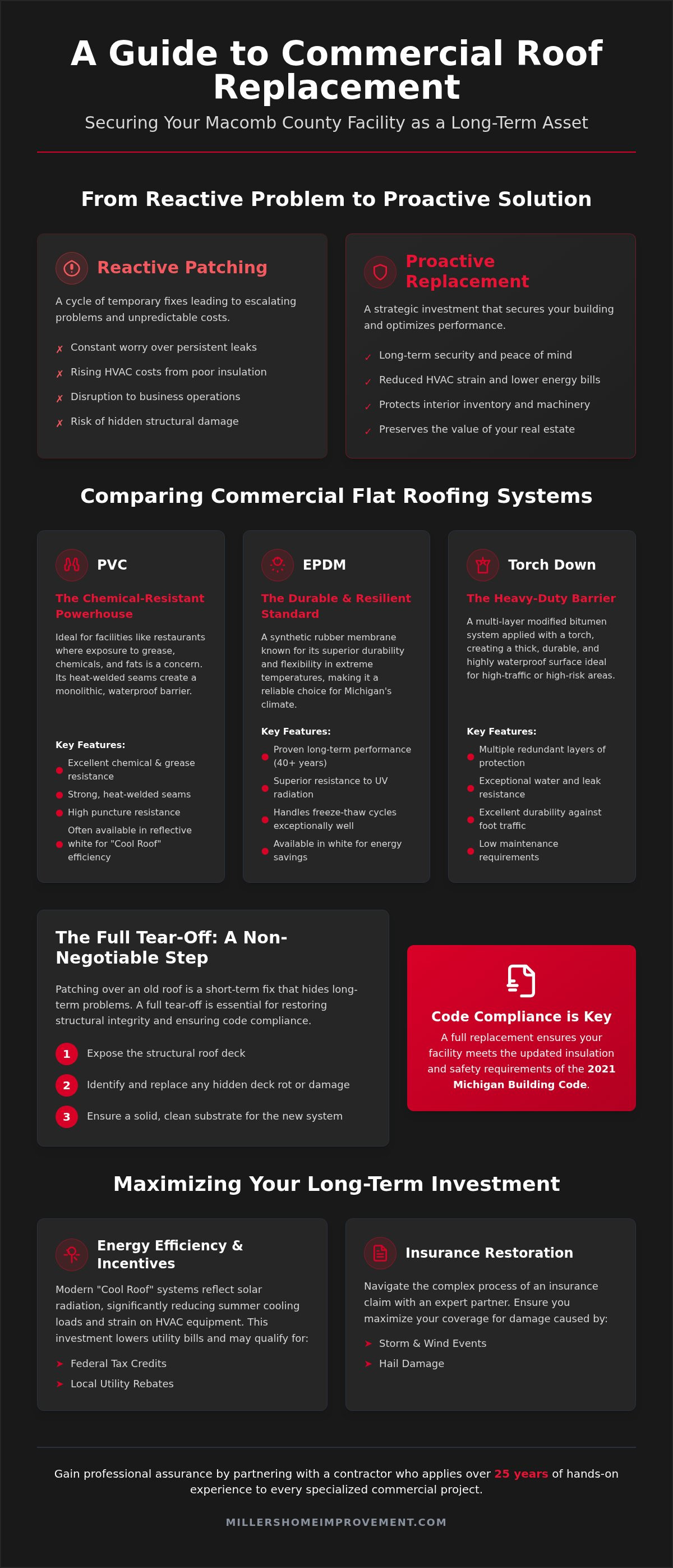
- Learn how transitioning from reactive patching to a proactive replacement strategy reduces HVAC strain and secures your building as a long-term asset.
- Compare the performance of PVC, EPDM, and Torch Down membranes to determine the most resilient system for a commercial roof replacement Macomb County.
- Understand the structural necessity of a full tear-off for identifying hidden deck rot and ensuring compliance with the 2021 Michigan Building Code.
- Discover how to navigate the insurance restoration process to maximize coverage for storm, wind, and hail damage on complex flat-roof systems.
- Gain professional assurance by partnering with a contractor who applies over 25 years of hands-on experience to every specialized commercial project.
Why Commercial Roof Replacement is a Strategic Investment for Macomb County Facilities
A well-maintained flat roof is more than a structural necessity; it's a critical component of your building's financial performance. Many facility managers in Southeast Michigan fall into a cycle of reactive patching, addressing leaks only after they've disrupted operations. Moving toward proactive asset management through a timely commercial roof replacement Macomb County allows you to control costs rather than letting the weather dictate your budget. This transition secures your building’s structural integrity and preserves the value of your real estate portfolio.
Protecting your interior assets is the primary goal. Whether you manage a retail space in Sterling Heights or an industrial warehouse in Warren, water intrusion threatens expensive inventory, sensitive machinery, and the safety of your employees. A new, professionally installed membrane system eliminates these vulnerabilities. It provides the quiet confidence that comes from knowing your facility is sealed against Michigan’s unpredictable freeze-thaw cycles and heavy snow loads.
The Cost of Delay: Risks of Neglected Commercial Roofing
Waiting for a total system failure is a high-risk strategy that often leads to compounding expenses. Hidden leaks frequently migrate through insulation, causing silent structural deck rot that isn't visible from the surface. By the time a ceiling drip appears, the underlying metal or wood decking may already be compromised, requiring a much more expensive repair during the tear-off process.
Neglected roofs also create significant liability. Mold growth and slip-and-fall hazards from water intrusion can lead to costly legal complications in commercial settings. In many cases, the cumulative cost of emergency repairs and localized patches over a few years will actually exceed the investment of a planned, full-integrity replacement. It's a matter of choosing between a controlled capital expense and an unpredictable emergency repair bill.
Energy Efficiency and Tax Incentives in 2026
Modern roofing systems offer a level of thermal performance that was unavailable just a decade ago. Reflective "Cool Roof" technology, common in PVC and specialized white EPDM systems, significantly reduces summer cooling loads by bouncing solar radiation away from the building. This reduces the strain on your HVAC equipment and lowers monthly utility bills, which is essential for large-scale industrial facilities.
The regulatory landscape has also shifted to prioritize efficiency. Under the 2021 Michigan Commercial Energy Code, which took full effect in early 2025, insulation requirements for commercial buildings have evolved to require significantly higher R-values to minimize thermal bridging and heat loss. Investing in these upgrades can often qualify your business for federal tax credits or local utility rebates designed to incentivize energy-efficient construction. Choosing a high-performance system today isn't just about stopping leaks; it's about optimizing your facility's long-term operational budget.
Comparing Commercial Flat Roofing Systems: PVC, EPDM, and Torch Down
The selection of a roofing membrane is a decision that impacts your building’s operational overhead for decades. In Southeast Michigan, the climate doesn't just age a roof; it tests its physical elasticity. Every winter, the constant shift between freezing nights and thawing afternoons creates mechanical stress that can pull poorly installed seams apart. Choosing the right material for a commercial roof replacement Macomb County requires a deep understanding of how these membranes react to thermal shock and building use.
A seasoned master craftsman looks beyond the initial cost. We evaluate the chemical exposure, foot traffic, and UV intensity your roof will face. Whether you're managing an industrial complex or a local retail center, matching the membrane to the building’s function is the only way to ensure long-term stability and a high return on investment. If you are unsure which system fits your specific facility, consulting with a local roofing specialist can provide the clarity needed to move forward.
PVC Flat Roofing: The Chemical-Resistant Powerhouse
PVC (Polyvinyl Chloride) is often considered the gold standard for facilities with specialized needs, such as restaurants or food processing plants. This material is naturally resistant to animal fats, grease, and many industrial chemicals that would quickly degrade other rubber-based systems. The seams of a PVC roof are heat-welded rather than glued, creating a monolithic bond that is actually stronger than the membrane itself. This makes it an incredibly water-tight option for buildings with complex roof penetrations or heavy HVAC equipment.
Beyond its durability, PVC is a leader in thermal performance. Its white surface is highly reflective, which qualifies it among the most effective energy-efficient cool roof products available today. By reflecting up to 80 percent of solar radiation, PVC significantly lowers the surface temperature of the building, reducing the cooling load on your interior systems during humid Michigan summers.
EPDM and Torch Down: Durability and Versatility
EPDM (Ethylene Propylene Diene Terpolymer) is a synthetic rubber membrane known for its exceptional resistance to UV radiation and thermal shock. It remains flexible even in sub-zero temperatures, which is a vital trait for Macomb County winters. It's an excellent choice for large warehouses where cost-effectiveness and long-term weathering are the primary concerns. While EPDM offers a significantly faster installation timeline due to the availability of large, seamless sheets, Torch Down provides a robust multi-layer protection system that excels in high-traffic or heavy-duty environments.
Torch Down, also known as Modified Bitumen, involves melting layers of asphalt-based membranes together with a propane torch. This creates a thick, puncture-resistant barrier that is ideal for roofs that require frequent maintenance access. It combines the traditional reliability of built-up roofing with the modern flexibility of modified polymers. For businesses that prioritize physical toughness and a proven track record in harsh climates, Torch Down remains a dependable staple in the commercial sector.
The Full Roof Tear-Off Process: Restoring Structural Integrity
When planning a commercial roof replacement Macomb County, property owners are often presented with the option of a "recover" to save on immediate labor costs. At Miller's Home Improvement, we advocate for a complete tear-off as the only reliable way to ensure the long-term safety of your building. A roof-over simply adds unnecessary weight and risks trapping existing moisture between old and new layers. This trapped water eventually leads to silent structural deck rot or mold, which can compromise the entire facility. By removing every layer down to the original substrate, we gain a clear view of the building's health and ensure we're building on a solid foundation.
This methodical approach aligns with the rigorous standards established by the National Roofing Contractors Association. During the tear-off, we meticulously inspect the underlying steel or wood decking for signs of rust, corrosion, or soft spots. If the deck is compromised, we replace the damaged sections before the new system is installed. We also take this opportunity to address drainage issues. By installing tapered insulation systems, we can correct improper slopes and eliminate ponding water, which is a primary cause of premature membrane failure in flat roofing.
Step-by-Step: The Commercial Replacement Workflow
Our process is designed for precision and safety. Phase one involves securing the staging area and establishing a strict safety perimeter to protect your employees and assets. In phase two, we perform a systematic removal of the old membrane and any saturated insulation, disposing of materials according to local environmental regulations. Finally, in phase three, we perform deck repairs and apply the new substrate. This structured progression ensures that your building is never left unnecessarily vulnerable to the elements during the transition.
Minimizing Business Disruption During Construction
We understand that your business doesn't stop just because the roof needs work. Our team coordinates specific work hours to avoid peak operational times, ensuring that noise and debris don't interfere with your daily activities. We manage parking lot access and material staging areas carefully to keep client and employee pathways clear. Constant communication between the project manager and the facility owner ensures that unexpected findings are addressed immediately without stalling the project timeline. This proactive coordination keeps the project moving forward while you focus on running your business.
Navigating Insurance Restoration and Local Macomb County Codes
Securing a full commercial roof replacement Macomb County often depends on how effectively you navigate the insurance restoration process. While we have already discussed the technical merits of different membranes, the financial success of your project rests on professional documentation and strict code compliance. Large-scale flat roofs present unique challenges during inspections. Wind uplift and hail impact often leave subtle signatures that a standard adjuster might overlook. Our role is to provide a comprehensive damage assessment that ensures every square foot of compromised material is accounted for in the final claim.
If your facility has recently weathered a severe storm, contact us for a professional damage assessment and insurance claim assistance to ensure your interests are protected throughout the adjustment process.
The Commercial Insurance Claim Process
Professional damage assessments differ significantly from standard adjuster walk-throughs because we utilize industry-standard Xactimate software to align our estimates with insurance expectations. We help facility managers understand the critical difference between Actual Cash Value (ACV) and Replacement Cost Value (RCV) policies. In many cases, if an older roofing material is no longer manufactured, we can advocate for a "matching claim," which may require the insurer to pay for a full roof replacement to maintain the system's integrity. It's also vital to remember that in Michigan, it is illegal for a contractor to waive or absorb an insurance deductible; doing so is considered insurance fraud. We prioritize transparency and ethical coordination to ensure your claim is handled correctly from the start.
Macomb County Building Requirements
Compliance with local regulations is not optional. All commercial roofing projects in our area must adhere to the 2021 Michigan Building Code and the 2021 Michigan Commercial Energy Code, which were updated to include stricter standards for thermal performance and structural resilience. Permit fees and enforcement are handled at the city or township level, meaning requirements in Sterling Heights may differ slightly from those in Macomb Township or Warren. We manage the registration with local building departments and ensure that every installation meets the specific wind load requirements for Southeast Michigan. A final municipal inspection is a mandatory requirement for all commercial projects to verify that the work meets these safety and efficiency standards before the project is officially closed.
Why Miller’s Home Improvement is the Trusted Choice for Macomb Roofing
Choosing a partner for a commercial roof replacement Macomb County is a significant decision that impacts your business's physical and financial security for decades. Unlike large, distant corporate entities that prioritize project volume, Miller’s Home Improvement operates with the quiet confidence and professional assurance of a local fixture. Our foundation is built on owner Eric Miller’s 25 plus years of hands-on experience in the field. This deep industry knowledge ensures that every technical challenge, from complex drainage slopes to specialized membrane welding, is handled with the meticulous care of a seasoned master craftsman.
We've spent 13 years in business refining a proactive approach to commercial roofing. This means we don't just perform a task; we act as an educational guide for your facility management. We prioritize transparency and long-term accountability because we're deeply rooted in the Southeast Michigan communities we serve. You won't encounter high-pressure sales tactics or vague promises here. Instead, we focus on providing straightforward communication and the peace of mind that comes from a job done correctly the first time.
The Miller Difference: Quality Materials and Workmanship
Our commitment to excellence begins with the materials we select for every project. We only install high-grade PVC, EPDM, and Torch Down systems that are engineered to withstand Michigan's volatile climate. While some contractors might suggest a "recover" to lower their bid, our team handles full tear-offs because we know it's the only way to identify hidden deck rot and guarantee structural integrity. This thoroughness allows us to address the root causes of ponding and leaks. By focusing on the fine details of installation and substrate preparation, we ensure your new roof remains a durable, low-maintenance asset.
Get Started with Your Macomb County Commercial Estimate
The process of securing your building starts with a comprehensive on-site roof evaluation. We'll walk your property, document any existing storm damage, and assess your current insulation levels to ensure compliance with the 2021 Michigan Commercial Energy Code. Following this inspection, you'll receive a detailed project proposal that outlines every phase of the replacement, from permit acquisition to final municipal inspection. There's no guesswork and no hidden fees involved in our estimates. When you're ready to move from reactive repairs to a permanent solution, schedule your free commercial roofing estimate today to experience our master craftsman approach firsthand.
Protecting Your Building and Your Bottom Line
Investing in a commercial roof replacement Macomb County is a critical step in transforming your building from a source of constant repair bills into a high-performing asset. By selecting the right membrane for your facility's specific needs and committing to a full-integrity tear-off, you're securing your property against Michigan's harsh weather while significantly improving energy efficiency. We've seen how modern PVC, EPDM, and Torch Down systems provide the durability necessary to withstand intense freeze-thaw cycles and UV exposure.
Miller's Home Improvement brings over 25 years of owner experience to every project. We're specialists in flat roof systems and insurance claims, and we're fully licensed and insured to provide you with absolute peace of mind. Our team is here to guide you through every technical detail and code requirement without high-pressure sales tactics. When you're ready to stabilize your facility's future, Request Your Free Commercial Roofing Estimate. We look forward to helping you build a stronger foundation for your business success.
Frequently Asked Questions
How long does a commercial roof replacement typically take in Macomb County?
Most commercial roof replacements in our area take between one and three weeks to complete, depending on the building's total square footage and current weather conditions. A standard 10,000-square-foot facility might be finished in a week, while larger industrial complexes require more time for staging and systematic tear-offs. We prioritize a disciplined workflow to minimize operational downtime and ensure your building is sealed at the end of each workday.
Can I install a new roof over my existing commercial roof membrane?
You can technically install a "recover" system, but Michigan building codes generally prohibit more than two layers of roofing. We strongly recommend a complete tear-off instead of a roof-over for every project. This approach allows us to inspect the underlying deck for hidden rot or moisture that a second layer would simply trap. A clean substrate is the only way to guarantee the long-term integrity of your new membrane.
What is the best flat roofing material for a restaurant in Michigan?
PVC is the superior choice for restaurants and food processing facilities due to its natural resistance to animal fats, grease, and chemicals. Unlike other materials that soften or degrade when exposed to kitchen exhaust, PVC maintains its physical properties over time. Its heat-welded seams also provide an exceptionally water-tight seal that stands up well to the heavy HVAC foot traffic common on restaurant rooftops.
Does insurance cover commercial roof replacement after a hail storm?
Commercial insurance policies typically cover roof replacement if the damage is caused by a sudden event like hail or high winds. Success depends on professional documentation that proves the membrane's integrity was compromised by the storm. We specialize in coordinating with adjusters to ensure that technical damage, such as fractured reinforcement layers or seam failures, is correctly identified so you receive the full replacement cost value.
How do I know if my commercial roof needs a full tear-off or just a repair?
A full commercial roof replacement Macomb County is necessary when more than 25 percent of the insulation is saturated or if the membrane has reached the end of its serviceable life. Minor leaks can often be addressed with localized repairs if the underlying substrate is dry. However, if you're experiencing persistent issues across multiple sections of the building, a full tear-off is the more cost-effective strategy to prevent structural deck damage.
What are the maintenance requirements for an EPDM rubber roof?
EPDM maintenance involves bi-annual inspections to check for seam separation, membrane shrinkage, or punctures. While the rubber itself is highly durable, the adhesives used in older installations can weaken over time due to thermal shock. It's important to keep the surface clear of debris and ensure that drainage points are not obstructed. Catching small seam gaps early prevents water from migrating under the membrane and compromising your insulation.
Are there energy-efficient roofing options available for Michigan businesses?
White PVC and "Cool Roof" EPDM systems are excellent energy-efficient options that help lower summer cooling costs by reflecting solar radiation. These systems comply with the 2021 Michigan Commercial Energy Code by reducing thermal bridging and HVAC strain. Many businesses also see a return on investment through lower utility bills and potential tax incentives designed for facilities that upgrade to high-R-value insulation and reflective membranes.
Is Miller's Home Improvement licensed to perform commercial work in Macomb County?
Miller's Home Improvement is fully licensed and insured to perform commercial roofing throughout Michigan. We maintain all necessary registrations with local municipal building departments across Macomb County to ensure permit compliance. Our team operates with 25 years of owner experience, ensuring that every project meets current state building codes. We provide proof of general liability and workers' compensation coverage for every commercial contract we sign.


