

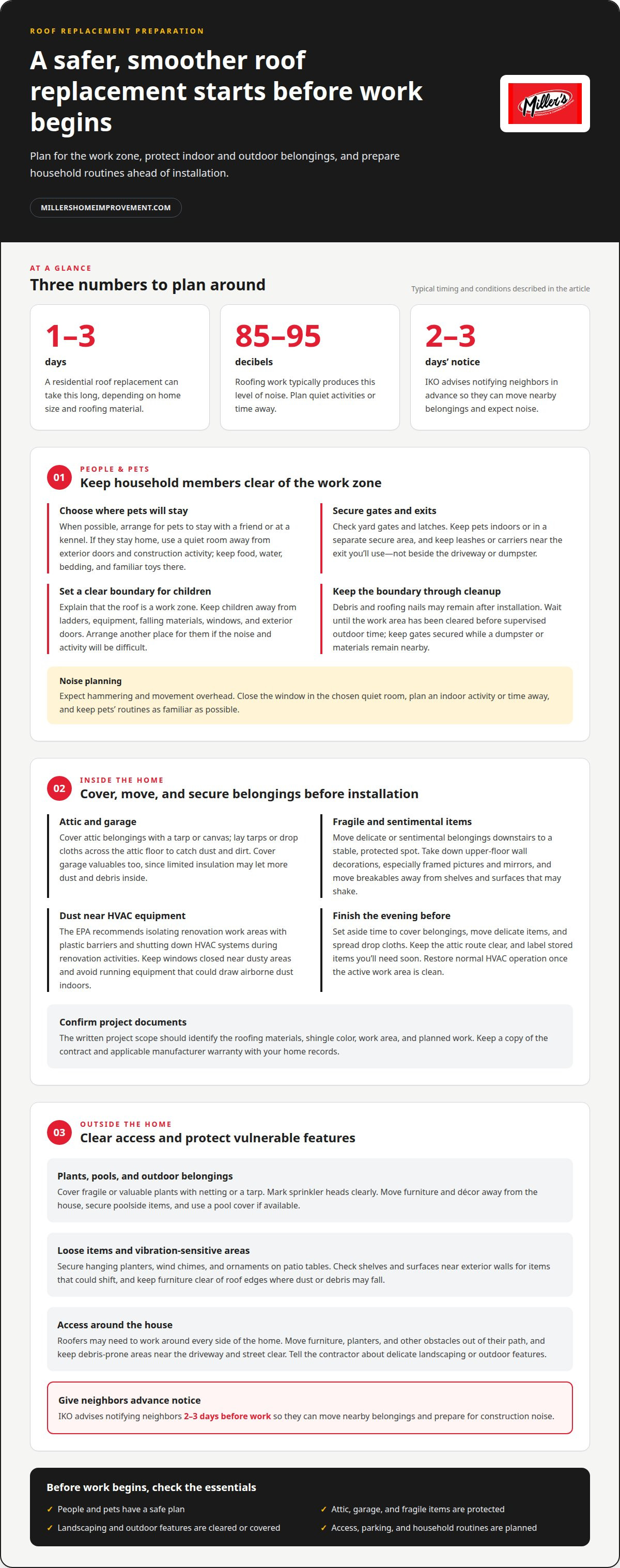
A roof replacement is a short project, but preparing your home takes planning. A residential roof replacement can take one to three days, depending on the home’s size and roofing material. Knowing how to prepare your home for a roof replacement helps protect people, belongings, and outdoor areas around the work zone.
It’s natural to wonder how disruptive the work will be, especially when you’re considering children, pets, and daily routines. A clear plan can make the process easier to manage. Decide what to move from the attic, how to protect landscaping and outdoor features, and where children and pets will stay. Also plan access around the house and how you’ll handle cleanup so you’re ready when work begins.
Key Takeaways
- Plan where children and pets will stay during noisy work, and keep them clear of the construction area.
- Protect attic and garage belongings from dust, and move fragile or sentimental items somewhere safer.
- Make room around the house and shield vulnerable landscaping and outdoor features before work begins.
- Prepare access, parking, and household routines in advance to help the roofing project start smoothly.
Keeping children and pets away from construction activity
Roofing materials and tools can fall near entryways and driveways. Keep children and pets away from work areas, and arrange another place for them if needed.
- Plan where pets will stay. IKO recommends arranging for pets to stay with a friend or at a kennel during roof replacement when possible. If they remain at home, choose a quiet room away from exterior doors and construction activity. Keep food, water, bedding, and familiar toys there so the space feels settled. Tell everyone in the household which doors must stay closed.
- Secure yard gates before roofers arrive. Check each gate and latch, then keep pets indoors or in a separate, secure area. Roofers may move around the home, and an open gate can create an escape route. Keep leashes and carriers ready near the exit you’ll use, not beside the driveway or dumpster.
- Choose a safe plan for children. Explain that the roof is a work zone and set a clear boundary inside the home, away from windows and exterior doors. Children should not approach ladders, equipment, or falling materials. If the noise and activity will be difficult, arrange for them to stay elsewhere during active roofing work.
- Prepare for sustained noise. Roofing work typically produces noise of 85-95 decibels. Expect hammering and movement overhead, which may unsettle pets and interrupt naps or remote learning. Plan a quiet indoor activity or time away from home, and close the window in the room you’ve chosen. Keep pets’ routines as familiar as possible.
- Keep the boundary in place through cleanup. Don’t let children or pets return to the yard just because roofers have stepped away. Debris and roofing nails can remain after installation. Wait until the work area has been cleared, then supervise children and pets outside. Keep gates secured while a dumpster or materials remain nearby.
Should I Remove Items From My Attic Before Roof Work Starts?
Cover belongings in the attic and garage, and move sentimental or fragile items downstairs. Before installation, make sure the written project scope identifies the roofing materials, shingle color, work area, and planned work.
-
Cover Attic Belongings
Cover important attic belongings with a tarp or canvas before work begins. Moving sentimental and fragile items to the ground floor keeps them away from potential falling debris. Lay tarps or drop cloths across the attic floor to catch dust and dirt. Cover garage valuables too, since limited insulation may let more dust and debris inside.
-
Protect Indoor Walls and Valuables
Take down wall decorations before installation, especially framed pictures and mirrors on the upper floor. Hammering vibrations during roof work can knock decorations from walls. Move fragile items away from shelves and surfaces where shaking could send them falling. Put breakables in a stable, protected spot downstairs, rather than beneath attic storage or near walls directly below the roof.
-
Finish Interior Preparation the Evening Before
Finish indoor preparation the evening before roofing begins. Set aside time to cover belongings, move delicate items, and spread drop cloths across the attic floor. Keep the route to the attic clear as you carry boxes downstairs. Label stored items you’ll need soon so protecting them doesn’t make everyday essentials hard to find.
-
Settle Contract and Warranty Details
Before work starts, make sure the written project scope identifies the materials, color, work area, and planned work. Ask for an explanation of the roofing materials and shingle color, and how the scope describes the installation. Keep a copy of the contract and applicable manufacturer warranty with your home records. These documents clarify what was agreed and what warranty information applies.
For the roofing work itself, residential roofing services are a natural next step when a replacement is planned.
Protecting landscaping, pools, and outdoor features
Before work starts, clear vulnerable areas and plan how to limit dust and debris. Check each side of the house, including areas near plants, pools, and outdoor furniture.
-
Protect Plants and Outdoor Features
Cover fragile or valuable plants with netting or a tarp before roofing begins. IKO advises this step to reduce exposure to falling debris. Mark sprinkler heads clearly so roofers can see them and avoid tripping or damaging the system. Move outdoor furniture and décor away from the house, and secure poolside items that could collect dust. If a pool cover is available, use it to help keep debris out.
-
Shield Fragile Items From Vibrations
Secure lightweight outdoor decorations before work starts, including hanging planters, wind chimes, and ornaments on patio tables. Roof replacement can send vibrations through the home, so check shelves and surfaces near exterior walls for items that might shift. Move delicate pieces to a stable place away from the work area. Keep furniture clear of roof edges, where dust or debris may fall.
- Reduce indoor dust near HVAC equipment. The EPA recommends isolating renovation work areas with plastic barriers and shutting down HVAC systems during renovation activities. For roof work, keep windows closed near dusty areas and avoid running equipment that could draw airborne dust indoors. Keep the route to HVAC controls clear, then restore normal operation once the active work area is clean.
- Clear access and give neighbors advance notice. Roofers may need to work around every side of the home, so move furniture, planters, and other obstacles out of their path. Keep debris-prone areas clear near the driveway and street. Notify neighbors 2-3 days before work, as IKO advises, so they can move nearby belongings and expect construction noise. Tell your roofing contractor about delicate landscaping or outdoor features that need careful access.
Roof replacement preparation and planning
A practical plan for how to prepare your home for a roof replacement starts with timing, access, and clear project details. Before work begins, consider how the schedule fits your household and what needs attention after installation.
- Set the project schedule early. Start contacting roofing contractors 4 to 8 weeks ahead of your preferred dates. This gives you time to discuss the scope and plan household routines. Ask about expected start and stop times, then account for any HOA guidelines affecting construction hours. Roofing work can be disruptive, so schedule around important commitments at home.
- Prepare the property and notify neighbors. Move vehicles away from the driveway the night before the crew arrives, as IKO advises. A dumpster may arrive 1-2 days before installation, so consider its placement and keep access clear. Notify neighbors 2-3 days ahead about noise and possible shingles or nails entering nearby yards. Photograph the driveway and exterior beforehand to record their condition.
- Keep project details together. Knowing how to prepare your home for a roof replacement also means keeping decisions and records organized. Before work starts, make sure the contract identifies the roofing materials, color, work area, and scope. Keep applicable permit copies, the contract, and manufacturer warranty documents with your home records. Check that delivered materials match the agreed selection.
- Inspect after installation and cleanup. Walk the driveway and exterior for debris or possible damage from roofing materials or the dumpster. Ask the roofing contractor to collect stripped nails before final payment, then use a strong magnet on a string to check the driveway and nearby lawn. Inspect the finished roof, and contact the company about anything unusual you notice.
If storm-related roof damage needs attention, storm damage repair is a relevant next step.
Miller's Home Improvement: Complete Roof Tear Offs
Miller's Home Improvement handles Complete Roof Tear Offs & Remodel for homeowners planning a full roof replacement. Removing the existing roof down to the deck creates a clear starting point for installing a new roof. The team also provides Residential Roofing, including replacement projects where preparation helps protect belongings, landscaping, and outdoor access.
Contact Miller's Home Improvement when you’re ready to plan a tear-off and discuss the project scope and roofing materials for your home. For flat roofs, options include PVC Flat Roofing and EPDM Flat Roofing. Share your project details and request a free in-home estimate for your property.
Contact Miller's Home Improvement to discuss your roof replacement.
Set Your Roof Project Up for a Confident Start
A well-planned roof replacement is easier to manage when the project scope and household needs are considered together. Use your preparation plan to flag access concerns, fragile belongings, and daily routines that could affect work around your home. That turns the question of how to prepare your home for a roof replacement into a practical discussion about your property.
Miller's Home Improvement handles residential and commercial roofing, including PVC flat roofing. If you’re planning a replacement, use the next conversation to describe your roof, preferred materials, and priorities for the project. Discuss your roof replacement with Miller's Home Improvement and take a clear next step toward getting the work planned.
With a clear preparation plan and project scope, you can move forward with greater confidence and focus on your new roof.
Frequently Asked Questions
How Long Does a Roof Replacement Take?
A residential roof replacement can take one to three days, depending on the home’s size and roofing material. Roof layout and installation complexity also affect the work sequence, so a larger or more involved roof may take longer. For a Detroit home, plan errands and deliveries around the project window, and keep the work area accessible until cleanup is complete.
Should I Move My Car Before the Roofing Crew Arrives?
Yes. Move your car away from the driveway the night before the crew arrives, as IKO advises. This leaves room for equipment and material handling, and reduces the chance your vehicle is in the path of work. If you rely on another vehicle, arrange where it will be parked and how you’ll reach it before roofing begins.
Will the Crew Need Access Inside Your Home?
Roofing crews generally work outside and don’t need indoor access. They may need an outdoor electrical outlet for equipment, so keep the route to it clear. If the project requires indoor entry, coordinate timing and access in advance. Otherwise, prepare indoor spaces without expecting the crew to work inside.
What should homeowners do inside before a roof replacement?
Take down wall decorations and secure objects that could shift during hammering. Notify your home security monitoring company before work begins to avoid unnecessary alarm disruption. Keep essential household items easy to reach while other belongings are protected. This is especially helpful if you’ll be working from home or need to leave during installation.
How do you prepare the attic for a roof replacement?
Cover attic belongings with a tarp or canvas, and move fragile or sentimental items to a safer floor. Put a drop cloth on the attic floor to catch dust and simplify cleanup. Keep a clear path through the space so you can retrieve anything you need without disturbing covered storage. Complete this preparation the evening before roofing begins.
What should you move or cover outside before roofers arrive?
Move outdoor furniture, décor, and loose belongings away from the house, and cover fragile plants with netting or a tarp. Mark sprinkler heads so the crew can see them. Secure poolside items, such as toys or cushions, and keep the driveway clear. These steps help limit exposure to debris and prevent obstacles around the work area.


