
Could the ice you can see be the least useful clue to where your roof is leaking? A ceiling stain may point to water entry, but it doesn’t show whether the leak is active or what’s happening beneath the shingles. Chipping away at ice yourself can also put shingles and gutters at risk. Ice dam roof damage repair Detroit homeowners need starts with tracing water to its source, not simply treating the visible symptoms.
It’s understandable to want a quick fix, especially when winter weather keeps pressing against your roof. But a lasting repair depends on understanding the damage and what contributed to it. This guide explains how ice dams form, what warning signs to look for, and what safe first steps to take. You’ll also learn how ice removal differs from roof repair or replacement, and how an assessment can connect visible signs to the right repair scope. Miller's Home Improvement brings more than 25 years of owner experience and 13 years in business to roof repairs and restoration across Detroit and Southeast Michigan.
Key Takeaways
- Learn how melting snow and refreezing at colder roof edges can trap water and lead to damage beyond the visible leak.
- Use indoor signs as clues, not a complete diagnosis. Water can travel before it appears on a ceiling.
- Understand how safe ice management, targeted roof repairs, and replacement address different problems. An ice dam alone doesn’t mean the whole roof needs replacing.
- After a leak, protect people and belongings, avoid electrical hazards and unsafe attic spaces, and arrange a roof assessment.
- See how an assessment can guide ice dam roof damage repair Detroit homeowners need, with repair or restoration recommendations based on observed damage.
Ice Dam Roof Damage in Detroit: How Winter Conditions Lead to Leaks
An ice dam can turn ordinary snowmelt into a roof leak. Snow melts on warmer parts of a roof, then water runs toward colder eaves and freezes again. As ice builds along the edge, it can obstruct drainage and allow water to back up beneath shingles. An ice dam is a ridge of ice at a roof’s edge that blocks melting snow from draining normally, allowing water to collect and potentially enter the roof. For a basic overview of what an ice dam is, see Wikipedia’s explanation.
Once water gets beneath the roofing, it may affect shingles, flashing, or the roof sheathing below. If moisture makes its way indoors, it can stain ceilings or dampen attic materials. A ridge of ice alone doesn’t establish where water entered, whether roof components are damaged, or how extensive the problem is. Those answers depend on the roof and the conditions inside the home.
Detroit-area winters can bring changing temperatures that alternate between melting and refreezing. The pattern varies by property. Roof slope and exposure, shaded areas, attic conditions, insulation, ventilation, and local weather all influence where snow melts and ice forms. That’s why ice dam roof damage repair Detroit homeowners need should be based on observed conditions, not ice alone.
Why ice dams form along roof edges
Uneven roof temperatures are a key part of the process. Heat escaping into the attic can warm sections of the roof and melt snow above the eaves, while the roof edge stays colder. Meltwater then refreezes at that colder boundary, gradually creating a barrier that interferes with drainage. Attic air leakage, insulation and ventilation conditions, and outdoor temperature changes can all contribute to this pattern.
Early signs of ice-dam-related roof damage
Watch for ceiling stains, damp attic materials, peeling paint, or leaks that return during winter weather. These are signs of moisture, not proof that an ice dam caused it or that a particular shingle or flashing detail has failed. Water can travel along roof framing or other surfaces before appearing indoors, so the stain may not be directly below the entry point.
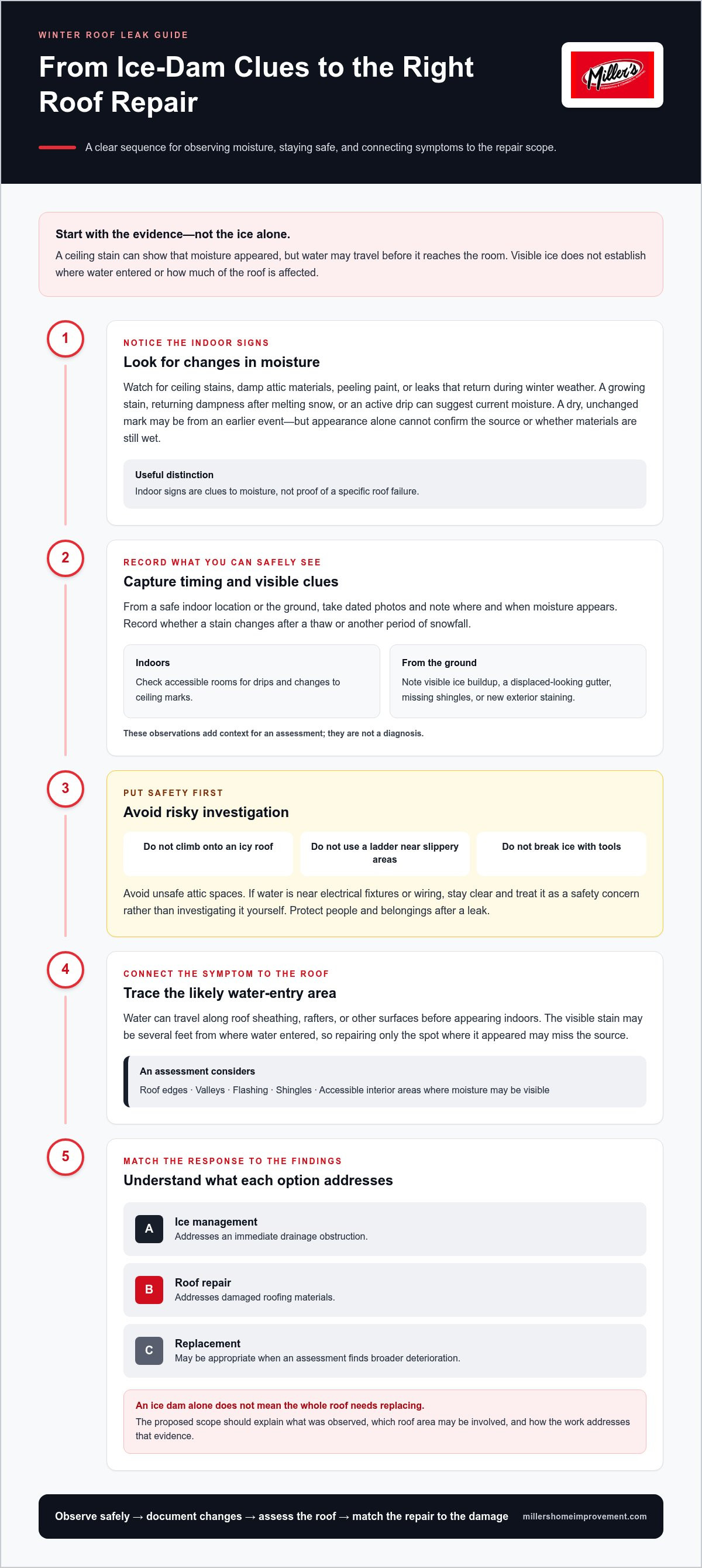
When it’s safe, record when a stain or leak appears and take photos from a safe indoor location. Note whether the mark changes after a thaw or another period of snowfall. This record can help connect the timing of symptoms with roof conditions during an assessment. Don’t climb onto an icy roof or enter an unsafe attic to investigate. Visible ice and indoor signs are useful clues, but they don’t replace an inspection.
How to Diagnose Ice Dam Roof Damage Before Choosing a Repair
A ceiling mark can linger after a leak has stopped, while a fresh drip may signal that water is still getting in. Look for changes: a stain that grows, dampness that returns after melting snow, or an active drip suggests current moisture. A dry, unchanged mark may be from an earlier event, but appearance alone can’t confirm the source or whether materials remain wet.
Interior stains identify symptoms, not necessarily the location where water entered the roof. Water can move along roof sheathing, rafters, or other building surfaces before it reaches a ceiling, so the visible mark may be several feet from the affected roof area. Connecting the indoor symptom to roof conditions helps prevent a repair from addressing only the spot where water appeared.
What homeowners can safely observe from the ground
From a safe position, note visible ice buildup, a gutter that appears displaced, missing shingles, or new exterior staining. Indoors, check accessible rooms for active drips and whether ceiling marks change. Take dated photos when it’s safe, but don’t climb onto an icy roof, use a ladder near slippery areas, or break ice with tools. These observations are useful clues, not a diagnosis.
Keep track of where and when moisture appears. For example, a mark that darkens during a thaw is useful context for an assessment, but it doesn’t prove which roof detail is involved. If water is near electrical fixtures or wiring, avoid the area and treat it as a safety concern rather than investigating it yourself.
What a roof-damage assessment should establish
A careful assessment connects the reported leak to observable conditions. It considers roof edges, valleys, flashing, and shingles, along with accessible interior areas where moisture may be visible. The goal is to identify the affected area, document evidence of water entry, and determine whether roofing materials or flashing show damage that calls for repair.
Findings should make the proposed scope understandable: what was observed, which roof area may be involved, and how the recommended work addresses that evidence. Ice buildup alone doesn’t establish that shingles have failed or that a broad replacement is needed. For ice dam roof damage repair Detroit homeowners can make informed decisions about, the assessment findings should guide the repair plan.
Miller's Home Improvement connects reported symptoms with observed roof conditions to shape repair recommendations around the property’s damage. Learn more about roof repair assessment options and how an assessment can help clarify the next steps.
Ice Dam Removal, Roof Repair, or Replacement: Which Addresses the Problem?
These responses address different parts of an ice-dam problem. Managing ice may address an immediate drainage obstruction, roof repair addresses damaged materials, and replacement may be appropriate when an assessment finds broader deterioration. An ice dam does not automatically mean the entire roof needs replacement. The right scope depends on what the roof assessment reveals.
| Response | What it addresses | What it doesn’t resolve by itself |
|---|---|---|
| Safe ice management | Visible ice that is obstructing drainage. | Damaged shingles, flashing, or sheathing, or the conditions that may contribute to recurring ice buildup. |
| Targeted roof repair | Localized, repairable damage identified during an assessment, such as an affected roof area or flashing. | Widespread deterioration beyond the repair area. |
| Roof replacement | Broader roof conditions when the observed damage or deterioration calls for work beyond an isolated repair. | A guarantee against future ice dams, which can also be influenced by attic and weather conditions. |
When managing the ice is different from repairing the roof
Removing or managing visible ice may help address the obstruction, but it doesn’t restore roofing materials damaged by water or correct the conditions behind recurring ice buildup. Avoid chopping or prying at ice, or applying unapproved heat. These actions can damage shingles and gutters. The safe approach depends on the roof and conditions, so don’t treat an ice-removal method as a substitute for assessing possible roof damage.
When targeted repair or replacement may be considered
If an assessment finds limited damage that can be repaired, a targeted repair may address the affected materials without replacing the entire roof. If it reveals more extensive deterioration, the work may need to extend beyond the area where a leak appeared. A single winter symptom cannot establish the condition of the whole roof.
For homeowners weighing broader work, the Detroit roof replacement guide offers more context. In each case, inspection findings should connect the observed condition to the recommended scope. That’s the sound basis for ice dam roof damage repair Detroit homeowners can plan around, whether the appropriate response is localized repair or replacement.
What Detroit Homeowners Should Do After an Ice-Dam Leak
Take these steps in order. Protect people first, then limit additional damage where it’s safe and keep a clear record of what happened. Don’t risk a fall or electrical injury to investigate a winter leak.
- Make the area safe. Keep people away from wet ceilings, sagging materials, and any water near electrical outlets, fixtures, or wiring. Don’t touch wet electrical equipment or enter an attic that feels unsafe. If there’s an active electrical hazard, stay clear and seek appropriate help.
- Contain drips only if you can do so safely. Move belongings out of the way and place a container beneath a drip if the area is stable and away from electrical hazards. Don’t stand beneath a bulging ceiling or attempt to puncture it.
- Record what you see. Take photos of interior stains, damp areas, and safely visible exterior conditions from the ground. Note the date, where the leak appeared, and whether it began or changed during snowfall or a thaw.
- Avoid roof access. Don’t climb a ladder, walk on an icy roof, or try to remove ice yourself. Chopping or prying can damage roofing materials, and slippery conditions can make a small leak a much greater safety risk.
- Arrange a roof assessment. An inspection can connect the indoor signs with the roof’s observed condition and help determine an appropriate repair scope. Share your photos and notes so the timing and location of the symptoms are part of the assessment.
Documenting damage and considering insurance
Keep your photos, dates, and notes together, and save related communications or records. Homeowners insurance coverage for water damage and ice-dam-related losses depends on the policy and the circumstances, so don’t assume every repair or ice-removal expense is covered. Review your policy and discuss claim questions with your insurer. Miller's Home Improvement assists with insurance claims, but coverage and claim decisions are determined by the insurer.
Once the immediate leak is addressed, prevention deserves attention too. The Michigan winter roof preparation guide offers steps to consider before the next stretch of winter weather. For ice dam roof damage repair Detroit homeowners can plan with confidence, begin with an assessment that ties the reported symptoms to the roof’s condition. Read about roof damage assessment and next steps.
Planning Ice Dam Roof Damage Repair with Miller's in Detroit
A sound repair plan begins by connecting the leak you noticed with the condition of the roof. An assessment can help identify which areas show evidence of damage, whether roofing materials or flashing are affected, and whether the concern appears limited or extends beyond the visible leak. That distinction matters: a ceiling stain is a reason to investigate, not by itself a reason to assume the entire roof needs replacement.
Miller’s Home Improvement serves Detroit and Southeast Michigan, bringing more than 25 years of owner experience and 13 years in business to residential roofing work. The company is fully licensed and insured and offers free in-home estimates. These are practical trust signals when you need a clear explanation of what the roof shows and what work may address it.
What to expect from a clear repair recommendation
A useful recommendation should describe the affected area and explain the proposed work in plain language. It should distinguish what was observed, such as damaged shingles or flashing, from what remains uncertain. The scope can then relate the immediate concern, such as water entry, to the condition of the surrounding roof. This helps ground the recommended repair in the property’s findings rather than assumptions based on ice buildup alone.
Depending on the observed damage, the appropriate next step may be a roof repair or storm-damage restoration. The goal is to understand how the proposed work addresses the evidence found during the assessment, not to prescribe the same solution for every winter leak.
When repair findings point to broader roof work
Sometimes an assessment identifies deterioration beyond the area where water appeared indoors. If broader work, including replacement, is part of the decision, Miller’s can explain how the findings relate to the recommended scope. For additional context, read the Detroit roof replacement guide.
Miller’s also assists with insurance claims, helping homeowners navigate the process without promising coverage or a particular insurer decision. The estimate and repair recommendation are based on the property’s observed condition. Any claim outcome depends on the policy and insurer.
For ice dam roof damage repair Detroit homeowners can approach with a clearer understanding of the next step, start with an assessment of the roof and the reported symptoms. Request a free in-home estimate to discuss the findings and an appropriate repair plan.
Take the Next Step Toward a Lasting Roof Repair
Ice dams can contribute to roof leaks, but visible ice or a ceiling stain doesn’t tell the whole story. The most useful next step is an assessment that connects reported symptoms with the roof’s observed condition. From there, the right scope may be a targeted repair or broader roof work, based on the damage found.
For ice dam roof damage repair Detroit homeowners can approach with confidence, Miller’s Home Improvement brings more than 25 years of owner experience and 13 years in business. The company is a fully licensed and insured Michigan contractor, with free in-home estimates and assistance with insurance claims. Coverage decisions remain with the insurer, while a clear assessment can help you understand the roof work being considered.
Request a free in-home estimate for your Detroit roof to discuss the assessment findings and a suitable repair plan. With the roof condition understood, you can move forward with greater peace of mind.
Frequently Asked Questions
What causes ice dams on Detroit roofs?
Ice dams form when snow melts on warmer roof sections and the meltwater refreezes near colder eaves. The resulting ridge can obstruct drainage and allow water to back up beneath roofing materials. In Detroit, changing winter temperatures can contribute to melting and refreezing, while attic heat loss, insulation, ventilation, roof exposure, and weather patterns affect conditions at each home. The exact cause can vary by roof.
Can an ice dam cause a roof leak even after the ice melts?
Yes, a leak or its effects can remain after visible ice has melted. Water may have entered beneath shingles and dampened roofing materials or interior surfaces, and moisture can take time to show as a ceiling stain. A mark that remains doesn’t prove water is still entering, but recurring dampness or a new drip deserves attention. An assessment can help distinguish lingering evidence from active intrusion.
Is it safe to remove an ice dam from my roof myself?
Climbing onto an icy roof or ladder is hazardous, and chopping, prying, or applying unapproved heat can damage shingles and gutters. Avoid trying to remove an ice dam yourself. Keep clear of falling ice and observe roof conditions from a safe place on the ground. If water is entering the home, prioritize household safety and arrange an assessment to determine the appropriate next step.
Does an ice dam mean I need a new roof?
No. An ice dam alone doesn’t mean the entire roof needs replacement. A roofing assessment can establish whether there is damage, where it appears, and whether it is limited enough for a targeted repair. If the roof shows broader deterioration beyond the leak area, more extensive work may be considered. The recommendation should follow observed roof conditions, not the presence of ice or one winter leak by itself.
How do I know whether an ice-dam leak needs roof repair?
A new or recurring drip, a stain that grows, or damp materials after a thaw can indicate water intrusion, but these signs don’t identify the failed roof detail. Photograph changes and note when they occur. A roof assessment can compare those symptoms with visible conditions at shingles, flashing, valleys, and roof edges. For ice dam roof damage repair Detroit homeowners should base the scope on documented findings, not assume every stain needs the same work.
What should I do if water is coming through my ceiling during an ice dam?
Keep people away from wet or sagging ceiling materials and any water near electrical fixtures or wiring. If it’s safe, move belongings and place a container under a drip, but don’t stand beneath a bulging ceiling, touch wet electrical equipment, climb onto the roof, or enter an unsafe attic. Take photos from a safe location and arrange a roof assessment to connect the leak with the roof condition.
Will homeowners insurance cover ice-dam roof damage?
Coverage depends on your policy and the circumstances of the damage. A policy may treat resulting water damage differently from the cost of removing ice, so don’t assume either is covered. Review your policy and discuss the situation with your insurer before relying on coverage for repairs. Miller’s Home Improvement assists with insurance claims, but the insurer makes coverage and claim decisions. Keep photos, dates, and assessment records for reference.


