
Could a small ceiling stain point to a roof problem you can’t see? In Detroit, a missing shingle, damaged flashing, or worn flat-roof membrane can let water in, but the visible mark doesn’t always reveal the source. Effective local roof repair starts by tracing the problem, not just covering the symptom.
It’s understandable to wonder how urgent a leak is, whether moisture has reached the roof deck, and whether a repair or replacement makes more sense. This guide explains warning signs, what a professional roof assessment and repair can involve, and how the roof’s condition and materials inform the next step.
Miller's Home Improvement serves Detroit and Southeast Michigan with residential and commercial roofing services, including roof repairs, storm-damage restoration, and flat-roof systems. With more than 25 years of owner experience, the team assesses visible damage, identifies a practical fix, and explains the proposed work. You’ll also learn what to consider when choosing a local roofing company and how storm-related damage may connect to insurance coordination.
Key Takeaways
- A stain, drip, or loose shingle is a warning sign, but it may not reveal where the roof problem began.
- Effective local roof repair starts with tracing the leak’s cause before selecting a fix.
- A repair concern doesn’t automatically mean roof replacement. The extent and pattern of damage help shape the recommendation.
- Record where and when symptoms appear, note recent weather, protect belongings, and stay off the roof.
- Miller's Home Improvement serves Detroit and Southeast Michigan, with 13 years in business and more than 25 years of owner experience.
Local Roof Repair in Detroit: What Common Warning Signs Can Tell You
A ceiling stain, loose shingle, or drip during rain can signal a roofing problem, but none reveals the cause on its own. Water can travel along roof framing before it appears indoors, and an exterior defect may not produce an immediate leak. A careful assessment connects the visible clues to the affected roof area and materials.
Roof repair means correcting a diagnosed, limited problem in the roofing system, not treating a symptom without finding its source. Prompt assessment can help identify where water is entering and limit the chance of additional damage. That doesn’t mean every stain points to a major failure. It means the next step should be based on evidence, not guesswork.
Track interior clues and exterior symptoms separately. Inside, note water marks, active dripping, or moisture in the attic. From the ground, look for missing or lifted shingles and damaged flashing around roof edges, chimneys, or other penetrations. A photo can document what you see, but it can’t reveal concealed conditions or confirm the cause. Asphalt shingles are one common roofing material, and the type and condition of the roof system affect how symptoms should be assessed.
Which roof symptoms should prompt a professional assessment?
Arrange an assessment for recurring stains, active drips, visibly displaced shingles, or flashing that appears bent or separated. Attic moisture or visible daylight through the roof structure may also point to a concern with the roof envelope. Don’t climb up to investigate. Photograph exterior signs from a safe place on the ground, and record where symptoms appear, when they occur, and whether rain or wind preceded them.
How Detroit-area weather can affect roof concerns
Seasonal rain, wind, snow, and temperature changes can expose or worsen weaknesses in roofing materials and connections. Weather can also affect when a symptom becomes noticeable, such as a drip during rainfall or a displaced shingle after windy conditions. These clues help describe the issue, but they don’t establish its source. If you’re investigating possible hail symptoms, consult the Michigan storm-damage guide for related information.
For local roof repair, clear observations give the roofer a useful starting point. Note whether the problem is new or recurring, which rooms or roof areas are involved, and what the weather was like when you noticed it. This information helps focus the inspection and match the repair to the cause.
How Roof Repair Diagnosis Works: Trace the Leak Before Choosing a Fix
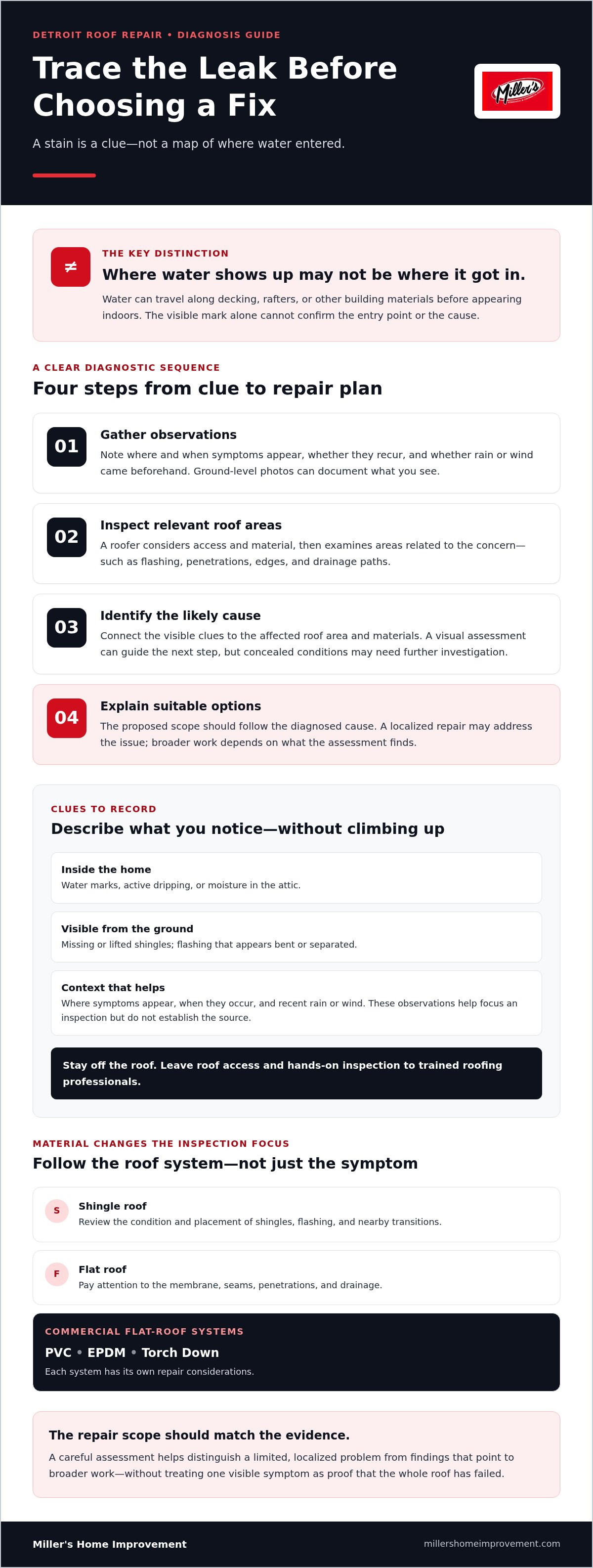
A sound repair plan follows a clear sequence: gather observations, inspect the relevant roof areas, identify the likely cause, and explain suitable options. A ceiling stain is a clue, not a map of the leak. Water can travel along decking, rafters, or other building materials before showing up indoors, so the entry point may be some distance from the stain.
The repair scope should follow the diagnosed cause, not the appearance of the damage alone. This helps avoid a surface-level patch that leaves the source unresolved, while keeping the response proportionate to what the inspection finds.
What happens during a roof repair assessment?
The roofer reviews where and when the symptom appears, considers the roof’s access and material, then examines relevant areas for visible damage. Depending on the concern, that may include flashing, roof penetrations, edges, and drainage paths. A visual assessment can guide the next step, but concealed conditions may require further investigation. Invasive work isn’t automatic. It should be tied to evidence and explained before proceeding.
Safe access matters during an assessment. Professional roof work involves fall hazards, and OSHA provides guidance on fall protection in construction. Homeowners can describe symptoms and share ground-level photos, but should leave roof access and hands-on inspection to trained roofing professionals.
Why roof material and design affect the repair plan
On a shingle roof, an assessment may focus on the condition and placement of shingles, flashing, and nearby transitions. A flat roof calls for attention to its membrane, seams, penetrations, and drainage. Miller's Home Improvement works with commercial PVC, EPDM, and Torch Down roofing systems, each with its own repair considerations. For drainage-specific information, see the published article on flat-roof ponding repair.
Once the cause and affected area are clearer, the roofer can explain whether a localized repair addresses the issue or whether the findings point to broader work. A useful explanation connects the observed condition to the recommended fix, rather than relying on the stain or damaged surface alone. That’s the value of a careful local roof repair assessment: it gives you a reasoned basis for deciding what happens next.
Miller's Home Improvement provides roof repairs in Detroit and Southeast Michigan. Learn more about a Detroit roof repair assessment.
Roof Repair or Replacement? How to Understand the Recommendation
A roof concern doesn’t automatically mean the entire roof needs replacement. The right scope depends on what an on-site assessment finds: how far the damage extends, the condition of nearby areas, the roofing material, and whether similar problems have returned after earlier repairs. A recommendation should connect those findings to the work proposed, not treat one visible symptom as proof that the whole roof has failed.
When can a targeted roof repair make sense?
A limited repair may be appropriate when damage is confined to a specific area and the surrounding roof remains serviceable. Examples might include a displaced shingle in one section or a concern at a particular flashing joint. These are possibilities, not diagnoses. If a leak or other symptom keeps returning, the assessment should look beyond the visible spot and investigate whether an unresolved cause is affecting it again.
When might a larger roofing project be discussed?
Broader work may enter the conversation if an inspection finds extensive damage, deterioration across multiple areas, or repeated issues that point to a wider problem. The roof’s material and overall condition also matter, since a repair suited to one section may not address widespread concerns. A professional should explain what was observed and why the proposed scope follows. That’s different from assuming replacement based on a single stain or loose shingle.
For local roof repair, ask specific questions: Which area is affected? What condition is the surrounding roof in? How does the repair history inform the recommendation? Clear answers help you understand whether the proposed work is limited or whether the findings support a larger project. No single symptom or threshold can determine the choice without assessing the roof itself.
If replacement preparation is being considered, a roof tear-off guide can explain what removing existing roofing involves. Replacement planning is separate from deciding how to address current damage. The assessment should first establish the roof’s condition and the scope of work needed.
What to Do Before and During a Local Roof Repair
A few practical steps can help protect your belongings and make a roof assessment more useful. You don’t need to identify the source yourself. Record what you can safely observe, then share those details so the roofer has a clear starting point.
How can homeowners prepare for a roof assessment?
Photograph interior stains or active drips, and note the room and approximate location. If water is dripping, move valuables and place a container beneath it if the area is safe to reach. Don’t climb onto the roof, especially if it’s wet, icy, or visibly damaged. A roof that looks stable from the ground can still present hazards.
What information helps clarify a repair recommendation?
Describe when the symptom began, whether it changes during or after rainfall, and whether similar issues or repairs have occurred before. Share recent weather if you suspect storm damage. Miller’s Home Improvement provides free in-home estimates for roofing projects. If hail may be involved, the company’s hail-damage guide can offer additional context while the roof concern is assessed.
During the assessment, the roofer reviews your observations and examines the relevant roof areas. The next step is to explain the findings and discuss the proposed scope, including how it addresses the suspected cause. Once the repair plan is clear, the work can be arranged for the project. Scheduling depends on the specific work.
If storm damage is part of the concern, keep relevant photos and notes together. Miller’s coordinates insurance claims for storm-related roofing concerns, connecting the repair assessment with the documentation process. This isn’t a substitute for your insurer’s claim instructions, but a clear record of what you observed can help keep the details organized.
After the repair, review the completed work and ask for a clear explanation of what was addressed. A local roof repair process should leave you understanding the issue, the work performed, and any practical points to watch for. Schedule a roof repair assessment with Miller’s Home Improvement.
Local Roof Repair in Detroit with Miller’s Home Improvement
Choosing a roofing team means trusting its assessment as well as its workmanship. Miller’s Home Improvement is a Michigan roofing contractor serving Detroit and Southeast Michigan, with residential and commercial roofing experience. The company has been in business for 13 years, and its owner brings more than 25 years of experience to roofing projects.
That range matters because roof systems and building needs differ. A home with shingle roofing and a commercial building with a flat roof call for attention to different materials and details. Miller’s handles roof repairs and storm-damage restoration, along with residential and commercial roofing work. The company is licensed and insured, providing a local roofing resource for Detroit-area property owners.
What roofing experience does Miller’s bring to Detroit-area projects?
For commercial flat roofs, Miller’s works with PVC, EPDM, and Torch Down systems. The appropriate repair depends on the roof’s condition and the issue identified during the assessment. For storm-related concerns, the company also coordinates insurance claims as part of its restoration support. This connects the observed damage with a practical repair plan and keeps the property’s roofing needs at the center of the discussion.
How to take the next step for a roof repair
Start by describing what you’ve noticed: a stain, drip, missing roofing material, or concern after a storm. Sharing where and when the issue appears gives the team helpful context for an in-home assessment. Miller’s provides free in-home estimates for roofing projects, then discusses the findings and a project-specific scope so you can understand the recommended work.
Local roof repair should begin with a clear view of the problem and a straightforward explanation of the next step. Whether you’re dealing with a residential concern or a commercial roofing issue, Miller’s can assess the roof and discuss repair options based on its condition. The assessment helps determine the work the roof actually needs.
Request a free in-home estimate from Miller’s Home Improvement to discuss your Detroit-area roof repair needs.
Take the Next Step Toward a Sound Roof
A stain, drip, or displaced shingle is a reason to look closer, not a verdict on the whole roof. A careful assessment traces the concern to its likely source, then weighs the roof’s condition, material, and repair history to determine whether a targeted fix or broader work makes sense. That’s the foundation of reliable local roof repair: understand the cause before choosing the remedy.
Miller’s Home Improvement is a licensed and insured Michigan roofing contractor serving Detroit and Southeast Michigan. The team handles residential and commercial roofing, including storm-damage repairs, and brings 13 years in business and more than 25 years of owner experience to its work. A free in-home estimate can help clarify the findings and project-specific scope.
Describe what you’ve noticed and take the next step toward a clear plan. Request a free in-home estimate from Miller’s Home Improvement. With the right assessment, you can make an informed decision and move forward with greater confidence.
Frequently Asked Questions
How do I know if my roof needs repair?
Look for water stains, active leaks, missing or lifted shingles, damaged flashing, or moisture in the attic. These signs can have different causes, and a ceiling stain may appear some distance from the roof opening. Photograph what you can see safely, note when the symptom appears and whether it follows rain or wind, then arrange a professional assessment. An inspection can help identify the source and determine an appropriate repair.
Can a roof leak be repaired without replacing the entire roof?
Yes. Some leaks result from localized damage that may be addressed with a targeted repair. The right scope depends on the roof’s overall condition, material, extent of damage, and repair history. A professional assessment helps distinguish a limited issue from broader deterioration. Don’t assume that a stain means the whole roof needs replacement, or that a small-looking mark can be fixed with a simple patch. The roof needs to be evaluated.
How quickly should I address a roof leak?
Arrange an assessment promptly, since continued water entry can damage interior finishes and other building materials. If water is coming in, move belongings and collect drips only if you can do so safely. Don’t climb onto a wet, icy, or damaged roof to investigate. Note which rooms are affected and when the leak occurs. Those details can help the roofer assess the issue and identify the next step.
Does homeowners insurance cover roof repair in Michigan?
Coverage depends on your policy, the cause of the damage, and your insurer’s claim decision. Document visible damage and relevant dates, then review your policy or contact your insurer for its claim requirements. Miller’s Home Improvement coordinates insurance claims for storm-restoration projects. An assessment or estimate doesn’t guarantee coverage, claim approval, or payment, so keep the insurer’s decision and policy terms central to your planning.
How do I find a local roof repair company in Detroit?
Choose a contractor serving Detroit with experience relevant to your roof type and a clear process for assessing damage. Miller’s Home Improvement is licensed and insured, serves Detroit and Southeast Michigan, and works on residential and commercial roofing projects. A free in-home estimate can help clarify the observed issue and project-specific repair scope. Sharing symptom details and repair history can also help focus the assessment.
Can a flat roof be repaired instead of replaced?
Yes, a flat roof may be repairable if an assessment finds a localized issue and the surrounding system remains suitable for repair. The membrane, drainage conditions, extent of damage, and repair history all inform the recommendation. Miller’s works with commercial PVC, EPDM, and Torch Down roofing systems. The appropriate approach depends on the specific roof, so an on-site assessment is needed to determine whether repair or broader work makes sense.


