
A roof replacement can fail long before its new membrane wears out if the surface beneath it is not properly prepared. For low slope roof replacement in Detroit, work typically begins by removing the existing roofing, then assessing the roof deck and preparing it for the new system.
It makes sense to want a clear picture of the disruption and the cost before committing to a major project. The total depends on the roof’s size and condition, the amount of material to remove, and whether the deck needs repairs. This guide explains what tear-off and preparation involve, how demolition factors into the project cost, and what to consider when choosing EPDM for Detroit’s changing weather. You’ll also see why drainage, seams, and careful installation matter to the roof’s long-term performance.
Key Takeaways
- A thorough tear-off makes it possible to assess the roof deck and prepare a sound base for the replacement system.
- Demolition is one part of project cost; roof size, existing layers, and any underlying repairs also affect the work involved.
- Drainage, secure seams, and sound flashing help a low-slope roof stand up to Detroit’s snow, wind, and freeze-thaw conditions.
- EPDM is one option for low-slope roofs, and the right replacement plan depends on the roof’s condition and how water moves across it.
Roof replacement and tear-off
For low-slope roof replacement in Detroit, the crew removes the old roofing, assesses the deck, prepares the surface, and installs the new system. A flat roof replacement typically takes about five days, depending on the project’s size and complexity.
Replacement Steps
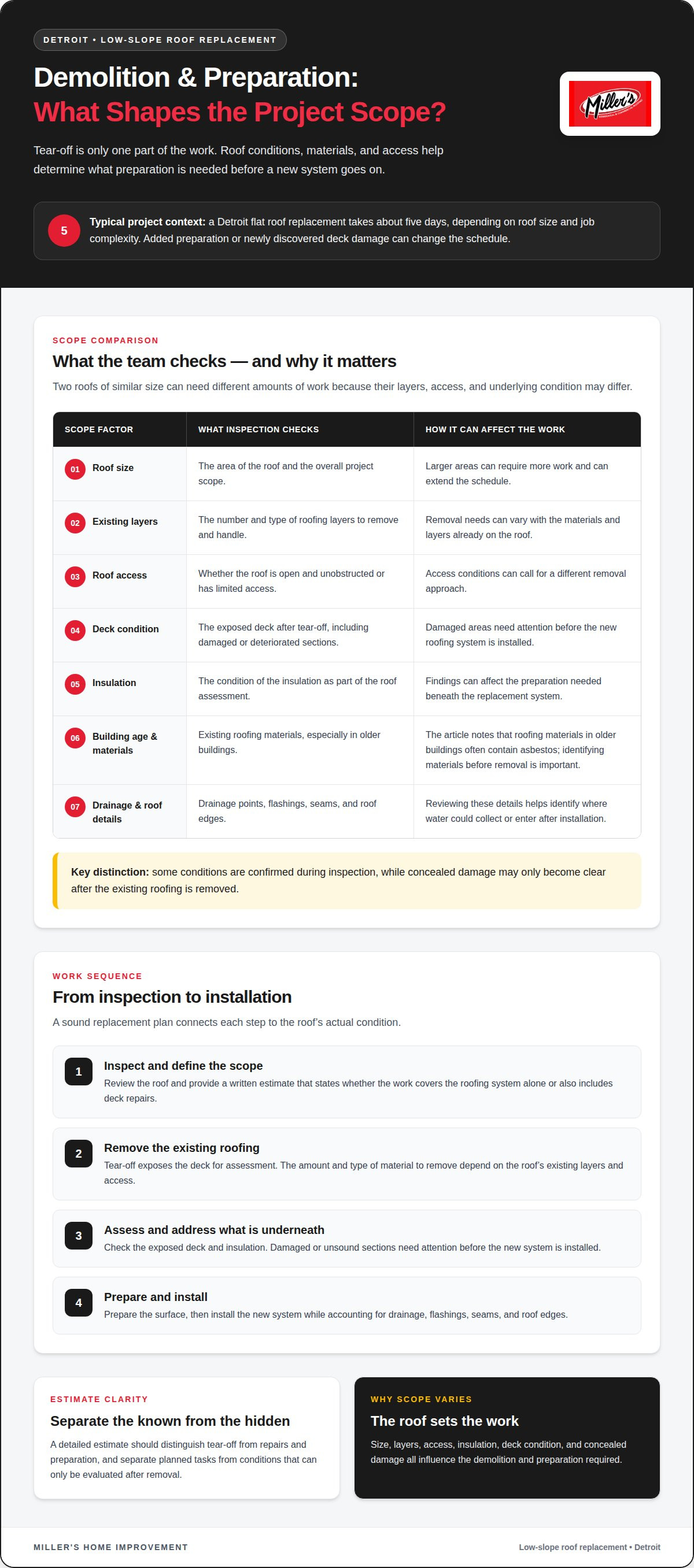
The sequence starts with a roof inspection and a written estimate that defines the project scope. During tear-off, workers remove the existing roofing and expose the deck for assessment. They address damaged sections before preparing the surface and completing the installation. The estimate should explain whether the work covers the roofing system alone or includes deck repairs, especially on an older commercial roof.
Preparation also includes reviewing drainage points, flashings, seams, and roof edges. These details help identify where water could enter or collect after installation. Hail damage can puncture membrane roofing and may require full replacement; a roof repair may be enough when damage is limited and the surrounding system remains serviceable. A licensed roofing company’s estimate should distinguish those conditions and explain the proposed work.
Project Timeline
Plan around five days for a typical Detroit flat roof replacement, though the schedule changes with roof size and job complexity. The U.S. Environmental Protection Agency notes that roofing project time depends on building square footage and the type of upgrade and material used. Larger areas or added preparation can extend work beyond the basic tear-off and installation sequence.
Weather and the condition of the newly exposed deck can also affect the sequence. If tear-off reveals damaged decking, the crew needs to address it before installing the new system. Material choice and project scope matter as well, because replacing a roof with a different system involves its own preparation and installation requirements. A clear estimate helps set expectations by identifying planned steps and included work.
Demolition and preparation costs
Demolition and preparation shape a low-slope roofing project in Detroit. A thorough inspection helps identify what removal involves and what the new system needs underneath. The roofing team assesses the existing layers, roof access, deck condition, and insulation. These findings help explain why two roofs of similar size can require different amounts of work.
Removing the existing roofing is only one part of demolition. The number and type of layers affect how the crew separates and handles the material. Access can also influence the removal plan: a commercial roof with limited access may require a different approach from an open, unobstructed roof. The estimate should distinguish tear-off from repairs or preparation that become necessary as work progresses.
Older Detroit buildings need particular care during preparation. The Agency for Toxic Substances and Disease Registry says roofing materials in older buildings often contain asbestos. Identifying the material before removal begins is therefore important. The inspection and demolition plan should account for the building’s age and existing materials rather than treating every roof as a straightforward membrane removal.
Preparation can include examining the exposed deck, reviewing insulation, and addressing areas that could compromise the new roof. Damage beneath the membrane may change the project scope, since installation should not cover an unsound surface. Roof size, material layers, access, and concealed damage all influence the amount of demolition and preparation required. The estimate reflects the conditions and work identified for the specific roof.
Before work begins, a detailed estimate should separate known tasks from conditions that can only be evaluated after removal. For example, an older flat roof may appear intact above but reveal deteriorated decking once opened. A clear inspection process helps connect each preparation step to the roof’s actual condition. If you’re planning a replacement, a roofing estimate can clarify the work needed for your property.
Freeze-thaw cycles, snow loads, and wind
Detroit’s weather can affect roof condition and replacement scope. Freeze-thaw cycles can stress roofing materials and loosen components, while heavy snow, ice buildup, and wind-driven rain place added strain on residential and commercial roofs. The work required depends on the roof area, membrane damage, exposed deck condition, and any necessary preparation or repairs.
Ice dams form when attic heat melts snow that later refreezes at the roof edge. Proper insulation and ventilation can help reduce this risk on Detroit homes. During replacement, the roofing team can assess drainage, roof edges, and flashing as part of the installation plan. These details matter because trapped or misdirected water can reach vulnerable seams and worsen damage during freeze-thaw cycles.
Wind damage can show up as lifted shingles, separated membrane seams, raised roof panels, or fallen trees. After strong winds in Detroit, owners may notice displaced roofing, loose flashing, or debris in gutters. These signs can indicate where a closer inspection is needed. For an insured property, documenting visible damage can help organize information for an insurance claim, without assuming what the policy covers.
Storm damage can change the replacement scope if the membrane has punctures or separated seams. Hail may damage a flat-roof membrane and the insulation beneath it, leading to leaks or further deterioration. The affected area, underlying condition, and amount of material to remove shape the work. A thorough inspection helps distinguish localized repairs from damage that calls for broader replacement.
The practical priority is matching the roof system and preparation to the building’s exposure. A commercial roof with open exposure may face different wind conditions from a residential section sheltered by nearby structures. Drainage planning, sound flashing, and secure membrane seams address specific vulnerabilities rather than treating every Detroit roof alike. These factors help explain why project scope varies between buildings.
Low-slope EPDM roof replacement
EPDM is one option for a low-slope roof, but performance depends on drainage, seams, and proper installation. Compare the system’s requirements with the building’s exposure and existing insulation before choosing a replacement.
Roofing Material Comparisons
EPDM, TPO, and PVC are membrane options; modified bitumen uses asphalt-based roofing layers. Their installation methods and seam details differ, so compare how each system fits the roof’s layout and drainage. EPDM can be punctured by hail, while pooling water, loose fasteners, and damaged seams can create trouble on flat roofs. No material removes the need for careful detailing.
For Detroit weather, prioritize drainage planning, sound seams, and suitable repairs. Shingles are not a direct substitute for a low-slope membrane system.
Contractor Selection
Compare Detroit roofing contractors by reviewing written scopes, installation methods, and how each proposal addresses drainage, seams, and insulation. Confirm stated licensing and insurance credentials, then compare the specific work each estimate includes. The lowest estimate may cover a different scope, so look for clear descriptions of tear-off, preparation, and membrane installation.
Warranty terms vary by roof and project. Review any written warranty coverage alongside maintenance instructions, including guidance on inspections and prompt repairs.
Permits and Building Codes
Detroit permit requirements depend on the replacement work and project scope. Identify applicable permit needs before work begins and include that step in the project plan. Michigan building-code requirements can also affect roof assemblies and insulation, so assess the proposed assembly against the requirements that apply to the building and work.
Ask for applicable permit and code steps to be identified in the written scope rather than assuming every replacement follows the same process.
Signs Replacement Is Needed
Repeated leaks, membrane tears, separated seams, and persistent pooling water call for a thorough assessment. Hail can puncture a membrane and damage the insulation beneath it, so a visible surface repair may not address the full problem. Replacement becomes a stronger consideration when damage is widespread or the roof deck also needs attention.
For an EPDM roof showing these conditions, request an EPDM roof replacement estimate that addresses the membrane, drainage, and underlying insulation.
Miller's Home Improvement
Miller's Home Improvement works with Detroit-area property owners on residential and commercial roofing, including low-slope replacements. If leaks, membrane damage, or recurring repairs raise questions about your roof, an assessment can help clarify the work the building needs.
Miller's Home Improvement installs PVC, EPDM, and torch-down flat roofing systems. The suitable option depends on the roof’s condition, drainage, and project scope. Discussing these factors can help you understand the replacement work and choose a practical direction for your property.
For guidance on a residential or commercial low-slope roof in Detroit, contact Miller's Home Improvement for a free in-home estimate.
Plan the next step with confidence
A low-slope roof replacement in Detroit is an opportunity to plan around the building’s needs, not just its visible surface. Consider how the roof is used, where water has entered, and what matters most in the replacement system. Sharing these priorities helps shape a project scope for the property as a whole.
Miller's Home Improvement handles residential and commercial roofing, including PVC, EPDM, and torch-down flat roofing. Detroit-area property owners can discuss their roof concerns and the options they are considering. A project conversation can clarify which details should guide the decision, from the building’s use to the work required.
For a straightforward discussion about your roofing project, contact Miller's Home Improvement. A clear starting point can help you move forward with greater confidence.
Frequently Asked Questions
For Your Flat Roof Project?
For a flat-roof project, start by identifying the building’s use and the problem the roof needs to address. A home addition, garage, and commercial space can have different access and drainage needs. Note where leaks appear and whether they follow rain or snowmelt. This context helps focus the inspection and connect the proposed work to the roof’s actual conditions.
What materials are best for low-slope roof replacement in Detroit?
No single material suits every Detroit roof. EPDM, TPO, PVC, and modified bitumen differ in system design and installation requirements; the right choice depends on roof layout, drainage, penetrations, and the existing assembly. For example, a roof with several drains or rooftop openings needs careful detailing around each transition, whatever membrane is selected. A project-specific comparison is more useful than a generic ranking.
How do Detroit's snow, ice, and freeze-thaw conditions affect low-slope roofs?
Snow and ice add stress, while changing temperatures can affect roofing materials and vulnerable transitions. After snowmelt, recurring interior stains or a new leak may signal that water reached a weak point. A professional assessment can help distinguish a localized issue from broader deterioration. Note when symptoms appear, such as after thawing or wind-driven rain, to give the roofing team useful context.
What are the pros and cons of EPDM, TPO, PVC, and modified bitumen roofing?
EPDM can suit low-slope roofs but can be punctured by hail. TPO and PVC are membrane options, while modified bitumen uses asphalt-based roofing layers; their installation methods and seam details differ, and all require careful drainage and detailing.


