
A useful roof inspection report for insurance shows exactly where damage is, not just that it exists. It records the roof’s material and condition, describes each finding and its location, and pairs written observations with labeled photographs. If the cause cannot be determined, the report should say so rather than guess.
A clear, straightforward record helps an insurer understand what an inspection found. The details matter: storm damage needs specific documentation, while the roof’s age, maintenance history, and overall condition put those findings in context.
This article explains what to include in a report, how photographs and written notes document storm damage, and how reports differ for homes and commercial roofs. You’ll also learn how to make the findings specific to the roof system.
Key Takeaways
- Learn which roof details help an insurer assess condition, age, and potential coverage implications.
- See how to connect storm-related findings to clear, location-specific evidence without confusing them with existing wear.
- Understand why labeled photographs and precise written observations strengthen a report.
- Explore how residential and commercial reports differ in the roof systems and inspection details they document.
How do I prove the damage is from this storm?
Connect each suspected storm-related defect to its location, visible condition, and timing. For example, a dated photograph of a newly missing shingle gives the report a specific observation to assess.
Storm Damage Versus Wear and Tear
Storm damage is a change linked to a weather event; wear and tear develops through ongoing exposure and aging. A report should describe what the inspection shows, not assume every defect came from the latest storm.
An inspector can record cracking, curling, granule loss, exposed materials, missing or damaged roofing, soft decking, and hail marks. Compare the locations and patterns with the reported storm conditions, and document pre-existing deterioration separately. If the evidence does not establish a finding’s cause, the report should say so rather than state an assumption as fact.
Roof Damage and Maintenance Red Flags
Red flags include damaged or missing roofing, curling shingles, granule loss, cracking, exposed materials, and soft decking. Each may indicate a defect or deterioration that deserves a clear description, even if the inspection cannot link it to a particular storm.
Check related areas as well as the visible roof surface. Attic water marks, damp insulation, and ceiling stains can help show where moisture is present, but they don’t automatically identify its entry point. A bedroom ceiling stain may be connected to a roof defect as far as 40 feet away because water can travel. Record the stain’s location and describe the roof finding separately, so the report doesn’t overstate a connection.
Photographing and Timestamping Damage
Photographs document the appearance and location of a finding; timestamps help place the image in relation to the storm. Capture damage as soon as possible, ideally within 24 to 48 hours after the storm, while recording the date and the roof area shown.
Pair each close view with a wider image that establishes its position on the roof. Label photos by slope or area and defect, then match each label to the written observation. For commercial roof drone flights conducted as part of a business in the United States, the Federal Aviation Administration requires the remote pilot to hold a Part 107 certificate.
What should I include in a roof inspection report for insurance?
A roof inspection report records the roof’s materials, age, condition, visible findings, and supporting evidence. It helps an insurer assess the roof and related claims, but does not guarantee coverage.
Roof Condition and Insurance Underwriting
Insurers use roof condition to assess whether the system works as intended and has visible hazards or deficiencies. That assessment can affect insurability, coverage terms, and how an insurer evaluates risk. A particular finding does not translate into a standard premium change.
Include the roof’s overall condition and explain any concerns with specific observations. A worn covering, active leak, or structural concern gives the insurer a clearer basis for evaluating eligibility than a general label such as “poor.” Roof age matters too: the International Association of Certified Home Inspectors states that roofs typically last 20-50 years, depending on materials and upkeep.
Findings, Ratings, and Repair Priorities
A finding is a documented condition, its location, and its likely cause, or a note that the cause cannot be determined. This detail helps distinguish observed evidence from assumptions. Describe each defect plainly, then give its condition and repair priority; roof damage findings have a recommended priority timeframe of “Within 12 months.”
An inspector or roofing professional usually prepares a roof inspection report for insurance; an insurer may also arrange its own inspection. Arrange an inspection and request written findings. If you disagree with a report or denial, submit relevant evidence and an independent report as a supplement, relating each finding to the policy language. For a denial, request the decision in writing and ask the insurer to cite the specific policy language.
Materials, Age, and Structural Conditions
For each roof covering section, record the material, age, and remaining useful life in years. If an update involved replacement, identify whether it was full or partial; for partial work, state the percentage replaced. These details show how much of the roof is affected and put defects in context.
Include attic and structural observations, not just exterior conditions. The National Roofing Contractors Association advises examining attic spaces for indicators of water damage, ventilation effectiveness, and structural soundness. Note leaks beneath the decking or on interior ceilings, and describe evidence of water reaching insulation or framing.
Inspection, Certification, and Report Validity
An inspection documents observed conditions; a certification is a separate statement about a roof’s condition or suitability. How long a report is accepted depends on the insurer’s requirements and whether the roof’s condition changes.
Inspection costs depend on roof size, material, access, and scope; the price is provided after a quote request. For storm-related defects requiring corrective work, storm damage repair can address the roof condition documented in the report.
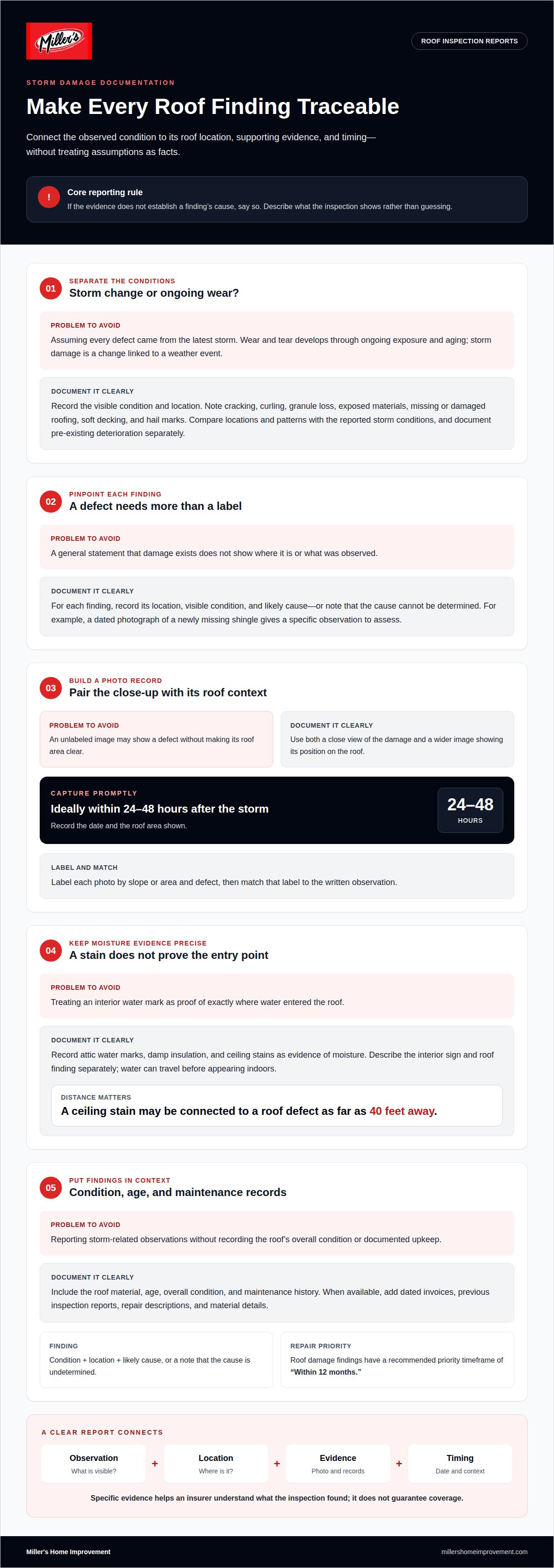
Photo and written documentation requirements
A strong insurance file connects every written observation to supporting records. Requirements differ by state and insurer, so report formats and required details can vary.
Maintenance Records and Supporting Documents
Maintenance records put the roof’s condition before a reported loss in context. Include dated invoices, previous inspection reports, repair descriptions, and material details when available. These records help distinguish documented upkeep from damage found during the current inspection.
Photographs should show both the affected area and its location on the roof. Photographs can help support written observations in a roof inspection report. Label each image with its location and defect, then match it to the relevant report entry. Record interior evidence, such as a ceiling stain, separately rather than assuming its cause.
For example, pair a close view of damaged shingles with a wider view that shows the roof slope. Document penetrations, flashing, or nearby repairs when they relate to the finding.
Documenting the Repair Scope
A repair scope describes the work associated with each documented finding. Identify the affected roof area, the damaged material, and the proposed repair, keeping observed conditions separate from recommended work. This detail helps an insurer compare the evidence with the requested claim.
Use specific descriptions instead of broad phrases such as “roof repair.” State which slope has damaged shingles and whether related flashing needs attention. Separate storm-related work from unrelated maintenance, and keep photographs and written notes that support each item. A clear scope shows what the proposed work addresses.
Variations in Inspection Requirements
Inspection requirements can vary by state and insurer, including the form used and the details requested. Florida’s sample roof inspection form requires photos of each roof slope and all hazards or deficiencies. Its comments section must fully describe roof updates, hazards, deficiencies, or a roof not in good working order.
The Florida form also includes inspector information such as title and license number. It is a sample, and another report may be submitted if it contains at least the same minimum level of detail. For drone reports, document capture weather, including precipitation in the prior 48 hours. Matching the insurer’s requested format helps keep the claim file organized.
Residential and commercial roof report differences
Both types of report document visible conditions, but the roof system and building use shape the inspection. A residential report often focuses on slopes, shingles, flashing, and attic evidence.
For a home, the report records roof material, age, affected slope, and interior signs such as ceiling stains. It should connect each visible finding to its location and explain whether it affects a specific roof section. For example, distinguish missing shingles on one slope from general wear across the roof. Attic observations add context about leaks, insulation, ventilation, and structural condition.
Commercial reports organize findings across the building’s roof areas and systems. For a flat roof, notes may cover membrane condition, seams, drainage, penetrations, and any ponding or debris observed during inspection. Clearly identify each area so building managers can compare findings with maintenance records and prior repairs. Distinguish roof sections when materials or conditions differ across the property.
Inspection schedules also differ in practice. Residential inspections are advised once a year and after major storms or suspected problems. Commercial roofs commonly follow an annual or semi-annual schedule. Consistent records make it easier to identify changes over time instead of treating every finding as new.
Commercial documentation may also need to make the inspection approach clear. For example, note which roof areas were visually accessible and where photographs were captured. If a drone is used for a commercial flight conducted as part of a business in the United States, the remote pilot must hold an FAA Part 107 certificate, according to the Federal Aviation Administration.
The practical takeaway is to match the report to the building: document slopes and interior evidence for a home, and map roof areas, systems, and maintenance records for a commercial property. For a building with a commercial roof, explore commercial roofing as a next step when inspection findings point to roofing work.
Miller's Home Improvement
Miller's Home Improvement helps property owners address roofing concerns identified during an inspection. If a report documents storm damage, a leak, or deterioration that needs attention, the team can discuss the roofing work involved and how the findings relate to the property.
Miller's Home Improvement provides residential and commercial roofing, including PVC and EPDM flat roofing for homes and commercial buildings. The right approach depends on the roof system and the condition recorded in the report. Clear findings help focus the conversation on the affected areas and needed work, rather than treating every roof concern alike.
If your inspection report identifies roofing work to discuss, contact Miller's Home Improvement.
Turn the Report Into a Practical Next Step
A roof inspection report for insurance can guide decisions beyond a claim. Use its findings to identify roofing concerns that need attention and base repair planning on documented conditions. Then discuss the work those findings point to, whether the property is residential or commercial in Detroit.
Miller's Home Improvement provides Residential Roofing, Commercial Roofing, and PVC Flat Roofing in Southeast Michigan. If your report identifies roof damage or repair needs, its findings can help frame a focused discussion about the affected roof and suitable work.
Contact Miller's Home Improvement to discuss your roofing concerns and move forward with a clear plan.
Frequently Asked Questions
What does an insurance roof inspection report include?
A report records the roof’s covering, age, condition, and inspection findings, with evidence to help an insurer assess the property. It may also describe repair history, remaining useful life, interior signs of water intrusion, and the cause of each finding when determinable. For example, distinguishing a prior repair from a newly observed defect gives the insurer useful context for its review.
What roof conditions can cause an insurance company to deny coverage?
Visible hazards or deficiencies can affect whether a roof meets an insurer’s underwriting requirements. Examples include an active leak, damaged or missing covering, deteriorated materials, or structural concerns. These findings do not automatically mean a claim will be denied; the insurer assesses the condition and policy terms. Distinguishing pre-existing wear from damage linked to a covered event can also matter during claim review.
How old can a roof be for homeowners insurance?
There isn’t one roof-age cutoff that applies to every homeowners policy. The International Association of Certified Home Inspectors states that roofs typically last 20-50 years, depending on their materials and upkeep. That lifespan range isn’t an insurance eligibility rule. An insurer may also consider the roof’s present condition, maintenance history, and material, so age alone doesn’t determine whether coverage is available.
Can an insurer require repairs or cancel coverage based on a roof inspection?
A roof inspection can affect an insurer’s assessment of whether a property is insurable, and findings may prompt a request for corrective work. Whether coverage changes or ends depends on the policy and applicable state requirements. If a claim is denied, request the decision in writing and ask the insurer to identify the specific policy language supporting it.


