
Roofing work doesn’t automatically mean residents must leave. Multi-family housing roofing in Detroit can be planned around an occupied property, including resident access, parking, and shared spaces. Whether flat-roof damage calls for a targeted repair or full replacement depends on the roof’s condition and the extent of the damage.
For property owners and managers, leaks can disrupt homes and common areas, so it helps to have a clear plan before work begins. Regular inspections can identify developing issues. An inspection after severe weather or when damage is visible can help establish what needs attention.
This article explains when flat-roof repairs may be appropriate, how to plan a replacement across an apartment or condominium property, and when to schedule inspections. It also covers roofing systems used on low-slope buildings and considerations for Detroit-area properties, so you can make informed decisions about the work involved.
Key Takeaways
- Targeted repairs may address localized flat-roof damage; widespread deterioration, recurring leaks, and overall roof condition help determine when replacement is the better path.
- Plan a multifamily replacement around building access, resident needs, parking, shared spaces, and property operations to keep the project organized.
- Schedule inspections regularly and after severe weather or signs of leaks, with attention to seams, flashing, penetrations, and drainage.
- Learn which Michigan communities are served and how Miller's Home Improvement’s residential, commercial, and flat-roof services fit multifamily properties.
Can you repair flat-roof damage without replacing the whole apartment roof?
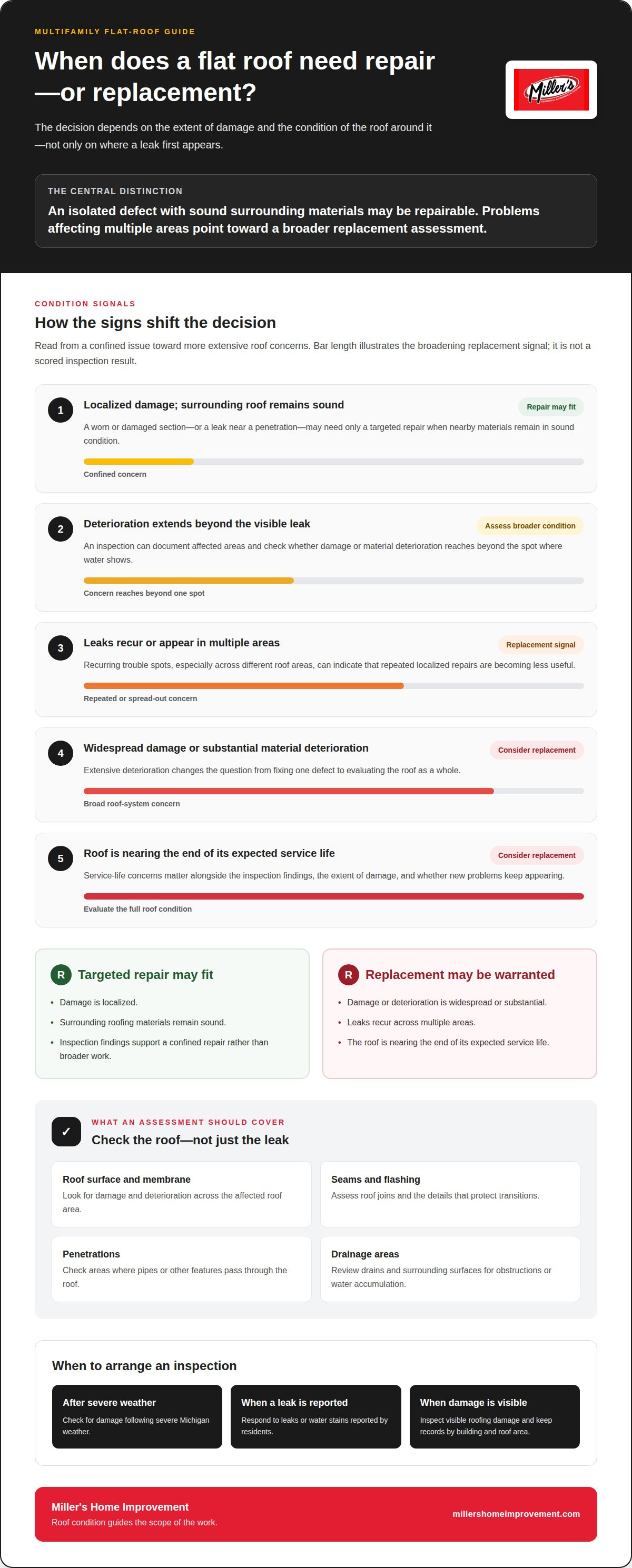
Yes. A localized damaged or worn section of an apartment roof may be repaired without replacing the entire roof. Start by assessing the membrane, seams, flashing, penetrations, and drainage areas. For example, a leak near a roof penetration may need only a targeted repair if the surrounding materials remain in sound condition. The roof’s overall condition and the risk of further problems matter as much as the visible damage.
Regular inspections can identify developing issues before water reaches apartments, shared hallways, or building systems. Schedule an inspection after severe Michigan weather, or when residents report leaks, water stains, or damaged roofing. A roofing company can document affected areas, check for deterioration beyond the visible leak, and recommend roof repair, maintenance, or replacement based on what it finds. Maintenance also helps track recurring trouble spots across the property.
For condominium communities, assess each building and roof area, not just the location of the first reported leak. Different elevations, shared components, or separate roofing systems may have different conditions. If damage is isolated and the surrounding roof remains serviceable, a localized repair may be appropriate. Recurring leaks across multiple areas or extensive deterioration may point to replacement instead.
Widespread damage, substantial material deterioration, recurring leaks, and a roof nearing the end of its expected service life are signs to consider replacement. Repeated repairs may become less useful when new problems appear in other areas. Inspection findings can distinguish a confined defect from broader failure and guide the choice between repairing one area and planning a complete replacement.
Eligibility for energy-efficiency incentives depends on the program’s criteria, the property, and the roof assembly. Replacing a roof alone does not establish eligibility; the materials and installation must meet the applicable requirements. For multi-family housing roofing in Detroit, review those criteria alongside the inspection findings before choosing a system.
Roof replacement planning for condominium and apartment properties
Replacing an apartment or condominium roof is a coordinated project, not simply a material swap. Planning should account for each building’s roof type, residents, access, and property operations.
Property Types and Roofing Materials
Apartment buildings, condominiums, and townhomes may combine low-slope roofs with steep-slope sections. PVC, TPO, and EPDM membranes are common on low-slope multifamily buildings. Shingles are common on apartment and condominium properties with steep-slope designs. Compare the existing assembly, drainage, penetrations, and roof condition before selecting materials. Map each building and elevation; one community may need more than one roofing system.
Permits and Building Codes
Detroit permit and code requirements depend on the project scope and existing building conditions. Include permit and code review early, before setting installation dates. Document whether the work replaces the existing assembly, changes roof details, or includes structural repairs. These details shape the project sequence and help prevent scheduling based on assumptions.
Warranties and Insurance Coverage
Before work starts, place warranty terms and insurance documentation in the project file. Specify coverage duration, exclusions, covered defects, and the process for reporting a claim. Separate material coverage from workmanship coverage so responsibilities are clear. Require written proof of relevant insurance for roofing work at occupied properties. Clear terms help owners understand next steps if a leak or damage appears after installation.
For larger communities, phase roof replacement by building or roof area. Coordinate access, resident notices, parking, and shared spaces with property management. Schedule material delivery and debris removal around those needs. Track completed areas and outstanding repairs before moving crews to the next building. This sequence can reduce avoidable disruption while keeping property operations in view throughout the project.
How Often Should a Multifamily Roof Be Inspected?
Schedule regular roof inspections and add one after severe weather or visible damage. Keep a separate record for each building, roof area, and repair. This helps identify recurring trouble spots and plan maintenance before small defects spread. A new leak, damaged shingle, or deteriorated flashing also warrants attention, especially when several units share the affected roof.
During an inspection, assess the roofing material, seams, flashing, penetrations, and drainage areas. On a metal roof, include panels, fasteners, seams, flashing, and signs of corrosion. Check drains and surrounding roof surfaces for obstructions or water accumulation. Record findings by location, then connect each concern to a practical next step, such as repair, maintenance, or further assessment.
Material recommendations should reflect the existing roofing system, roof condition, and drainage needs. Low-slope multifamily properties may use membrane systems such as PVC or EPDM. The assessment should also consider how flashing and penetrations meet those materials. A coating may be considered for a structurally sound flat roof, but it does not replace addressing underlying damage.
For installation, property managers can coordinate building access, resident notices, parking, and shared spaces with the project schedule. Work sequencing should account for drainage, ventilation, and flashing details, not just the visible roof surface. For an occupied apartment, planning deliveries and work areas around entrances can reduce avoidable disruption. Clear scheduling also helps residents understand which areas may be affected.
After repairs or installation, review completed roof areas and clear project debris from access routes and common spaces. Keep inspection notes with repair locations, material observations, and follow-up needs. These records support future maintenance and help identify recurring issues across buildings. In Michigan, inspecting the roof promptly after storms can reveal problems before they affect more units.
Roofing service areas across greater Detroit and Michigan
For apartment owners in Detroit and the surrounding area, roofing needs depend on building design, materials, and exposure. Multifamily properties may include several buildings, roof slopes, and systems, so define the project by building and roof area. A tenant’s leak report can help locate a concern, but the condition of the full roof informs the repair plan. Assess each building separately before setting priorities.
Flat and pitched roofs use different systems and need different inspection priorities. Low-slope apartment roofs commonly use membrane systems, while shingles are common on steep-slope apartments, condominiums, and townhomes. Michigan snow, ice, wind, rain, and freeze-thaw cycles can affect both. Roof slope, drainage, seams, and flashing all help determine which roofing system suits a property.
A roofing contractor working on multifamily properties should be able to assess multiple roof areas and coordinate work around residents, access, and shared spaces. The assessment should connect observed conditions to a clear scope, whether the need is a localized repair or replacement. This helps owners and managers understand what work applies to each building, rather than treating the whole community as one uniform roof.
Detroit-area snow and freeze-thaw cycles can affect seams, flashing, and drainage areas. Water collecting at a low point can create concerns as weather changes, so inspections should consider how each roof sheds water. Shingled pitched roofs need different checks, including attention to damaged shingles and flashing. Material and design shape inspection priorities, while the overall roof condition guides the plan.
Miller's Home Improvement serves Southeast Michigan and surrounding communities, including Detroit. For owners planning roofing work at apartment buildings or other multifamily properties, begin by identifying the roof system, documenting concerns, and considering tenant access. A focused discussion can help clarify the project’s needs. Discuss your multifamily roofing needs.
Miller's Home Improvement
Miller's Home Improvement helps property owners assess whether multifamily roof damage calls for repair or replacement. Its residential and commercial roofing services address properties with different layouts and roofing needs. For low-slope roofs, the company installs PVC and EPDM systems. The right approach depends on the roof’s condition and project scope.
Turn to Miller's Home Improvement when leaks recur, damage affects multiple roof areas, or you need a clear plan for an apartment or condominium property in Detroit. The company provides a free in-home estimate to help identify the work required and plan around residents and shared spaces.
Contact Miller's Home Improvement to discuss your multifamily roofing needs.
Turn Your Roof Assessment Into a Clear Next Step
A roof plan can address more than today’s leak. It can help owners organize future maintenance, keep property records useful, and make decisions building by building. For multi-family housing roofing in Detroit, start with a clear picture of the property’s needs and the work that matters most.
Miller's Home Improvement provides residential and commercial roofing, including PVC flat roofing. These services help property owners address roofing concerns across different building types. Contact the company for a free in-home estimate and a clear next step for your property.
Bring your questions and discuss the roof work you’re considering. Contact Miller's Home Improvement to take the next step with a practical plan for your property.
Frequently Asked Questions
Can you roof occupied buildings?
Yes, roofing work can be carried out while an apartment building remains occupied. The project can be phased by roof area, with access coordinated around active work zones. For example, the plan can identify which entrances remain available while crews work elsewhere. Residents should follow posted directions and stay clear of active work areas. Occupancy alone does not mean residents must leave the building.
Can you handle an entire complex?
Yes. Miller's Home Improvement provides residential and commercial roofing, and work across a multifamily complex can be organized building by building. Apartments, condominiums, and townhomes may have different roof designs and conditions. Documenting each building separately helps owners distinguish areas that need repair from those that need replacement, rather than assuming one approach fits every roof.
Can you plan the work around tenants?
Yes, the work plan can account for tenant access and daily property operations. Property managers can coordinate notices explaining work areas, expected access changes, and where residents should enter. For a building with shared parking, the schedule can identify spaces affected by deliveries or active work. Clear, timely updates help tenants understand what is changing and where to go.
How do you keep residents, pets and cars safe during the job?
Safety planning should identify active work zones, resident walkways, parking areas, and delivery routes before work begins. Property managers can share restrictions with residents and indicate where pets and vehicles must stay clear. If work affects a parking section, for example, the plan should identify the area and communicate alternate access. Residents should avoid marked work areas and follow site directions.
How many years does a roof last in Michigan?
Michigan asphalt-shingle roofs typically last 15 to 30 years, while metal roofs can last 40 to 70 years. Flat-roof systems don’t share one lifespan across all properties. Material condition, installation details, drainage, weather exposure, and ongoing maintenance all influence how a roof performs. Inspection records can help owners track deterioration and plan repairs or replacement before problems spread.
What roofing materials are best for multifamily housing in Detroit’s climate?
The best fit depends on roof slope, drainage, and the building’s existing assembly. Low-slope multifamily roofs commonly use PVC, TPO, or EPDM membranes, while shingles are common on steep-slope apartment buildings and townhomes. Detroit’s snow, ice, wind, rain, and freeze-thaw cycles stress roofing systems. Material selection should account for seams, flashing, and drainage, not climate alone.


