

Prepare your roof before snow arrives by clearing gutters, checking for leaks, and trimming branches near the roofline. These roof maintenance tips for Michigan homeowners can help you spot concerns early and decide when to arrange a professional inspection. Avoid climbing onto steep, icy, or snow-covered surfaces; check visible areas from the ground instead.
Winter readiness involves more than shingles. These roof maintenance tips for Michigan homeowners also cover checking attics and ceilings for moisture, keeping drainage paths clear, and recognizing when roof damage needs professional attention. Use them to plan maintenance before snow and ice make roof access more difficult.
Key Takeaways
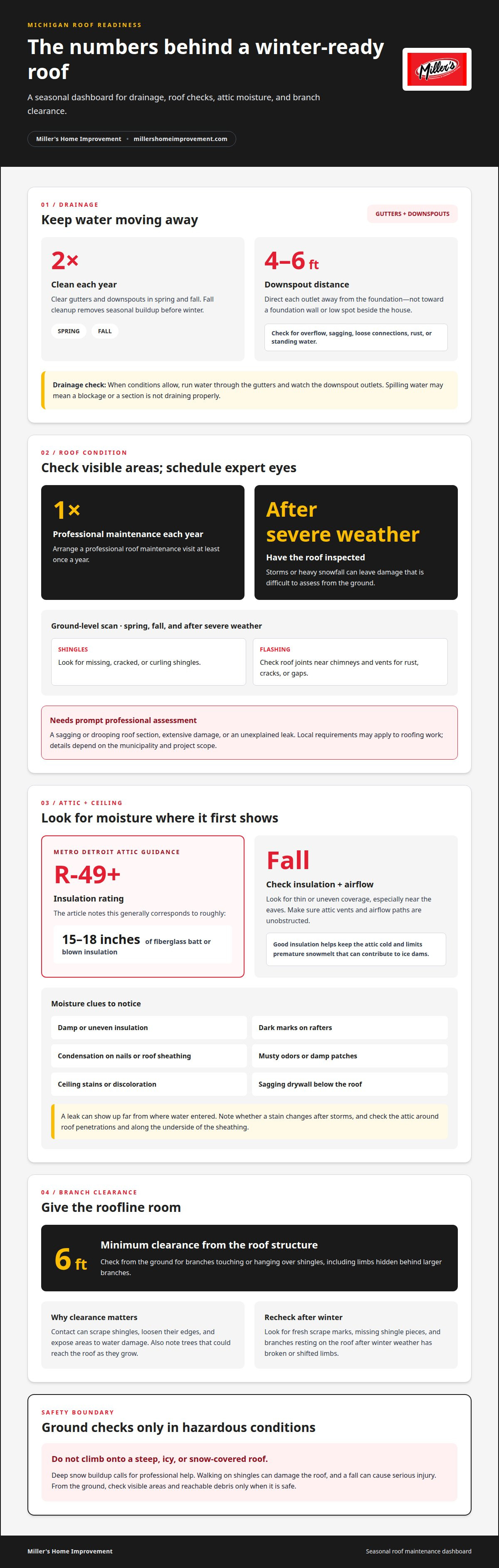
- Clean gutters in spring and fall, and direct downspouts 4-6 feet away from the foundation to help manage runoff.
- Look over the roof in spring and fall, and after severe weather; rust, cracks, or gaps in flashing are signs to investigate.
- Check attic insulation and ventilation paths for moisture or condensation, and watch for stains or sagging drywall below.
- Keep overhanging branches at least six feet from the roof structure to reduce scraping and shingle damage.
1. Cleaning gutters and downspouts
Michigan homeowners should clean gutters and downspouts at least twice a year, in spring and fall. Before winter, remove leaves, needles, twigs, and other debris so water can drain instead of backing up beneath shingles. Fall cleaning is especially important because seasonal buildup can block water’s path from the roof edge to the ground. Clear each gutter run, then check that water flows through the downspout.
Direct downspouts 4-6 feet away from the foundation to help manage runoff and reduce basement flooding risk. Check that each outlet points away from the house, rather than toward a foundation wall or low spot beside it. During cleaning, look for sagging sections, loose connections, rust, or standing water. These signs can point to drainage problems that need attention before repeated overflow contributes to stains or structural damage.
Which roof maintenance tasks are safe for homeowners, and which pose a fall or damage risk? From the ground, inspect visible gutters and downspout outlets, and remove reachable debris only if it’s safe to do so. Avoid standing on an icy or steep roof. Deep snow buildup also calls for professional help. A fall can cause serious injury, and walking on shingles can damage the roof.
After clearing debris, run water through the gutters when conditions allow and watch each downspout outlet. If water spills over an edge, check for a remaining blockage or a section that isn’t draining properly. In spring, clear gutters again before snowmelt, which can push water toward shingles if drainage is restricted. Address loose or damaged components before the next season to help keep water moving away from the roof and foundation.
2. Should I get a professional roof inspection?
Inspect visible roof areas in spring and fall for damage from winter weather. Look for missing, cracked, or curling shingles, and check flashing for rust, cracks, or gaps. Flashing seals roof joints around features such as chimneys and vents. If the seal fails, water can enter even when the surrounding roof surface looks intact.
Arrange professional roof maintenance at least once a year, and an inspection after severe weather, including storms or heavy snowfall. A professional can assess damage that’s difficult to see from the ground and identify repairs before moisture reaches the roof structure. A sagging or drooping section needs immediate professional assessment because it may signal structural damage. Extensive damage or an unexplained leak also calls for professional help.
Do Michigan building codes or local rules affect roof repairs and replacement? Local requirements can apply to roofing work, and details depend on the municipality and project scope. Keep this in mind when considering a larger replacement instead of a small repair.
How do Michigan winters, lake-effect snow, and freeze-thaw cycles affect a roof’s lifespan? Snow and ice add seasonal stress, while repeated freezing and thawing can worsen weak shingles and flashing seals. Lake-effect snow can mean more accumulation in affected areas. The roof’s condition, existing damage, and how well vulnerable joints shed water all affect how it holds up.
Don’t climb onto a steep, icy, or snow-covered roof to inspect it. A ground-level check can reveal missing shingles or loose flashing, but it can’t establish the full extent of hidden damage. If winter weather has exposed a leak or damaged shingles, professional roof repairs can address the problem before further deterioration. Timely assessment can help prevent a small issue from becoming a more costly repair.
3. Checking attics and ceilings for leaks
Each fall, inspect attic insulation coverage, ventilation paths, and signs of moisture or condensation. After winter, look for water intrusion, such as damp insulation, dark marks on rafters, or water stains on ceilings. Check rooms below the roof for discoloration and sagging drywall. These signs can point to moisture even when shingles and roofing materials look intact from the ground.
In Metro Detroit, attic insulation should generally be rated R-49 or higher. That rating corresponds to roughly 15-18 inches of fiberglass batt or blown insulation. Proper insulation helps keep the attic cold during Michigan winters, limiting premature snowmelt that can contribute to ice dams. Check for thin or uneven coverage, especially near the eaves, where insulation gaps may be easy to miss.
Next, make sure attic vents are unobstructed and airflow paths remain open. Leaves and other debris near exterior openings can restrict ventilation, while blocked interior paths may trap moisture. Look for condensation on nails or roof sheathing, damp patches, musty odors, and visible signs of pests. Moisture can damage wood and insulation; pests may disturb insulation or leave droppings that need attention.
If you find a ceiling stain, trace its position upward in the attic and note whether nearby insulation feels damp. A roof leak can appear far from where water entered, so check around roof penetrations and along the underside of the sheathing. Don’t dismiss a small mark: even a minor leak can cause substantial damage if left unchecked. Photograph the stain and note whether it changes after storms to help identify a pattern. Prompt roofing repairs may prevent further deterioration and extend the roof’s service life. If damage keeps returning, a broader assessment can help determine whether repair or replacement is appropriate.
4. Trimming overhanging branches
Before winter weather arrives, check the roofline from the ground for branches touching or hanging over shingles. Keep branches at least six feet from the roof structure. Contact can scrape shingles, loosen their edges, and expose areas to water damage. Check each side of the house, including for branches hidden behind larger limbs. Note trees that could reach the roof as they grow.
Spring is a good time to reassess clearance after winter weather has broken or shifted limbs. Look for fresh scrape marks, missing shingle pieces, and branches resting on the roof. Remove small, reachable debris only if you can do so safely from the ground. Don’t walk on the roof to pull away a limb; that can further damage the roofing surface.
After a storm, check from the ground for cracked limbs suspended above the roof and branches that have fallen across it. A heavy limb can damage shingles or flashing, while smaller twigs can collect near roof edges and obstruct drainage. If branches have struck the house, look for visible roof damage and indoor water stains. Keep cut branches clear of gutters and away from the foundation, where piled debris can obstruct access and drainage.
Pruning should preserve clearance without removing more growth than needed. Focus on limbs that touch the roof or could scrape it as they move in wind. Avoid reaching across a roof edge or working from an unstable position. If a fallen or broken branch has damaged roofing, a prompt assessment can identify the affected area and needed repairs. For roof damage after a storm, request storm damage repair to address the roof itself before water intrusion worsens.
Trim overhanging branches that touch the roof, since they can scrape and damage shingles. Removing contact points helps protect the roof surface.
Miller's Home Improvement
Miller's Home Improvement helps Michigan property owners address roofing concerns found during seasonal maintenance. If you’ve noticed a leak, damaged shingles, or roof wear that needs professional attention, the company provides residential roofing services to help you determine the next step. For flat roofs, Miller's Home Improvement installs PVC and EPDM systems.
Share what you observed, such as a ceiling stain, missing shingles, or damage after a storm. These details help focus the discussion on your home’s condition and the type of roofing involved. Miller's Home Improvement also provides commercial roofing for businesses and commercial properties in Southeast Michigan.
Make Your Roof-Readiness Plan
Use these roof maintenance tips for Michigan homeowners to turn visible warning signs into a clear next step. Note where you found a leak, what damage you observed, and whether it appeared after a storm. This gives a roofing professional a practical starting point and helps ensure important details aren’t overlooked.
Not every concern calls for the same response. A loose shingle, recurring leak, or storm-related impact may need a closer assessment, especially before winter makes roof access more difficult. Focusing on the specific issue, rather than relying on a general checklist alone, helps you make an informed decision about your roof.
If you’d like to discuss a roofing concern or possible next steps, contact Miller's Home Improvement. A thoughtful plan can help you approach the coming season with greater confidence.
Frequently Asked Questions
How do I get my roof ready before the snow flies?
Prepare your roof by checking exterior areas from the ground and addressing drainage or visible damage before winter. Clear fall leaves and needles from gutters, confirm downspouts carry water away from the foundation, and note missing or curling shingles. Check indoor ceilings for fresh stains. Don’t climb onto an icy or steep roof; arrange professional help for issues that require roof access.
Should I get a professional roof inspection?
Yes. Arrange professional roof maintenance at least once a year, and after severe weather such as a storm or heavy snowfall. It’s especially useful if you see a sagging roof section, recurring leak, or flashing with rust, cracks, or gaps. A professional can assess damage that isn’t visible from the ground and determine whether the affected area needs repair.
What does the attic have to do with my roof?
The attic affects roof temperatures and moisture during Michigan winters. Proper insulation helps keep the attic cold, reducing premature snowmelt that can contribute to ice dams. Blocked vents or damp insulation can signal moisture problems. Look for condensation on roof sheathing, musty odors, or wet patches, then compare these observations with any ceiling stains below.
What should I do before winter?
Before winter, remove leaves, needles, and other debris from gutters, then clear branches that touch or hang close to the roof. Check visible shingles and flashing from the ground, and look indoors for new ceiling stains. If you find a leak or damage after a fall storm, arrange an assessment before snow and ice make roof access more difficult.
How often should Michigan homeowners inspect and maintain their roofs?
Inspect the roof in spring and fall, and after severe weather, including storms or heavy snowfall. Plan for professional roof maintenance at least once a year. Seasonal checks can reveal visible changes, while a professional inspection can assess hard-to-see areas. For Detroit homeowners, regular checks help track weather-related wear and identify concerns before winter arrives.
What roof maintenance should Michigan homeowners do each season?
In spring, look for winter-related shingle damage and clear gutters before snowmelt. In fall, remove leaves and debris, check attic ventilation and moisture, and prepare visible roof areas before snow arrives. After a storm or heavy snowfall in any season, look for new signs of damage from the ground. Detroit homeowners can use these seasonal checkpoints to keep maintenance organized.


