
A roof inspection is more than a leak check. A commercial roof maintenance plan in Detroit should include a professional review of the membrane and seams, flashings, drains and scuppers, roof penetrations, and visible damage. Photos and repair records help turn the findings into a written condition assessment and action plan. Costs depend on roof size, system, access, and the work identified during the inspection. Request a quote for project-specific pricing.
It makes sense to want a clear view of costs before committing to roof maintenance. A thorough inspection gives property managers a stronger basis for prioritizing repairs, documenting the roof’s condition, and weighing maintenance against larger projects over time.
This article explains what a commercial inspection covers, which records are useful, and how roof condition and maintenance choices affect costs and service life. It also shows how preventative planning can help you prepare for Detroit’s seasonal weather and make informed decisions about your building.
Key Takeaways
- Organized roof records, including repair photos and warranty documents, make it easier to track changes and plan future work.
- A professional inspection reviews drainage, flashings, seams, and visible damage, then turns findings into a written assessment and action plan.
- Roof system, condition, and maintenance history all shape lifecycle decisions; an inspection can help distinguish repair needs from larger replacement considerations.
- Seasonal maintenance focuses on addressing drainage and roof details before harsh weather makes existing problems harder to manage.
Roof condition documentation with photos and repair history
In Detroit, roof records connect inspection findings to maintenance decisions. A clear file helps property managers track changes and plan work before seasonal conditions make access more difficult.
Repair History Tracking
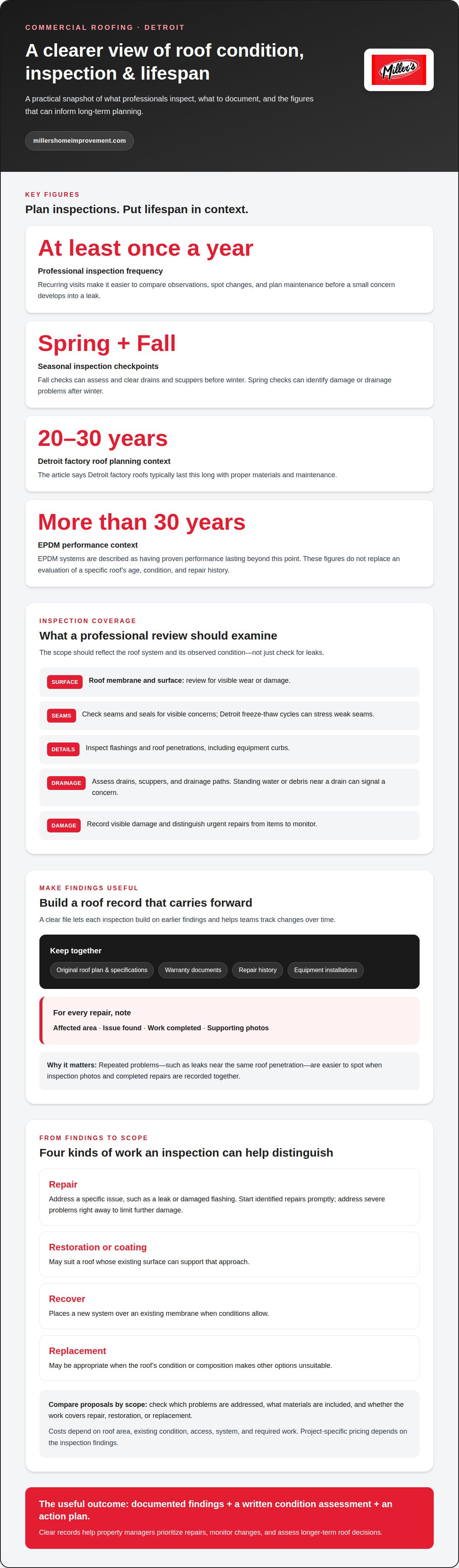
A useful record brings together the original roof plan and specifications, warranty documents, repair history, and equipment installations. For each repair, note the affected area, the issue found, the work completed, and supporting photos. Keep these records secure and easy to access so each inspection can build on earlier findings instead of starting from scratch.
When comparing roof maintenance plans, look for defined inspection coverage, written condition findings, and a practical action plan. Ask how photos and completed repairs will be added to the building’s records. This documentation makes recurring problems easier to spot, such as repeated leaks near the same roof penetration.
Without regular maintenance, blocked drains, damaged flashings, or open seams can go unaddressed. Water entering through these points can worsen roof damage and affect building interiors. Records of observed issues and completed repairs help roofing professionals track changes and prioritize corrective work.
Repair, Restoration, Recover, or Replacement Decisions
Inspection findings help distinguish localized repairs from broader work. A repair may address a specific leak or damaged flashing. Restoration or a coating may suit a roof whose existing surface can support that approach. A recover places a new system over an existing membrane when conditions allow. Roof replacement may be appropriate when the roof’s condition or composition makes other options unsuitable.
A strong maintenance plan explains why a recommendation suits the roof instead of treating every problem as a reason for replacement. Start commercial roof repairs identified during an inspection promptly, and address severe problems right away to limit further damage. Clear photos and repair notes help property managers track the work.
Documentation has a practical role in preventing emergencies: it helps teams recognize developing issues before they become more serious. A roofing professional can also organize the roof condition, proposed scope, and repair history when assessing whether a current rebate or incentive program applies. Eligibility depends on the program’s requirements, so records support evaluation without implying that an incentive is available.
What happens during a roofing inspection?
A professional inspection reviews the roof surface, drainage, seams, flashings, and penetrations for visible concerns. Flat commercial roofs in Michigan benefit from clear drains and scuppers, sound seals, and inspections timed around seasonal weather. Detroit snow, ice, and freeze-thaw cycles can stress weak seams and allow moisture to enter.
Preventive Maintenance and Seasonal Inspections
For a flat roof, an inspection should assess drainage paths, scuppers, flashings, seams, and roof penetrations. Standing water or debris near a drain can signal a drainage concern that needs attention. A planned visit also gives the professional a chance to identify visible wear before winter weather makes access and repairs more difficult. The inspection scope should reflect the roof system and its observed condition.
Spring and Fall Inspection Timing
Spring and fall visits help assess the roof before and after demanding seasonal weather. In fall, professionals can inspect and clear drains and scuppers across Metro Detroit, helping reduce ponding and leak risks before winter. In spring, an inspection can identify damage or drainage problems that need attention after winter. Detroit manufacturing facilities can benefit from proactive checks in both seasons.
Annual Inspection Scheduling
Professionals typically recommend an inspection at least once a year. Property managers can schedule recurring visits and add seasonal inspections when the roof’s exposure or facility operations call for closer attention. A consistent schedule makes it easier to compare observations, spot changes around roof penetrations, and plan maintenance before a small concern develops into a leak.
Professional Roof Evaluations
A professional contractor examines the roof surface and details, including seams, flashings, drains, and equipment curbs. After the inspection, property managers should receive a written condition assessment and action plan. The evaluation separates urgent repairs from items to monitor and explains what work supports the roof. Choose a professional assessment that clearly records findings and recommended next steps.
For a clear assessment of a commercial roof’s condition, request a professional roof inspection.
Roofing system cost, durability, and lifecycle value
Commercial roofing costs depend on the roof’s area, existing condition, access, system, and required work. For Detroit facility managers, compare proposals by checking which problems each addresses, what materials are included, and whether the scope covers repair, restoration, or replacement. A clear scope makes lifecycle decisions easier to assess.
Durability also depends on material selection and ongoing maintenance. Detroit factory roofs typically last 20 to 30 years with proper materials and maintenance. EPDM systems are described as having proven performance lasting more than 30 years. These figures are useful planning context, not a substitute for evaluating a specific roof’s age, condition, and repair history.
Automotive and manufacturing facilities may face exposure to oil vapors and solvents. PVC roofing is described as resistant to chemicals such as these, but the roofing system still needs to suit the building’s operations and existing assembly. Facility managers can weigh those site conditions alongside drainage, penetrations, and the roof’s maintenance records.
Built-up roofing and modified bitumen are distinct commercial roofing systems. A proposal should identify the existing assembly and explain how its condition affects repair, restoration, recover, or replacement options. This helps managers understand the scope and compare lifecycle considerations without assuming one system suits every facility.
For industrial roofing, make work coordination and planned safety procedures clear in the project scope. Facility managers can align those details with their site’s OSHA compliance process, including how roofing work relates to building operations. Detroit-area roofing professionals should also explain the inspection findings and connect recommended work to specific roof problems.
To evaluate lifecycle value, compare the proposed work’s purpose, materials, and maintenance needs with the roof’s documented condition. A repair may address a localized issue; broader work may be considered when problems extend across the system. Compare scopes that address the same observed conditions, not just the lowest initial price.
Preventative commercial roof maintenance programs
A useful program turns inspection findings into assigned maintenance actions. For a Michigan facility, that can mean prioritizing drainage, seals, insulation, and roof penetrations before the first hard freeze. A commercial roof maintenance plan in Detroit can connect seasonal findings with scheduled work. The written plan should distinguish urgent repairs from work that can be scheduled, then link each action to the roof area and observed condition.
Manufacturing sites can coordinate professional inspections with facility operations. For example, reviewing HVAC curbs and other roof penetrations can reveal deteriorated flashing before water reaches the building. Coordinated inspections and curb reflashing can help address leaks around those details in Detroit. The action plan should state what needs attention and how the recommended work relates to the findings.
Preventative planning also helps managers organize installation or upgrade work. Roofing upgrades, especially coatings, can be completed in phases with little to no disruption to production. A commercial roof maintenance plan for Detroit manufacturing facilities can align work by roof area with operating needs while keeping unaffected sections in service. The sequence should reflect the roof’s condition and project scope.
Keep the program useful by recording completed actions and carrying unresolved items into the next review. If drain clearing is complete but a damaged seal remains, the plan should show that distinction. Managers can track which actions protect the roof, which problems still need attention, and how improvements fit facility operations.
For professional help planning commercial roof work around facility needs, request commercial roofing service.
Miller's Home Improvement: Commercial Roofing
Miller's Home Improvement provides commercial roofing for property owners weighing repair or replacement after an inspection. When the roof’s condition raises questions about the next step, the company can address commercial roofing needs and flat-roof systems. Its offerings include PVC flat roofing and EPDM flat roofing, which can be considered in light of the building’s existing roof and documented condition.
Bring the inspection findings and available roof records to the discussion. They can clarify the areas of concern and the work under consideration. A focused conversation can connect the roof’s condition with a practical direction for the facility, rather than treating every issue as a reason for full replacement.
For help with your commercial roof, contact Miller's Home Improvement.
Turn Roof Priorities Into a Practical Next Step
A commercial roof maintenance plan in Detroit should be a working decision tool. Connect each priority to the building’s operating schedule, assign responsibility for the next action, and set a review point for unresolved items. This gives property teams a practical way to coordinate roof work with facility needs instead of treating maintenance as a separate task. Before planning the next project, identify the areas that need attention, how building operations could affect timing, and which decision the inspection findings need to support.
Miller's Home Improvement offers commercial roofing, residential roofing, and PVC flat roofing. If your facility is considering commercial roof work, share its priorities and discuss a practical next step for the property. A focused conversation can put the building’s needs at the center of the plan without assuming every roof needs the same scope or approach.
Contact Miller's Home Improvement to discuss your roofing needs and move forward with a clear plan.
Frequently Asked Questions
When should I get my roof inspected?
Arrange a professional inspection at least once a year, and schedule another assessment if a leak, visible damage, or drainage problem appears. For example, a new water stain beneath a roof penetration deserves attention rather than waiting for the next routine visit. Timing inspections around facility operations also helps coordinate roof access and follow-up work.
What does a commercial roof maintenance plan include?
A commercial roof maintenance plan should define the inspection scope, routine upkeep, repair priorities, and how completed work is tracked. It should account for the roof system and building use. For a facility with rooftop HVAC equipment, for example, include the areas around equipment curbs and assign follow-up for developing concerns. This keeps recommendations connected to the property’s actual needs.
How often should commercial roofs be inspected in Detroit?
Plan a professional inspection at least once a year. For Detroit manufacturing facilities, spring and fall inspections provide additional seasonal checks. A spring visit can help identify concerns after winter, while a fall visit allows time to address drainage and roof details ahead of winter. Facility operating schedules can help determine practical timing for the assessments and any resulting work.
What is the average cost of commercial roof maintenance in Detroit?
The cost depends on the building and maintenance scope, with pricing provided after a quote request. Roof area, membrane type, access, current condition, and whether work involves routine upkeep or repairs all affect the estimate. An average figure may not reflect the needs of a particular Detroit commercial property, especially when the required work varies from one roof to another.
What factors affect commercial roof maintenance costs?
The main cost drivers include roof size, system, condition, access, and required work. Several rooftop equipment curbs or difficult access can affect labor compared with an open, straightforward roof. Existing damage also changes the scope: addressing one localized defect differs from work across a larger area. An estimate reflects the tasks and materials needed for the property.
Which commercial roofing contractors in Detroit offer maintenance plans?
Miller's Home Improvement provides commercial roofing and roof repairs for Detroit-area property owners. These services can address corrective work identified during an inspection, such as a leak or a concern with a flat-roof system. The company also offers PVC and EPDM flat roofing. Property managers can discuss their building’s condition and roofing needs with Miller's Home Improvement.


