
A roof problem doesn’t automatically mean you need a full replacement. Roofing contractors in my area can assess whether the damage is isolated and the surrounding roof remains sound, or whether widespread deterioration makes replacement more appropriate. The roof’s overall condition, not just the presence of a leak, should guide the decision.
It’s reasonable to want a clear explanation before committing to major work. A repair may resolve a limited problem, while brittle shingles, leaks in multiple areas, or broader deterioration may point to replacement. The recommendation should identify what is damaged and explain why the proposed work fits.
This guide explains how a roofing professional evaluates repair versus replacement, what to look for in an estimate, and how warranty terms can differ. It also covers residential, commercial, flat-roof, and storm-damage services to help you identify the right kind of work for your property and decide what to do next.
Key Takeaways
- Learn which signs can point to a targeted repair and which may indicate that replacement is the more suitable option.
- See what details make an estimate easier to understand, and how to review the scope of work and warranty coverage.
- Identify roofing services that may fit your property, including residential, commercial, and flat-roof work.
- Understand how licensing, insurance, and customer reviews can help you assess a roofer before moving forward.
How Can a Roofing Contractor Help You Decide Whether to Repair or Replace Your Roof?
A residential roof inspection in Detroit helps identify the source and extent of damage before work is recommended. The findings can clarify whether a targeted repair or a full replacement better addresses the roof’s condition.
How Contractors Assess Repair or Replacement
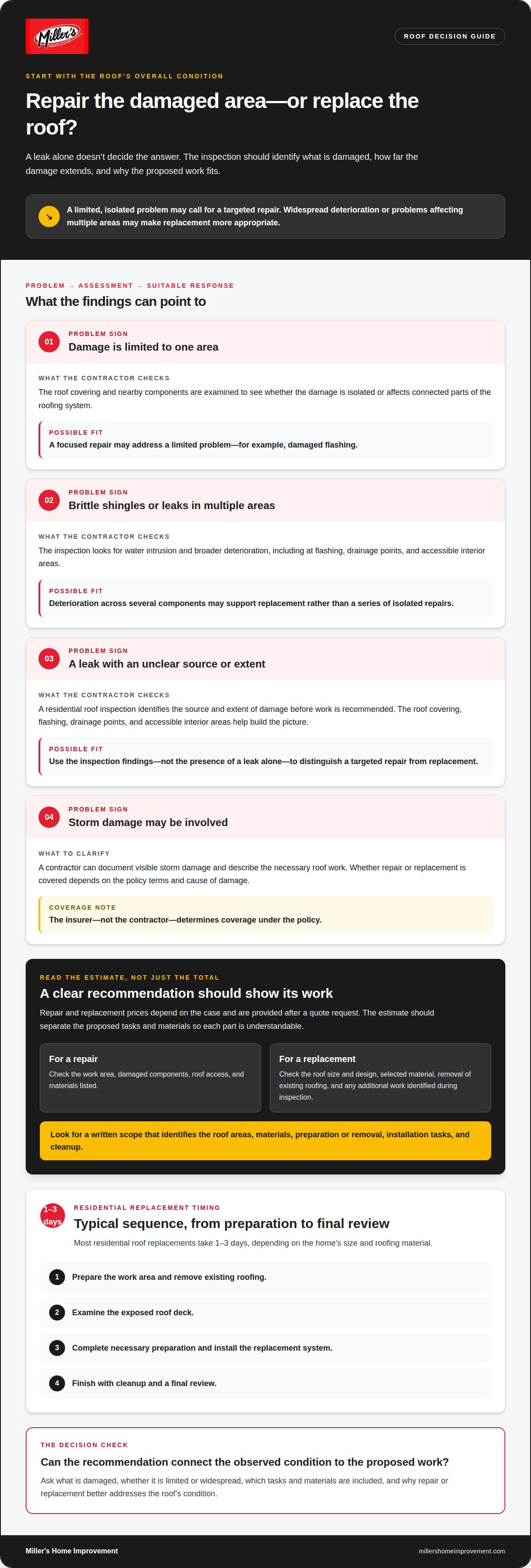
A contractor examines the roof covering, flashing, drainage points, and accessible interior areas for signs of water intrusion. They assess whether damage is limited to one section or affects connected parts of the roofing system. For example, damaged flashing may call for a focused repair, while deterioration across several components may support replacement. The inspection findings should explain the recommendation.
Repair and Replacement Costs
The price depends on the case and is given after a quote request. For repairs, the work area, damaged components, roof access, and materials affect the estimate. Replacement costs reflect the roof’s size and design, selected material, removal of existing roofing, and any additional work identified during the inspection. A clear estimate separates the proposed tasks and materials, helping homeowners understand what each part covers without relying on a single unexplained total.
Replacement Steps and Timing
Most residential roof replacements take 1-3 days, depending on the home’s size and roofing material. The sequence generally starts with preparing the work area and removing existing roofing, followed by examining the exposed roof deck. The crew then completes necessary preparation, installs the replacement system, and finishes with a cleanup and final review. The estimate should describe the planned scope so homeowners know which stages are included.
Residential Inspections and Roof Work
An inspection gives the contractor a basis for recommending repair, installation, or replacement instead of treating every leak as the same problem. Homeowners insurance coverage varies: policy terms and the cause of damage determine whether repair or replacement is covered. A contractor can document visible storm damage and describe the necessary roof work, while the insurer determines coverage under the policy. Residential roof work should reflect the inspection findings and the home’s existing roof system.
Free estimates and warranties
A free in-home estimate gives homeowners a written starting point for understanding proposed roof work. Roofing options include residential systems and flat-roof systems such as PVC, EPDM, or torch-down roofing. Warranty terms vary by material and project. Review the documents for what each warranty covers, its duration, exclusions, and the process for making a claim.
Use the estimate to understand the work, not just the total. A useful breakdown identifies the roof areas involved, proposed materials, removal or preparation tasks, and cleanup. For example, an estimate for a flat roof should name the proposed system, such as PVC, EPDM, or torch-down. In Detroit, the roof’s existing construction and project requirements help shape the material recommendation.
Warranty language may cover materials, workmanship, or both. These are distinct forms of coverage, so the documents should state which applies and who provides it. Check whether coverage depends on specific installation methods or maintenance, and note exclusions for particular damage or repairs. Don’t assume a warranty covers every future leak; its written terms define the scope.
Before approving work, compare the estimate’s scope with the warranty documents. Confirm that the proposed material and installation work are clearly described, and keep copies of the estimate, contract, and warranty paperwork together. If the project includes several roof sections, the documents should specify which sections and materials each term applies to. That record helps clarify the agreement later.
For a roof project involving residential or flat-roof work, request a free in-home estimate to review the proposed scope and applicable warranty documents. A careful review helps connect the recommended roofing system with the work described in writing, so the decision rests on specific materials, tasks, and coverage terms rather than assumptions.
Roofing services and specialties
Roofing companies may handle residential and commercial roofs, repairs, replacements, and different flat-roof systems. The right specialty depends on the building, roof design, existing materials, and work required. A pitched residential roof and a commercial flat roof, for example, call for different system choices and installation methods.
Flat-roof options include PVC, EPDM, and torch-down systems. Each uses a different roofing material and installation approach, so an estimate should name the proposed system and describe the work. For a sloped roof, the contractor should identify the planned roofing material and explain how the installation suits the roof’s design. These details make it easier to compare roofing services by scope, not just by label.
In Detroit, applicable permits and building-code requirements depend on the project and governing jurisdiction. Clarify which requirements apply to the planned work and how they’ll be addressed before installation begins.
Before hiring a contractor, ask which roof system the estimate proposes, what work it includes, and what warranty terms apply. Request a written scope that identifies materials, removal, installation, and cleanup, so the agreement describes the finished work.
Warning signs include a vague written scope, pressure to approve work immediately, or promises that don’t appear in the estimate. Pause if you’re asked to proceed without clear project details, and request written clarification. A sound explanation should connect the roof’s condition, the selected system, and the proposed tasks.
The contractor’s fit for the specific work matters as much as its overall service list. A PVC or EPDM flat-roof project should have a proposal that names the system, while a repair should identify the affected roof area. These details help you understand what will be installed or repaired and why the approach suits the building.
Miller's Home Improvement, a premier provider among roofing contractors in my area, states that it has more than 50 years of industry experience serving Detroit. Consider that background alongside project-specific information in a proposal, including the named system, planned tasks, and written warranty terms. Experience alone does not show whether a specialty fits a particular roof, so focus on how the proposed work responds to the building and its condition.
How can I verify a roofer's license, insurance, and reviews?
Start by matching the business name on the written proposal with its license record. Confirm the record through the issuing authority, then compare the contractor’s name with the insurance documents. When choosing roofing contractors in my area, check that the paperwork identifies the same business responsible for the proposed work.
Review the insurance document’s coverage dates and business name before work begins. If the proposal and insurance paperwork identify different businesses, request a clear explanation before approving the project. Keep both documents with the estimate so you can refer to the agreed business and scope if questions arise.
Reviews can offer practical clues about communication and project follow-through. Look for specific accounts of workmanship, cleanup, and how concerns were handled. A detailed review of a roof repair may be more useful than a brief rating, especially if your project involves similar work. Read several accounts and look for recurring themes.
Compare each review’s project type with your own needs. A comment about flat-roof installation may not reflect a residential repair. Notice whether the roofer responds clearly to concerns and explains how issues were addressed. Those details can help you assess how roofing contractors in my area communicate throughout a project.
Before signing, make sure the proposal identifies the business and describes the work, then compare it with the license and insurance documents. For help discussing your roofing project and its scope, get in touch.
Miller's Home Improvement
Miller's Home Improvement helps homeowners assess whether roof damage calls for repair or replacement. The company provides residential and commercial roofing, along with PVC and EPDM flat roofing for flat-roof projects. A professional assessment can connect the roof’s condition with an appropriate scope of work.
A clear project discussion should cover the affected roof areas, recommended work, and materials involved. This helps you understand how the proposed solution fits your building, whether you need a targeted repair or broader roofing work. Miller's Home Improvement also handles roof repairs, so homeowners can discuss repair needs alongside replacement options.
Take the Next Step With a Clear Roofing Plan
Choosing among roofing contractors in my area is easier when the discussion focuses on your roof’s condition, the proposed scope, and the written terms. Explain what you’ve noticed, whether it’s a leak, storm damage, or signs of broader wear. A focused conversation can help clarify what work your property needs.
The right service should suit the building and the project. Miller's Home Improvement offers Residential Roofing, Commercial Roofing, and PVC Flat Roofing. Describe whether the property is residential or commercial, and explain the roof issue or planned work. That context helps shape a useful discussion without assuming every roof needs the same approach.
Ready to discuss your roofing needs? Contact Miller's Home Improvement to take the next step. A clear starting point can make the path forward feel more manageable.
Frequently Asked Questions
How do I find licensed roofing contractors near me?
Match the contractor’s business name on the written proposal with its license record and insurance documents. Confirm the license through the issuing authority, then check that the insurance document is current and identifies the same business. Miller's Home Improvement is licensed and fully insured for roofing work in Detroit. Keep the proposal and supporting documents together so the responsible contractor and agreed work are clear.
What roofing contractors serve my ZIP code?
Miller's Home Improvement serves Detroit and Southeast Michigan. Include your ZIP code and whether the property is residential or commercial when describing the project. Mention whether the roof is flat or pitched and what prompted the work. For example, a Detroit homeowner with a leak can describe its location and any visible storm damage, giving the discussion useful local and roof-specific context.
How much does roof repair or replacement cost in my area?
Roof repair and replacement estimates depend on the property and the work required. Factors include roof dimensions, design, removal of existing roofing, material selection, access, and the extent of damage. A small leak repair and a complete roof tear-off involve different scopes. Miller's Home Improvement provides free in-home estimates, giving Detroit property owners a written basis for understanding the proposed work.


