
A single season of Detroit's notorious freeze-thaw cycles can age an unmonitored commercial roof by several years, often turning a minor membrane stress point into a catastrophic structural leak. You already know that managing a facility in Southeast Michigan requires constant vigilance against the elements and aging industrial infrastructure. It is exhausting to face unexpected operational shutdowns because of a roof failure that could have been identified months earlier. Scheduling a professional commercial flat roof inspection Detroit is not just another line item on your maintenance checklist; it is a strategic financial move to protect your building's equity and your tenants' safety.
This 2026 guide provides the clarity you need to move from reactive repairs to proactive management. You will learn exactly what seasoned craftsmen look for during a thorough assessment, how the latest Michigan building code updates impact your facility, and how to extend the lifespan of PVC or EPDM systems by up to 50 percent. We will also outline how to prioritize maintenance tasks to avoid the sting of emergency costs and navigate complex insurance claims after heavy wind or hail storms. By the end of this guide, you will have a clear roadmap for securing your property against the unique stressors of the Detroit landscape.
Key Takeaways
- Understand how Detroit’s extreme temperature swings cause thermal shock in flat-roof seams and how to identify these vulnerabilities before they lead to structural leaks.
- Discover our professional 5-point protocol that prioritizes perimeter flashing and surface membrane integrity to catch issues like blistering and thinning early.
- Learn the material-specific risks for EPDM, PVC, and Torch Down systems, including how to spot adhesive breakdown and plasticizer migration in aging membranes.
- Scheduling a regular commercial flat roof inspection Detroit can extend your system's life by up to 50% while helping you avoid the exorbitant costs of emergency interior restoration.
- Gain the confidence to make informed repair-versus-replace decisions by working with a guide who prioritizes honest assessments over unnecessary, high-cost tear-offs.
Why Detroit’s Climate Demands Specialized Commercial Flat Roof Inspections
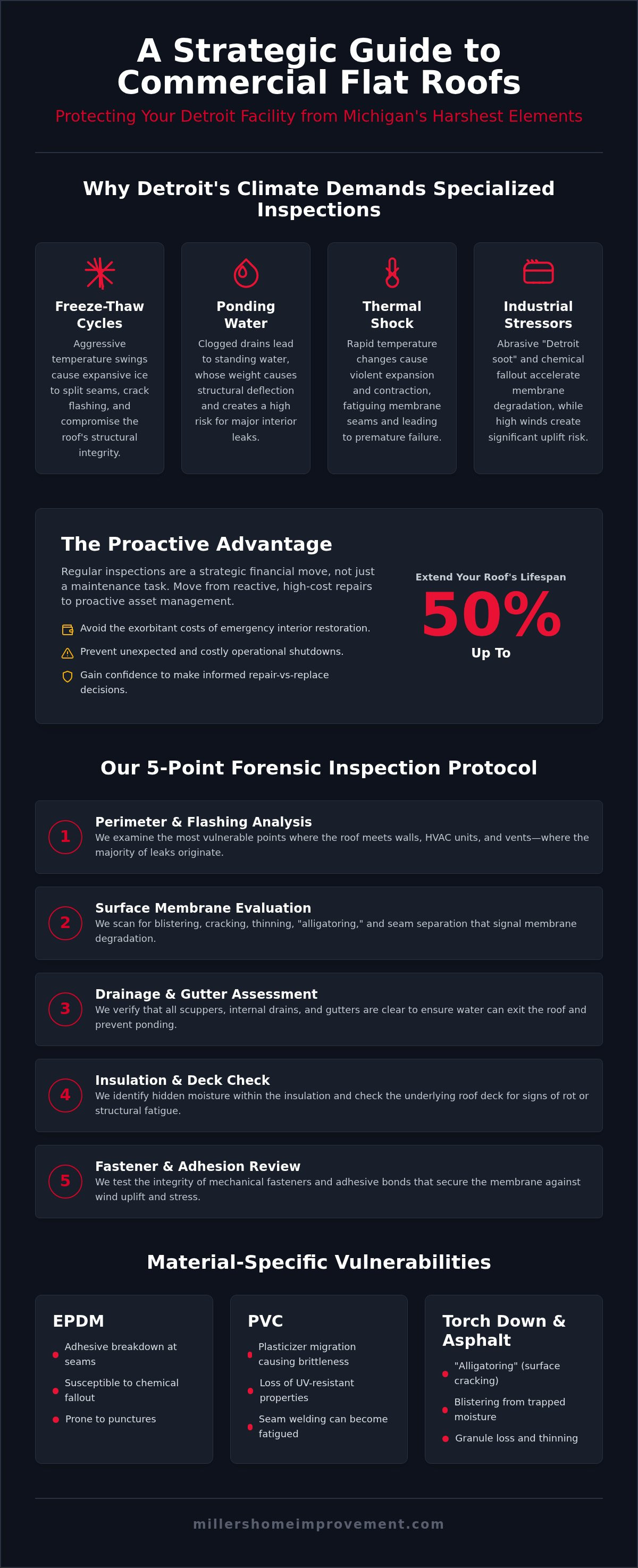
A professional commercial flat roof inspection Detroit is far more than a casual walk-over; it functions as a forensic evaluation of membrane integrity. This process involves a meticulous examination of the roof’s various layers, including the membrane, insulation, and underlying deck, to uncover hidden stressors before they manifest as costly operational disruptions. In Michigan, our roofing systems face environmental pressures that standard national guidelines often overlook. Detroit's industrial heritage and volatile weather patterns require a localized approach to maintenance to ensure long-term durability and safety.
One unique local factor is "Detroit soot." This fine particulate matter from industrial zones settles on flat surfaces, creating an abrasive layer that can accelerate membrane degradation. When combined with organic debris, it traps moisture against the roof surface, leading to common flat roof issues like premature seam failure and localized rot. This soot also darkens the roof surface, increasing heat absorption and further stressing the material. Seasonal inspections in the Spring and Fall are critical for Michigan building owners. A Spring check identifies damage caused by winter ice, while a Fall inspection ensures the system is sealed tight before the first deep freeze hits the Great Lakes region.
The Freeze-Thaw Cycle and Ponding Water
Michigan’s freeze-thaw cycles are particularly aggressive. When water enters a clogged drain and freezes, the resulting ice expansion can exert enough pressure to split commercial seams or crack flashing. During the spring thaw, ponding water becomes a significant threat. The weight of standing water can cause structural deflection, which only invites more water to collect and increases the risk of structural fatigue. It doesn't take much for a small blockage to turn into a major interior leak during a heavy rainstorm.
Thermal shock is the physical stress placed on roofing materials by rapid, extreme temperature fluctuations that cause the membrane to expand and contract violently, eventually fatiguing the seams.
Industrial Environmental Stressors
Facilities located in industrial corridors or near the Detroit River face specific mechanical challenges. Chemical fallout from nearby manufacturing can react with EPDM and PVC membranes, causing them to become brittle or lose their UV-resistant properties over time. High-profile buildings near the river must also contend with significant wind uplift risks. Strong gusts can create a powerful vacuum effect, pulling at the membrane and stressing the mechanical fasteners or adhesive bonds.
A professional inspection identifies these microscopic membrane punctures and attachment issues that are invisible to the untrained eye. Spotting these vulnerabilities early ensures the building stays protected through every storm and helps owners avoid the massive expense of a full system failure. It's about maintaining control over your facility's most important protective barrier.
The 5-Point Protocol: What Happens During a Professional Inspection?
A high-quality commercial flat roof inspection Detroit follows a disciplined, methodical sequence to ensure no vulnerability is overlooked. We adhere to professional inspection standards that go far beyond a simple visual walkthrough. Our 5-point protocol is designed to provide a complete forensic picture of your asset's health.
- Perimeter and Flashing Analysis: We examine the most vulnerable points where the roof meets parapet walls, HVAC units, and vents. These transitions are where the majority of leaks originate.
- Surface Membrane Evaluation: Our team looks for signs of blistering, cracking, or thinning. We specifically check for "alligatoring" in older systems and seam separation in modern membranes.
- Drainage and Gutter Assessment: We verify that scuppers, internal drains, and gutters are clear. Ensuring water can actually leave the roof is vital for preventing the ponding issues common in Michigan's wet springs.
- Core Sampling and Moisture Detection: This involves identifying hidden rot within the substrate that isn't visible from the surface.
- Structural and Decking Review: We verify that the building's deck can safely support the roof's weight and the significant snow loads typical of a Detroit winter.
Visual vs. Physical Testing
Simply walking the roof accounts for only about 20 percent of a true professional assessment. A seasoned master craftsman uses a hands-on approach to check seam strength and flashing adhesion. We look for "soft spots" underfoot that indicate trapped moisture under the membrane. Physical probing of the seams is necessary because a seam that looks intact from a distance may actually be failing at the adhesive level. Core sampling is the only way to verify roof saturation levels and determine if the underlying insulation has lost its R-value or structural integrity.
Documentation and Reporting
A professional inspection report provides more than just a list of problems. It includes high-resolution photos, clear diagrams, and a prioritized ranking of necessary repairs. This data allows property managers to build a realistic 5-year maintenance budget, shifting from high-stress emergency spending to planned, predictable investments. If you need an honest assessment of your facility's current condition, scheduling a professional evaluation can provide the clarity and peace of mind you're looking for. We prioritize transparency, ensuring you know exactly which tasks are urgent and which can be deferred to next year's budget cycle.
Material-Specific Vulnerabilities: EPDM, PVC, and Torch Down
Every roofing material possesses a unique chemical profile and a distinct physical response to the environment. A high-quality commercial flat roof inspection Detroit must be tailored to the specific membrane protecting your facility. While general drainage and flashing checks are universal, the failure points of a rubber roof differ significantly from those of a thermoplastic or bituminous system. Our approach incorporates federal roofing maintenance standards to ensure that material-specific degradation is caught before it compromises the building's interior.
Detroit’s heavy snow loads add another layer of complexity to these material assessments. During a typical winter, accumulated snow and ice can put immense tension on seams and transitions. If a membrane is already brittle or its adhesive is failing, the added weight of a Michigan blizzard can be the final factor that causes a seam to pop or a flashing to pull away. We evaluate how your specific material is handling these seasonal weights to prevent structural fatigue.
Inspecting EPDM Seams and Shrinkage
EPDM, or ethylene propylene diene terpolymer, is a resilient choice, but it's prone to "shrinkage" as it reaches the end of its service life. Over time, the rubber membrane can contract, causing it to pull away from parapet walls and curb flashings. We look for signs of tension at the perimeter, where the material might be tenting or showing exposed fasteners. Identifying this early allows for localized repairs rather than a total replacement. We also distinguish between failing adhesive and simple surface scuffs. While a scuff is often cosmetic, a failing seam will show signs of "bridging" or gaps where the glue has crystallized and lost its bond. Understanding why businesses choose EPDM flat roofing helps property managers appreciate the importance of these specific seam checks to maintain the system's long-term value.
PVC and Torch Down Red Flags
PVC roofs are known for their chemical resistance, but they rely on plasticizers to remain flexible. In older installations, these plasticizers can migrate out of the material, leaving the membrane brittle. During extreme cold snaps in Michigan, a brittle PVC roof can actually "shatter" if struck by debris or walked upon. We check for micro-cracking and a loss of flexibility that signals the membrane is no longer able to expand and contract safely.
For Torch Down systems, we prioritize looking for granule loss and "alligatoring," which is a pattern of deep cracks that resemble reptile skin. This indicates the bitumen has dried out from years of UV exposure. We also look for "bleed-out" issues at the seams. While some bleed-out is expected during a proper installation, uneven flow can indicate poor heat application, leading to weak bonds that fail under pressure. If the membrane is still structurally sound but showing surface wear, a high-quality coating might save the system. However, if the core is saturated or the cracks have reached the reinforcement layer, a complete tear-off is usually the only responsible path forward.
The Financial Case: ROI of Inspections vs. Emergency Repairs
Viewing a commercial flat roof inspection Detroit as a discretionary expense is a common oversight that can lead to severe financial strain. In reality, a thorough assessment is a high-yield investment in risk mitigation. When you compare the cost of a standard 500 dollar inspection to the potential 50,000 dollar price tag of an emergency interior restoration following a major leak, the value of proactive care becomes undeniable. This disparity doesn't even account for the lost revenue caused by disrupted business operations or damaged inventory that often accompanies a sudden roofing failure.
Regular professional evaluations can extend the functional life of a commercial system by 25 to 50 percent. By identifying and addressing minor issues like localized seam separation or clogged scuppers, you prevent the systemic failures that necessitate a premature and costly full tear-off. These small, targeted maintenance tasks represent the highest ROI investment a building owner can make. They preserve the integrity of the building envelope for pennies on the dollar compared to the capital expenditure required for a new installation. Meticulous care today prevents a massive budget crisis tomorrow.
Insurance Claims and Storm Damage
A detailed inspection report serves as a critical asset during insurance claim negotiations. Having a pre-storm record of your roof's condition provides a "baseline" that insurance adjusters cannot easily dispute. When Southeast Michigan experiences heavy wind or hail, having documented proof that your roof was in good repair prior to the event makes it much harder for carriers to claim the damage was due to "wear and tear." Our team specializes in identifying subtle hail impacts that often go unnoticed by general adjusters but can lead to membrane failure years down the line. Proper documentation ensures you receive the full coverage your policy provides.
Budgeting for the Future
Effective facility management requires moving from a reactive "break-fix" mindset to a proactive strategy. Professional reports allow property managers to anticipate needs and avoid the "surprise" capital expenditure requests that frustrate ownership. You gain the ability to forecast repairs over a multi-year period, ensuring funds are available when they are most needed. Scheduled repairs generally cost significantly less than emergency calls, as they allow for competitive material sourcing and standard labor rates without the premium fees associated with rapid response mobilization. This disciplined approach keeps your facility protected without draining your reserve funds.
If you're ready to take control of your facility's long-term maintenance costs, contacting us for a commercial flat roof inspection Detroit is the first step toward peace of mind. Our seasoned craftsmen provide the honest data you need to make informed financial decisions for your property's future.
Partnering with Miller’s: Expert Commercial Inspections in Detroit
Selecting a partner for your commercial flat roof inspection Detroit requires more than just finding a contractor with a ladder. It requires a relationship with a team that understands the architectural history and industrial challenges of Southeast Michigan. Eric Miller brings over 25 years of hands-on experience to every project, providing the kind of insight that only comes from decades of navigating Michigan's unique roofing environment. Our approach is defined by a commitment to honesty. If your current system has five more years of life with minor maintenance, we'll tell you exactly that. We don't believe in high-pressure sales; we believe in building long-term trust with property managers who value their building's integrity.
Our capabilities cover the full spectrum of commercial needs. Whether your facility requires a minor leak repair to stop an operational disruption or a complete tear-off and installation of a new PVC, EPDM, or Torch Down system, we have the specialized knowledge to execute the job correctly the first time. We treat every industrial roof as a critical asset, ensuring that our work supports your operational goals and protects your bottom line. Our team focuses on meticulousness, ensuring that every seam and flashing is inspected with the precision of a seasoned master craftsman.
The Miller’s Difference in Southeast Michigan
We are deeply rooted in the Detroit and Macomb County business communities. This local focus means we aren't a distant corporate entity; we're your neighbors who care about the stability of our local infrastructure. As a "Seasoned Master Craftsman," Eric Miller oversees our projects with a no-nonsense approach to problem-solving. We are fully licensed and insured specifically for large-scale commercial work, providing the peace of mind property managers need when protecting high-value assets. You can expect straightforward communication and a disciplined work ethic from the initial assessment to the final walk-through.
Next Steps for Your Facility
Requesting a commercial estimate is a straightforward process designed to respect your time. When you reach out, we'll coordinate a visit that fits your schedule without disrupting your tenants or employees. During our first visit, we perform a non-invasive visual and physical assessment, identifying immediate red flags and long-term vulnerabilities. We take the time to educate you on our findings, ensuring you have the data necessary to make the best decision for your facility. Schedule your professional commercial roof inspection with Miller’s today. Taking this step now ensures your building remains a secure, dry, and profitable asset for years to come.
Securing Your Property’s Future with Proactive Maintenance
Managing a commercial facility in Southeast Michigan is a high-stakes responsibility that demands a disciplined approach to maintenance. We've explored how Detroit's unique environmental stressors, like industrial soot and aggressive freeze-thaw cycles, can compromise even the most durable membranes. By adhering to a rigorous 5-point protocol and understanding the specific vulnerabilities of PVC, EPDM, and Torch Down systems, you can transform your roofing strategy from a source of anxiety into a predictable, well-managed asset.
Miller’s Home Improvement stands as a reliable partner in this process, offering more than 25 years of local experience and A+ rated workmanship. Our licensed experts specialize in the technical nuances of large-scale flat-roof membranes, ensuring your building stays protected against whatever the Great Lakes climate brings. Scheduling a regular commercial flat roof inspection Detroit is the most effective way to avoid the catastrophic costs of emergency repairs while extending the life of your investment.
Don't wait for a ceiling leak to tell you there's a problem. Take the lead today by securing an honest, professional assessment of your roof’s current condition. Get a Free Commercial Flat Roof Inspection Estimate and enjoy the peace of mind that comes from knowing your facility is in the hands of seasoned craftsmen. Your building deserves the stability that only a proactive maintenance plan can provide.
Frequently Asked Questions
How often should I have my commercial flat roof inspected in Detroit?
You should schedule a commercial flat roof inspection Detroit at least twice per year, ideally during the Spring and Fall. A Spring inspection identifies damage caused by ice expansion and heavy snow loads from the previous winter. A Fall visit ensures your drainage systems are clear and seams are secure before the next freeze-thaw cycle begins. Regular timing prevents minor membrane stresses from developing into major structural failures.
Can I perform my own commercial roof inspection?
While property managers can perform basic visual checks for debris or obvious damage, a professional forensic evaluation is necessary to identify hidden vulnerabilities. Professionals use specialized tools to check seam strength, flashing adhesion, and moisture levels within the substrate. Attempting a DIY inspection often misses microscopic punctures and can void manufacturer warranties or lead to safety risks on high-profile industrial sites. It's best to leave the physical probing to experts.
What are the most common causes of flat roof failure in Michigan?
Michigan’s aggressive freeze-thaw cycles and ponding water are the leading causes of system failure. Rapid temperature swings cause thermal shock, which fatigues seams and flashing over time. In industrial areas, "Detroit soot" and chemical fallout can also accelerate membrane degradation. These factors, combined with clogged drains that cause water to sit on the surface, eventually compromise the building's structural integrity and lead to costly interior leaks.
How much does a commercial roof inspection cost in Detroit?
The cost of a commercial flat roof inspection Detroit varies based on the total square footage, the type of membrane, and the building's height. Factors like the complexity of the roof's perimeter and the presence of numerous HVAC units or vents also play a role. We focus on providing a thorough diagnostic report that helps you avoid the much higher costs associated with emergency repairs or premature replacements by identifying issues early.
Will my insurance cover a roof inspection after a storm?
Most insurance policies cover the cost of a professional assessment as part of a storm damage claim following wind or hail events. Miller's Home Improvement specializes in insurance claim restoration, helping you document specific damage points for your adjuster. Having a detailed, professional report increases the likelihood of a successful claim and ensures your facility is returned to its pre-storm condition without any lingering hidden vulnerabilities or structural weaknesses.
What is the difference between a roof inspection and a roof estimate?
A roof inspection is a comprehensive health diagnostic that identifies current conditions and potential future risks throughout the entire system. In contrast, a roof estimate is a specific quote for the labor and materials required to perform a defined repair or replacement project. An inspection provides you with a prioritized list of maintenance tasks, while an estimate gives you the financial roadmap for executing one of those specific tasks.
How long does a professional commercial roof inspection take?
A standard professional evaluation typically takes between two and four hours for a mid-sized commercial building. The duration depends on the roof's accessibility and the number of penetrations, such as vents and skylights, that require individual checking. Larger industrial complexes or roofs with multiple levels may require more time to ensure a complete forensic analysis of every seam and flashing point across the entire surface area of the facility.
What happens if the inspection finds trapped moisture under the membrane?
Finding trapped moisture usually requires core sampling to determine the extent of the saturation within the insulation and decking. If the moisture is localized, we can often perform a targeted repair by replacing the wet insulation and patching the membrane. However, if the moisture has spread across a large percentage of the substrate, it can lead to mold or deck rot, which may necessitate a more extensive tear-off to preserve the building's safety.


