
Is your roof currently supporting the weight of a mid-sized SUV without you even knowing it? In our climate, a single heavy snowfall can put thousands of pounds of pressure on your home's structure. Understanding the dangers of an old roof Michigan homeowners face is the only way to prevent a seasonal nuisance from becoming a structural catastrophe. You likely look up at your ceiling during a heavy January blizzard and wonder if those aging shingles can truly handle another foot of wet snow. It's a common anxiety for those of us living through Great Lakes winters, especially when you're unsure if a small water spot is a minor leak or a sign of impending failure.
We agree that the uncertainty of whether to repair or replace is often as stressful as the damage itself. This guide will help you identify the hidden structural, health, and financial risks lurking in your attic before they turn into costly emergencies. You'll gain a clear understanding of the specific risks unique to our region and learn how to perform a self-inspection for critical danger signs. We'll walk through the 2026 safety checklist, covering everything from ice dam vulnerabilities to silent mold growth, so you can finally have peace of mind regarding your home's long-term integrity.
Key Takeaways
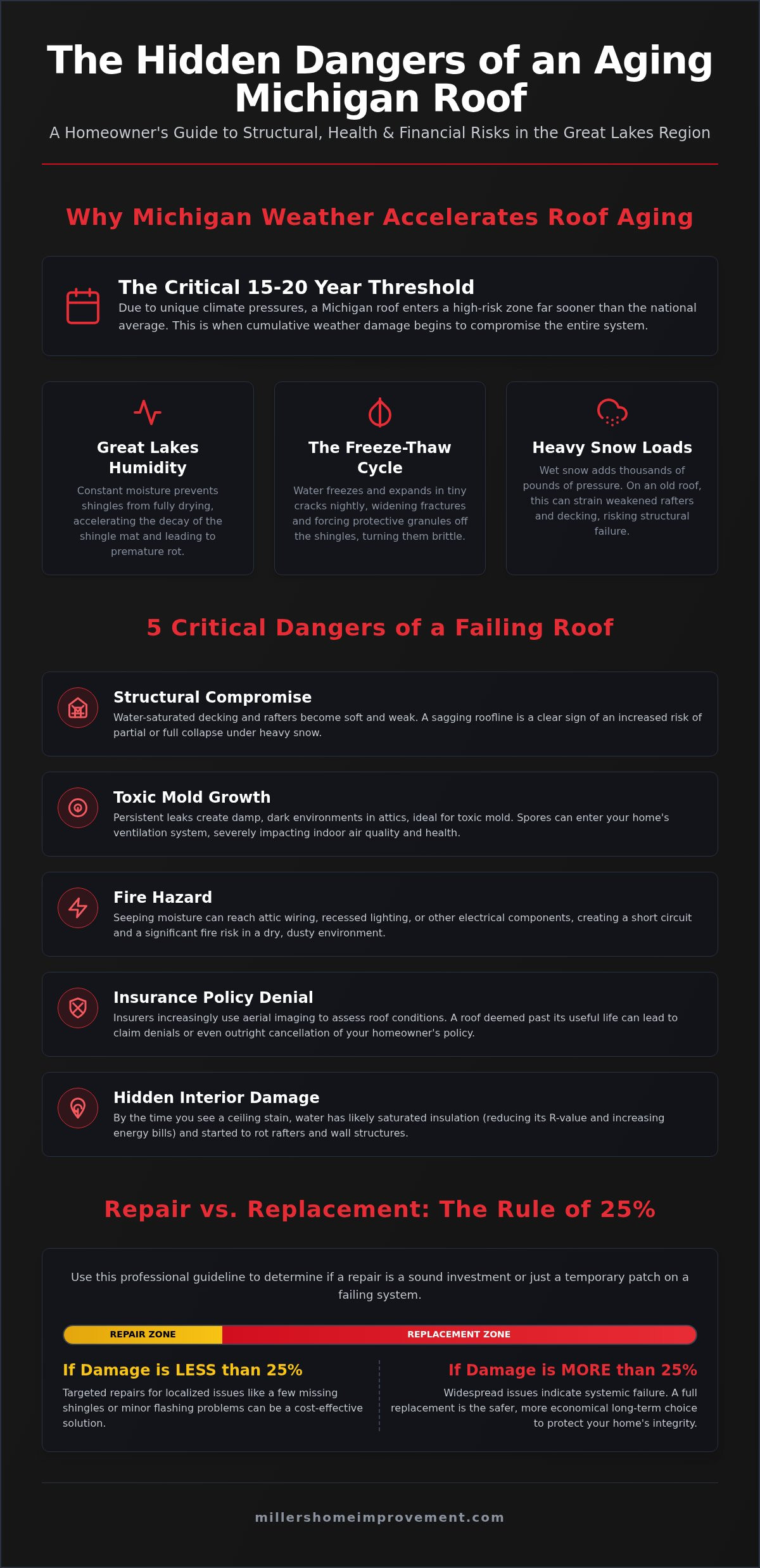
- Learn why the 15-20 year mark is a critical threshold for Michigan roofs due to Great Lakes humidity and heavy snow loads.
- Understand the primary dangers of an old roof Michigan homeowners face, including hidden structural rot and toxic mold growth in the attic.
- Master a professional two-step inspection process to identify failing shingles and excessive granule loss without ever leaving the ground.
- Discover the "Rule of 25%" to determine if a repair is a sound investment or just a temporary patch on a failing system.
- Gain the confidence to make an informed decision about your home's safety and structural integrity before the next major storm hits.
The Michigan Factor: Why Local Weather Accelerates Roof Aging
Michigan's climate is uniquely punishing for residential structures. While national shingle manufacturers often talk about thirty-year lifespans, the local reality is much shorter. In our region, a roof typically enters a high-risk zone between the 15 and 20-year mark. This is the threshold where the cumulative effects of our weather patterns begin to manifest as structural liabilities. The constant moisture from the Great Lakes creates a humid environment where shingles rarely dry out completely during the spring and fall. This trapped moisture accelerates the decay of the shingle mat, leading to premature rot that compromises the entire system.
One of the specific dangers of an old roof Michigan residents must understand is the physics of the freeze-thaw cycle. During a typical winter day, aging shingles absorb small amounts of moisture. When temperatures drop rapidly at night, that water freezes and expands within the microscopic cracks of the asphalt. This expansion forces protective granules to detach and widens existing fractures. Over two decades, this cycle occurs thousands of times; it eventually turns a once-flexible shingle into a brittle, porous shell that can no longer shed water effectively. Even during our summers, UV radiation remains a threat. Intense sunlight breaks down the asphalt's chemical bonds, causing shingles to dry out, shrink, and curl at the edges.
The Role of Heavy Snow Loads
A healthy roof is engineered to distribute weight across its entire surface, but an old system often has tired or weakened components. Aging rafters and plywood decking lose their structural stiffness over twenty years of constant moisture exposure. Wet snow is particularly hazardous because it can weigh significantly more than dry, powdery snow. If your roof is compromised, you might notice interior doors that suddenly stick or new cracks appearing in the drywall near the ceiling during a heavy accumulation. These are clear indicators that your home's skeleton is struggling to support the weight of a Michigan winter.
Ice Damming: The Silent Killer of Old Roofs
Older homes in Southeast Michigan often lack the advanced ventilation and insulation found in modern construction. Heat escapes into the attic and melts the snow on the upper parts of the roof, which then refreezes at the colder eaves. This creates a thick ice dam. Because many older roofs were installed before modern building codes required robust ice and water shields, this backed-up water is forced directly under the shingles. It eventually migrates into your wall cavities and insulation, creating hidden damage that often goes unnoticed until a major failure occurs.
The 5 Most Critical Dangers of Postponing Your Roof Replacement
Postponing a replacement often feels like a way to save money, but in reality, it invites risks that far exceed the cost of a new installation. The dangers of an old roof Michigan homeowners face extend beyond simple leaks; they involve the very stability of your home. When a roof reaches the end of its functional life, the protective layers fail, allowing water to infiltrate the underlying structure. This process is often silent and invisible until the damage becomes catastrophic.
Structural compromise is the most immediate physical threat. A sagging roofline suggests that the plywood decking or rafters have become saturated and soft. This significantly increases the risk of a partial collapse during a heavy snow event. Beyond the wood, toxic mold growth often begins in the dark, damp corners of an attic long before you smell it. These spores can enter your home's ventilation system, impacting the air quality for your entire family. There is also a legitimate fire hazard to consider. Seeping moisture can reach attic wiring or recessed lighting fixtures, creating a short circuit in a dry, dusty environment. Finally, insurance companies are increasingly using aerial technology to track roof conditions. If your roof is deemed past its useful life, you risk immediate insurance denials or even the total cancellation of your homeowner's policy.
Hidden Interior Damage
Water stains on your ceiling are usually the final stage of a long-term leak. By the time you see a spot, the water has likely already traveled through your shingles, saturated your attic insulation, and begun rotting the rafters. Wet insulation is a major concern because it loses its R-value, which forces your heating system to work much harder. This moisture can eventually migrate into your exterior walls, leading to expensive repairs that go far beyond the roof deck itself.
Financial and Insurance Risks
Insurance carriers frequently apply a 'Wear and Tear' exclusion to older properties. If a storm hits but your roof was already twenty years old and failing, an adjuster may argue that the damage was inevitable due to lack of maintenance. This leaves you paying for a full replacement entirely out of pocket. Choosing to act proactively with a professional roof assessment can prevent these financial surprises. Emergency repairs during a blizzard or a spring downpour always cost significantly more than a planned, methodical replacement. You aren't just buying shingles; you're protecting your home's equity and your family's safety.
Master Craftsman’s Checklist: Signs You Need a New Roof This Season
Identifying the early warning signs of failure requires a methodical approach. You don't necessarily need to climb a ladder to understand the dangers of an old roof Michigan weather has created for your home. By following this structured checklist, you can evaluate your property's condition and determine if it's time for a professional assessment. Recognizing the dangers of an old roof Michigan winters can expose is the first step toward securing your property before the next heavy snow cycle begins.
- Step 1: The Ground-Level Walkthrough. Stand back from your home and look for shingle "ghosting." This occurs when the outline of your rafters becomes visible through the shingles; it often indicates significant wear or poor insulation. You should also look for "grit" or piles of granules at the base of your downspouts.
- Step 2: The Gutter Inspection. Check your gutters for excessive granule loss. These small, stone-like pieces protect the asphalt from UV rays. When you see "bald" spots on shingles or a thick layer of silt in the gutter, the material has lost its primary defense mechanism.
- Step 3: The Attic Deep-Dive. Head into the attic during a sunny day with the lights off. If you see "pinpricks of light" through the roof boards, you have gaps that will eventually admit water. Look for dark water spots on the rafters or damp insulation, which are clear indicators of active leaks.
- Step 4: The Flashing and Chimney Check. Inspect the metal around chimneys, vents, and valleys. If the flashing is rusted, pitted, or pulling away from the masonry, the seal is broken. These areas are responsible for a high percentage of residential leaks.
Exterior Warning Signs
Shingles that are curling, cupping, or "clawing" at the edges are suffering from thermal shock. This happens when years of extreme Michigan temperature swings cause the material to lose its flexibility. Cracked shingles are another major red flag. They indicate that the asphalt has lost its volatile oils and is now brittle. If you see moss or algae growth, don't just view it as a cosmetic issue. Greenery on the roof acts like a sponge, trapping moisture against the shingles and accelerating the rot of the underlying wood deck.
Interior Warning Signs
Your home's interior often tells the story of the roof's health before a major leak occurs. Peeling paint or bubbling wallpaper near the ceiling line usually points to moisture infiltrating the wall cavity. Musty odors in the upper levels or a heavy, humid feel in the attic are signs of poor ventilation and trapped dampness. If you notice the attic floor sagging or the rafters feel soft to the touch, the structural integrity of the roof system is already in question.
Repair vs. Replacement: When is an Old Roof Beyond Saving?
Deciding whether to patch a leak or invest in a full replacement is a significant financial crossroad for any homeowner. As a general guideline, seasoned professionals often use the "Rule of 25%." If the cost of necessary repairs exceeds a quarter of the price of a full replacement, the investment in a patch rarely makes long-term sense. The dangers of an old roof Michigan residents encounter often stem from trying to "limp" a system along past its functional life. While a small repair might stop a visible drip today, it doesn't address the systemic failure of the asphalt or the integrity of the underlying deck.
Patching an aged roof is technically difficult because of the material's loss of flexibility. When shingles are twenty years old, they become brittle. Lifting them to slide in new flashing or replacement shingles often creates micro-fractures in the surrounding area, leading to a new leak just inches away from the original repair. You should also be wary of "roof-overs," or adding a second layer of shingles. While legal in some jurisdictions, this practice hides the condition of the plywood decking and adds immense weight to your rafters. In a climate where we must already account for heavy snow loads, that extra weight is a structural liability you don't want to carry.
When a Repair is Sufficient
Repairs are a logical choice when the roof is relatively young, typically under 12 years old, and the damage is isolated. If a single Michigan gale blows off a few shingles or a tree limb punctures a small area, a targeted fix can restore the system's integrity. Common maintenance tasks like replacing a cracked pipe boot or resealing flashing around a chimney are also standard repairs that don't require a full tear-off. These are proactive steps that extend the life of a healthy roof rather than desperate attempts to save a failing one.
When a Full Tear-Off is Mandatory
A full tear-off becomes mandatory when the underlying roof deck shows signs of saturation or rot. You cannot simply nail new shingles into soft, decaying wood. If you have multiple leaks in different areas of the home, or if you see widespread curling and granule loss across the entire surface, the system has reached a state of total failure. At this stage, patching is no longer a viable safety strategy. If you are unsure which path to take, you can schedule a professional roof inspection to get a clear, honest assessment of your home's structural health.
Protecting Your Michigan Home with Miller's Home Improvement
Miller's Home Improvement has spent over 25 years navigating the specific challenges of the Southeast Michigan climate. We've seen firsthand how the dangers of an old roof Michigan winters exploit can devastate a property's value and safety. Our legacy is built on a foundation of professional integrity and a no-nonsense approach to home protection. We don't just look at shingles; we evaluate the entire roofing system to ensure your family remains safe through every season, from the humid summer months to the heaviest January snowfalls.
Our team specializes in complete roof tear-offs because we believe in doing things correctly the first time. While some contractors might suggest a quicker "roof-over," our experience shows that this practice often hides significant deck rot and structural weaknesses that eventually lead to failure. By removing the old materials entirely, we can inspect every square inch of the underlying plywood and rafters. This thoroughness is especially critical when dealing with storm restoration. We provide professional insurance claim assistance to help you navigate the complexities of a filing. Our experts often find subtle wind or hail damage that adjusters might overlook during a brief walkthrough, ensuring you receive the coverage you deserve.
Our Professional Restoration Process
Every project begins with a detailed assessment of your home's deck integrity and attic ventilation. We understand that a roof is only as strong as the wood beneath it and the airflow that keeps it dry. Our crews use high-quality materials specifically engineered to withstand Great Lakes winters, from advanced ice barriers to wind-resistant shingles. Throughout the installation, we maintain a meticulous workspace. We treat your property with respect, ensuring a thorough cleanup so that the only evidence of our presence is a beautiful, secure new roof.
Secure Your Peace of Mind
You shouldn't wait for the next major Michigan blizzard to test the limits of an aging structure. A proactive professional inspection can save you thousands in future structural repairs by identifying minor vulnerabilities before they escalate into major failures. We invite you to schedule a free, no-pressure in-home estimate with our seasoned experts. We'll provide a clear, honest evaluation of your roof's condition so you can make an informed decision for your home's future.
Get Your Free Michigan Roof Assessment from Miller's Home Improvement
Securing Your Home Before the Next Big Storm
Michigan homeowners face a unique set of challenges that turn standard maintenance into a matter of structural survival. We've explored how the dangers of an old roof Michigan residents encounter are often amplified by heavy snow loads and relentless freeze-thaw cycles. Waiting for a visible leak usually means the damage has already reached your home's skeleton. By using our 2026 safety checklist, you've taken the first step toward moving from a state of concern to one of informed resolution.
Miller's Home Improvement brings over 25 years of local experience to every project. As a fully licensed and insured team, we specialize in identifying the subtle signs of failure that others miss. We take pride in our reputation as A+ rated storm damage restoration specialists who prioritize the long-term integrity of your property through meticulous full tear-offs. You don't have to face the uncertainty of an aging roof alone. Our goal is to provide the stability and durability your home needs to withstand the Great Lakes climate for decades to come.
Schedule your free, expert roof inspection with Miller's Home Improvement
Taking action today ensures your home remains a safe haven for your family through the coming seasons. We're here to provide the professional assurance and quality workmanship you deserve to protect your most valuable investment.
Frequently Asked Questions
How long does a typical asphalt shingle roof last in Michigan?
Asphalt shingles in Michigan typically provide a functional lifespan of 15 to 20 years. While national manufacturers often quote longer durations, our local humidity and intense freeze-thaw cycles significantly accelerate material degradation. Once a roof passes the 15-year mark, the protective oils in the asphalt begin to dissipate, making the shingles brittle and prone to failure during seasonal transitions.
Can an old roof cause my energy bills to increase during Michigan winters?
An aging roof definitely contributes to higher heating costs. When shingles curl or lose their granules, they no longer provide a tight seal against the elements, which allows heat to escape from your attic. Additionally, if minor leaks have saturated your attic insulation, that material loses its R-value and fails to keep your living spaces warm, forcing your furnace to work much harder.
Will homeowners insurance cover a roof that is 20 years old?
Most insurance carriers are hesitant to provide full replacement coverage for roofs that have reached the end of their useful life. Many policies include "Actual Cash Value" clauses or "Wear and Tear" exclusions for systems over 20 years old. This means that if a storm occurs, the payout may be significantly reduced or denied entirely because the roof was already in a state of advanced depreciation.
What happens if I don't replace my roof when it shows signs of aging?
Postponing a necessary replacement leads to compounding structural damage that eventually costs much more than the original project. Water infiltration quietly rots the roof deck and rafters, which can lead to a sudden ceiling collapse or the growth of toxic mold. What starts as a shingle issue can quickly evolve into a full-scale interior renovation if the moisture reaches your drywall and electrical systems.
Is it dangerous to have moss or algae growing on an old Michigan roof?
Moss and algae are more than just cosmetic nuisances; they are active threats to your roof's integrity. These organisms act like sponges, trapping moisture against the shingles and preventing them from drying out after a rainstorm. This constant dampness softens the asphalt and eventually rots the wood decking underneath, which is one of the primary dangers of an old roof Michigan homeowners often overlook.
How much snow can an old roof safely hold before it becomes a danger?
The weight a roof can support depends heavily on the condition of the underlying rafters and decking. While local building codes require structures to handle significant snow loads, the dangers of an old roof Michigan residents face include weakened wood that has lost its load-bearing capacity. Even a few inches of heavy, wet "heart attack" snow can cause a compromised roof to sag or fail catastrophically.
Can I just repair the leaks on my 20-year-old roof instead of replacing it?
Patching a 20-year-old roof is rarely a sound investment because the surrounding shingles are too brittle to handle. When a technician lifts an aged shingle to install new flashing or material, the old asphalt often cracks or loses its seal. This creates a cycle of perpetual repairs where fixing one leak accidentally causes two more, making a full replacement the only logical path for long-term safety.
What is the best time of year to replace a roof in Michigan?
Late spring through early autumn is the ideal window for roofing projects in our region. While we can perform tear-offs in colder weather, shingles require consistent temperatures above 40 degrees to activate their thermal sealing strips. Installing during the warmer months ensures that the adhesive bonds properly, providing the maximum wind resistance needed to survive the following winter's gales.


