
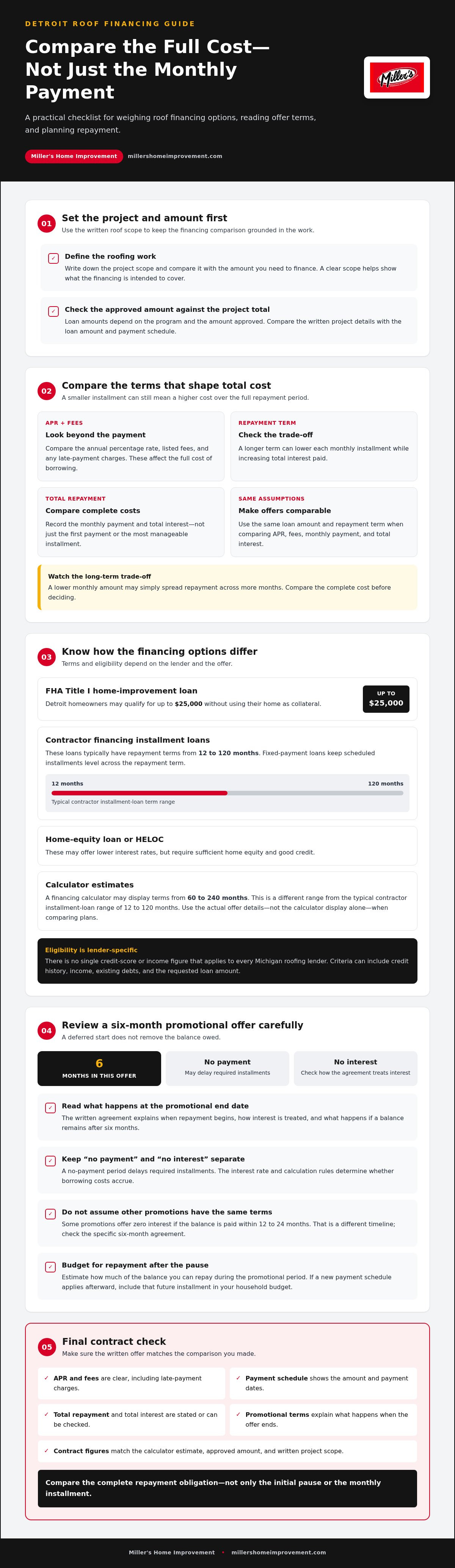
A roof replacement doesn’t have to be paid for all at once. Detroit roofing payment plans can include FHA Title I home-improvement loans of up to $25,000 without using your home as collateral, while contractor financing installment loans typically offer repayment terms from 12 to 120 months. The right route depends on the available terms and what fits your budget.
It’s understandable to focus on the monthly payment, but the interest rate, fees, and repayment period also affect the total cost. A lower payment spread over a longer term can mean paying more interest overall.
This guide explains how Detroit-area homeowners can compare roof financing options, what affects monthly payments, and how to review payment arrangements. You’ll learn what to check in a loan offer and how to weigh convenience against repayment terms before deciding on a roof replacement.
Key Takeaways
- Compare the full terms of a six-month promotional offer, including what happens when the promotion ends, before relying on the initial pause in payments.
- Weigh the manageable monthly amount of a 10-year plan against the total interest paid over the full repayment period.
- Set up automatic payments only after reviewing the draft date, payment amount, and account details so the schedule fits your budget.
- Match the roofing scope to your property, then use the written project details to assess which payment structure is practical.
- Learn how residential roofing work can address replacement needs and support a clear next step for your home.
Looking For A Longer Payment Plan?
A longer repayment term can lower monthly payments but increase the total interest paid. Before choosing financing, compare the loan amount, annual percentage rate (APR), fees, and repayment term.
Loan Amounts and Repayment Terms
Loan amounts depend on the financing program and the amount approved for the project. Detroit homeowners may qualify for FHA Title I home-improvement loans of up to $25,000 without using their home as collateral. Contractor financing installment loans typically have terms from 12 to 120 months. Compare the approved amount with the project total, then see whether the repayment schedule fits your monthly budget.
Rates, Fees, and Total Interest
Interest rates and fees affect the full cost of a loan, not just the monthly payment. Compare APRs, listed fees, repayment length, and total interest. A smaller installment may cost more overall if a longer term adds interest.
APR and Loan-Term Examples
A financing calculator displays terms from 60 to 240 months, while contractor installment loans typically range from 12 to 120 months. These are different ranges, so use the actual offer details when comparing plans.
Financing Contract Risks
Watch for unclear APRs, fees, late-payment charges, or terms that don’t explain the total repayment amount. Promotional interest may depend on paying the balance within a stated period, so read what happens when that period ends. Before signing, compare the approved amount, payment schedule, and total interest in the contract with the calculator estimate.
To compare offers, write down the loan amount, APR, fees, monthly payment, and total interest for each one. Check that the figures use the same repayment term and assumptions. Then compare the complete cost, not just the first payment. This helps distinguish a lower-cost plan from one that simply spreads payments over more months.
Can I Finance My New Roof in Metro Detroit?
Yes. Michigan homeowners can compare installment loans, FHA Title I loans, and home-equity borrowing. Approval and payments depend on the lender’s terms.
Monthly payment estimates help you compare repayment options, but the term and interest rate determine the total amount paid.
Monthly Payment Calculations
A monthly payment depends on the amount financed, APR, repayment term, and any fees included in the loan. A calculator estimates payments from those inputs, but it doesn’t replace the lender’s final offer. A longer term lowers the installment but increases total interest.
Fixed Monthly Installments
Fixed-payment loans keep scheduled installments level across the repayment term, making household budgeting more predictable. Roofing installment loans typically run from 12 to 120 months. Compare the payment schedule with the total repayment amount, since a longer term can reduce each monthly payment while increasing interest overall. The loan agreement sets the actual amount and payment dates after approval.
Financing Eligibility and Options
There’s no single credit-score or income figure that applies to every Michigan roofing lender. Approval criteria can include credit history, income, existing debts, and the requested loan amount. FHA Title I home-improvement loans may provide up to $25,000 without using the home as collateral. Home-equity loans or HELOCs may offer lower interest rates, but require sufficient equity and good credit.
FHA Title I and home-equity borrowing are loans, not grants or rebates. Assistance programs have their own eligibility and covered-work rules. Distinguish repayable loans from support that doesn’t create loan payments before comparing options.
Applying for Roof Financing
Start by defining the roof work and the amount you need to finance. Then compare lender offers using the same loan amount, APR, fees, and repayment term. Consider the estimated monthly payment alongside total interest and repayment obligations. For a roof replacement, a clear written project scope helps you understand what the financing covers and compare it with the loan amount.
Before accepting an offer, read the payment schedule, approval conditions, and any promotional terms. Use a calculator to test how a shorter or longer term changes the payment and total interest. A written roof replacement scope can help you evaluate the project itself alongside its financing.
Six-month no-interest, no-payment promotion
A six-month no-interest, no-payment promotion can postpone scheduled payments and interest charges during its promotional period. The written agreement explains when repayment begins, how interest is treated, and what happens if a balance remains after six months. Read those terms before relying on the promotion to plan a roof repair or replacement.
Understand the Promotion Terms
“No interest” and “no payment” describe different features. A no-payment period delays required installments, while the interest rate and calculation rules determine whether borrowing costs accrue. Some roof-financing promotions offer zero interest when the balance is paid within 12 to 24 months; a six-month offer has a different timeline. Don’t assume it follows those longer offers’ terms. Check the agreement for the promotional end date, repayment start, payment amount, and any interest due afterward.
Plan for Repayment Before Applying
Before applying, estimate how much of the balance you can repay during the six-month period. Use the written project scope and lender’s terms to set a realistic target. If the contract requires the remaining balance to be repaid under a new schedule, include that future installment in your household budget. A deferred start can ease immediate cash-flow pressure, but the balance is still owed.
Compare the promotion with other terms available to you. Contractor financing installment loans typically run from 12 to 120 months, and some promotional offers provide zero interest if paid within 12 to 24 months. Those options differ in repayment length and qualification terms. Compare the APR, fees, payment schedule, and total interest for each offer rather than choosing solely by the first six months.
Keep Project and Financing Details Separate
For storm damage or roof repairs, match the financing amount to the written work description. Keep the roofing scope distinct from the financing terms so you can see what work the loan covers and what repayment requires. A warranty describes coverage for specified work or materials; it doesn’t replace the loan agreement or cancel repayment. Review both documents and keep copies with your application and payment records.
Use a Simple Review Checklist
Before signing, record the promotional start and end dates, interest rate, payment start date, and post-promotion repayment terms. Confirm how the lender calculates any remaining balance and whether the agreement lists fees or consequences for missed payments. Compare the six-month schedule with your expected cash flow. If your planned payoff depends on uncertain income or another loan, assess the regular repayment option too. This helps you choose based on the full obligation, not just the initial pause.
10-Year roofing payment plan
A 10-year roofing payment plan spreads repayment across 120 monthly installments. That longer schedule can make a major home-improvement expense easier to budget, but it can also increase total interest. Compare the payment and full repayment amount before deciding whether the added flexibility fits your household finances.
See What the Longer Term Changes
A published Shelby Township project example shows the tradeoff clearly. A lower monthly amount can help homeowners manage cash flow, but the full interest cost matters as much as the installment.
Use the same loan amount to compare terms. A shorter repayment period generally means higher monthly payments and less time for interest to accrue. A 10-year term spreads payments further, but the overall expense may rise. A contractor’s written project scope and the lender’s loan estimate help distinguish the work being financed from the credit terms.
Review the Full Repayment Picture
Before accepting an offer, record the APR, monthly payment, number of payments, fees, and total amount repaid. For a 120-month plan, multiply the scheduled installment by 120, then compare that result with the loan amount and stated total interest. Check that promotional terms or deferred payments don’t change the repayment schedule later.
Approval and available terms depend on the lender’s program and application review. Credit history, income, existing obligations, and the requested amount can affect an offer. Don’t build a budget around a calculator estimate alone. Use the final loan disclosure to confirm the actual installment and repayment terms.
Decide Whether Ten Years Fits
Ask whether the monthly installment remains manageable alongside regular household expenses, including housing, utilities, and existing debt payments. Then consider how long you expect to keep the home and whether you’re comfortable carrying the loan throughout its term. A 120-month agreement is a long commitment, even when its monthly payment appears affordable.
Roof financing covers borrowing, not the installation itself. Review the project scope separately from the loan, including the materials and work described. The roofing work should match the property’s needs, and the financing terms should fit your budget. Comparing both documents helps you weigh the repair or replacement plan against the long-term credit obligation.
Compare Before Signing
Put the 10-year offer beside any shorter-term alternative and compare the monthly payment, APR, fees, and total interest. Use the same requested loan amount for each comparison. If a lower installment adds substantial interest, decide whether the monthly flexibility justifies that additional expense. The best fit is the repayment schedule you can sustain while understanding the full amount owed.
Automatic payment options
Automatic payments can make a roofing loan easier to manage by scheduling installments from a chosen account. The lender’s agreement sets the payment amount, due date, and accepted payment method. Before enrolling, compare those terms with your household cash flow and the written roofing estimate. Automatic withdrawal handles timing, not the total cost or installation quality.
Set Up a Payment Schedule You Can Track
Start with the loan agreement, then note the monthly due date and required installment. If the lender offers recurring bank withdrawals or card payments, choose the method that suits your routine. For example, a homeowner paid monthly might schedule a debit after income arrives. Keep enough funds in the selected account and record the date in your calendar.
Read the payment authorization before enrolling. It should explain how to change or stop recurring payments, update account details, and handle a missed payment. Automatic payments don’t remove your responsibility to monitor the account. Check each statement against the loan schedule, especially when a due date falls near a weekend or holiday.
Protect Your Budget and Records
Set a reminder even after enrolling. A bank alert can help you spot a low balance before a scheduled withdrawal, while lender statements show whether each installment posted. Keep confirmation emails and payment records with the roofing contract and installation documents. If your account changes, update the payment method through the lender’s stated process before the next due date.
Don’t treat automatic payment as a discount or a change to the interest rate. Compare financing options by APR, fees, payment amount, and total repayment, then use automatic withdrawals as a payment-management tool. A household savings cushion can help cover an installment if income timing or another expense disrupts your usual budget.
Connect the Loan to the Project Scope
Before starting recurring payments, match the loan amount to the roofing company’s written scope and estimate. Confirm that the financed amount reflects the agreed work, such as a replacement or repair, rather than an outdated draft. Keep financing paperwork separate from project documents: the lender’s schedule explains repayment, while the roofing agreement describes the work.
For a clearer project starting point, request a roofing estimate before planning how installments fit your budget. Use the written scope to compare the roofing expense with the lender’s payment schedule, then track the account and project records together.
Miller's Home Improvement: Residential Roofing
Miller's Home Improvement provides residential roofing for homeowners planning a repair or replacement in Detroit and Southeast Michigan. A written estimate helps you understand the work and compare its scope with the amount you’re considering financing. The company also assists with insurance claims when storm damage is part of the roofing project.
For a commercial property or flat roof, Miller's Home Improvement provides commercial roofing, PVC flat roofing, and EPDM flat roofing in Southeast Michigan. Start by clarifying the roof’s needs and reviewing the proposed work before settling on a payment schedule. Contact Miller's Home Improvement to discuss your Detroit-area roofing project and request a free estimate.
Choose a Clear Next Step for Your Roof
Start with a clear roofing scope, not a monthly payment target on its own. Match the work your property needs with a repayment schedule you can manage, and keep the project details and financing terms together as you decide. This makes it easier to assess whether the proposed work and payment arrangement fit your priorities.
As you compare Detroit roofing payment plans, keep the roof’s needs in view. Miller's Home Improvement provides residential roofing, commercial roofing, and PVC flat roofing in Southeast Michigan. A defined project scope can help you move from financing research toward a practical plan for your property.
If you’re ready to discuss roofing work, contact Miller's Home Improvement. A clear conversation about the roof’s needs is a straightforward next step toward making an informed decision. You can take the process one decision at a time and choose the approach that fits your project.
Frequently Asked Questions
Can you pay monthly for a new roof?
Yes, monthly payments may be available through a lender’s roofing installment loan or another home-improvement financing option. Detroit roofing payment plans vary according to the amount borrowed, APR, and repayment term. Treat examples as illustrations, not quotes for your roof.
Do you offer financing for roofing?
Miller's Home Improvement provides roofing services, while financing comes through a lender or loan program. The distinction matters: the roofing agreement describes the work, and the lender’s agreement sets borrowing terms and repayment. If you’re planning a project, compare the written scope with the lender’s documents to understand the proposed work and separate financial obligation before accepting either agreement.
Does financing change the price of the roof?
Financing doesn’t automatically change the quoted price of roofing work, but interest and applicable loan fees can increase the total you repay. Compare the written project amount with the loan’s total repayment figure. A longer term, for example, may reduce monthly installments while increasing total interest. Consider both figures so a payment that fits your monthly budget doesn’t obscure the full borrowing cost.
How to pay for a roof when you can't afford it?
First, clarify whether your roof needs repair or replacement, then compare the project scope with potential borrowing options. FHA Title I home-improvement loans may provide up to $25,000 without using the home as collateral. Home-equity loans or HELOCs may offer lower interest rates but require sufficient equity and good credit. For storm damage, consider any insurance claim separately from borrowing.
Is 0% roof financing really interest-free?
It can be interest-free when the offer’s written conditions are met. Some roofing promotions offer zero interest if the balance is paid within 12 to 24 months. Other offers may defer interest or set different repayment conditions after the promotional period. Review the agreement’s interest rate, payoff deadline, payment start date, and terms for any unpaid balance. A delayed payment alone doesn’t mean interest won’t accrue.
Which Detroit roofing contractors offer payment plans or financing?
Financing availability depends on the contractor’s arrangements, while the lender sets the loan terms. Miller's Home Improvement provides residential and commercial roofing, including PVC flat roofing, in Detroit and Southeast Michigan. To assess an offer, compare the written project scope with the lender’s APR, fees, repayment term, and total amount owed. The estimate describes the roofing work; it isn’t a loan approval or financing commitment.
What financing options are available for roof replacement in Detroit?
Detroit homeowners can explore contractor-linked installment loans, FHA Title I home-improvement loans, and home-equity loans or HELOCs. FHA Title I loans may provide up to $25,000 without using the home as collateral. Equity-based borrowing requires sufficient home equity and good credit. Compare APR, fees, repayment terms, and promotional conditions. Detroit roofing payment plans differ by lender and offer, so review the actual terms before choosing.
What are typical monthly payments for a financed roof in Detroit?
There’s no single typical payment because the loan amount, APR, and repayment term determine the installment. These figures illustrate different terms, not a quote for your roof.


