
The cheapest-looking roof repair can become the costliest if it misses the source of a leak. With DIY roof repair vs. professional help, a single cracked or loose shingle may be manageable as a DIY fix, while widespread damage, indoor leaks, or repairs around valleys and roof penetrations call for professional work. A lower upfront cost isn’t always better value if a mistake leads to more damage.
It’s understandable to consider handling a small repair yourself: materials may seem straightforward, and you can avoid labor costs. But roofing work involves more than replacing what’s visible, and working at height carries real safety risks.
This guide compares the costs, risks, warranty considerations, and skill involved in common roof repairs. You’ll learn which jobs may suit a capable homeowner, when professional workmanship matters, and how to make a practical decision for your roof.
Key Takeaways
- Compare material costs with the value of accurate diagnosis and workmanship before deciding how to handle a repair.
- Check how a DIY repair could affect your roof’s manufacturer warranty and any coverage for the work.
- Keep safety central: roof height, slope, and weather conditions can make a seemingly small repair risky.
- Use visible damage as a guide: widespread shingle problems, indoor leaks, valleys, and roof penetrations often call for professional attention.
- For roof repairs that need experienced workmanship, Miller's Home Improvement offers residential roofing services.
DIY roof repair vs professional roof repair: which costs less?
DIY can cost less upfront for a small repair, such as replacing one loose shingle. Weigh the materials and any tool rental against the diagnosis, scope, and workmanship involved in a professional repair.
DIY Repair Costs and Tools
A single cracked or loose shingle may be manageable as a DIY repair, but the roof’s pitch, access, and your ability to work safely all affect whether it’s a practical choice.
Professional Repair and Replacement Costs
Professional repair costs depend on the location, materials, and extent of the damage. A valley, flashing, or leak may involve layers beneath the visible roofing, so comparing only the surface task can miss the true scope. Roof replacement is a different project: it involves removing old materials, inspecting the decking, and replacing damaged sections before installing new roofing. The cost depends on the roof and the work required.
Hidden Costs of DIY Mistakes
An improper repair can let water reach the underlayment or decking, turning a small job into more extensive work. Sealant applied in the wrong place may hide a leak without fixing its source. DIY is most likely to save money when the problem is correctly diagnosed, the materials suit the roof, and the repair is done properly.
Contractor Estimates and Repair Costs
Compare written estimates by scope, materials, damaged layers, and cleanup, not just by the total. For a licensed and insured roofing contractor, review proof of licensing and coverage, then compare how each estimate describes the work. Permit requirements and applicable codes depend on the repair and local jurisdiction; the estimate should explain whether permits apply and how the work will meet applicable codes.
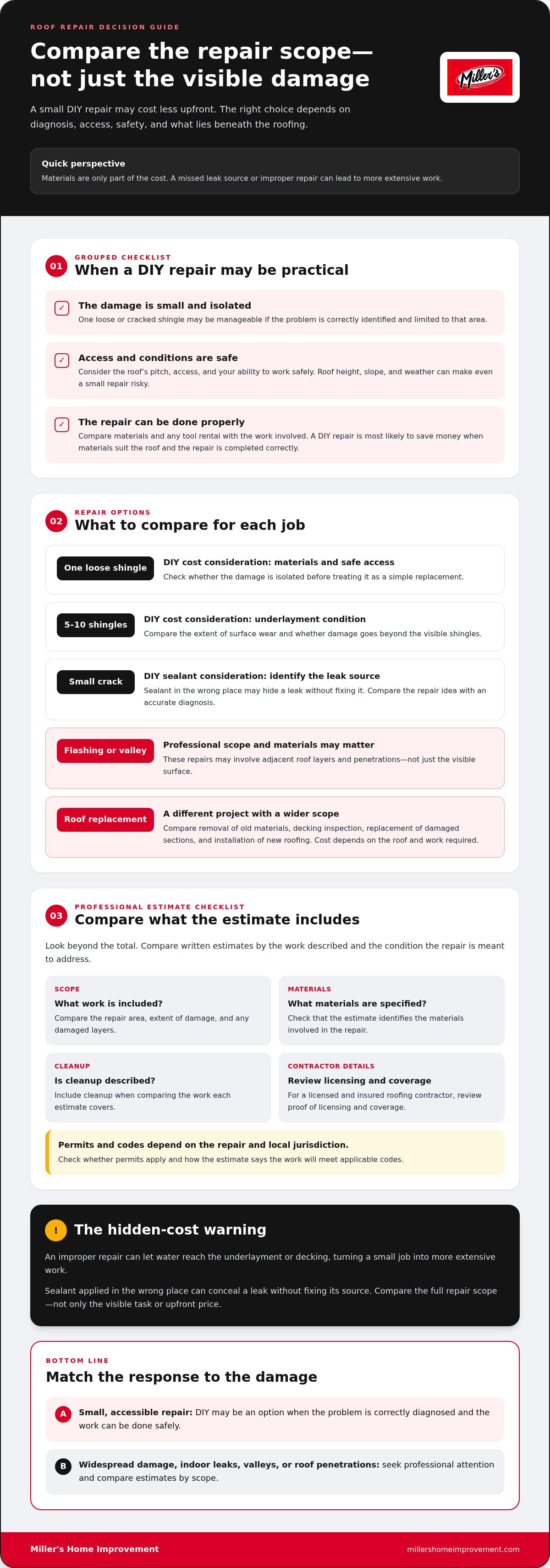
| Repair option | Typical cost consideration | Scope to compare |
|---|---|---|
| One loose shingle, DIY | Materials and safe access | Whether damage is isolated |
| 5-10 shingles, DIY | Underlayment condition | Extent of surface wear |
| Small crack, DIY sealant | Whether the crack is the leak source | Accuracy of diagnosis |
| Flashing or valley repair | Professional scope and materials | Adjacent roof layers and penetrations |
| Roof replacement | Removal, decking, and new materials | Full roof condition and installation scope |
Choose DIY only for a small, accessible repair you can complete safely. For complex damage or problems hidden beneath the roofing, compare professional estimates.
Manufacturer and workmanship warranties
A roof may have separate coverage for its materials and installation work. Before repairing a shingle roof, identify which warranty applies and review its installation requirements.
Manufacturer Warranty Implications
Manufacturer warranties cover the roofing product, not automatically every repair or leak. Shingle manufacturers generally require products to be installed according to their application instructions and applicable building-code requirements for limited warranty coverage. If replacing a damaged shingle yourself, match the product and follow its installation directions rather than relying on sealant or a visually similar material.
Incorrect DIY roof repairs can affect a roof warranty. For example, fastening shingles in a way that conflicts with the manufacturer’s instructions may jeopardize limited warranty coverage. Keep product paperwork and repair records together, including the affected area and materials used. These details help clarify what work was done if questions about coverage arise later.
Workmanship and Contractor Warranties
A workmanship warranty covers a contractor’s work under the written terms and is separate from the manufacturer’s product warranty. Professional roofing contractors may offer warranties on their work, which can cover problems arising within a specified period after completion. Read the terms to understand what work is covered, for how long, and subject to what limits.
For example, a roof may have a product warranty while a contractor separately covers installation workmanship. One document does not automatically replace the other. The estimate and written warranty should describe the repair scope and materials, so you can connect the coverage to the work performed. Any applicable certification is separate from the warranty terms.
Repair Warranties and Guarantees
Repair coverage depends on the written warranty’s scope. It may cover the repaired section rather than the entire roof, so distinguish a workmanship issue from new storm damage or a problem outside that section. A repair warranty is not the same as a manufacturer warranty; each covers different parts of the work or product.
Before work begins, keep the estimate, warranty, and final repair record together. Check what the documents say about materials, covered workmanship, and how to report a problem. If storm damage involves an insurance claim, confirm with your lawyer and insurance company before using claim funds for repairs you plan to complete yourself.
These distinctions matter after a repair, too. A leak following DIY work may raise questions about whether installation instructions were followed, while a later product defect involves the manufacturer’s terms. Documenting the repair helps establish what was replaced and by whom. Roofing also carries fall and injury risks, so warranty coverage is never a substitute for safe work practices.
Roof repair safety and fall hazards
DIY roofing exposes homeowners to ladder falls, slips, and injuries from tools or loose materials. Reduce risk by avoiding wet or windy conditions, using fall-protection equipment, and leaving complex work to trained roofers.
The Occupational Safety and Health Administration identifies falls as the leading cause of construction-related fatalities in the United States. According to the Bureau of Labor Statistics, ladder-related injuries requiring emergency room visits exceed 50,000 every year.
Professional Expertise and Safety
Professional expertise changes the safety equation: trained roofers assess access, footing, roof pitch, and hazards before starting. The Occupational Safety and Health Administration says workers six feet or more above lower levels risk serious injury or death if they fall. A professional can also recognize when a repair involves unstable decking or a complex roof area that homeowners shouldn’t approach.
Safety matters even for a visible repair. Replacing a shingle near a roof edge differs from working around a chimney or skylight, where footing and access may be restricted. A roofer can plan the work area, position materials, and limit unnecessary movement across the roof. These precautions also help prevent dropped tools from damaging property or causing water damage.
Safety Equipment and Repair Tools
Basic tools don’t provide fall protection. Homeowners also need a stable ladder, secure footwear, gloves, and a clear path for carrying tools. A hammer or nail gun may help with shingle work, but neither makes an unsafe roof safe.
Before climbing, set the ladder on firm, level ground and clear debris from its base. Don’t carry loose shingles or tools in your hands while climbing; use a controlled method to raise them. Avoid working alone, and keep people away from the area below. These steps help manage common hazards, but they don’t replace fall-protection training.
Weather and roof condition can quickly change the risk. Avoid roof work during wet or windy conditions, when shingles and ladder rungs can become slippery. Below 40 degrees Fahrenheit, shingles can become brittle and crack, making careful handling harder. DIY roof repairs are recommended only on roofs with a pitch of 6:12 or less, but a lower pitch doesn’t remove ladder or edge hazards.
Don’t climb if the roof is steep, damaged, or difficult to access. A leak near a roof penetration, loose decking, or storm-damaged area can make footing unpredictable. In these situations, inspect from the ground and arrange a professional repair rather than trying to reach the damaged spot. No tool can make unstable roofing, poor weather, or inadequate fall protection safe.
Widespread damage and complex repairs
A professional diagnosis can identify underlying damage that a surface patch might miss, reducing the risk of repeat leaks. For common leaks or shingle damage, identify the affected area, inspect the surrounding roofing, and repair the source rather than covering the visible symptom.
DIY Installation Mistakes and Damage
DIY installation mistakes can affect more than the shingles being replaced. A misaligned or improperly fastened shingle can leave openings for water, while a patch can conceal damage beneath the roofing. Even if you’re comfortable with a small, isolated repair, recognize when the problem extends into the underlayment or decking.
Professional repair is better suited to widespread damage because it can address connected roof areas, not just one obvious defect. If a mistake lets water reach the underlying structure, the work may grow beyond the original task. A complete roof replacement typically involves removing old roofing, inspecting the decking, replacing damaged sections, and installing new materials.
Assessing Shingle and Hidden Roof Damage
After a storm, start with a ground-level inspection. Look for missing, curled, or visibly damaged shingles, then check ceilings and walls for indoor leaks. Widespread shingle damage, curled shingles, or indoor leaks are reasons to seek professional repair. These signs may point to a larger problem than one exposed shingle.
The indoor location of a leak may not match the point where water enters the roof. Water can travel beneath shingles before appearing inside, so a stain alone won’t identify the source. Roof leaks can indicate deeper problems that need professional diagnosis, especially around valleys and penetrations such as chimneys or skylights.
Repair steps depend on the leak’s source. For missing shingles, identify the affected section and assess nearby roofing before replacing material. A professional diagnosis also considers whether water reached the underlayment or decking. For a leak around a roof penetration, examine the junction and flashing rather than sealing only the interior stain.
A lasting repair starts with identifying the source and completing the work correctly. A professional roofer can spot underlying problems a homeowner may overlook, helping reduce the likelihood of repeat leaks. A surface patch that leaves the original entry point open won’t fix the cause.
Storm damage can complicate the decision to do the work yourself. Before using insurance claim funds for repairs you plan to complete yourself, confirm with your lawyer and insurance company. Keep records of the observed damage and repair work so the claim and completed work are clearly documented.
Choose professional help for multiple damaged areas, curled shingles, indoor leaks, or repairs involving valleys, chimneys, and skylights. A single cracked or loose shingle may suit a DIY repair, but widespread damage or an uncertain leak source calls for a fuller assessment. If the underlying roof condition is compromised, a patch alone won’t resolve the problem.
Professional workmanship and expertise
A professional roofer brings more than tools to a repair. Good workmanship starts with finding the roof’s actual failure point, choosing suitable materials, and installing them correctly. For example, a ceiling stain may appear far from the damaged flashing that lets water in. Repairing only the visible stain leaves the roof defect unresolved.
That diagnostic skill is central to the comparison. A homeowner may notice a loose shingle, while a roofer checks adjacent shingles, fasteners, and the underlying roof layers. Professionals can spot problems a homeowner may overlook, potentially preventing more extensive repairs later. They also bring experience with roof penetrations, valleys, and other areas where water can enter.
Professional work considers the roof as a system. During a replacement, the roofer removes old materials, inspects the decking, replaces damaged sections, and installs new roofing over a protective layer. The appropriate material and installation method depend on the roof’s construction and project requirements. A neat surface alone doesn’t show whether the underlying work was done correctly.
Weather and timing affect workmanship, too. Shingles can become brittle below 40 degrees Fahrenheit, making them more likely to crack during handling. A professional plan accounts for material conditions and the work area, rather than forcing a repair when the roofing is difficult to handle. Avoiding wet or windy conditions also helps reduce hazards during roof work.
Use the estimate to understand how the roofer plans to resolve the problem. Compare the repair area, materials, damaged layers, and related roof components described. A useful estimate explains the intended work, not just the visible symptom. It should also distinguish a repair from a replacement when the damage extends beyond an isolated section.
- Look for a clear description of the damage and proposed repair.
- Compare the materials and installation scope, not only the total.
- Check whether the estimate addresses underlying decking or other affected components.
- Review how the proposed work accounts for applicable local building codes.
Professional roofing work can help ensure repairs meet local building codes and manufacturer application instructions. These requirements matter because incorrect installation can affect limited manufacturer warranty coverage. Keep the estimate, product details, and repair records together to document what was installed and where.
Choose professional workmanship when the source is unclear, damage affects multiple roof areas, or structural components may be involved. For a repair estimate that describes the work and materials, request a roof repair estimate.
Miller's Home Improvement: Residential Roofing
Miller's Home Improvement provides residential roofing for homeowners who need professional work beyond a small, manageable repair. If damage is widespread, a leak’s source is unclear, or roofing materials need replacement, a professional assessment can identify the work required and help protect the roof’s underlying structure.
For flat roofs, Miller's Home Improvement installs PVC and EPDM systems. The right approach depends on the roof type and the condition of its existing materials. Commercial roofing is also available for property owners considering repair or replacement.
To discuss a roofing concern, contact Miller's Home Improvement for a free in-home estimate.
Choose the Next Step With Confidence
The DIY roof repair vs. professional decision can also help protect your roof’s long-term condition. Before acting, note what you can see from the ground, where water appears indoors, and whether damage followed a storm. These details help start a clear conversation about the work your home may need, without requiring you to climb onto the roof or diagnose hidden damage yourself.
Miller's Home Improvement provides residential and commercial roofing, including PVC flat roofing. If you need a professional assessment or repair, discuss your roof’s condition and the appropriate next step. A straightforward conversation can help turn uncertainty into a practical plan for your property.
Contact Miller's Home Improvement to discuss your roofing needs. A careful next step can help you move forward with confidence.
Frequently Asked Questions
DIY Roofing: Should You Hire a Roofer or Repair Your Own Roof?
Handle a DIY repair only when the damage is isolated, accessible, and within your skills. A single loose shingle may be manageable; a leak with an unclear source or damage across several roof areas needs a broader diagnosis. The DIY roof repair versus professional choice also depends on your comfort working at height, the roof’s condition, and whether the repair could affect existing warranty coverage.
What Are the Real Risks of DIY Roof Repair?
The risks include falls, incomplete repairs, and damage hidden beneath the roofing. A loose tool can also endanger people below, while incorrectly fastened shingles may let water in. Before attempting the work, consider access, footing, weather, and how you’ll secure tools and materials. If safe movement or fall protection is uncertain, assess the roof from the ground and don’t climb.
When Should You Call a Professional Roofer Instead?
Call a roofer when a leak keeps returning, damage spans several roof sections, or repairs involve flashing or a roof penetration. These problems may require tracing water beyond the visible stain and assessing adjoining materials. For a Detroit home with storm-related damage, Miller's Home Improvement can assess the roof and document the work involved. Seek professional help when the source or extent of damage is unclear.
Which Roof Repairs Can a Homeowner Safely Do Themselves?
A homeowner may be able to replace one cracked or loose shingle if the roof is accessible, the damage is isolated, and the work can be done safely. Small hairline cracks in shingles may also be repaired with roofing sealant. Inspect from the ground where possible, and don’t attempt a repair if the roof is wet, windy, steep, or difficult to access.
Which Roof Repairs Are Safe for Homeowners to DIY, and Which Require a Professional?
DIY work is best limited to simple, isolated issues, such as one loose shingle or a small hairline crack. Leave repairs involving multiple damaged areas, valleys, chimneys, skylights, or recurring leaks to a professional. Several overlapping problems may require examining connected materials, not just replacing the visible piece. The key is whether the source and repair boundaries are clear and safely reachable.
How Much Do DIY Roof Repair Materials and Tools Cost?
Costs depend on the repair and equipment needed. Add the job-specific materials and tools, then consider whether the repair requires equipment you won’t use again.
How Can Homeowners Identify Roof Damage That Needs Immediate Professional Repair?
Look for active indoor leaks, widespread missing or curled shingles, or visible damage around roof penetrations. From the ground, note which roof areas appear affected and where water stains appear indoors; the stain may not mark the roof’s entry point. Avoid climbing to investigate. Multiple damaged sections or a leak with an unclear source call for professional assessment rather than a surface patch.
Can DIY Roof Repairs Void Homeowners Insurance, Roofing Warranties, or Manufacturer Warranties?
Incorrect DIY work can void a roof warranty, and shingle manufacturers generally require installation to follow their application instructions and applicable building-code requirements for limited warranty coverage. Homeowners insurance is separate from a manufacturer warranty, so don’t assume the same terms govern both. If you plan to use insurance claim funds for DIY repairs, confirm the approach with your lawyer and insurance company first.


