
A roof’s age alone usually doesn’t qualify it for an insurance-paid replacement. If you’re asking whether homeowners insurance covers roof replacement because of age, the short answer is generally no: policies typically exclude normal wear and tear. But if a covered event, such as wind, hail, or fire, damages the roof, insurance may help pay for repairs or replacement, depending on the policy.
It’s understandable to expect coverage to work the same way for every roof, but age and policy terms can affect how much an insurer pays. A claim may be settled using the roof’s depreciated value rather than the cost of replacing it with new materials. This article explains when roof damage may qualify, how replacement cost and actual cash value coverage differ, and what to look for in your policy to understand your options when an aging roof needs attention.
Key Takeaways
- Separate damage from a covered event, such as wind or hail, from replacement needed because of age or ordinary wear.
- Compare actual cash value and replacement cost coverage to understand how depreciation can affect a roof claim payout.
- Factor in the deductible and policy terms when estimating what an approved claim could pay.
- Review roof-age limits, payment schedules, and renewal terms so you know how your policy treats an aging roof.
- Keep roof records and document damage to support your claim and plan repairs or replacement with clearer information.
Does home insurance cover roof repair and replacement?
Home insurance may cover roof repair or replacement when a covered event, such as wind, hail, or fire, damages the roof. The payout depends partly on whether the policy uses actual cash value or replacement cost value.
Actual Cash Value Coverage
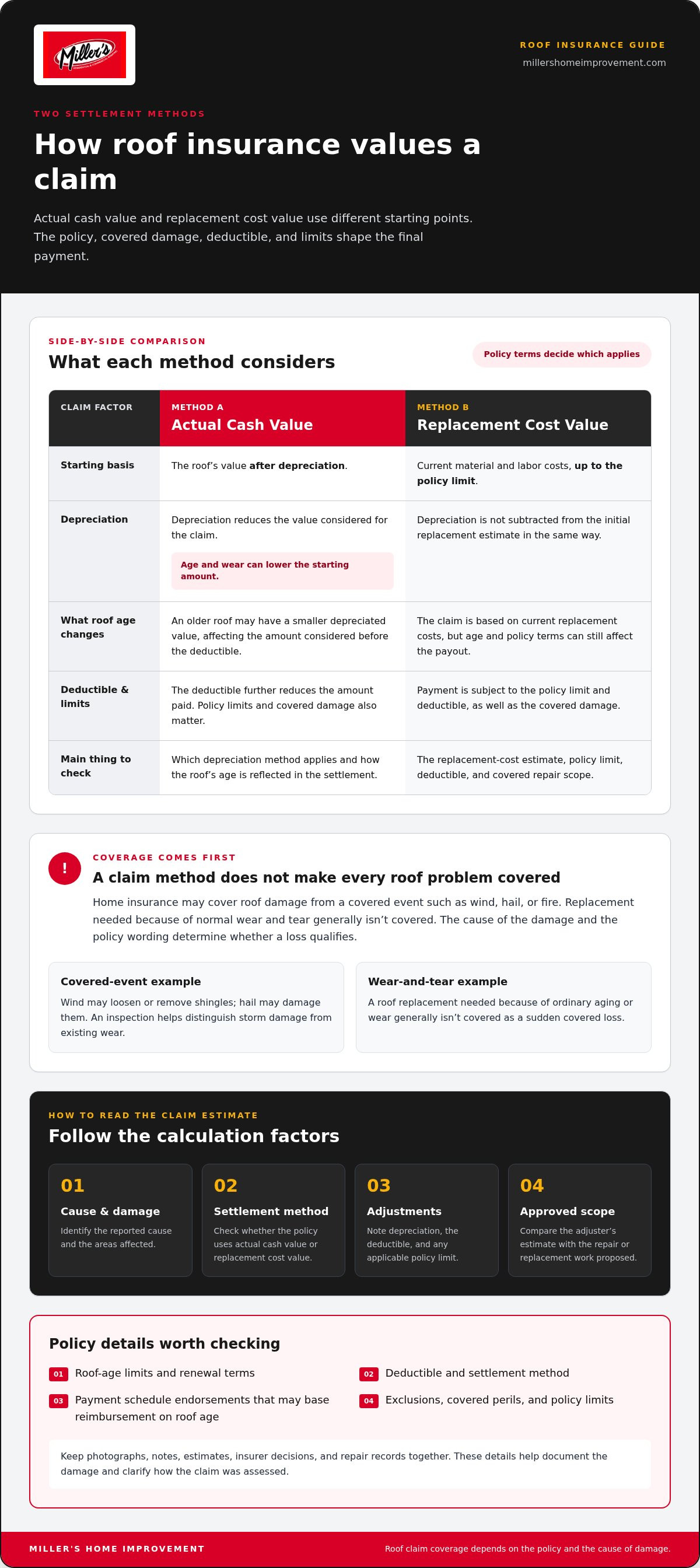
Actual cash value coverage bases a roof claim on its value after depreciation, not the full cost of new materials and labor. That difference matters most when an older roof needs replacement after a covered loss. These figures show how age can reduce the amount considered before the deductible.
Replacement Cost Coverage
Replacement cost value coverage bases a roof claim on current material and labor costs, up to the policy limit. It doesn’t subtract depreciation from the initial replacement estimate in the same way actual cash value coverage does. The policy limit and covered damage still shape the claim payment.
Depreciation in Roof Claims
Depreciation is the reduction in a roof’s value as it ages and wears, and actual cash value coverage reflects that reduction in the claim. That example shows why an older roof can have a much smaller payout than the cost of new materials and labor. The deductible further reduces the amount paid.
Under actual cash value coverage, the same replacement-cost figure could first be reduced by depreciation. The two methods therefore produce different starting points, even when the damage and roof estimate are identical. Review the policy wording to identify which method applies to your roof.
Coverage also depends on the cause of the problem. Missing shingles after wind damage may be part of a covered claim, while replacement needed because of normal wear and tear generally isn’t covered. A repair may address limited covered damage; replacement may be considered when a covered event causes broader damage. Policy terms determine how the loss is handled.
To understand a claim, identify the reported cause, the roof’s age, and the settlement method stated in the policy. Then compare the adjuster’s estimate with the repair or replacement scope, noting whether depreciation and the deductible are applied. If the policy uses actual cash value, the age-based reduction can substantially affect the amount available. If it uses replacement cost value, check the policy limit and deductible.
Roof claim deductibles and possible premium changes
A roof claim payout is reduced by the deductible stated in your policy. The final payment also depends on the covered damage, settlement method, and policy limits. Since the deductible applies to covered claims, compare it with the repair scope when considering how the claim affects your budget.
Depreciation can further reduce a payout under actual cash value coverage. That amount is deducted from the replacement estimate before the deductible is applied. The roof’s age and condition therefore affect the amount considered, even when the damage stems from a covered event. A roof payment schedule endorsement can also set reimbursement according to roof age.
Frequent roof damage claims can contribute to higher premiums or policy non-renewal. A single claim doesn’t automatically determine what happens at renewal, but claim history is one factor insurers can weigh. Older roofs can also attract higher premiums because they may present greater risk. A new roof doesn’t automatically produce major savings either; material, location, and weather risks also affect premiums.
Before filing, review the policy’s deductible, roof settlement terms, exclusions, and any endorsement that changes how payment is calculated. Document the damage with photographs and notes, then contact your insurer. Make temporary repairs to limit further damage, but wait for the adjuster to inspect before undertaking major work. Keep records of temporary repairs and related expenses.
During the inspection, the adjuster assesses the roof damage and its cause. Obtain repair estimates and compare the proposed scope with the adjuster’s findings. A storm damage claim should distinguish newly damaged areas from existing wear or maintenance issues. That distinction matters because age, condition, and cause influence what the policy covers and how the payout is calculated.
After an approved claim payout, complete the covered repairs and retain the related documentation. If wind or hail has damaged your roof, storm damage repair can address the physical damage while you follow the insurer’s claim process. Keep the insurer’s decision, estimates, photographs, and repair records together. These details give you a clear record of the work and the claim’s outcome.
How are roof claims calculated?
A roof claim starts with the reported cause and the damage it produced. The policy’s covered perils, exclusions, and settlement terms then shape the amount considered.
Covered Perils and Roof Damage
A covered peril is an event listed in the policy that causes damage to insured property. Standard homeowners policies may cover roof damage from wind, hail, or fire, while coverage for certain water damage depends on policy terms. A damaged shingle alone doesn’t establish coverage. The cause, affected areas, and policy wording all help determine whether the loss qualifies.
Sudden Damage from Covered Perils
Sudden damage from a covered peril results from a specific event, rather than deterioration that develops over time. For example, hail can damage shingles, while wind can loosen or remove them. An older roof can still be damaged by a covered event, but age and policy terms may affect the payout. An inspection helps separate storm-related damage from pre-existing wear and tear.
That figure illustrates replacement cost, not an automatic claim payment. The insurer assesses the covered damage, policy limits, deductible, and settlement terms. If hail damaged only part of the roof, the approved scope may address that damage rather than assume the entire roof needs replacement.
Wind, hail, fire, and the weight of snow or ice can cause roof damage that may qualify for coverage, subject to policy terms. Certain water damage may also be covered, depending on the policy. A leak by itself doesn’t identify the cause. For example, water entering after wind damages shingles presents a different claim question than water associated with long-term deterioration.
During an inspection, the adjuster considers the roof’s condition and the pattern of damage. Missing shingles concentrated on one slope after a wind event may help explain the reported loss. Widespread deterioration across the roof can point to a maintenance issue instead. Photographs, the date you noticed the damage, and a clear description of the event help connect the observed damage with its possible cause.
Keep your roof in serviceable condition by addressing minor issues and documenting repairs. That record can help distinguish earlier wear from new damage after a storm. If hail or wind strikes, note visible changes from the ground and protect your home from further water intrusion. Avoid major repairs before the insurer’s inspection so the original damage remains available for assessment.
Coverage limits and policy renewal for aging roofs
Roof age can affect both claim payments and whether an insurer continues coverage. Review the policy’s roof provisions, age limits, and renewal notices before assuming an older roof has the same protection as a newer one.
Coverage for Older Roofs
Coverage for an older roof depends on the policy’s terms, its condition, and the cause of damage. Some policies limit coverage for roofs that are 20 years or older, while others may still cover damage from a covered event. Age can also affect a claim through depreciation or a roof payment schedule, so the replacement cost alone may not reflect the available payout.
State laws can shape insurance practices, but they don’t create one universal roof-age rule for every policy. For an older roof, the written policy’s coverage terms, payment schedule, and renewal conditions determine how age affects protection.
Insurer Age Limits
Insurer age limits are thresholds that can affect eligibility, coverage, or renewal for a roof. Some insurance companies may decline new policies for homes with roofs older than 15 or 20 years. Others may change roof coverage from replacement cost to actual cash value, limit particular damage coverage, or require a higher deductible as the roof ages.
At renewal, an insurer may require roof repairs or replacement if it considers the roof too old. An older roof can also lead to higher premiums because insurers may view it as a greater risk. Read renewal notices alongside the policy, paying attention to changed roof terms, deadlines, and any payment schedule endorsement.
State Laws and Old Roof Coverage
State laws can govern aspects of insurance practices, while the policy sets coverage terms for a particular roof. For homeowners, that means the roof’s age alone doesn’t answer whether a claim qualifies. The policy’s exclusions, settlement method, and renewal conditions matter alongside applicable state requirements.
Ask what the policy says about roofs aged 20 years or older, whether coverage uses actual cash value, and whether a roof payment schedule applies. Also review any notice about nonrenewal or required work. These details clarify whether an older roof can remain insured and how a covered loss may be handled.
A new roof may help lower premiums, but savings aren’t automatic. Qualifying new roofs may receive insurance premium reductions of 5% to 35%. The amount depends on factors such as roofing material, location, and weather risks, so a roof replacement doesn’t by itself establish a particular premium change. After replacement, notify the insurer and keep receipts, warranties, and contractor documentation with the policy records.
Insurance coverage for roof replacement
Home insurance generally doesn’t pay to replace a roof solely because it has aged or worn out. Replacement may be covered when a covered event, such as hail, wind, or fire, causes damage. The key distinction is the cause of the loss, not simply whether the roof needs replacement. A roof claim therefore depends on policy terms, documented damage, and the settlement method.
For example, hail damage may affect enough shingles or roof sections for replacement to be part of the repair scope. A replacement cost value policy bases the claim on current material and labor costs, up to the policy limit. Actual cash value coverage factors in depreciation. Either way, the insurer assesses the damage and applies the policy’s deductible and limits before determining payment.
The approved scope matters. If an inspection finds damage confined to one area, the claim may address that area rather than the entire roof. If a covered event has damaged the roof more broadly, replacement may be considered. The adjuster’s findings, the documented condition before the event, and the policy wording help distinguish storm damage from deterioration that developed over time.
Replacing a roof after a covered loss may involve costs beyond materials and installation. If local building codes require upgrades after the loss, homeowners may pay those added costs unless the policy includes ordinance or law coverage. Review this provision alongside replacement cost value and the policy limit to see whether code-related work is included in the available coverage.
A covered roof loss can also make a home unsafe to occupy. Homeowners policies commonly include additional living expense, also called loss of use coverage, which may help pay for temporary housing in that situation. The policy’s terms govern how this benefit applies. Check the coverage details if roof damage prevents safe occupancy while repair or replacement work proceeds.
Keep records that show the roof’s condition and the work completed. After replacing a roof, notify the insurer and retain receipts, warranties, and contractor documentation. These records help update the policy file and document the replacement date. Homeowners can choose their own contractor for a roof replacement, while the insurer’s claim decision remains based on covered damage, policy limits, and applicable settlement terms.
Miller's Home Improvement: Residential Roofing
Miller's Home Improvement provides residential roofing for homeowners facing roof repairs or replacement after storm damage, age-related wear, or an insurance inspection. Once you understand what your policy may cover, a roofing assessment can clarify the roof’s condition and the work it needs. Insurance determines coverage; roofing work addresses the roof itself.
For flat roofs, Miller's Home Improvement also offers PVC and EPDM systems. The right next step depends on whether the roof needs a repair, a full replacement, or a flat-roof solution. Discuss your roofing concerns with Miller's Home Improvement to plan your project.
Make Your Next Roof Decision With Confidence
If you’re still asking whether homeowners insurance covers roof replacement because of age, let the policy guide the claim decision and the roof’s condition guide the repair decision. Keeping those questions separate can help you plan your next step without assuming insurance will pay for age-related work. A clear record of the roof’s condition can also help you make informed decisions at future renewals.
Miller's Home Improvement provides Residential Roofing and Commercial Roofing, including PVC Flat Roofing. If your roof needs professional attention in Detroit or elsewhere in Southeast Michigan, discuss its condition and the appropriate work for your property. The insurer determines claim coverage, while roofing work addresses the roof itself.
Contact Miller's Home Improvement to talk about your roofing needs and plan a practical next step.
Frequently Asked Questions
What Should You Do?
If you notice roof damage, document it from a safe place and protect your home from further water intrusion. Photograph visible issues, note when you found them, and contact your insurer to report the loss. Arrange temporary repairs to limit additional damage, but avoid major work before the adjuster inspects the roof. Keep receipts and records of temporary repairs for the claim file.
What are roof endorsements and special policy riders?
Roof endorsements and policy riders change or clarify how specific roof losses are covered. A roof payment schedule endorsement, for example, can set reimbursement as a percentage of replacement cost based on the roof’s age when damage occurs. Other policy terms may set higher deductibles or exclusions for certain roof damage. Read the endorsement with the main policy, since its terms can change the claim calculation.
Does homeowners insurance cover roof replacement due to age or normal wear and tear?
Usually, no. Homeowners insurance generally excludes replacement needed because of age or normal wear and tear. If you’re asking whether homeowners insurance covers roof replacement because of age, the key distinction is whether a covered event caused the damage. An aging roof with gradual shingle deterioration differs from a roof damaged by a sudden hailstorm. The policy’s cause-of-loss terms determine how the claim is evaluated.
What roof damage is typically covered by homeowners insurance?
Homeowners insurance may cover roof damage from events such as wind, hail, or fire, depending on policy terms. Damage from the weight of snow or ice may also qualify. Coverage for certain water damage depends on the policy and how the water entered. For example, a storm-damaged roof followed by water intrusion differs from a leak that developed over time. The event and policy wording guide coverage.
How does roof age affect homeowners insurance coverage and claim payouts?
Roof age can affect both whether coverage is offered and how a covered claim is paid. An insurer may use actual cash value or a roof payment schedule that reduces reimbursement as the roof ages. A roof in poor condition may also face coverage limits. Keep installation records and receipts for roof work, since accurate age and maintenance documentation can help clarify the roof’s condition during a claim review.
What roof age limits or exclusions do homeowners insurance policies commonly have?
Some policies limit coverage for roofs around 15 to 20 years old or older, while some insurers may decline new coverage for homes with older roofs. Terms vary: a policy may switch to actual cash value, apply a payment schedule, or limit certain damage. Asphalt three-tab shingles may last 15-30 years, but material and condition matter. Read the policy’s roof provisions rather than relying on age alone.
How can I check whether my homeowners policy covers roof replacement?
Read the policy sections covering roof losses, exclusions, settlement method, deductible, and coverage limits. Look for terms such as actual cash value, replacement cost value, roof payment schedule, and ordinance or law coverage. Then compare those provisions with your roof’s age and known condition. For a Detroit home, keep the policy and roof installation or repair records together so the details are easy to reference.
What steps should I take to file a roof damage insurance claim?
Start by photographing visible damage and recording when you noticed it. Notify your insurer, describe the event, and make safe temporary repairs to limit further damage. Arrange the adjuster’s inspection before major repairs, then compare the inspection findings with repair estimates. Keep photographs, receipts, estimates, and claim correspondence together. After an approved claim, complete the covered work and retain contractor documentation for your records.


