
A roof repair estimate alone can’t show whether damage came from a storm or years of wear. Getting a second opinion on roof damage means comparing a professional inspection report with the adjuster’s findings, including photos, the stated cause of each issue, and the proposed repair scope. If the reports differ, ask your insurer to reinspect the roof with your contractor present.
It’s understandable to want clear evidence before deciding what to do next. Storm damage and age-related deterioration can look similar from the ground, so focus on where damage appears, what it looks like up close, and whether the inspector can connect it to a specific cause. A bid alone doesn’t establish that connection.
This guide explains how to compare assessments, organize photos and claim documents, and request a reinspection. You’ll also learn which details make a report easier to evaluate and how to distinguish possible storm damage from wear and tear. Organized records and specific findings can make your discussion about the roof’s condition clearer and more productive.
Key Takeaways
- Compare inspection reports by checking the photos, locations, measurements, stated causes, and specific repair line items.
- Gather dated photos and videos of roof, exterior, and interior damage, along with inspection records and receipts for temporary repairs.
- For a claim reinspection, organize the differences between reports and request that your contractor attend to help document the findings.
- Look at the evidence and condition of each area to distinguish possible storm impact from deterioration associated with age and upkeep.
Comparing a contractor's assessment with the insurance adjuster's report
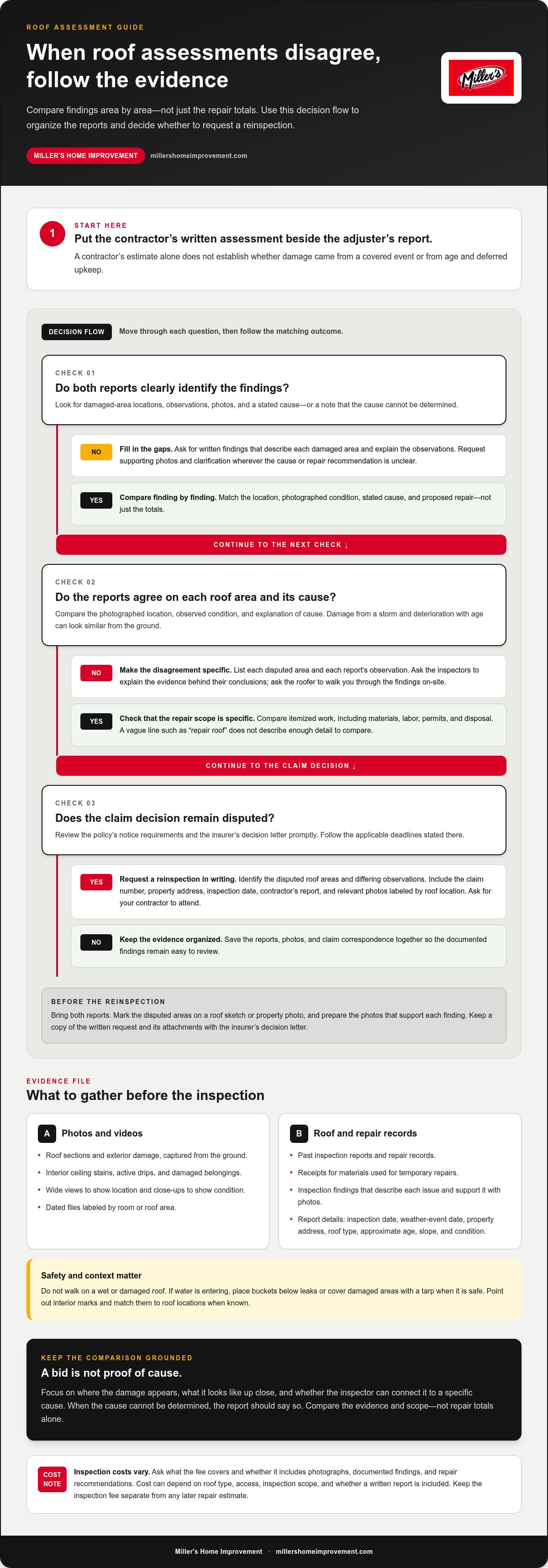
Compare the reports finding by finding, not just by their repair totals. A contractor’s estimate alone can’t establish whether damage came from a covered event or from age and deferred upkeep.
-
Obtaining an Independent Roofing Opinion
Choose an independent roofing contractor to inspect the roof and provide written findings. Review whether the assessment identifies each damaged area, explains its observations, and separates findings from recommended repairs. An insurer-preferred contractor may be one option, but homeowners have the legal right to choose their own roofing contractor. Evaluate the report’s clarity and supporting evidence, rather than relying on preference or sales claims alone.
-
Comparing Assessments and Repair Recommendations
Set the contractor’s report beside the adjuster’s report, then compare each finding by location and cause. Look for labeled photos with both wide and close views, specific descriptions, and a clear explanation when the cause can’t be determined. Compare repair recommendations and itemized scope, including materials, labor, permits, and disposal. A vague line such as “repair roof” doesn’t describe the work well enough to compare.
-
Considering the Inspection Cost
Ask what the inspection fee covers and what deliverables are included before scheduling. Costs can depend on roof type, access, inspection scope, and whether a written report is included, so there’s no single amount that fits every roof. Clarify whether the fee includes photographs, documented findings, and repair recommendations. Keep the inspection cost separate from any later repair estimate so you can evaluate each decision clearly.
-
Handling Disagreements About Roof Damage
List the specific findings that differ, then ask the inspectors to explain the evidence behind each one. Compare the photographed location, observed condition, and stated cause instead of treating different repair totals as proof. Ask the roofer to walk you through the findings on-site. If the claim decision remains disputed, request a reinspection with your contractor present and bring both reports.
Documents to prepare before an inspection
Organize your records before the inspection so the roofer can compare visible conditions with your roof’s history. Preparing these documents before getting a second opinion on roof damage helps the inspector assess the findings in context.
-
Documenting Roof and Interior Damage
Photograph and video roof, exterior, and interior damage before repairs begin. From the ground, capture affected roof sections; indoors, record ceiling stains, active drips, and damaged belongings. Include wide views that show each area’s location and close-ups of the damage. Don’t walk on a wet or damaged roof. If water is entering, place buckets below leaks or cover damaged areas with a tarp when it’s safe.
Keep receipts for materials used for temporary repairs. These costs may be reimbursable through insurance. Save dated files together to show what changed after the storm and what temporary steps you took. Label images by room or roof area so they’re easier to discuss when getting a second opinion on roof damage.
-
Checking Inspection Report Contents
Ask for a written report that identifies the inspection date, weather-event date, and property address. It should describe the roof type, approximate age, slope, and current condition. What should a roof damage inspection report include? It should document each issue, explain its likely cause or state when the cause can’t be determined, and support the findings with photos. You can also ask for a repair timeline and an explanation of warranty coverage.
Keep a roof history file with records of past inspections and repairs. Professional inspection findings can help maintain a roof system warranty. A roofer may also identify damage that isn’t obvious from the ground, so arrange an inspection while waiting for the adjuster.
- Bring your organized records to the inspection and point out areas that may be overlooked, such as a ceiling stain beneath a roof section that looks intact from outside. Match each interior mark to its location, if known, and ask the inspector to record findings clearly. This creates a useful record for comparing the assessment with the adjuster’s report.
If documented storm damage requires repairs, storm damage repair services may be a relevant next step.
Requesting an insurance claim reinspection
The time to dispute a roof claim decision depends on the policy and claim circumstances. Read the policy’s notice requirements and the insurer’s decision letter promptly, then follow the applicable deadlines stated there.
- Identify the exact findings you want reviewed before contacting the claims department. Note each disputed roof area, the adjuster’s conclusion, and the contractor’s different observation. For example, if one report records damaged shingles and the other does not, identify their locations and supporting photos. A focused request keeps the reinspection centered on evidence, not just the difference between estimates.
- Send a written request for a reinspection and ask to have your contractor present. Include the claim number, property address, inspection date, and a concise explanation of the disputed findings. Attach the contractor’s report and relevant photographs, labeling each image by roof location. Keep a copy of the request and attachments with the insurer’s decision letter.
- Prepare for the site visit by organizing both reports and marking the areas in question on a roof sketch or property photo. During the inspection, ask the adjuster and contractor to review those locations together. Have the contractor demonstrate the reported conditions and explain the repair recommendations. Record any unresolved points so the insurer can address them in its follow-up.
- After the reinspection, compare the updated findings with the original decision. If the claim was denied, you can submit an independent roof inspection report as a supplement. Include its photographs, itemized findings, stated causes, and repair scope. Ask the insurer to acknowledge receipt and explain how the new material affects the decision. Keep copies of each submission and response together in one claim file.
There is no single deadline; it depends on your policy and claim circumstances. Check the policy and decision letter for the applicable time limit, and act promptly.
Storm damage versus wear and tear
Start with the reported storm date, then compare it with the location and pattern of each roof defect. A repair estimate alone can’t establish the cause.
- Match each finding to the weather event you’re documenting. Note the date and type of storm, then compare that timeline with dated roof photos, leak records, and earlier inspection reports. For example, a new ceiling stain after a storm may support a timeline, but it doesn’t prove the cause of roof damage by itself. Ask the inspector to explain how the evidence connects.
- Look for patterns across the roof rather than judging one mark in isolation. Ask the inspector to show the location of each suspected impact and describe it in measurable terms, such as strikes per test square or hail size when determinable. Compare these observations with nearby areas and photographs. A specific location and documented condition make the finding easier to evaluate against the storm timeline.
- Ask the report to distinguish sudden damage from gradual deterioration. For example, a lifted shingle course should be described by its location and length, with the cause stated or marked undetermined. Worn materials and deferred upkeep may coexist with storm damage, so an older roof’s overall condition doesn’t prove that every defect has the same cause. The report should explain each finding separately.
- Compare the adjuster’s and contractor’s explanations for every disputed area. Focus on differences in observed damage, cause, and proposed repair, not simply whether the totals match. If evidence points to both wear and storm impact, ask for those conditions to be documented separately. This gives the insurer a clearer basis for reviewing the claim and ties repair decisions to specific findings.
If documented storm damage needs repair, request storm damage repair to address the affected roof areas.
Miller's Home Improvement: Residential Roofing
Miller's Home Improvement can help when documented roof damage calls for repairs or replacement. Its residential roofing services are a practical next step for homeowners who have compared inspection findings and need to address the roof itself. Share your reports and photos to explain the areas in question and the work you’re considering.
For flat roofs, Miller's Home Improvement offers PVC and EPDM systems, with the right approach depending on the roof and project scope. Commercial roofing is also available for property owners assessing damage to a business property. Clear documentation keeps the conversation focused on observed conditions and repair needs, rather than assumptions about the cause.
Move Forward With a Clear Roofing Plan
Once the inspection evidence is organized, focus on the roof’s next practical need. A claim decision and a sound roof are related, but separate concerns. The priority is understanding which conditions need attention, what work addresses them, and how to plan repairs without confusing an insurance disagreement with the roof’s physical condition.
Getting a second opinion on roof damage can give you clearer documentation and more specific questions as you consider next steps. Use the findings to discuss the work required, identify unresolved concerns, and decide how to protect the property while planning repairs. A clear scope gives you a useful basis for discussing the project.
Miller's Home Improvement can discuss residential roofing needs and help you consider a practical path forward for your roof. Contact Miller's Home Improvement to discuss your roofing project and take the next step with confidence.
Frequently Asked Questions
How to get a second opinion on roof damage?
Getting a second opinion on roof damage starts with an inspection by a qualified roofing professional who hasn’t prepared the first assessment. Share the original report, estimate, and claim correspondence, but ask the inspector to examine the roof independently. Request labeled photos and a written explanation of each issue, including whether it needs repair now or can be monitored. Don’t climb onto the roof yourself.
Who can provide an independent roof damage inspection?
An independent roofing contractor or roof consultant can assess damage, provided they disclose any connection to the first contractor or proposed repair work. Ask whether the inspection is visual or includes accessible attic areas, and whether you’ll receive photos and written findings. For a complex concern, such as suspected structural movement, ask whether a relevant building specialist should also evaluate it.
How to compare roof repair estimates and inspection reports?
Compare each estimate with the inspection findings, not just the final total. Check whether both documents identify the same roof areas, materials, repair method, and scope of work. For example, one proposal might address a damaged flashing detail while another includes nearby shingles; ask why the scopes differ. Clarify exclusions, cleanup, and how concealed damage would be handled before choosing.
How to document roof damage before getting a second opinion?
Record the date you noticed the issue and take clear photos from the ground or another safe location. Capture the full roof slope and close-ups of visible concerns, such as lifted shingles, fallen debris, or a ceiling stain, and keep the original files. Note when leaks appear and which rooms are affected. Save inspection reports, repair proposals, and claim messages together for the inspector.
How to get a second opinion on an insurance roof damage claim?
Ask a qualified roofer to inspect the roof independently, then compare the written findings with the insurer’s assessment and note specific differences in damage or repair scope. Give your insurer the new documentation and ask how to submit it for review. A contractor’s inspection can provide evidence, but it doesn’t determine the insurer’s coverage decision. For Detroit-area storm damage, Miller's Home Improvement offers Storm Damage Repair and insurance claim assistance.
How to find a licensed and insured roofing inspector in my area?
For a Detroit-area inspection, ask prospective roofers for their business name, proof of insurance, and details of the license required for the work they perform in Michigan. Verify licensing through the relevant state authority and confirm insurance with the issuing company. Ask for a written inspection scope and sample report. Before booking, clarify whether the inspection is separate from a repair estimate.


