
A contractor can be licensed and insured without having approval for your community’s roofing project. Choosing among HOA-approved roofing contractors in Michigan means understanding the association’s process and selecting a contractor who can work to its requirements. For condominium modifications, the association of co-owners must approve or deny submitted plans and specifications not later than 60 days, according to the Michigan Legislature.
Before hiring HOA approved roofing contractors in Michigan, get clear answers about who will handle the roof, which materials and styles are acceptable, and what the board needs to review. Rules vary by community, so start with the governing documents and the association’s approval process.
This guide explains how to coordinate a roofing plan with your HOA, review a contractor’s credentials and project proposal, and choose materials and styles that suit Michigan homes while meeting community standards. It also explains how roof responsibilities can differ between a single-family home and a condominium community.
Key Takeaways
- Read the community’s governing documents to understand who is responsible for the roof and what approval steps apply.
- Prepare a clear submission that aligns the proposed roofing color, material, and visible profile with community standards.
- Plan project details such as material selection, removal and cleanup, permits, and warranty coverage before work begins.
- If a preferred roofing product is unavailable, consider alternatives with a similar color, profile, and overall appearance.
Coordinating roofing work with subdivision HOA requirements
Start with the governing documents, then compare the proposed roof with the community’s written standards. Approval steps, responsibility, and review requirements depend on the property type and association rules.
HOA Roofing Approval Documents
What documents does a Michigan HOA require for roofing approval? Check the declaration, bylaws, architectural standards, and application form for required plans and specifications. A complete submission can identify the proposed material, manufacturer, color, visible profile, and scope of work. Include product details and the contractor’s written proposal if the association’s process requires them.
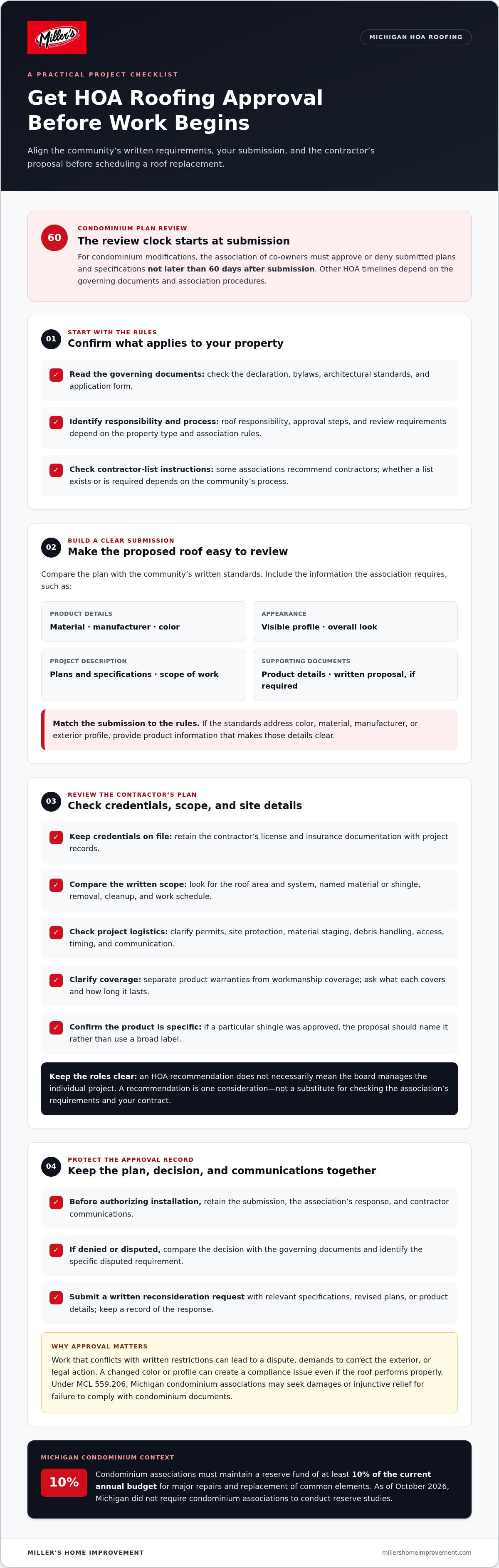
For condominium projects, the association of co-owners shall approve or deny the proposed improvement or modification not later than 60 days after the plans and specifications are submitted by the co-owner proposing the improvement or modification to the association of co-owners, according to Michigan Legislature. That 60-day period begins with submission.
HOA Roofing Requirement Compliance
Compare the proposed roof with the association’s written requirements before scheduling work. Check whether its rules address color, material, manufacturer, or exterior profile, then submit matching product information. How long does HOA roof approval take in Michigan? For condominium improvements, the approval period is not later than 60 days after plans and specifications are submitted; other HOA timelines depend on their governing documents and procedures.
For a denial or contractor dispute, review the decision against the declaration and architectural rules, then submit a written request for reconsideration with the relevant specifications. Michigan condominium associations must maintain a reserve fund of at least 10 percent of the current annual budget for major repairs and replacement of common elements. As of October 2026, Michigan did not require condominium associations to conduct reserve studies.
Risks of Replacing a Roof Before Approval
What are the risks of replacing a roof before HOA approval? Work that conflicts with written restrictions can lead to a dispute, demands to correct the exterior, or legal action. Michigan condominium associations may seek damages or injunctive relief for failure to comply with condominium documents under MCL 559.206. A changed color or profile can create a separate compliance issue even when the roof performs properly.
How can you appeal a Michigan HOA roofing denial or dispute contractor requirements? Compare the denial with the governing documents, identify the disputed requirement, and send the board a concise written appeal with revised plans or product details. Keep the submission, response, and contractor communications together before authorizing installation.
Preferred roofing contractors for HOA residents
Do Michigan HOAs maintain an approved roofing contractor list? Some associations recommend contractors, while homeowners contract directly with the roofing company. Whether a list exists or is required depends on the association’s process. A recommendation also does not necessarily mean the board manages the individual project.
Treat the association’s contractor guidance as one consideration, then compare it with the project requirements. A residential roof replacement needs a clear scope covering the roof area and system, shingle or other material, removal and cleanup, and work schedule. The written proposal should describe the planned work plainly so you can compare it with the HOA’s conditions.
Before selecting a contractor, organize the practical details that affect the decision:
- Record any HOA contractor-list instructions and whether the board’s recommendation is optional.
- Review the proposal’s scope, materials, and cleanup responsibilities alongside the approved plan.
- Keep license and insurance documentation with the project records.
- Compare proposed work with community requirements for roof color, material, and visible profile.
- Save written communications about project access, timing, and responsibilities.
These steps help distinguish a contractor preference from an architectural requirement. For example, a Detroit homeowner may prefer a particular shingle, while the community’s standards focus on its color or profile. A proposal is easier to assess when it identifies the product and scope clearly, rather than relying on a vague description such as “new roof.” This also helps clarify who handles removal, cleanup, and communication during installation.
Use the association’s preferred list as a starting point, not a substitute for understanding its requirements. A homeowner remains responsible for knowing the project’s contractual terms when contracting directly with a roofing company. For a clear next step, review roof replacement planning alongside the community’s written criteria.
Roofing contractor project practices for Michigan associations
Replacing a roof in a Michigan community takes more than planning the installation. Align the schedule, materials, site protection, and communication with the association’s expectations. A written plan helps residents understand when crews will arrive, where materials will be staged, and how debris will be handled.
Review the contractor’s quote before authorizing work. A useful proposal should identify materials, removal and cleanup, permits, and any licensing and insurance costs. Compare each item with the approved project scope. For example, if the association approved a specific shingle product, the proposal should name it rather than use a broad label such as “architectural shingle.”
Separate product warranties from workmanship coverage. Ask what each covers and how long it lasts, then keep the answers with the contract and product records. A product warranty concerns the roofing material, while workmanship coverage concerns installation. Clear documents help you understand the stated protections if an issue arises.
Weather also affects scheduling. A roofing guide identifies 50-70°F as favorable shoulder-season installation weather. That range can inform planning, but the project schedule should also account for the specific roof system and conditions on site. Share the proposed work window with the association, then coordinate access, deliveries, and debris removal with neighboring residents.
- Confirm the approved materials match the contractor’s written scope.
- Keep the proposal, permit details, and warranty documents together.
- Agree on communication for schedule changes and site cleanup.
- Document visible progress and any change to the approved plan.
Product details can clarify expectations. CertainTeed Landmark PRO shingles are described as having a 130 mph wind rating. That specification is one product detail, not a substitute for checking the association’s approved color, profile, and material requirements. Keep product selection and workmanship records with the project file, so the association and homeowner can refer to the same agreed scope.
Roofing materials and HOA-friendly aesthetics
Start with the association’s architectural standards, then compare the proposed material, color, and visible profile. These details affect how the roof looks from the street and whether it fits the community’s established appearance. For example, a dark shingle with a pronounced profile may look different from a flatter, lighter option, even when both suit the home’s roof design.
Ask for product samples or clear manufacturer information to support the review. Compare the proposed color and profile with the written standards, rather than relying on a general description such as “gray shingles.” If an HOA-approved shingle has been discontinued, the community may evaluate available products with a similar color, profile, and overall appearance. Keep the product details with the approval record.
- Compare the manufacturer and product name with the proposed submission.
- Review color and profile against nearby homes and written standards.
- Keep samples, product details, and approval documents together.
- Submit a comparable alternative if the original product is discontinued.
An inspection provides useful context before homeowners settle on a roofing plan. Roof condition, repair history, and roofing system type can affect whether repair or replacement is the practical next step. A roofing inspection evaluates roof condition and maintenance, while a reserve study addresses broader financial planning for association assets. Their different purposes matter when a board reviews a project proposal.
Choose an option that satisfies the association’s appearance criteria while fitting the roof’s actual needs. A product match should account for both visible design and the specified roofing system, rather than selecting by color alone. Share the proposed material details with the association before installation, and preserve its written decision with the project records. Discuss roofing material options as you plan a community-conscious replacement.
Miller's Home Improvement: Residential Roofing
Miller's Home Improvement provides residential roofing for Detroit homeowners planning a roof repair or replacement. Once you understand your association’s approval process and have the project requirements, arrange roofing work that fits the home and approved scope. Clear material and project details help keep the work aligned with your submission.
For a home roof project, Miller's Home Improvement can discuss the residential roofing work involved and help you move from planning toward installation. Its roofing services also include commercial roofing, PVC flat roofing, and EPDM flat roofing for properties with those systems. To discuss your roofing project, contact Miller's Home Improvement.
Move Your Roofing Plans Forward
Turn the community’s requirements into a clear project plan. Keep the approved scope, material choice, and installation details aligned as planning moves forward. This gives you a practical basis for coordinating with your association and making decisions about the home while preserving its appearance.
Choosing among HOA-approved roofing contractors in Michigan is one part of the process, but the work must also suit the property. Miller's Home Improvement offers residential roofing, commercial roofing, and PVC flat roofing. If your project needs roofing work, match the service to the building and its roofing system.
Contact Miller's Home Improvement to discuss your roofing project. A thoughtful plan can help you approach the next stage with clarity and confidence.
Frequently Asked Questions
Are you licensed and insured?
Yes. Miller's Home Improvement is licensed and fully insured. For Detroit homeowners coordinating roofing work with an association, this answers a common question about contractor qualifications. Keep the contractor’s documentation with your project records, alongside the association’s approval and the agreed scope. These records help clarify responsibilities if project details or site conditions need discussion during the work.
Can an HOA Recommend a Roofing Contractor to Homeowners?
Yes. An HOA may recommend a roofing contractor, while the homeowner contracts directly with the roofing company. A recommendation and architectural approval are separate: one concerns the contractor, the other the proposed work. Detroit homeowners can document the approved scope and contract terms separately, including who coordinates access and communicates project changes.
How to find HOA-approved roofing contractors in Michigan?
Start with the association’s written contractor guidance, then determine whether its list is a recommendation or a project condition. Compare the proposed scope with the approved roofing plans, including material and exterior appearance. For Detroit homeowners, Miller's Home Improvement is licensed and fully insured. Matching the proposal to association requirements helps keep contractor selection and architectural review aligned.
What roofing rules can Michigan HOAs enforce?
HOA rules may set standards for roof color, material, and visible profile, subject to governing documents and applicable law. Michigan condominium co-owners may not change a unit’s exterior appearance except as condominium documents allow under MCL 559.147. Under MCL 559.305, HOA provisions prohibiting or requiring approval for an energy-saving improvement are invalid and unenforceable.
How to get HOA approval for a roof replacement in Michigan?
Submit the association’s application with plans and specifications identifying the proposed roofing material, color, manufacturer, and visible profile. Keep the submitted documents and the association’s decision with your project file. For condominium modifications, the association of co-owners must approve or deny the proposal not later than 60 days after receiving the plans and specifications, according to Michigan Legislature.
How to verify a Michigan roofing contractor's license, insurance, and credentials
Ask for the contractor’s license and insurance documentation, and keep it with your project records. Compare the written proposal and product details with the HOA’s requirements.


