
A commercial roof can look intact from the ground and still have storm damage. Identifying storm damage on commercial roofs means looking for wind-lifted materials, hail impacts, water intrusion, blocked drainage, and other changes that can weaken the roof’s weatherproofing. On a flat roof, water remaining more than 48 hours after precipitation is considered ponding and may signal a drainage or roof-system problem.
It’s understandable to look first for obvious storm damage on commercial roofs, such as a leak or scattered roofing materials. But smaller signs can be easy to miss, and water may travel beneath a low-slope roof before appearing indoors. This guide explains what storms can damage, what to photograph for an insurance claim, and how to spot interior moisture and hail impacts. It also outlines how a safe professional inspection can reveal damage that isn’t visible from the ground.
Key Takeaways
- Look beyond obvious roof damage: wind, hail, blocked drainage, and standing water can all compromise a commercial roof.
- For an insurance record, capture wide and close-up photos when safe, and log the storm conditions and any temporary protective measures.
- Interior stains, damp ceiling tiles, and moisture near roof penetrations can point to water intrusion, even when the leak’s roof entry point is elsewhere.
- Hail marks vary by roofing material, and some membrane impacts may be difficult to see without a professional inspection.
1. What Causes Roof Storm Damage?
Wind, hail, heavy rain, ice, and fallen limbs can damage different parts of a commercial roof. Wind may lift membrane edges, loosen flashing, or pull roofing materials away from seams. Hail can bruise shingles, strip protective granules, and damage rooftop equipment. On a flat roof, water remaining more than 48 hours after precipitation is ponding. Standing water adds structural load, accelerates membrane deterioration, and can compress insulation, allowing the affected area to spread during later storms.
Damage can remain hidden from the ground. After a storm, look from a safe position for scattered roofing materials, damaged roof surfaces, blocked downspouts, or displaced edge metal. Inside, check ceiling tiles, walls near the roofline, and areas around roof penetrations for stains, dampness, or active drips. Water can travel beneath a low-slope roof, so an interior leak may appear far from the roof opening. Unchecked moisture can damage insulation and interior finishes and may contribute to mold or mildew.
How can you tell whether storm damage requires emergency repairs or full roof replacement? Active leaks, exposed openings, or signs of structural damage call for a prompt professional assessment and protection of affected areas. Keep occupants away from the damaged area and avoid DIY roof repairs. Replacement depends on the extent of damage and whether repairs can restore the roof membrane and underlying roof.
What local building codes and permit requirements apply to commercial roof storm repairs? Requirements depend on the property’s municipality and the project’s scope. Before permanent work begins, the roofing contractor should establish which local code and permit steps apply to that address and project.
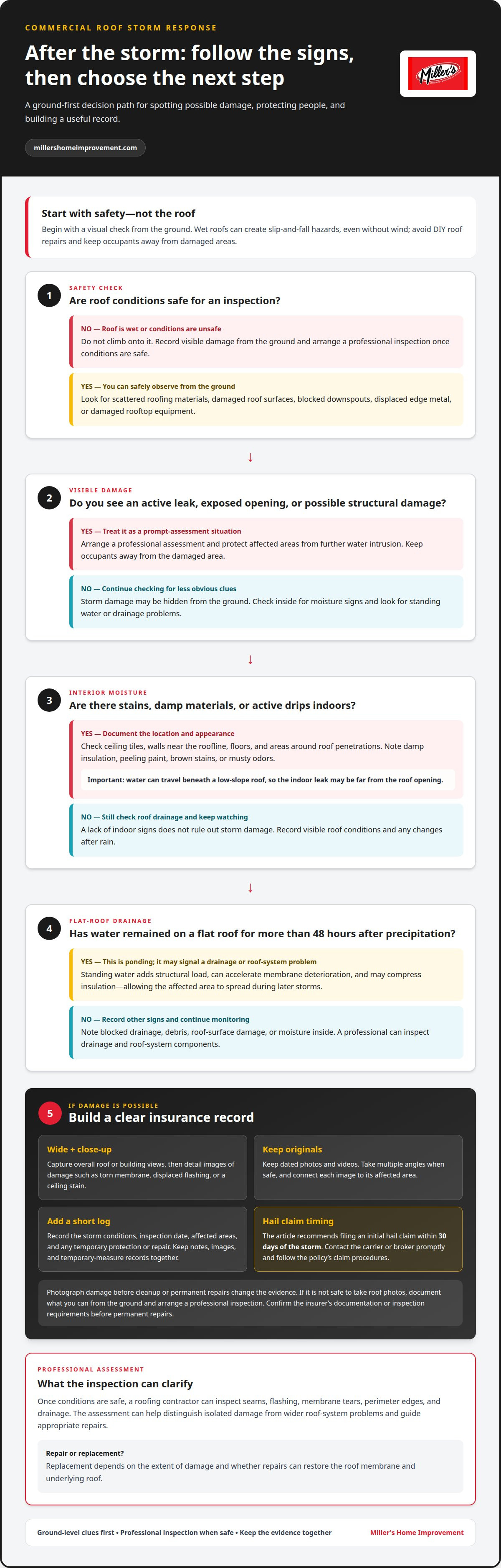
How do you safely inspect a commercial roof after a storm? Start with a ground-level visual check and note visible damage without climbing onto the roof. The National Institute for Occupational Safety and Health (NIOSH) warns that wet roofs can pose slip-and-fall hazards even without wind. Once conditions are safe, a roofing contractor can inspect seams, flashing, membrane tears, perimeter edges, and drainage. This professional assessment helps distinguish isolated damage from wider roof-system problems and guides appropriate repairs.
2. Photographic documentation for insurance claims
After severe weather, document visible damage before cleanup or permanent repair changes the evidence. Photograph the roof only when conditions are safe; otherwise, record damage from the ground and arrange a professional inspection. For hail claims, the article recommends filing an initial claim within 30 days of the storm, while evidence is fresh. Contact the insurance carrier or broker promptly and follow the policy’s claim procedures.
Build a clear record rather than collecting isolated close-ups. Take wide photographs showing the roof area or building elevation, then close views of specific damage, such as a torn membrane, displaced flashing, or a ceiling stain. Photograph multiple angles when safe, and keep the original files with their dates. A short written log can connect each image to the inspection date, storm conditions, affected area, and any temporary protection or repair.
- Capture overall roof and building views, then detail images of individual damage.
- Record interior signs, such as a wet ceiling tile, alongside the affected room or area.
- Note standing water, blocked drainage, damaged rooftop equipment, and visible debris.
- Keep inspection notes, photographs, videos, and records of temporary measures together.
When should a commercial roof inspection be performed after severe weather? Properties with visible roof damage, interior leaks, standing water, significant debris, damaged rooftop equipment, or possible structural damage should be inspected as soon as possible after the storm, once conditions are safe. Roof age, prior damage, storm severity, and critical building operations also help determine inspection priority.
What tools and documentation help identify and record commercial roof storm damage? A camera or phone, dated photographs, video, and a written storm and inspection log create a useful record. A professional inspection can document seams, flashing, drainage, and repair needs. Infrared cameras may help locate concealed moisture beneath the roof surface.
Before permanent repairs, confirm the insurance carrier’s documentation or inspection requirements. Temporary measures can limit further water intrusion while preserving evidence of the original condition. A thorough commercial roof storm damage assessment can help connect observed damage with practical repair documentation.
3. Water leaks and interior moisture signs
Start inside the building, where ceiling tiles, walls, and floors can reveal water intrusion. Check for fresh brown stains, peeling paint, damp insulation, or musty odors near rooflines and rooftop penetrations. Dark spots on attic walls or the underside of a roof deck can signal moisture, and wet insulation may no longer perform properly. Mark each affected room and compare its location with roof features above, such as seams, drains, or equipment curbs.
A leak’s indoor location doesn’t necessarily show where water entered. On a low-slope commercial roof, moisture can travel many feet beneath the surface before appearing at a ceiling joint or wall. Photograph the visible damage, note whether it changes after rain, and have a roofing professional assess the membrane and underlying areas. Mold growth can also be a warning: visible mold may have been spreading for 18 days before anyone notices it.
- Record the location and appearance of stained ceiling tiles, wall marks, and damp flooring.
- Look for water around roof penetrations, interior walls near the roofline, and equipment areas.
- From the ground, check for fallen branches, scattered roofing materials, or displaced roof components.
- After hail, note damage to ground-level property, such as dented vehicles, cracked fencing, or torn screens.
Exterior clues can support an insurance claim, but the absence of visible signs doesn’t prove the roof is undamaged. Hail impacts may be subtle, and storm damage can remain hidden until moisture reaches the interior. A professional inspection can trace water pathways, examine roof surfaces, and assess whether repairs address the cause or broader replacement needs consideration. Keep occupants away from areas with sagging ceilings, active drips, or water near electrical fixtures, and document changes as they develop. A prompt assessment helps connect interior signs with roof conditions before more moisture affects insulation, finishes, or building operations.
4. Hail damage on modified bitumen, TPO, EPDM, and metal roofs
Hail damage varies by roofing material, so each system needs a specific assessment. On modified bitumen, hail can knock away protective granules or dimple the surface, weakening its protection from ultraviolet exposure. Impact fractures in TPO and EPDM membranes may not be visible to the naked eye. Metal roofing commonly shows dents, while hail can also puncture parts of a commercial roofing system.
Wind and rain can compound these impacts. High winds may lift or displace membranes, especially around edges, corners, seams, and penetrations. Wind-driven rain can then enter through damaged areas, while hail may damage rooftop HVAC equipment as well as the roof. Check equipment panels and surrounding roofing for impact marks, punctures, or openings. Serious roof storm damage can affect waterproofing and, in severe cases, structural stability.
Commercial property insurance terms determine which storm damage is covered and the applicable filing deadlines. Contact the carrier or broker promptly, follow its claim procedures, and document the damage; an initial hail claim within 30 days is recommended while evidence remains fresh. Some commercial property policies use wind and hail deductibles ranging from two to five percent of the building’s insured value, so the deductible can affect how a claim proceeds.
During an inspection, the adjuster may assess hail impacts within a test square usually measuring 10 by 10 feet. That sample is one part of documenting roof condition, not a substitute for recording damage across the roof and to rooftop equipment. Photograph marked areas and note the material, location, and visible impact. A professional assessment can help connect surface damage with repair needs.
For an assessment of storm-related roof damage and repair needs, schedule commercial roof storm damage repair.
Miller's Home Improvement: Commercial Roofing
Miller's Home Improvement provides commercial roofing and storm damage repair for property owners dealing with leaks, hail impacts, displaced materials, or damaged roof edges. Turn to the team when a storm inspection identifies damage that needs repair or when water intrusion calls for a closer assessment of the roof system.
For flat roofs, the right repair approach depends on the existing system and the location and extent of damage. Miller's Home Improvement installs and repairs PVC, EPDM, and Torch Down flat roofing systems, with repair work suited to the building’s needs. Clear photographs and inspection notes can help inform the repair discussion. Address active leaks or visible structural concerns promptly.
Contact Miller's Home Improvement to discuss commercial roof storm damage and the repair options for your property.
Turn roof findings into a practical plan
After a storm, the next decision is how roof work can fit the building’s operating needs. Consider which areas support essential equipment, what access limits affect the work, and how scheduling may interact with tenants or planned activities. A roofing professional can use these priorities to shape a practical scope instead of treating each observation as an isolated issue. A deliberate process for identifying storm damage on commercial roofs should lead to a clear plan to protect the property and manage the work ahead.
It also helps to connect the roof decision with ongoing facility planning. A repair may address an immediate concern, while broader roof needs can inform future maintenance and capital discussions. Miller's Home Improvement can discuss commercial roofing concerns and storm-related repair options in light of your building’s needs. Contact Miller's Home Improvement to talk through the next step. A considered plan can help you move forward with greater confidence.
Frequently Asked Questions
What Causes Roof Storm Damage?
Storm damage occurs when weather forces exceed a roof component’s ability to stay intact and shed water. The roof’s age, maintenance history, material, and exposed transitions all shape its vulnerability. When identifying storm damage on commercial roofs, consider the storm alongside the building’s prior condition. A maintenance record can help distinguish a new change from a pre-existing concern.
What Should a Post-Storm Roof Report Include?
A useful report makes its findings easy to act on. It can identify the roof system, locate each affected area using consistent labels, and separate directly observed damage from recommended work. For example, “north-side rooftop unit” is more useful than “near the equipment.” Clear descriptions help facility teams track follow-up and compare later inspections at the same locations.
What types of storm damage commonly affect commercial roofs?
Commercial roofs can experience physical impacts, displaced components, water entry, or strain on the roof structure. The effects depend on the roof system and storm conditions. For a facility with rooftop equipment, include the equipment and surrounding roof area in the assessment. This broader view helps owners understand whether the concern is limited to one component or affects connected parts.
How can you distinguish hail damage from normal wear on a commercial roof?
Compare suspected impacts with the roof’s maintenance history and condition before the storm. A sudden change documented after hail may support a storm-related assessment, while gradual deterioration may have developed over time. The distinction can be difficult on membranes where impact fractures aren’t visible. A roofing professional can assess the material and available records without treating every mark as hail damage.
What are the signs of wind damage on commercial roofing systems?
Wind damage can appear as movement or separation in components designed to hold the roof assembly in place. The location and pattern of affected areas can help an inspector assess how wind interacted with the building. During the inspection, note whether damage is concentrated around roof transitions or appears across broader areas. Avoid climbing onto the roof to investigate suspected movement.
Should businesses hire a roofing contractor or public adjuster to assess storm damage?
Engage a roofing contractor to assess roof condition and repair needs. A public adjuster addresses the insurance-claim side, so the roles serve different purposes. If you need both technical findings and claim assistance, keep the contractor’s roof assessment available for the claim discussion. For Detroit properties, identifying storm damage on commercial roofs starts with understanding the physical condition and documenting the building’s needs.


