
A roof claim doesn’t automatically mean a higher homeowners insurance premium. In Michigan, insurers typically don’t raise an individual homeowner’s rate for hail or wind damage; rates generally reflect storm history across the homeowner’s ZIP code. An insurance claim roofer in Detroit can document roof damage and explain the repair scope, while your insurer determines coverage and payment.
It’s understandable to worry that filing a claim could affect what you pay, especially when roof damage raises questions about repair costs and next steps. This guide explains what may influence premiums, how a roofer can support communication with your insurer, and what to review in an estimate when choosing a local contractor. It also explains how storm damage differs from wear and tear, and why a clear scope of work helps you understand proposed repairs. The goal is to help you approach the claim with confidence and make informed decisions about your roof.
Key Takeaways
- A roof claim doesn’t automatically mean a premium increase; storm history across your ZIP code can factor into rates.
- Having a roofer document visible damage before the adjuster visit can help clarify the condition of the roof and the work being considered.
- Review the estimate’s scope and payment basis carefully, and understand the written appraisal option if you and your insurer disagree about the loss amount.
- Choose a local roofer with appropriate licensing and insurance, and look for clear communication about the repair work.
Will my insurance premiums increase if I file a roof claim?
Filing a roof claim does not automatically increase your homeowners insurance premium. In Michigan, insurers typically don’t raise an individual homeowner’s rate after hail or wind damage. Rates generally reflect storm history across the homeowner’s ZIP code. A claim may still affect your insurance history, so distinguish the cause of damage from the decision about repairs.
Coverage commonly applies to sudden events, including wind, hail, fallen trees, lightning, fire, and severe storms. Normal wear, aging shingles, neglected leaks, and poor maintenance typically aren’t covered as storm losses. A roof inspection before filing can help document damage and assess whether it appears consistent with a recent event. Keep photographs and a written report for the insurance adjuster.
Read the policy’s deadline and deductible terms before deciding how to proceed. The deductible is your share of the covered loss, not a contractor’s estimate.
Most Michigan HO-3 policies include replacement cost value coverage. Replacement cost coverage bases payment on replacing damaged property, subject to policy terms; actual cash value accounts for depreciation. That difference can affect the initial payment and what remains available for repairs or replacement. After claim approval, homeowners can generally choose their roofer for covered work.
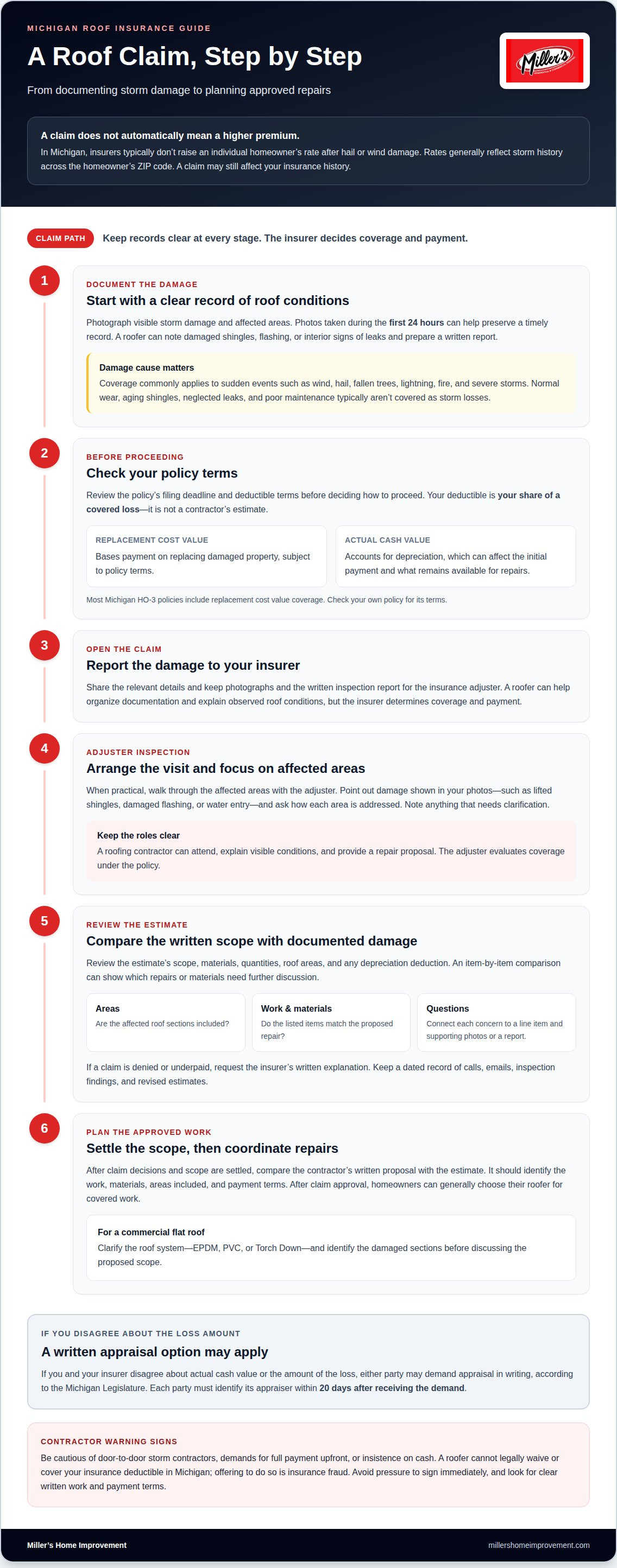
If you and your insurer disagree about actual cash value or the amount of the loss, either party may demand appraisal in writing, according to the Michigan Legislature. Each party must identify its appraiser within 20 days after receiving the demand. A careful inspection, report, and estimate help clarify the disputed scope before repair or replacement moves forward.
How Can a Roofing Contractor Help with My Roofing Insurance Company?
A contractor can document roof conditions, organize photos, and explain repair options before the adjuster’s visit. A roofer cannot legally waive or cover your insurance deductible in Michigan; offering to do so is insurance fraud.
Preparing Before the Adjuster Visit
Before the inspection, a roofing contractor can photograph visible storm damage and record affected areas. Photos taken during the first 24 hours can help preserve a timely record. The contractor can also note damaged shingles, flashing, or interior signs of leaks, then prepare a report for discussion with the insurance adjuster. This gives the visit a clear focus without deciding coverage for the insurer.
Proposal, Scheduling, and Installation
A roofing proposal should describe the work, materials, and areas included so you can compare its scope with the adjuster’s estimate. For commercial properties, clarify whether the roof uses EPDM or another system, such as PVC or Torch Down. These are different flat-roof systems, and the proposal should identify the one that applies. Once the scope and claim decisions are settled, the contractor can explain installation steps and coordinate the project, including a roof replacement where needed.
Roofing Insurance Claim Steps
Keep the insurance claim process organized: document the damage, report it to your insurer, arrange the adjuster’s inspection, review the estimate, then plan approved work. A contractor can attend the inspection, explain observed roof conditions, and provide a repair proposal. The adjuster makes coverage decisions. For a commercial roof, identify the damaged sections and system type before discussing the proposed scope.
Contractor Scams and Warning Signs
Be cautious of contractors who appear at your door after a storm, demand full payment upfront, or insist on cash. Avoid agreements that offer to absorb your deductible. That offer is insurance fraud in Michigan. A written proposal should identify the work and payment terms clearly, rather than pressuring homeowners to sign immediately. For project planning, you can schedule your free in-home estimate.
Reviewing the adjuster's estimate and scope of loss
If your insurer denies or underpays a Michigan roof claim, request its written explanation and compare the estimate with the documented damage. An item-by-item review can show which repairs, materials, or roof areas need further discussion.
Communicating With Adjusters
Michigan homeowners work with their insurance adjuster or get help from a licensed public adjuster. Keep communication focused on the loss: identify each affected roof area, describe the observed damage, and connect questions to specific estimate line items. If an item appears to be missing, provide supporting photographs or a contractor’s report. Clear records help keep discussions focused on the damage and proposed restoration.
Meeting With Insurance Adjusters
During a roof inspection, walk through the affected areas with the adjuster when practical. Point out damage documented in photographs, such as lifted shingles, damaged flashing, or water entry. Ask how the estimate addresses each area and note anything that needs clarification. A roofing specialist can explain visible conditions and the work needed for repair or replacement, while the adjuster evaluates coverage under the policy.
Working With Insurance Adjusters
Review the estimate’s scope, materials, quantities, and any depreciation deduction. Actual cash value reflects depreciation, while replacement cost coverage is based on replacing damaged property under the policy terms. Use the estimate and inspection report to identify differences that need explanation.
Keep a dated record of calls, emails, inspection findings, and revised estimates. In Michigan, the property owner works with the insurer’s adjuster or a licensed public adjuster. A roofing contractor can provide a repair scope and explain construction details, but does not decide coverage or act as a public adjuster. Separate the physical repair assessment from the insurer’s coverage decision, then address each disputed estimate item with supporting documentation.
Choosing a licensed, insured local roofer
A roof insurance claim involves more than choosing the lowest proposal. Property owners need a contractor who can document roof conditions, explain the repair scope, and complete the approved work. In Detroit and Metro Detroit, prioritize a thorough inspection and clear written communication. Check a Michigan roofing contractor through Michigan LARA, and review its insurance documentation to understand coverage for the work.
Time in business also offers useful context. Metro Detroit homeowners are advised to look for a roofer continually in business for more than 10 years. Longevity alone doesn’t prove workmanship, but it gives owners a track record to consider alongside licensing, insurance, and a detailed proposal. A local contractor should be able to describe how the listed work addresses the documented damage, rather than treating every roof as the same project.
- Review the documentation. Confirm the written proposal identifies the roof areas, materials, and repair or replacement work being considered.
- Connect scope to evidence. Look for photos and inspection notes that explain why each proposed task relates to the reported damage.
- Keep claim decisions distinct. The insurer decides what is covered and approved; the roofer describes the construction work and its scope.
- Read payment terms carefully. Don’t pay the full amount upfront, and be wary of contractors insisting on cash or offering to cover your deductible.
Weather-related claims can feel urgent, but a door-to-door pitch after a storm isn’t a substitute for careful review. Take time to read the proposal and understand how the contractor will coordinate the work. A sound choice connects inspection findings, a written scope, and approved repairs without promising a particular insurance outcome.
For a roof inspection and a clear project estimate, request a roofing estimate.
Miller's Home Improvement
Miller's Home Improvement helps homeowners connect roof claim questions with practical roofing work in Detroit and across Southeast Michigan. When storm damage calls for a repair or replacement, the team can assess the roof, explain the proposed scope, and assist with the insurance claim process. The insurer decides coverage; clear documentation helps keep the repair plan tied to the roof’s condition.
Miller's Home Improvement provides Residential Roofing and Commercial Roofing for homes and businesses. Flat-roof projects include PVC, EPDM, and Torch Down systems. Whether you’re reviewing an estimate or planning approved work, discussing the project can clarify how the roof’s needs relate to the next steps.
Contact Miller's Home Improvement to discuss your roof and claim-related project.
Move Forward With a Clear Roof Plan
Turn the claim paperwork into a practical plan for your property. Keep the inspection findings and project scope together, then focus on the work the roof needs. This makes the next conversation specific: which areas need attention, what work is proposed, and how the project will move forward.
An insurance claim roofer in Detroit can connect roof documentation with the work ahead. Miller's Home Improvement offers Residential Roofing, Commercial Roofing, and PVC Flat Roofing for property owners planning roof repairs or replacement. Keep the completed project records with your home documents so the work and materials are easy to reference later.
To discuss your roof and claim-related project, contact Miller's Home Improvement today. Bring your questions and the estimate details that need discussion. A straightforward conversation is a good place to begin.
Frequently Asked Questions
Does Homeowners Insurance Cover Roof Damage?
Homeowners insurance may cover roof damage caused by a sudden event, depending on the policy and claim findings. For example, a wind-damaged roof may be treated differently from shingles worn down over time. The insurer evaluates the reported cause, affected areas, and policy terms. Review your coverage wording and exclusions to understand how damage to your Detroit property may be considered.
Are you licensed, insured, and certified in Michigan?
Miller's Home Improvement is licensed and fully insured in Michigan. Licensing and insurance are distinct from certification and don’t establish a separate certification. For a Detroit roofing project, these credentials clarify the company’s professional status. Your insurer, not the roofing contractor, determines whether a particular loss is covered under your policy.
Do you handle both residential and commercial roofing in Detroit?
Yes. Miller's Home Improvement provides Residential Roofing and Commercial Roofing in Detroit. The right project approach depends on the building and roof system: a home roof and a commercial flat roof can require different materials and work scopes. The company also offers PVC Flat Roofing. Describe the property type and roof concern when discussing the work.
Should I call a roofer or my insurance company first?
Report suspected storm damage to your insurer and arrange an inspection to understand the roof’s condition. An insurance claim roofer in Detroit can document visible damage and explain possible repair work, while your insurer handles the claim decision. Keep the insurer informed about the inspection and proposed work. Before authorizing a larger project, review the insurer’s decision and the contractor’s written scope.
How do I file a homeowners insurance roof claim in Detroit, Michigan?
Start by contacting your insurer through its claims process and describing the event and visible roof damage. Keep a record of the incident date, affected areas, and interior signs, such as a ceiling stain. An insurance claim roofer in Detroit can provide an inspection record to help you understand the roof’s condition. Save photographs and documents, then review the insurer’s decision before scheduling repairs.
What roof damage is typically covered by homeowners insurance in Michigan?
Michigan homeowners policies often cover damage from sudden events such as hail, wind, lightning, fire, fallen trees, or severe storms. A hail impact or a tree striking the roof are examples to report. Coverage depends on the policy and the insurer’s assessment of the cause. Aging shingles, neglected leaks, and ordinary wear are typically treated differently from sudden storm damage.


