
A commercial roof quote is useful only when its scope is clear. In Michigan, there is no single set price for a new commercial roof: the estimate depends on roof area, the existing assembly, the roofing system selected, site access, and repair needs. A licensed commercial roofer in Detroit should also explain what the estimate includes and provide clear information about licensing and insurance.
It’s reasonable to want a clear budget before planning a major roofing project. This guide explains what shapes a commercial roof estimate, how to review a contractor’s licensing and insurance, and what to consider when arranging local service. It also covers how PVC and EPDM flat roofing systems may fit a project and what information can help the estimate process move forward.
Key Takeaways
- See which project details shape a commercial roofing estimate and why a site-specific scope matters.
- Find out whether service coverage includes Wayne, Oakland, Washtenaw, Macomb, and Livingston counties.
- Learn what licensing and insurance can tell you when assessing a roofing contractor.
- Understand how to identify a suitable commercial roofing option and when to discuss your project with Miller's Home Improvement.
How much does a new commercial roof cost in Michigan?
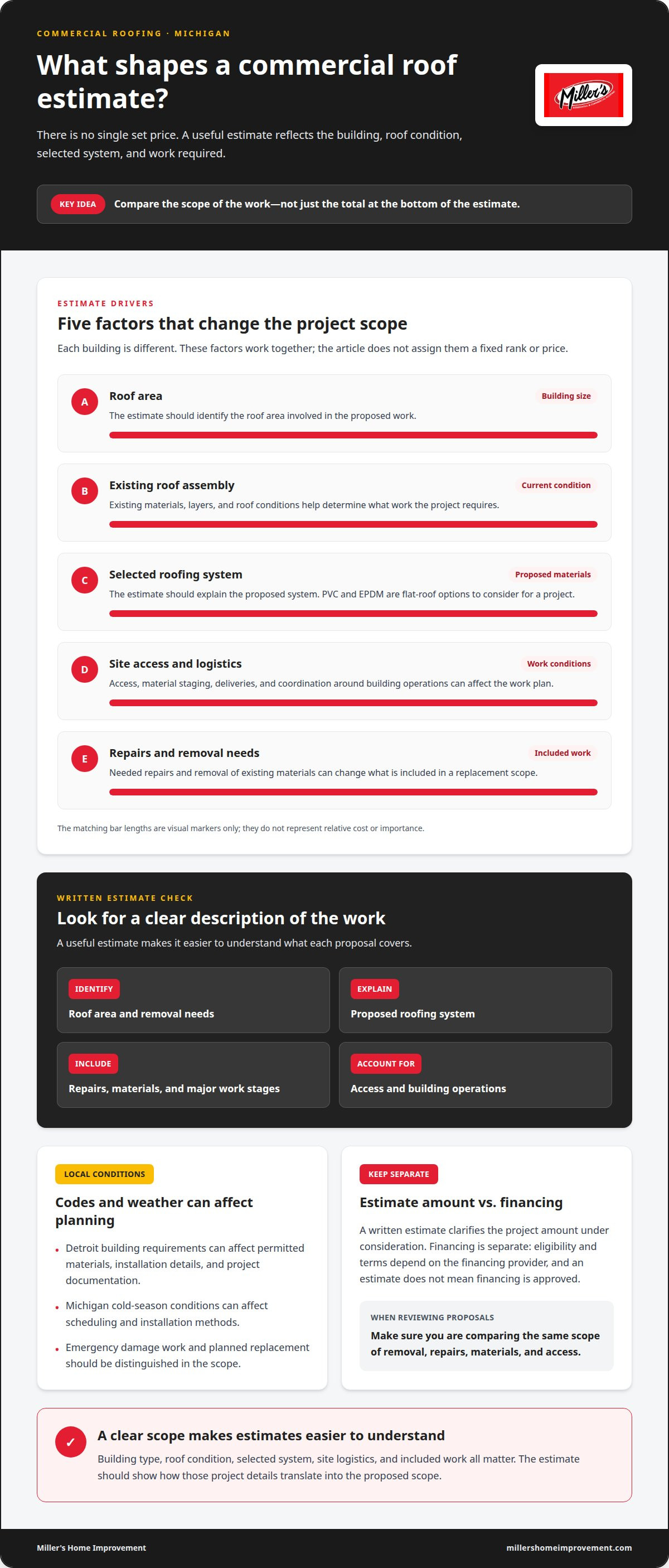
There is no single set price for a commercial roof in Michigan. An estimate depends on roof size, existing materials, access, needed repairs, and the replacement system.
Project Reviews and Estimates
Commercial roofing projects in Detroit can involve different buildings and roof conditions. A warehouse, retail property, and office building may each need a different scope. A useful estimate identifies the roof area, removal needs, proposed roofing system, and included work. Reviews may offer context about communication and project delivery, but they do not replace a written scope.
Financing for a qualifying commercial roofing project is separate from the roofing estimate. Loan eligibility and terms depend on the financing provider, while the estimate reflects the building’s condition and proposed work. A written estimate clarifies the project amount under consideration, but does not imply financing approval.
Local Codes and Weather
Detroit building requirements can affect permitted materials, installation details, and project documentation. The scope should account for the building’s use and roof assembly instead of assuming one approach suits every property. Michigan weather also matters: cold-season conditions can affect scheduling and installation methods. The U.S. Bureau of Labor Statistics notes that roofing work may be limited during winter months in northern states.
Commercial roofers may handle repairs and inspections, while maintenance plans depend on the contractor and project scope. Emergency response availability varies, so a repair estimate should distinguish urgent damage work from planned replacement.
Licensing and insurance are important parts of a contractor’s credentials. Reviews can provide context about project history, while an estimate should explain the proposed roofing system and major work stages. Compare scope details, not just totals: removal, repairs, materials, and access can change what each estimate covers. A clear estimate makes those differences easier to understand before you decide.
Service areas in Wayne, Oakland, Washtenaw, Macomb, and Livingston counties
As a trusted licensed commercial roofer Detroit businesses rely on, our service footprint across Southeast Michigan covers Wayne, Oakland, Washtenaw, Macomb, and Livingston counties. In Detroit, a building’s location can affect travel, site access, material staging, and coordination with occupants. Provide the property address and describe the roof type when arranging an estimate. These details help clarify whether the project involves commercial roof repair, installation, or replacement.
Detroit-area roofing projects can involve warehouses, offices, retail buildings, and other commercial properties, each with different operating needs. For example, work at an occupied retail building may need to be sequenced around entrances, deliveries, and customer access. A warehouse project may require coordination around loading areas and equipment. Clear planning helps organize the roofing work while building operations continue.
Commercial roof installation or replacement in Detroit has no fixed completion time. The schedule depends on roof area, existing layers, repairs, selected materials, weather, site access, and how work is phased around building operations. A project schedule can identify work stages, site access needs, and coordination points before installation begins.
- Wayne County: Detroit and nearby properties may need careful coordination around active building access.
- Oakland County: Office and retail sites can require scheduling around daily operations.
- Washtenaw County: Property use and roof configuration shape the installation plan.
- Macomb County: Delivery access and work zones can affect project sequencing.
- Livingston County: Travel and site logistics belong in the project plan.
Project management should clarify the work sequence, site coordination, and how updates are handled. A service guarantee is a separate written commitment, not an automatic part of every roofing project. Its terms should identify what work it covers and any stated limits. For a property in these counties, commercial roofing project planning starts with the building’s location, roof condition, and operational needs.
Contractor licensing and insurance
For a Metro Detroit roofing project, licensing and insurance are separate credentials. A license relates to authorization for particular work; insurance addresses risks covered by applicable policies. Requirements can vary by state and work type. Many states require a license for roofing work, but that general fact does not establish which credential applies to a specific Michigan project.
Start by identifying the license type and issuing authority relevant to the proposed work. Review the credential’s name, scope, and current status. If a commercial roof repair expands into replacement, confirm that the contractor’s stated qualifications match the revised scope. Clear documentation helps distinguish relevant credentials from broad claims about experience or craftsmanship.
Review insurance with the same care. Ask what policies cover the contractor’s work, who is insured, and whether coverage applies to the site and project. Roofing work above an occupied building presents different exposures from a small ground-level repair. Policy documents and project details should align: the word “insured” alone does not explain coverage limits or exclusions.
- Credential: Identify the license type, issuing authority, scope, and status.
- Insurance: Review the named insured, coverage period, and relevant project coverage.
- Scope: Match documentation to the proposed repair or replacement work.
- Records: Keep the estimate and credential documents with project files.
These steps help owners assess a licensed commercial roofer in Detroit without treating licensing and insurance as interchangeable. They also make it easier to compare roofing services based on documented qualifications, not claims alone. For example, a completed roof repair should have a defined scope and clear records of the work performed. Energy performance may matter to a building owner, but it does not replace credential review. In Michigan, begin by matching the project location and work description with the relevant documentation.
Which commercial roofing contractors are licensed in Detroit, Michigan?
A contractor’s Detroit address or commercial roofing experience does not establish license status. For a Michigan project, identify the contractor’s legal business name and the specific credential they say applies to the work. Compare those details with the relevant licensing authority’s records. This distinguishes a documented credential from a general claim of being “licensed.”
Use a consistent review process for each bid:
- Identify the business: Match the estimate’s legal name to the contractor’s credential records.
- Review the credential: Note its type, status, scope, and issuing authority.
- Match it to the project: Check that the credential relates to the proposed commercial roofing work.
- Review insurance separately: A license and an insurance policy serve different purposes.
For example, a Detroit warehouse estimate might cover repairs now and replacement later. Review credentials against the work actually proposed, not merely another service the business performs. If the scope changes, review the revised estimate and documentation together. Keep copies with the property’s project records.
Review insurance records separately and carefully. Confirm the named business and the policy information shown in the documents. A certificate or statement should not be treated as proof of every coverage detail. The contract scope, work location, and policy information should correspond clearly. This is especially relevant when roofing crews work above occupied offices or active retail spaces.
There isn’t a reliable contractor list based only on a Detroit location or online description. A licensed commercial roofer in Detroit is identified through credentials tied to the business and project, rather than search rankings or broad marketing claims. Use the same steps for each estimate, then compare the written scope, insurance records, and credential details side by side. For a commercial roof project, request a commercial roofing estimate to discuss the building’s needs and proposed work.
Miller's Home Improvement: Commercial Roofing
Miller's Home Improvement handles commercial roofing projects, from assessing roof concerns to planning repairs or replacement. If a commercial roof has leaks, visible wear, or damage, an evaluation can help define the next step. For flat-roof properties, PVC and EPDM systems are available; the existing roof and project needs guide the discussion. Residential Roofing is also available for property owners managing both building types.
Bring the property address, known roof issues, and relevant project documents to the estimate discussion. This gives the team useful context about the building and helps outline the work. The next step is a project-specific estimate, rather than a general price range that may not reflect the roof’s condition or scope.
Contact Miller's Home Improvement to discuss your commercial roofing project.
Plan the next step with confidence
A roof project is also an opportunity to plan around the building’s future use. Consider how the work fits upcoming maintenance, tenant schedules, and operational priorities. A clear scope gives property owners a practical basis for internal discussions and keeps decisions focused on the building’s needs.
Miller's Home Improvement handles commercial roofing, residential roofing, and PVC flat roofing. If you’re considering a licensed commercial roofer in Detroit, start with the property’s current concerns and the outcome you want. Those details can shape a useful conversation about the next step, without assuming one solution fits every roof.
Discuss your roofing project with Miller's Home Improvement, and move forward with a clearer plan for your property.
Frequently Asked Questions
How do I choose the best roofing contractor?
Choose a contractor whose experience and proposed work fit your building. For example, a low-slope warehouse roof calls for experience with flat-roof systems, while an occupied office may require careful work sequencing. During the assessment, review how the contractor explains drainage, roof penetrations, and visible damage. A clear account of the roof’s condition helps you understand why the estimate recommends repair or replacement.
How long does a roof last?
A roof’s service life depends on its material, installation, maintenance, and exposure to weather. Asphalt shingle roofs are listed with a lifespan of 20 years, while slate roofs are listed at 100 or more years. Those examples don’t set a lifespan for every commercial roof. For a flat roof, consider its current condition and repair history rather than applying a lifespan from another roofing material.
Is it worth it to hire a roofer?
A roofer can help when a leak, damaged membrane, or planned replacement requires work on the roof assembly. A professional assessment can identify the affected area, related damage, and repair scope. For example, water appearing inside a commercial building may not be entering directly above the visible stain. Assessing the roof helps connect the interior symptom with the exterior condition before planning repairs.
How can I verify a Detroit roofer’s Michigan license and insurance?
Start with the contractor’s legal business name and the license information provided for the project. Compare the credential details with records from the issuing authority, including its scope and status. Review insurance documents separately: check the named business, policy dates, and coverage details relevant to the work. Keep these records with the estimate and agreement so the project file clearly identifies responsibility for the work.
What licenses and permits are required for commercial roofing in Detroit?
Permit requirements depend on the specific work and property, so there is no single permit list for every Detroit commercial roof project. Before scheduling, define whether the scope covers a repair, replacement, or changes to the roof assembly. Then establish the applicable requirements with Detroit’s building department and document permit responsibilities in the project agreement. A contractor’s license is not a substitute for required project permits.
Which Detroit commercial roofers specialize in flat roofs, TPO, EPDM, or metal roofing?
Miller's Home Improvement provides flat-roofing options for commercial properties, including PVC, EPDM, and Torch Down systems. TPO and metal are distinct roofing systems, so the proposed material should be clearly identified in the project scope. For a Detroit building, consider the existing roof assembly, visible damage, and planned work when reviewing a system recommendation. The estimate should name the proposed material and describe the work involved.


