
Between June 2025 and June 2026, Michigan recorded at least 69 separate hail events, many of which left behind damage that is invisible to the untrained eye. If you've recently weathered a storm in Southeast Michigan, you're likely wondering exactly what to do after hail damage to roof Michigan properties occurs. It's a high-stakes situation because a few missing granules today can lead to structural rot once the winter freeze-thaw cycle begins. A small dent might look cosmetic in the summer, but it quickly becomes a gateway for moisture during a heavy January snow.
You're right to feel concerned about hidden leaks or the confusing jargon of insurance adjusters, especially when high-pressure contractors are knocking on your door. This guide provides a clear, expert-led roadmap to help you identify subtle signs of compromise, understand the 2026 Michigan Residential Code updates, and distinguish between ACV and RCV policies. We'll walk through the specific steps to secure a successful insurance claim and ensure your home is restored with the meticulousness it deserves. By the end of this guide, you'll have the knowledge needed to protect your investment and face the next Detroit winter with total peace of mind.
Key Takeaways
- Learn the immediate safety and documentation protocols required to protect your property and build a solid foundation for your restoration.
- Discover exactly what to do after hail damage to roof Michigan structures occurs, including how to spot the subtle "bruising" that leads to winter leaks.
- Navigate the complexities of insurance claims by understanding how to interpret policy jargon and the critical importance of the official Date of Loss.
- Identify the red flags of "storm chasers" and learn the verification steps to ensure your contractor is fully licensed and rooted in Southeast Michigan.
- Understand how the 2026 Michigan Residential Code updates and proper ice shield installation protect your home from the destructive freeze-thaw cycle.
Immediate Steps After a Michigan Hail Storm
The first 24 hours after a storm are critical, but your physical safety is the absolute priority. It is tempting to grab a ladder the moment the clouds part. Don't do it. A wet roof is a significant fall hazard, and heavy hail can compromise the structural integrity of the decking in ways that aren't visible from the ridge. Instead, focus on gathering evidence from the safety of the ground. Understanding Hail and how it forms helps you realize that even small stones can cause major issues when propelled by high winds.
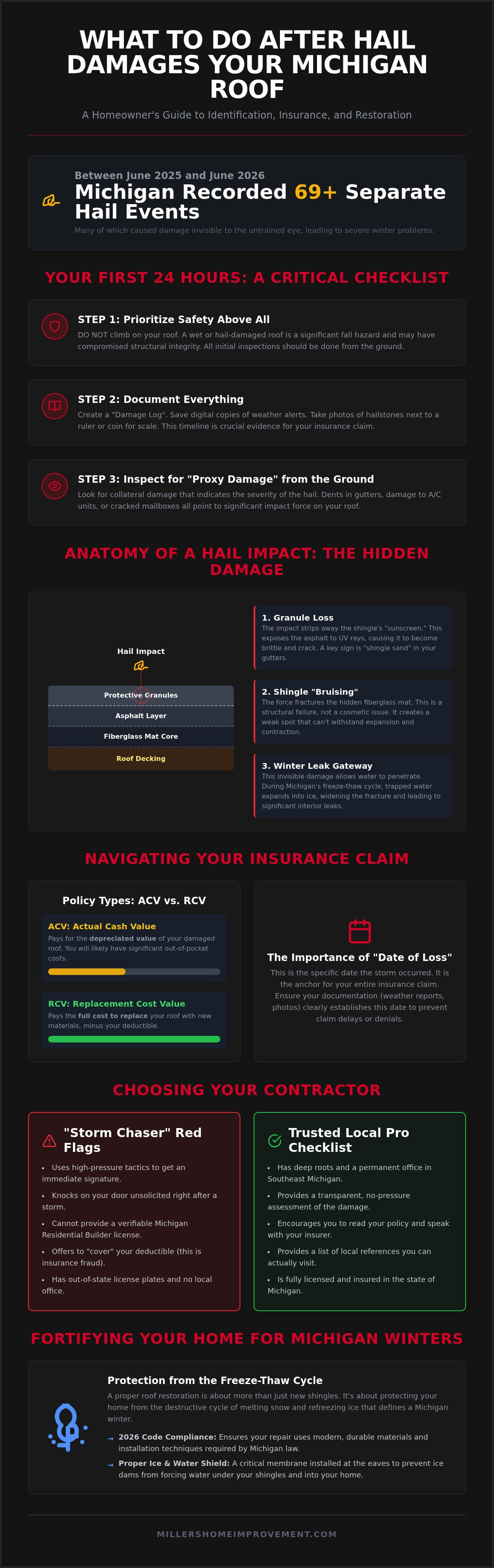
Knowing what to do after hail damage to roof Michigan homeowners face begins with building a "Damage Log." Save digital copies of local weather alerts or news clips from the date of the storm. Take photos of hailstones next to a ruler or a coin for scale. This documentation creates a factual timeline that proves the severity of the event to your insurance adjuster later in the process.
If you notice active leaks inside your attic or ceiling, temporary mitigation is necessary to prevent interior rot. Only use a tarp if it can be secured safely without climbing onto the primary roof slope. Insurance providers expect you to take reasonable steps to prevent further damage, but they don't want you risking an injury. For most situations, waiting for a professional with the right safety gear is the smartest choice.
Safety First: Ground-Level Inspection
Stay on the grass and use your smartphone's zoom feature to scan the shingles for dark spots or missing granules. Look for "proxy damage" on other areas of your property. Dents in your metal gutters, cracked plastic mailboxes, or impact marks on your air conditioning unit's cooling fins are all strong indicators of roof damage. These ground-level signs provide a clear roadmap for where a professional should focus their inspection. Never attempt to walk on a roof that has been subjected to heavy impact, as the underlying structure may be weakened.
The "Storm Chaser" Red Flag Checklist
After a major Detroit storm, "storm chasers" often flood the neighborhood. These out-of-state contractors typically use high-pressure tactics to get you to sign a contract immediately. Be cautious of anyone who demands a signature before you've even reviewed your insurance policy. A reputable local contractor has deep roots in Southeast Michigan and won't pressure you into a hasty decision. Always verify their Michigan Residential Builder license and ask for local references you can actually visit. A seasoned master craftsman prioritizes transparency and your home's long-term health over a quick sale.
Identifying Hail Damage: What a Master Craftsman Looks For
Identifying the true aftermath of a storm requires a trained eye and a methodical approach. While a homeowner might only notice a few missing granules, a seasoned professional looks for the systemic failures that follow a high-velocity impact. One of the most reliable indicators of trouble is found at ground level within your gutter system. If your downspouts are discharging "shingle sand," or a heavy accumulation of granules, your roof has lost its primary defense against the sun's rays. This erosion accelerates the aging process and leaves the underlying asphalt vulnerable to thermal cracking.
When determining what to do after hail damage to roof Michigan residents must understand the concept of the "bruise." A bruise occurs when a hailstone compresses the shingle, crushing the granules into the asphalt layer and fracturing the fiberglass mat hidden beneath. Shingle bruising is a structural failure, not a cosmetic one, because it creates a direct path for water to reach the roof deck. Over time, the intense heat of the Michigan summer causes these fractured areas to expand and contract, eventually opening up leaks that won't appear until the next heavy rain or winter snow melt.
Anatomy of a Shingle Impact
The loss of UV protection is the silent killer of a compromised roofing system. Without granules to deflect radiation, the asphalt becomes brittle and loses its essential waterproofing properties. While standard 3-tab shingles often show clear circular patterns of loss, architectural shingles can hide damage within their thicker, layered texture. A master craftsman must feel for these soft spots to ensure the integrity of the fiberglass core remains intact. If you suspect your roof's lifespan has been cut short, a professional storm damage assessment can clarify the extent of the invisible harm.
Damage Beyond the Shingles
A thorough inspection extends to the metal and membrane components of your property. Dents in roof vents, chimney caps, and valley flashing are more than just eyesores; they represent points of potential failure where water can bypass the shingles entirely. When flashing is deformed by hail, it can pull away from the roof-wall intersection, leading to structural rot within the walls that is often not discovered until mold begins to form. On commercial properties, hail can cause stress fractures in PVC and EPDM membranes, leading to ponding water issues that compromise the entire flat roofing system.
Navigating the Michigan Insurance Claim Process
Once you've identified potential damage, the focus shifts to the financial side of restoration. Understanding what to do after hail damage to roof Michigan homeowners experience requires a firm grasp of your insurance policy. Most modern policies are either Replacement Cost Value (RCV) or Actual Cash Value (ACV). An RCV policy covers the full cost of replacing your roof at today's prices, minus your deductible. In contrast, an ACV policy only pays the depreciated value of the roof based on its age. This distinction is vital; it determines whether your restoration budget is fully funded or if you'll face significant out-of-pocket expenses.
The "Date of Loss" is the foundation of your claim. This is the specific calendar day the hail event occurred. Carriers use forensic weather data to confirm that hail of a damaging size actually fell at your address on that day. If you don't have this date exactly right, the entire claim could be rejected on a technicality. Check your weather alerts or damage log to ensure you're providing the most accurate information possible to your agent.
Michigan-Specific Claim Deadlines
In Michigan, homeowners generally have up to one year from the date of the storm to file a property damage claim. However, some specific policies may have shorter windows. Southeast Michigan's unique "Lake Effect" weather patterns can cause multiple storms in a single season, making it difficult to pinpoint which event caused the failure if you wait too long. Filing within a few weeks of the storm is the best way to ensure your claim isn't denied due to "late reporting" or pre-existing wear and tear.
Working with Your Adjuster
The adjuster's job is to assess the damage, but they may overlook subtle signs like fractured fiberglass mats or dented chimney caps. Having your roofing contractor present during the adjuster meeting is essential. A seasoned master craftsman can point out these non-obvious issues to ensure the scope of work is comprehensive. If a claim is underpaid, your contractor can provide a detailed, line-item estimate known as a supplement to request the necessary funds for a code-compliant installation. This collaborative approach ensures you receive the full payout required to protect your home before the next winter cycle.
Choosing a Trusted Local Contractor in Southeast Michigan
Selecting a partner for your restoration is the most critical decision in the entire process. When considering what to do after hail damage to roof Michigan homeowners must prioritize local accountability over flashy sales pitches. A local Detroit-based team isn't just a service provider; they're neighbors who will be here years after the storm clouds have cleared to honor their warranties. This long-term presence is vital for your peace of mind, as it ensures that any future issues will be addressed by someone with a physical stake in the community.
In Michigan, any roofing project valued at $600 or more requires a Residential Builder or Maintenance & Alteration Contractor license from the Department of Licensing and Regulatory Affairs (LARA). Don't simply take a contractor's word for it. Verify their license status and ensure they carry both general liability and workers' compensation insurance. These documents protect you from being held liable for accidents that occur on your property. A master craftsman will always provide these certificates upfront, demonstrating a commitment to professional integrity and meticulousness.
Be wary of "contingency agreements" that attempt to lock you into a contract before your insurance claim is even approved. A trustworthy professional provides a clear, free estimate without demanding an immediate signature. This transparency allows you to compare material options, such as architectural shingles versus standard 3-tab, and understand the scope of work before committing. If you're ready for an honest assessment from a local expert, you can schedule a professional consultation to review your options.
The Value of Experience
Experience is the difference between a roof that merely looks good and one that survives thirty years. With over 25 years of owner experience, Miller’s Home Improvement understands the nuances of Southeast Michigan’s 2026 building codes, including the updated requirements for ice and water shields. A master craftsman identifies structural needs, such as deck repairs or ventilation upgrades, while a salesman only focuses on the surface shingles. This deep professional knowledge ensures your roof is built to withstand the unique pressures of the Michigan climate.
Contractor Red Flags
Identifying a "storm chaser" is often a matter of looking for simple inconsistencies. Watch for out-of-state license plates or temporary office setups that suggest the company will vanish once the peak storm season ends. Legitimate contractors maintain a permanent physical address in Southeast Michigan and never ask for large upfront deposits before materials are delivered to your driveway. If a deal feels rushed, it's usually because the contractor doesn't want you to look too closely at their credentials or local reputation.
Restoration and Protection: Preparing for the Michigan Winter
Michigan's climate presents a unique challenge for compromised roofing materials. The state's relentless freeze-thaw cycle turns minor hail impacts into major structural failures in a matter of months. When water seeps into the "bruises" left by hailstones, it remains trapped against the fiberglass mat. As temperatures drop, this water expands, putting immense pressure on the surrounding asphalt. This internal stress destroys the shingle's integrity and creates a direct path for leaks once the snow begins to melt in the spring.
Why You Can’t Wait Until Spring
Waiting until the spring thaw to address storm damage is a gamble that rarely pays off in the Great Lakes State. A compromised roof structure is significantly less capable of supporting the heavy snow loads common in Southeast Michigan. When snow accumulates, it creates a blanket that traps heat, leading to the formation of ice dams in gutter lines already weakened by hail impact. Moisture trapped within shingle fractures expands as it freezes, effectively prying the asphalt layers apart from the inside out. This process, repeated dozens of times throughout the winter, turns small dents into wide-open leak points that can ruin your home's interior insulation.
Deciding what to do after hail damage to roof Michigan homeowners face often involves choosing between a repair and a complete tear-off. Under the Michigan Residential Code updates effective April 13, 2026, any home with two or more existing roof layers must have all materials stripped to the deck before a new installation. A complete tear-off is the only way to inspect the underlying wood for rot or moisture damage that occurred during the storm. This stage is also when we install mandatory ice and water shields, extending them at least 24 inches inside the exterior wall line to combat the specific threat of ice dams.
The Miller’s Difference in Restoration
Miller’s Home Improvement specializes in these complex, insurance-funded restorations. We leverage over 25 years of experience to ensure your claim covers every necessary code upgrade and material requirement. Our process is designed to minimize your stress by handling the intricacies of the insurance paperwork while providing a meticulously installed roofing system. We believe in doing the job correctly the first time to ensure your property remains stable for decades. Schedule your free Southeast Michigan roof inspection today to ensure your home is fully protected before the next freeze begins.
Securing Your Home’s Future Before the First Freeze
A Michigan storm might last only a few minutes, but the structural consequences can linger for decades if left unaddressed. Proactive documentation and a professional assessment are your best defenses against the hidden "bruising" that leads to winter leaks. Knowing exactly what to do after hail damage to roof Michigan properties sustain ensures that you aren't caught off guard by the destructive power of the freeze-thaw cycle. By choosing a local partner who understands our unique building codes, you transition from a state of concern to a state of informed resolution.
Miller’s Home Improvement brings over 25 years of local Michigan experience to every project. We are fully licensed and insured, providing the expert insurance claim assistance you need to navigate complex policy jargon with confidence. Don't let a high-pressure storm chaser or a hidden leak compromise your peace of mind. Our team is here to provide the stability and meticulous workmanship your home deserves. Get Your Free Master Craftsman Roof Inspection today and ensure your roof is ready to stand strong against the coming winter.
Frequently Asked Questions
How long do I have to file a hail damage claim in Michigan?
In Michigan, you generally have up to one year from the date of the storm to file a hail damage claim. However, individual insurance policies can vary, so it's best to review your specific contract immediately. Filing within a few weeks of the event is recommended to avoid complications with late reporting. This timeline is crucial for homeowners wondering what to do after hail damage to roof Michigan storms cause.
Can I still file a claim if my roof isn’t leaking yet?
Yes, you can and should file a claim even if you don't see active leaks inside your home. Hail causes bruising that fractures the underlying fiberglass mat; this is a form of structural failure. While it won't leak today, the next freeze-thaw cycle will expand those fractures and lead to rot. Insurance companies cover this damage because it represents a loss in the roof's intended lifespan and protective capability.
Will my insurance company cancel my policy if I file a hail claim?
No, insurance companies typically cannot cancel your policy or single you out for a rate increase based on a hail claim. Since hail is considered an Act of God, it's a non-fault event beyond your control. While regional rates might rise after a widespread storm, filing an individual claim for legitimate damage is your right as a policyholder. It's a standard part of maintaining your property's value and structural integrity.
What is the difference between ACV and RCV in a roof claim?
Replacement Cost Value (RCV) covers the full cost of a new roof at current market prices, minus your deductible. Actual Cash Value (ACV) only pays the depreciated value based on the roof's age. If you have an ACV policy, you'll likely face higher out-of-pocket costs because the payout won't cover the total restoration. Knowing which coverage you have is a vital part of what to do after hail damage to roof Michigan properties.
How do I know if a roofing contractor is a "storm chaser"?
You can identify storm chasers by their high-pressure sales tactics and lack of local roots. Look for out-of-state license plates, temporary office setups, or requests for large upfront deposits. A reputable contractor like Miller's Home Improvement has over 25 years of local experience and a permanent physical presence in Southeast Michigan. Always verify their Michigan Residential Builder license through LARA to ensure they're authorized to perform professional work in our state.
Does Michigan law require me to get multiple roofing estimates?
No, Michigan law does not require you to obtain multiple estimates before choosing a contractor. While some insurance adjusters might suggest it, you have the legal right to work with any licensed professional you trust. It's often more beneficial to find one highly experienced master craftsman who can accurately document the damage and meet with your adjuster. This ensures the scope of work is handled correctly from the start without confusing, conflicting bids.
What happens if the insurance adjuster misses some of the damage?
If an adjuster misses damage, your contractor can file what's known as a supplement. This is a detailed, line-item request for additional funds based on evidence found during the restoration process. Having an experienced roofer present during the initial inspection helps prevent these omissions. If new issues like deck rot are uncovered after the tear-off begins, the supplement ensures the insurance company covers the necessary costs to meet current building codes.
Is hail damage covered under a standard Michigan homeowner’s policy?
Yes, hail damage is almost always covered under a standard HO-3 homeowner’s policy in Michigan. It's categorized as a peril alongside wind and fire. The coverage typically includes the cost of repairs or a full replacement, depending on the severity of the impact and your policy limits. Because Michigan storms are frequent, most local policies are designed to handle these specific weather-related events to protect the structural stability of residential and commercial properties.


