
A patch can solve a flat-roof problem, but it won’t fix a roof that’s failing across a wider area. Patching a flat roof versus replacing it depends on whether the damage is isolated and the rest of the roof remains sound, or whether leaks, deteriorated materials, and hidden moisture point to broader trouble. Standing water that remains for more than 48 hours is another sign the roof needs attention.
It’s understandable to weigh the cost of patching a flat roof against the expense and disruption of replacement. This guide explains how damage, previous repairs, roof condition, and ponding water affect the decision, so you can see which option may suit your roof. You’ll also learn how repairs and replacement differ, what can affect the project scope, and what to expect from a professional assessment.
Key Takeaways
- Use the extent of damage and the condition of the surrounding roof to distinguish a targeted repair from a broader replacement.
- Understand why recoating only suits a roof that is structurally sound, with dry underlying layers and decking.
- Consider ponding water as a drainage concern, not just a surface issue, when weighing your options.
- During an inspection, focus on hidden moisture, split seams, and whether previous repairs have held up.
Assessing whether damage is isolated or widespread
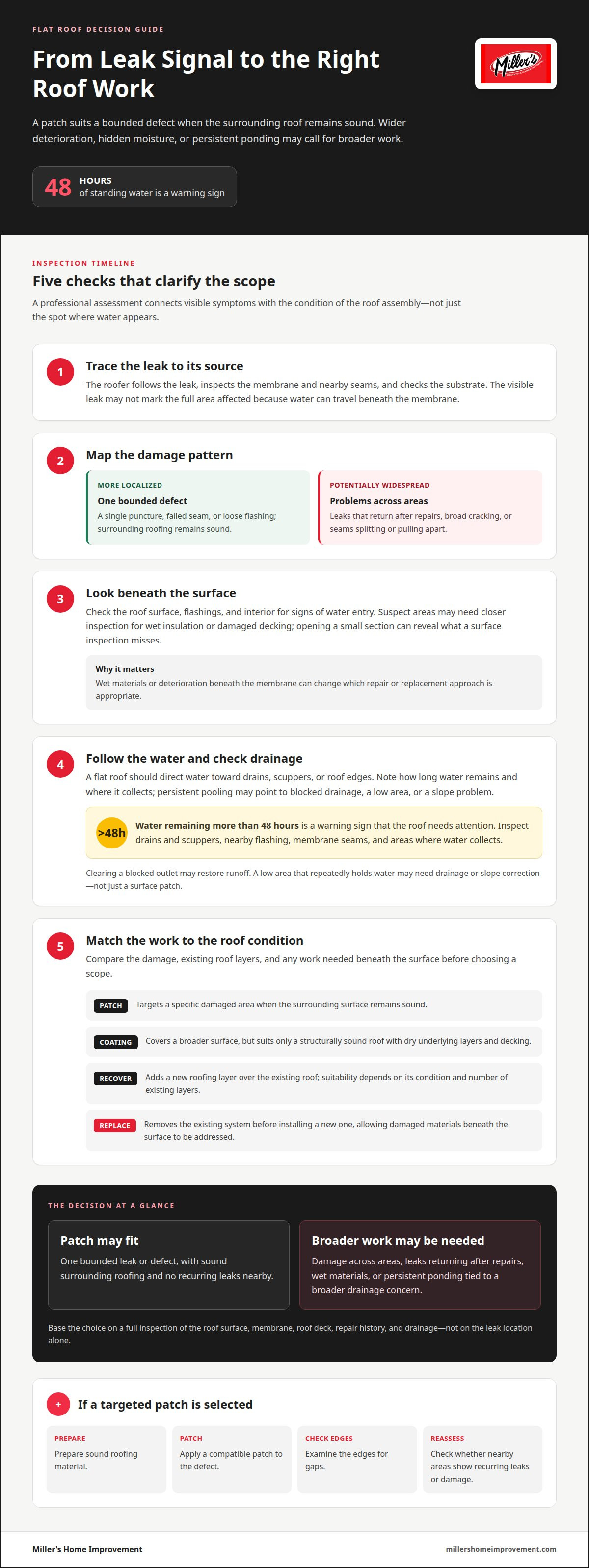
To patch a leak, a roofer traces its source, inspects the membrane and nearby seams, and checks the substrate. They prepare sound material, apply a compatible patch, then examine the edges for gaps.
Isolated roof damage
A single puncture, failed seam, or loose flashing may suit a targeted patch if the surrounding roofing remains sound. For example, a roofer may repair a small tear beside a parapet without replacing an otherwise intact roof. Unlike widespread damage, this problem has a clear boundary, and nearby areas show no recurring leaks or cracked surfaces.
Widespread roof damage
Damage in several areas, leaks that return after repairs, or broad cracking can indicate a problem beyond one patch location. A roofer compares leak locations with visible wear and checks whether seams are splitting or pulling apart. When deterioration is widespread, repeated patches may treat symptoms without addressing the roof’s overall condition.
Hidden roof damage
Water can travel beneath a membrane, so the visible leak may not show the full area affected by moisture. A roofer examines the roof surface, flashings, and interior for signs of water entry, then checks suspect areas for wet insulation or damaged decking. If needed, opening a small section can reveal conditions a surface inspection alone may miss.
For storm damage, the roofer records affected areas and distinguishes fresh punctures or displaced flashing from older wear. Clear documentation can help organize an insurance claim, while the inspection shows whether the damage is local or spread across the roof.
| Option | Damage pattern | Roof condition |
|---|---|---|
| Patch | One bounded leak or defect | Surrounding surface remains sound |
| Replacement | Leaks or deterioration across areas | Widespread damage or wet materials |
Base the decision on a full inspection: isolated defects may suit patching, while widespread damage or wet insulation may point to replacement.
What affects the cost of flat roof repair?
The project scope depends on the damage, existing roof layers, and any work needed beneath the surface. Comparing repair, coating, recover, and replacement starts with determining what the roof assembly can support.
Repair and coating
A targeted repair addresses a specific damaged area, such as a failed seam. A coating covers a broader surface, but it is suitable only when the structure is sound and the underlying layers and decking are dry. A professional assesses these conditions before recommending an option. The cause of damage, roof access, materials, and preparation also affect the work involved.
Recover and replacement
A recover adds a new roofing layer over the existing roof, while replacement removes the existing system before installing a new one. Recover may require less removal, but its suitability depends on the condition and number of existing layers. Replacement allows damaged materials beneath the surface to be addressed. Wet insulation or deteriorated decking can affect which approach is appropriate.
Repair costs and replacement investment
Repair usually focuses on a limited area; replacement involves a broader scope, including removal and installation. The price depends on the roof’s condition and project scope, so it is determined after an assessment. Factors include the damaged area, access, existing layers, material, and any underlying repairs. Repeated repairs for new leaks can add up without resolving widespread deterioration.
Yes. Permit and building-code requirements can vary by location. The applicable rules depend on the municipality and project scope, so a repair and a full replacement may have different requirements.
For a practical comparison, a roofing professional can assess the roof layers and explain the work each option involves. Request a flat-roof assessment from Miller's Home Improvement when you need help weighing repair against replacement.
Ponding water and drainage
A flat roof should direct water toward drains, scuppers, or roof edges. Small amounts of ponding are common when they evaporate within a day or two. Water that remains for more than 48 hours is a warning sign that the roof needs attention. Persistent pooling may point to blocked drainage, a low area, or a slope problem rather than one isolated leak.
A roofer assesses where and how widely water ponds, then traces its drainage path. The inspection covers drains and scuppers, nearby flashing, membrane seams, and areas where water collects. For example, pooling beside a parapet may indicate a blocked outlet or a low spot. The roofer also checks whether moisture has reached the layers beneath the membrane.
The repair depends on the cause. If leaves or debris block a drain, clearing the outlet restores the runoff path. If a drain connection or flashing has failed, the roofer repairs that detail and checks the surrounding membrane. Where a low area repeatedly holds water, flat roof repair may require correcting the drainage or slope, not just sealing the visible surface.
A patch can address a leak, but it won’t correct poor drainage. The roofer compares the extent of ponding with the roof’s overall condition before recommending repair or replacement. If water collects in one small area and the surrounding system remains sound, localized work may address the cause. Pooling across multiple sections points to a broader drainage concern.
To compare options, consider how long water remains, where it collects, and whether the drainage path works. A professional assessment connects those observations to the roof’s condition and the source of the problem. Clearing an outlet may resolve one cause; ponding that continues afterward calls for a closer review of the slope, membrane, and underlying materials.
Roof repair vs replacement: what is the difference?
A professional inspection considers the membrane, roof deck, and repair history together. It determines whether a limited repair can address the cause or broader work is needed.
Inspectors examine the roof surface for blisters, cracks, loose seams, and worn flashing. Inside, ceiling stains can help locate water entry, but the leak may start elsewhere. A roofer traces the path and checks whether moisture has affected the insulation or roof deck. This matters because visible surface damage alone may not reveal the assembly’s full condition.
During the assessment, a roofer considers several questions:
- Are leaks confined to one location, or have they appeared in separate areas?
- Do earlier repairs remain intact, or have leaks returned around old patches?
- Is the membrane still sound, and are seams pulling apart?
- Does the roof deck feel stable, or are there signs of sagging or deterioration?
These findings help distinguish a repairable defect from broader deterioration. A focused repair may suit one failed detail if the surrounding materials remain sound. Replacement may be more appropriate when moisture, damaged decking, or repeated failures extend beyond one repair area. The roofer should explain what they found and how each finding affects the recommended scope.
Arrange a professional roof inspection twice a year, ideally in spring and fall, and after major storms. Seasonal checks can identify changes in the membrane before they become harder to trace. After a storm, an inspection can document visible damage and check roof details that wind or debris may have affected.
For a significant replacement decision, two professional opinions can help compare assessments of the roof’s condition. Ask what issues were observed, what work is recommended, and why the proposed scope addresses them. A clear evaluation links each recommendation to a specific finding, such as stains below a seam or damage to the roof deck.
Arrange a professional roof inspection to understand whether repairs or replacement best address your roof’s condition.
Miller's Home Improvement
Miller's Home Improvement helps property owners in Detroit weigh roof repair against replacement by assessing the roof’s condition and the extent of damage. When leaks are isolated and surrounding materials remain sound, a repair may be appropriate. Widespread deterioration, recurring leaks, or damaged underlying materials can point toward replacement.
For homes and businesses, Miller's Home Improvement provides residential and commercial roofing, including flat-roof systems such as PVC and EPDM. The right option depends on the roof assembly, existing damage, and whether a repair can address the cause rather than just the visible leak. A professional assessment can clarify these factors and outline a suitable next step.
Contact Miller's Home Improvement to discuss your flat roof and the repair or replacement options.
Make a clear plan for your roof
Deciding between patching a flat roof vs replacement means looking beyond the leak and considering the roof’s overall condition. The right choice should address the underlying issue and suit the roof’s needs. A clear assessment gives you a sound basis for planning without committing to work that doesn’t fit the property.
Before moving ahead, make sure you understand the proposed scope and why it fits. Comparing patching a flat roof vs replacement with the assessment in mind can help you plan your next step, whether that’s a focused repair or a larger project. That clarity supports informed decisions about the property’s needs.
Contact Miller's Home Improvement today to discuss your flat roof and the options that fit your property. With a practical plan in place, you can move forward with greater confidence.
Frequently Asked Questions
What are the signs your flat roof needs attention?
Interior ceiling stains, recurring leaks, cracked membrane, loose flashing, and water that remains after rainfall can all signal a problem. A stain near a wall, for example, may point to a parapet detail rather than a leak directly above it. Note where water appears indoors and when it follows rain, then share those observations during a professional inspection.
Can I recoat a flat roof that's leaking?
Sometimes, but a coating is suitable only when the roof is structurally sound and the underlying layers and decking are dry. A leak needs to be assessed before coating, since trapped moisture or a damaged substrate won’t be fixed by covering the surface. A roofer can identify the source, assess the assembly, and determine whether coating or another repair is appropriate.
How long do modern flat roofing systems typically last?
There isn’t one lifespan that applies to every flat roof. The system’s material, installation quality, maintenance, weather exposure, drainage, and previous repairs all affect how it performs over time. A roof with sound seams and a dry substrate may remain serviceable longer than one with recurring leaks or standing water. An inspection can assess its current condition without relying on age alone.
When can a flat roof be patched instead of replaced?
A patch may suit a roof when a specific defect, such as one puncture or failed seam, is limited and the surrounding membrane remains sound. The roofer also considers whether previous repairs have held and whether hidden moisture affects nearby materials. For example, one localized leak with dry surrounding layers may call for targeted work rather than full roof replacement.
What signs indicate a flat roof needs full replacement?
Replacement may be appropriate when leaks recur in different areas, seams split across the roof, or the membrane is broadly cracked and brittle. Wet insulation, rotted decking, or sagging sections are further warning signs because the damage extends beneath the visible surface. Widespread deterioration needs more than another isolated patch to address the roof’s full condition.
How much does flat roof repair or patching cost in the United States?
The cost depends on the roof’s condition and the work required, so a reliable figure follows a project-specific assessment. Factors include the damaged area, access, roofing material, existing layers, and any hidden repairs to insulation or decking. For a property in Detroit, an inspection helps define the scope before a quote is prepared, rather than relying on a generic national average.


