

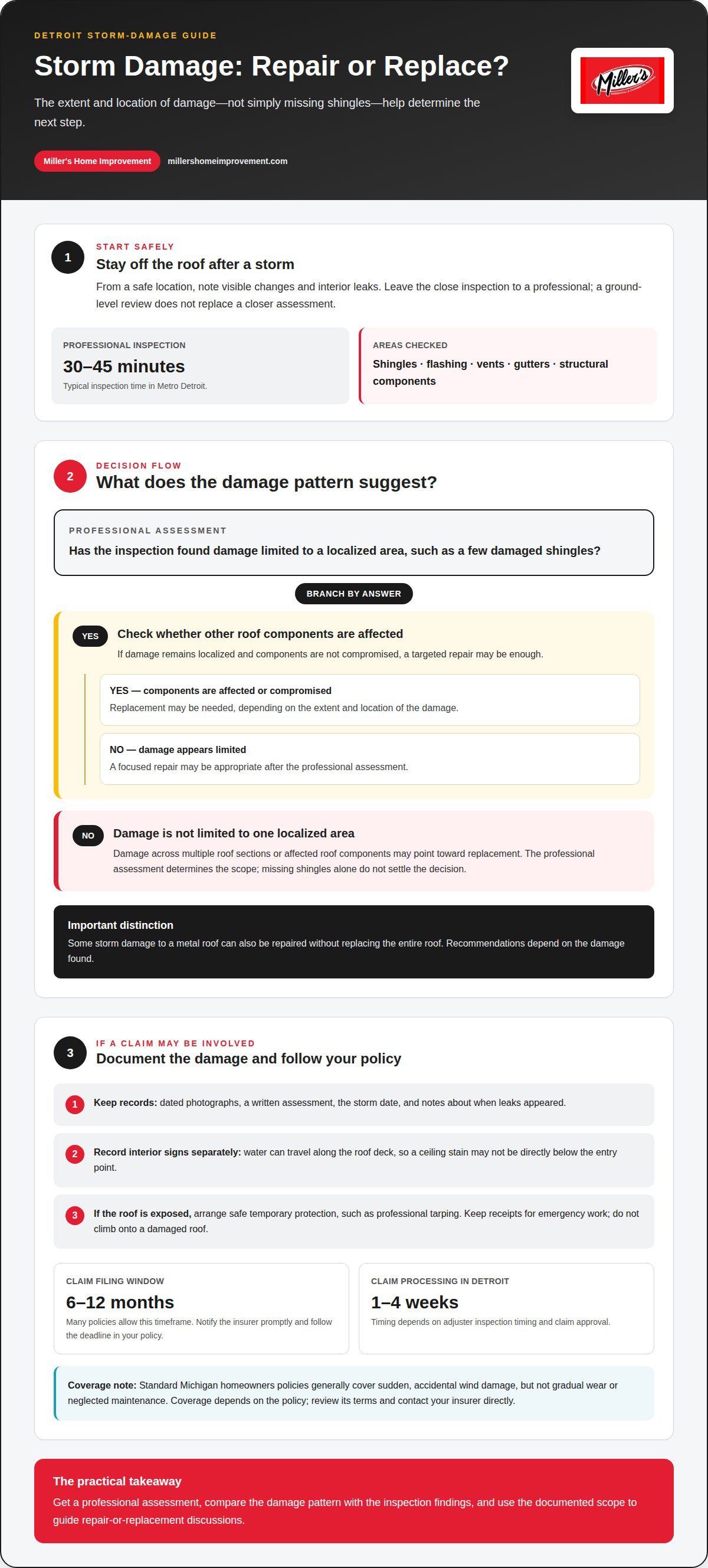
A wind damage roof inspection in Detroit can help determine whether targeted repairs are enough or a full replacement may be needed. A roof damage inspection in Metro Detroit takes about 30 to 45 minutes and can assess shingles, flashing, vents, gutters, and structural components. Homeowners should stay off the roof after a storm and leave the close inspection to a professional.
It’s understandable to worry that missing or lifted shingles mean the entire roof needs replacing. The extent and location of the damage matter: a localized issue may call for a repair, while widespread damage or affected roof components may point to replacement. A professional assessment can also identify damage that isn’t visible from the ground.
This article explains what a wind damage roof inspection in Detroit covers, how to weigh repair against replacement, and what to document for an insurance claim. You’ll also learn how a roofing professional can assess storm damage and help determine the next practical step for your roof.
Key Takeaways
- Learn how a professional can assess storm damage without putting you at risk on the roof.
- Understand which damage patterns may call for a focused repair and which may point toward replacement.
- See how timely documentation can support an insurance claim and help show where water entered.
- Find out what to expect from a roof damage assessment and how it can guide your next step.
Safe post-storm inspection and professional assessment
After a Detroit storm, stay off the roof and arrange a professional assessment. From a safe location, note visible changes and any interior leaks.
Professional Inspection Assessment
A professional wind damage roof inspection in Detroit checks shingles, flashing, vents, gutters, and structural components. In Metro Detroit, an inspection takes about 30 to 45 minutes. The inspector can look for lifted materials, loose roof-edge components, and signs of water entry that aren’t visible from the ground. A ground-level review can identify concerns, but it doesn’t replace a closer professional assessment.
Roof repair work in Michigan must meet state licensing requirements and building codes. Permit requirements depend on the work and local rules, so clarify whether the planned repair requires a permit before work begins.
Storm Damage Versus Normal Wear
An assessment helps distinguish storm-related damage from gradual deterioration. Wind may lift or shift metal panels near edges, corners, or ridges, while temperature changes can affect metal components through repeated expansion and contraction. On shingle roofs, the inspector considers whether lifted or missing sections are consistent with wind impact or broader wear. A mark alone doesn’t prove that a particular storm caused the damage.
High winds can loosen metal flashing, trim, and other roof-edge components. Branches, hail, and wind-blown debris may also leave dents, scrapes, or punctures. A metal roof storm-damage assessment in Metro Detroit should document affected areas and distinguish impact marks from normal surface wear before recommending repairs.
For insurance documentation, a professional can photograph visible storm damage and debris, then prepare a written assessment of affected roof areas. Keep these records with the storm date and notes about when leaks appeared. Water can travel along the roof deck, so an interior stain may not be directly below the entry point.
To identify a licensed and insured roof inspector in Detroit, look for a local address, a Michigan builder’s license, and proof of insurance. Review the written scope and contract terms before roof work begins. A documented inspection gives you a clearer basis for discussing an insurance claim and choosing next steps.
Do All Storm-Damaged Roofs Need Replacement?
No. A storm-damaged roof may need a targeted repair or replacement, depending on how widespread the damage is and whether roof components are affected. A few damaged shingles are different from damage across multiple roof sections, but both warrant prompt assessment.
In Michigan, standard homeowners policies generally cover sudden, accidental wind damage, but not gradual wear or neglected maintenance. Coverage depends on the policy, so review its terms and contact your insurer directly to file a claim. Many policies allow 6-12 months to file storm-damage claims, but notify the insurer promptly and follow the deadline in your policy.
Timing matters when a roof is exposed. Water can travel along the roof deck or structure, so a ceiling stain may appear away from the entry point. Delaying temporary protection can allow more water intrusion and damage. If the roof is exposed, arrange safe temporary protection, such as professional tarping, and keep receipts for emergency work. Don’t climb onto a damaged roof yourself.
Prepare dated photographs, a written assessment, and any available repair estimate for the claim. These records can help show visible damage and the condition of affected areas. During the adjuster’s visit, point out observed leaks and interior stains, then compare the findings with the documented roof damage. Keep copies of claim communications and records of when damage and leaks appeared.
In Detroit, claim processing typically adds 1-4 weeks, depending on adjuster inspection timing and claim approval. The repair decision depends on the extent and location of damage, not simply whether shingles are missing. Limited damage may be addressed with roof repair; broader damage or compromised components may require replacement. Some storm damage to a metal roof can also be repaired without replacing the entire roof. A professional damage roof repair assessment can help clarify the work needed while you coordinate with your insurer.
Documenting roof damage for insurance claims
Clear documentation connects visible roof conditions to the storm and helps organize an insurance claim. A professional report can show which materials were affected and what the inspection found.
How a roofing professional photographs roof damage
After severe weather, a roofing professional photographs damage from safe positions and records affected areas. Images can show missing shingles, lifted materials, damaged flashing, and debris without requiring a homeowner to climb onto the roof. Wider views show where damage appears, while closer images clarify individual conditions. Dated photographs help keep the inspection record organized.
Ground-level and interior photographs can add context. For example, you can document a ceiling stain alongside the exterior roof area suspected of allowing water entry. The stain may not be directly below that entry point, so identify each location separately rather than implying they align.
Recording roof damage for insurance with a professional inspection
A written assessment should describe the roof areas inspected, visible conditions, and affected materials. It can distinguish observed storm damage from normal wear and note missing shingles, lifted sections, or damaged roof-edge components. This gives the insurance claim a clear record of the professional’s findings without assuming what the policy will cover.
Keep the written report and photographs together with the storm date, when leaks were first noticed, and any temporary-protection receipts. These details help create a timeline for the insurer and adjuster. Preserve original images and records so the sequence of events remains clear.
Before moving or cleaning up anything, document visible damage and debris if it is safe to do so. A professional can add inspection findings and explain which roof areas need attention. For example, photographs of a fallen branch and a punctured roof area can document the scene and specific damage separately.
- Record the date and affected roof area for each image.
- Keep wide views alongside close-ups of damaged materials.
- Save the written assessment with claim records and repair documents.
A complete file supports a more organized discussion with the insurer. It also helps distinguish roof damage repair needs from conditions that require further inspection, while keeping the evidence tied to visible findings.
Free roof damage inspections
A free estimate and an independent inspection can serve different purposes after Detroit storms. Understand what each assessment covers before using its findings to plan repairs or discuss insurance.
A roofing assessment provided with an estimate helps identify visible concerns and outline potential work. An independent inspection focuses on evaluating roof condition without being tied to a repair proposal. The difference is the assessor’s purpose and relationship to the work, not whether the roof has missing shingles or debris.
A free in-home estimate can help you understand the potential scope of storm-related work. The assessment may consider visible damage, affected materials, and whether repair or replacement appears appropriate. Ask for the findings and proposed work in writing to distinguish observed conditions from recommended repairs. An estimate does not determine what an insurer will cover.
For an insurance claim, keep the inspection record with dated photographs, the storm date, and notes about when leaks appeared. The insurer and its adjuster make coverage decisions under the policy. A contractor’s observations can help describe roof conditions, but they don’t replace the insurer’s review or guarantee claim approval. If severe weather has left the roof exposed, arrange temporary protection promptly to limit further water intrusion.
The next step depends on the inspection findings. A few missing shingles may call for a localized repair, while widespread damage or affected roof components may lead to a replacement recommendation. On a metal roof, document the location of dents or shifted panels: a surface mark alone doesn’t establish storm damage. When safe, photograph debris before cleanup.
Choose an assessment that clearly separates visible storm damage, ordinary wear, and proposed work. If you need a written estimate for storm-related roof work, request a roof damage assessment. Use the findings to organize your repair decision and insurance documentation, then address exposed areas promptly rather than waiting for damage to spread.
Miller's Home Improvement: Storm Damage Repair
Miller's Home Improvement provides storm damage repair when an inspection identifies wind-related roof damage that needs attention. Depending on the affected areas and roof condition, the work may involve repairs or a full replacement. For residential and commercial properties, review the findings and determine the appropriate scope. PVC flat roofing is also available for projects involving that system.
A free in-home estimate can help clarify the proposed work after storm damage. Keep inspection photographs and written documentation handy when discussing the roof and any insurance claim. The estimate supports repair planning, while coverage decisions remain with the insurer under the policy.
If you’re ready to discuss storm-related roof work, contact Miller's Home Improvement.
Take the Next Step Toward a Sound Roof
A clear decision starts with matching the repair plan to the roof’s actual condition. After a wind damage roof inspection in Detroit, use the documented findings to discuss the work, organize your claim records, and plan how to protect the property while repairs are arranged. Miller's Home Improvement provides residential roofing, commercial roofing, PVC flat roofing, and storm damage repair.
If wind has exposed roofing materials or created a leak, don’t let uncertainty delay your next step. Share the inspection information and discuss a practical path forward with a roofing professional. Contact Miller's Home Improvement to talk about your roof. A careful, informed decision can help you move ahead with confidence.
Frequently Asked Questions
Roof Repair Or A New Roof?
A roof with limited, localized damage may need a repair, while widespread damage or affected roof components may call for replacement. A few damaged shingles, for example, differ from damage across several roof sections. A professional’s written findings can clarify the scope. Compare the documented damage with the proposed work before deciding, and keep the assessment with your insurance records.
When Is Wind Damage Insurable?
Michigan homeowners policies generally cover sudden, accidental wind damage, but not gradual wear or neglected maintenance. Coverage depends on the policy’s terms. Records showing the roof’s condition before a storm, when damage appeared, and any maintenance can help explain the timeline. Contact your insurer about filing requirements, and read your policy for its claim deadline and coverage conditions.
Can a metal roof start leaking after a storm?
Yes. Wind can lift or shift metal panels, particularly around roof edges, corners, and ridges, creating openings where water can enter. Storm debris may also dent, scrape, or puncture metal roofing. A dent alone doesn’t establish that a storm caused damage, so the assessment should consider its location and surrounding conditions. Leaks can appear away from the entry point as water travels along the roof structure.
Do you inspect for hidden storm damage?
A professional assessment can identify storm damage that isn’t visible from the ground. The inspection evaluates roof components such as shingles, flashing, vents, gutters, and structural areas for signs of displacement or impact. If an interior ceiling stain appears, share its location and when it began. Water may travel before becoming visible indoors, so the stain’s position doesn’t necessarily identify the roof entry point.
How Fast Should I Schedule An Inspection After A Storm?
Arrange an inspection promptly after severe weather, especially if you notice a leak, missing roofing material, or debris impact. An exposed area can let water inside and cause further damage. Stay off the roof and arrange safe temporary protection if needed. Contact your insurer promptly, since policies may set claim-filing deadlines. Keep notes about when you noticed changes or leaks.
How can a professional tell if wind damaged my roof in Detroit?
A professional looks for conditions consistent with wind impact, such as lifted or missing shingles, loosened flashing, and shifted roof-edge materials. The assessment also considers damage patterns across the roof and possible debris impacts. Normal wear can resemble storm damage, so a surface mark alone doesn’t establish the cause. Dated photographs and a written description of affected areas help document the inspection findings.


