

While a missing shingle is obvious, the most dangerous wind damage to a Michigan roof is often the kind you can't see from your driveway. After a severe storm, many homeowners wait for a visible leak to appear before taking action. By that time, the structural integrity of the home may already be compromised. Understanding wind damage roofing Michigan standards is essential, especially since local codes require systems to withstand speeds of at least 110 mph. Waiting too long to inspect your property doesn't just risk water damage; it can also lead to missed insurance deadlines, which typically range from six to twelve months in our state.
It's natural to feel uneasy about the state of your roof after high winds, especially with the pressure of "storm chaser" contractors offering dishonest assessments. You deserve transparency and a clear path forward. This guide provides a comprehensive post-storm inspection checklist to help you identify everything from lifted shingles to hidden seal failures. We'll explain the difference between minor repairs and full replacements while ensuring you understand the specific Michigan building codes that protect your investment. By the end of this article, you'll have the knowledge needed to secure your home and navigate the insurance process with confidence.
Key Takeaways
- Identify technical signs of failure like sealant strip breakage and shingle uplift that often go unnoticed by the untrained eye.
- Conduct a safe perimeter walk to find debris and shingle fragments that indicate your home has suffered significant impact.
- Master the specifics of wind damage roofing Michigan regulations, including how state matching laws can impact your eligibility for a complete roof replacement.
- Recognize the "creased shingle" phenomenon to catch structural damage before it develops into a costly interior leak.
- Learn the critical insurance deadlines and building code requirements that dictate how and when your storm damage must be repaired.
The Reality of Wind Damage in Michigan: Why It’s Not Always Obvious
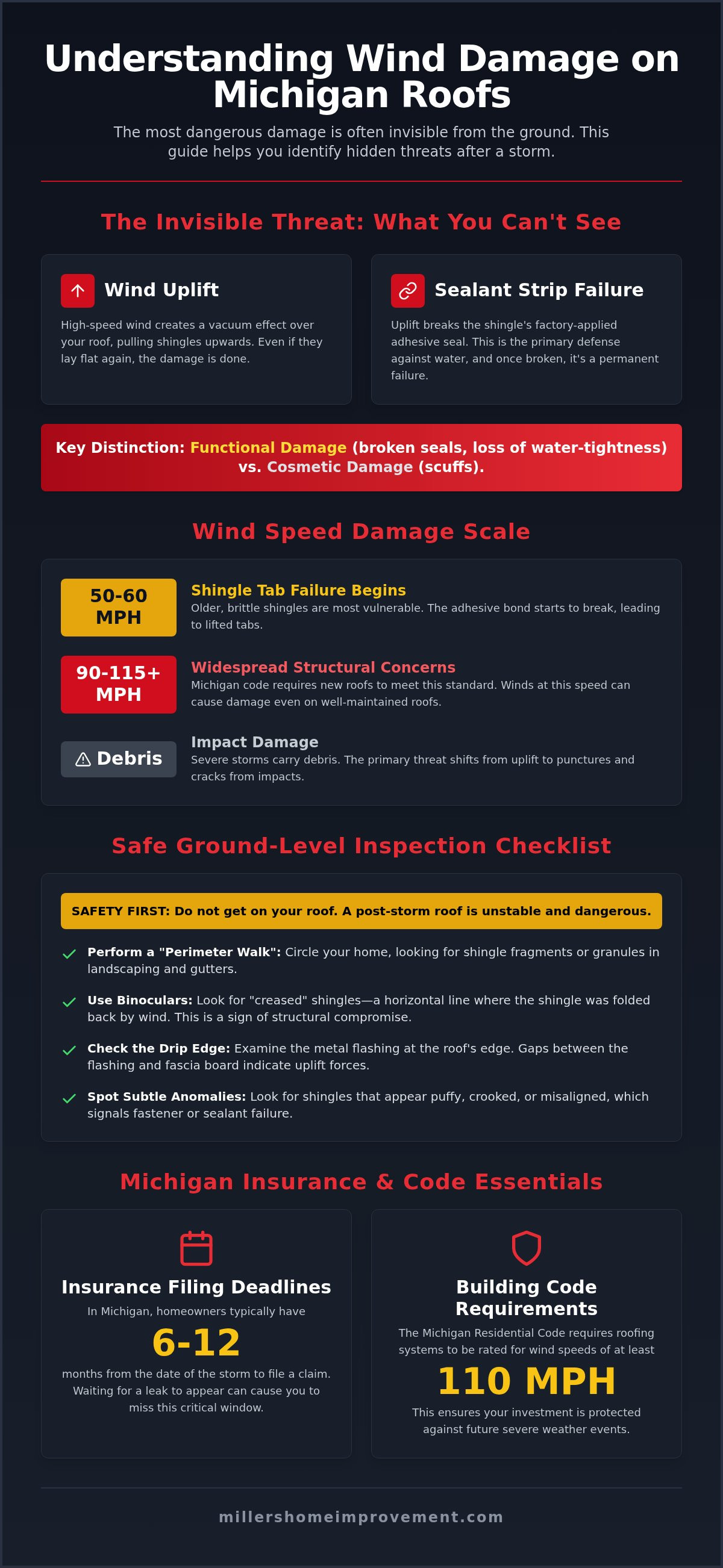
Michigan's unique geography, tucked between the Great Lakes, creates a high-pressure environment where wind speeds can escalate quickly without warning. For homeowners, wind damage roofing Michigan isn't always as dramatic as a fallen tree or a missing section of shingles. Often, it's a subtle structural failure known as "uplift." This occurs when wind rushing over the roof creates a vacuum effect, pulling the shingles upward. This force breaks the factory-applied sealant strip, which is the primary defense against water infiltration. Once this bond is severed, the shingles lose their ability to shed water effectively, even if they appear to lay flat once the storm passes.
In the eyes of insurance carriers, there's a distinct line between cosmetic and functional damage. Cosmetic issues involve minor scuffs or discoloration that don't affect the roof's performance. Functional damage, however, is a loss of material integrity that prevents the roof from doing its job. Michigan building standards focus heavily on this distinction. If the wind has compromised the roof’s ability to remain water-tight, it's no longer a simple aesthetic concern; it's a failure that requires professional restoration to prevent rot and mold.
How Michigan Winds Impact Different Roofing Materials
Different systems react to wind pressure in unique ways. Asphalt shingles are most vulnerable at the sealant strip; once high gusts break this bond, the shingles become "flippers" that catch more wind in the next storm. For commercial or residential flat roofs, such as PVC or EPDM, wind can cause "billowing" or "tenting." This happens when air gets under the membrane, stretching it away from the substrate and risking a total system blow-off. Metal roofing, while durable, can suffer from fastener pull-out where the wind's leverage actually tugs the screws through the metal panels, leaving the structure exposed.
Common Wind Speed Thresholds for Damage
Understanding the specific thresholds for wind damage roofing Michigan specialists look for is the first step in protecting your property. Different wind speeds present different risks to your home's exterior:
- 50-60 mph: This is the typical threshold where shingle tab failure begins, especially on older roofs where the adhesive has become brittle over time.
- 90-115 mph: The Michigan Residential Code (MRC) uses these design speeds as a baseline for new installations. Any storm reaching these speeds is likely to cause widespread structural concerns even on newer roofs.
- Extreme Events: Beyond pure wind speed, severe storms often bring wind-driven debris. In these cases, the primary threat shifts from uplift to impact damage, which can puncture membranes and crack shingle mats instantly.
Ground-Level Checklist: Spotting Roof Wind Damage Without a Ladder
Safety is the primary concern following any major weather event. While it’s tempting to grab a ladder to see the damage up close, you should stay on the ground. Roof surfaces can be unstable after a storm, and shingles that have lost their adhesive bond are incredibly slippery. A thorough ground-level inspection often reveals enough evidence to justify a professional assessment without putting yourself at risk. By performing a disciplined "Perimeter Walk," you can document the external clues that point toward wind damage roofing Michigan experts look for during a formal inspection.
Grab a pair of binoculars and walk the entire circumference of your home. Focus your attention on the "drip edge," which is the metal flashing installed along the edges of the roof. If you see gaps between this flashing and the fascia board, it's a strong indicator that high-pressure winds have attempted to lift the roof deck. You should also look for subtle anomalies like shingles that appear slightly "puffed up" or crooked. These are signs that the fasteners have been stressed or the sealant has failed, even if the shingle hasn't blown away entirely.
Identifying Shingle and Material Debris
The most obvious sign of trouble is finding shingle fragments in your yard or landscaping. To distinguish between old wear and new storm damage, look at the edges of the debris. Freshly torn shingles usually have clean, sharp edges and may show a dark, unweathered asphalt color where they snapped. If you find entire shingle sections, the wind has likely bypassed the individual tabs and lifted the entire course. Check your downspouts and the ground beneath them for excessive granular accumulation. A sudden "shedding" of these protective granules during a storm leaves the asphalt mat exposed to UV rays, significantly shortening the lifespan of your roof.
Secondary Signs of Wind Impact
Your home's surroundings often act as a proxy for the wind speeds your roof endured. If you notice fallen tree limbs or damaged fencing, your roof was likely subjected to the same forces. Pay close attention to the following secondary signs:
- Soffit and Fascia Damage: Look for loose or missing trim pieces. These components often fail when wind is forced into the attic space, creating internal pressure.
- Dented or Hanging Gutters: Lateral wind forces can pull gutters away from the roofline or cause them to sag, indicating that the wind was strong enough to stress mechanical fasteners.
- Displaced Vent Caps: Check the metal caps on your roof vents. If they are tilted or missing, the wind was powerful enough to compromise the most secure parts of your roofing system.
If you spot these anomalies, scheduling a professional storm damage assessment can provide the documentation needed for a successful claim. Identifying these issues early prevents the slow progression of wood rot and interior ceiling stains that often follow a major Michigan storm.
The Invisible Threat: Technical Signs of Wind-Induced Roof Failure
While missing shingles are easy to spot, the most insidious forms of wind damage roofing Michigan properties face are often invisible to the naked eye. A roof can appear perfectly intact from the ground while suffering from catastrophic structural failures. These technical failures occur when wind forces exceed the material's design limits, causing internal fractures that don't always result in immediate debris. Identifying these issues requires a disciplined eye and an understanding of how roofing components interact under pressure.
The "creased shingle" is a prime example of this hidden threat. During a storm, wind lifts the shingle tab upward. Instead of blowing off, the shingle folds over and then settles back into place once the wind dies down. This folding action creates a permanent horizontal crease near the top of the shingle. This isn't just a cosmetic line; it represents a fracture in the internal fiberglass matting. Once the mat is broken, the shingle's water-shedding capability is compromised, and it will eventually tear away completely during the next minor gust.
Sealant strip failure is equally dangerous. Every shingle has a factory-applied adhesive strip designed to bond it to the course below. High-velocity winds can "unzip" this bond. Even if the shingle stays on the roof, the lost seal allows wind-driven rain to blow underneath. In extreme cases, we see "nail pull-through." This happens when the uplift force is so violent that the shingle mat is sheared away from the nail head. The shingle is then essentially floating, held in place only by gravity and the weight of the shingles above it. This also leads to hidden granular loss, where the protective stones are scrubbed off by the wind, leaving the asphalt mat vulnerable to rapid UV degradation.
Vulnerabilities of Commercial Flat Roofs
Commercial systems like EPDM and PVC face different technical risks. High winds cause these membranes to "flutter" or whip against the roof deck. This repetitive motion can back out fasteners or stress the seams. Termination points and flashings are the most common failure zones, as wind pressure concentrates at the roof's edges. Additionally, wind can shift the underlying insulation boards, creating uneven surfaces that lead to ponding water, which further stresses the membrane's integrity.
Attic and Interior Warning Signs
Sometimes the best way to find wind damage roofing Michigan specialists might miss from the outside is to look from the inside. Enter your attic during the day and look for "daylight" points where the roof deck has pulled away from the rafters. You should also check the insulation for dampness. High winds often force water through ridge vents or under compromised shingles, and this moisture can travel along rafters before dripping. This means a water stain on your bedroom ceiling might be located several feet away from the actual point of entry on the roof.
Michigan Building Codes and Your Insurance Claim: What Homeowners Must Know
The intersection of state law and insurance policy is where many homeowners feel most vulnerable. In Michigan, the 2015 Michigan Residential Code (MRC) sets strict standards for how repairs must be handled. One of the most critical regulations is the "25% Rule." If more than 25% of a roof surface is damaged within a 12-month period, the entire roof system must be brought up to current code. This regulation often triggers a full replacement even if a significant portion of the roof appears functional, as partial repairs are not legally compliant under these conditions.
Michigan also observes specific "matching" requirements that favor the homeowner. If a wind event damages a portion of your roof and the existing shingles are no longer manufactured or have faded so significantly that a match is impossible, the insurer may be required to replace the entire slope or roof to ensure a uniform appearance. Documenting the exact date and time of the storm is vital for this process. Insurance carriers cross-reference your claim with meteorological data to verify that wind speeds in your specific zip code were high enough to cause wind damage roofing Michigan experts classify as functional failure.
Understanding Wind Design Speeds in Southeast Michigan
Building codes in Detroit, Macomb County, and the surrounding areas are based on Risk Category II wind speed requirements. For most residential structures, this means the roof must be designed to withstand gusts of 110 to 115 mph. Many older roofs were installed under previous codes with lower thresholds. When a storm hits, a licensed contractor can certify that the existing system no longer meets current safety standards. This certification is a powerful piece of evidence that can help justify a full replacement rather than a simple patch job.
The Insurance Adjuster vs. The Professional Roofer
Adjusters are often tasked with inspecting dozens of homes in the wake of a storm. They frequently miss "unsealed" shingles that have lost their adhesive bond but haven't yet blown off. A professional assessment from Miller's Home Improvement provides a more granular look at the technical failures adjusters might overlook during a hurried walk-through. We recommend preparing a "Storm Damage Evidence Folder" that includes high-resolution photos of debris, interior leaks, and a copy of your current policy's declarations page to streamline the conversation with your carrier.
Navigating these requirements is a complex task that requires local expertise and a disciplined eye. If you've experienced high winds recently, you can schedule a professional storm damage inspection to ensure your claim is supported by accurate, code-based evidence. Remember that the statute of limitations for filing most Michigan insurance claims typically falls between six and twelve months, so acting quickly is essential to protect your home's integrity and value.
Securing Your Home: Why Professional Storm Damage Restoration Matters
Delayed repairs are a gamble with your home's structural integrity. While a small leak might seem manageable, the moisture trapped under compromised shingles creates an ideal environment for mold and wood rot. These issues often remain hidden until the first heavy Michigan snow, when the added weight stresses an already weakened roof deck. "Quick fixes" or temporary patches rarely survive the freeze-thaw cycles typical of our region. Professional wind damage roofing Michigan restoration ensures that every component is returned to its peak performance level before the weather turns.
Choosing a contractor requires looking for local roots and a deep understanding of both residential and commercial systems. At Miller's Home Improvement, we bring over 25 years of experience to every project in Southeast Michigan. Whether your property uses asphalt shingles or high-performance PVC and EPDM membranes, we understand the specific failure points caused by Great Lakes wind patterns. Our approach is grounded in transparency and meticulous workmanship, ensuring your property is protected for the long term.
The Value of a Comprehensive Roof Tear-Off
A complete tear-off is often the only way to identify wind-induced stress fractures in the roof decking. When we strip the old materials, we inspect every inch of the wood for cracks or soft spots that may have been caused by the leverage of lifting shingles. During installation, we ensure proper fastener depth and frequency to meet the 115 mph wind ratings required by the Michigan Residential Code. We also take this opportunity to evaluate your attic ventilation. By reducing wind-pressure differentials between the interior and exterior of your home, we can significantly decrease the risk of future shingle uplift.
Next Steps: Getting Your Free Michigan Wind Damage Assessment
When you contact us for an inspection, you'll receive a methodical evaluation of your entire roofing system. We don't just look for missing shingles; we document the technical failures like seal breakage and fastener stress that we've discussed throughout this guide. Our team also assists with the insurance documentation process, providing the clear, code-based evidence your adjuster needs to process the claim accurately. This proactive approach alleviates the typical anxieties of storm recovery and provides the peace of mind that comes from knowing your home was repaired by seasoned craftsmen.
Schedule your free storm damage estimate with Miller's Home Improvement today.
Protecting Your Home’s Integrity After the Storm
Addressing wind damage roofing Michigan property owners face requires a disciplined approach that goes beyond spotting a few missing shingles. The most severe threats often involve broken sealant bonds and structural uplift that aren't visible from the ground. By understanding the specific building codes in our state and the technical signs of material failure, you can move from a state of uncertainty to a state of informed resolution.
Protecting your investment is about more than just a quick repair; it's about ensuring long-term stability and quality. Miller's Home Improvement brings over 25 years of owner experience to every inspection. We are a fully licensed and insured Michigan contractor specializing in insurance claim restoration for both residential and commercial systems. We prioritize your peace of mind and the safety of your property above all else, ensuring every detail meets our rigorous standards.
Get a Free Wind Damage Assessment from Michigan's Roofing Experts
You don't have to navigate the recovery process alone. With professional guidance and a meticulous inspection, you can restore your home’s integrity and rest easy knowing your roof is prepared for whatever the next Michigan winter brings.
Frequently Asked Questions
Does insurance cover wind damage to a roof in Michigan?
Most standard homeowners' policies cover wind damage, though you're responsible for the deductible. In Michigan, many policies now include a separate wind and hail deductible, which is often calculated as a percentage of your home's insured value. It's vital to check your declarations page for these specifics. Professional documentation of the storm's impact is usually required to substantiate the claim and ensure your adjuster has all the necessary evidence.
How much wind is needed to damage roof shingles?
Damage can begin at speeds as low as 50 to 60 mph, especially on older roofs where the sealant has become brittle. While newer shingles are rated for higher speeds, the cumulative effect of high-gust events often leads to wind damage roofing Michigan experts identify as sealant failure. Sustained winds over 90 mph generally trigger more widespread structural concerns across all types of roofing materials regardless of their age.
What are the signs of wind damage on a flat roof?
Flat roofs like PVC or EPDM show damage through "billowing" or "tenting," where the membrane pulls away from the deck. You should also look for loose metal flashing at the edges or "stress wrinkles" near termination points. If insulation boards have shifted under the membrane, it's a sign that high-pressure uplift has compromised the system's mechanical fasteners or adhesive bond, which requires a professional assessment to ensure long-term stability.
How long do I have to file a roof insurance claim in Michigan?
The timeframe varies by policy but typically ranges from 6 to 12 months from the date of the storm event. Filing as soon as possible is recommended to avoid disputes over whether the damage was caused by a specific storm or general wear and tear. Waiting too long can lead to a claim denial, especially if secondary issues like mold or wood rot have developed in the interim.
Can I repair just the wind-damaged shingles or do I need a full replacement?
This depends on the extent of the damage and Michigan's "25% Rule." If more than 25% of the roof surface is damaged within a year, the entire roof must be brought up to current code. Additionally, if the shingles are discontinued and cannot be matched, state regulations often favor a full replacement. This ensures a uniform appearance and maintains the structural integrity of the home according to local standards.
What is a 'creased' shingle and why is it dangerous?
A creased shingle occurs when wind lifts the tab and folds it over without blowing it off completely. This action fractures the internal fiberglass mat, creating a permanent weakness that allows water to seep through. Even if the shingle lays flat afterward, its water-shedding capability is gone. These fractures are often missed during quick inspections but lead to significant rot and interior ceiling damage if they aren't addressed by a professional.
Does Michigan law require insurance to match my roof shingles?
Michigan does have "matching" requirements that generally require insurers to provide a reasonably uniform appearance. If your existing shingles are no longer available or have faded to the point where new ones would create a glaring mismatch, the carrier may be responsible for replacing the entire slope or the whole roof. This ensures the home's value and aesthetic integrity are maintained after a loss, providing you with much-needed peace of mind.
How do I find my local Michigan wind speed design value?
Local design values are determined by the Michigan Residential Code (MRC) and vary by county. For example, Detroit and Macomb County typically fall into Risk Category II, requiring systems to withstand 110 to 115 mph. You can find specific values by consulting your local building department or a licensed contractor who specializes in wind damage roofing Michigan standards. They can certify if your current roof meets these essential safety requirements.


