
In Michigan, your roof is far more than an aesthetic choice; it's a structural defense against a climate that works tirelessly to find a way inside. Whether it's the weight of lake-effect snow or the relentless cycle of freezing and thawing, the pressure on your home's exterior is constant. Finding the best roofing material for Michigan homes is about more than just picking a color. It's about choosing a system that can handle thermal shock while keeping your attic ventilated and your energy bills manageable.
You've likely felt that familiar sense of dread during a heavy winter storm, wondering if ice dams are forming or if your shingles are truly up to the task. We understand that a new roof is a significant investment, and you deserve a solution that provides peace of mind for decades. This guide explores the most resilient materials available in 2026, from high-performance architectural shingles to durable metal systems. We'll also break down the latest Michigan building codes regarding ice and water shields and proper attic insulation to ensure your home remains a fortress of stability and efficiency.
Key Takeaways
- Learn how the unique "Lake Effect" climate degrades standard roofing and why specific material grades are necessary for long-term durability.
- Compare performance-grade asphalt shingles and metal roofing to determine the best roofing material for Michigan homes based on your budget and protection goals.
- Explore the essential components, like synthetic underlayment and ice shields, that are required by Michigan code to prevent structural moisture damage.
- Calculate the long-term financial impact of choosing high-quality materials versus the premature failure of budget-grade alternatives in harsh climates.
- Find out how to identify seasoned local craftsmen who understand the specific installation requirements of the Southeast Michigan environment.
The Michigan Climate Stress Test: Why Your Roof Material Matters
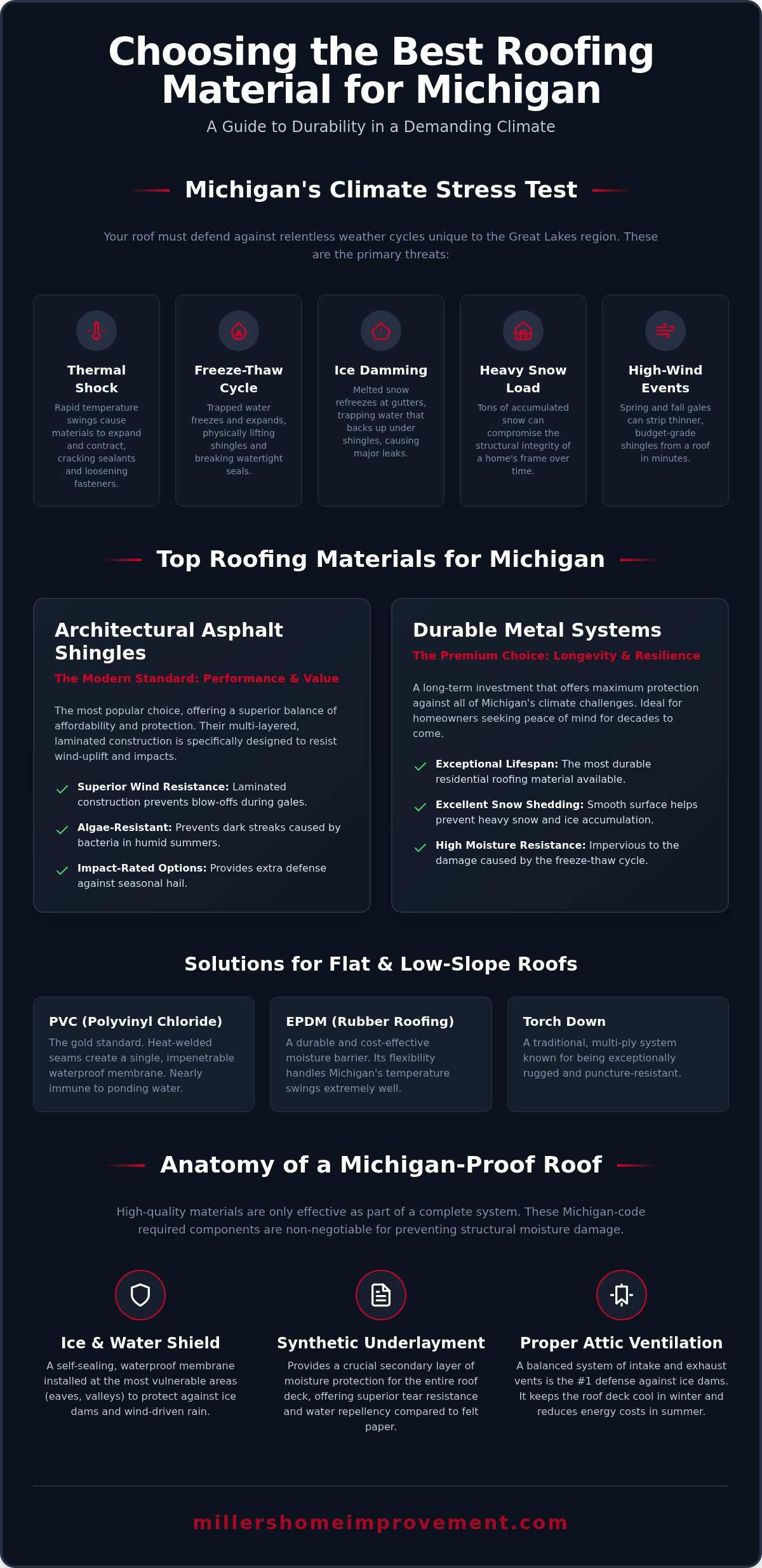
Michigan's climate is a relentless testing ground for residential structures. The "Lake Effect" isn't just a weather pattern; it's a constant cycle of high humidity and sudden temperature swings that can degrade standard roofing materials within a few short years. When temperatures drop forty degrees in a single afternoon, the resulting thermal shock causes materials to expand and contract with a force that can pull nails loose and crack brittle sealants. This volatility is why the best roofing material for Michigan homes must be engineered for high elasticity and moisture resistance.
The freeze-thaw cycle is particularly destructive to roofs that aren't built to professional standards. As water from melting snow enters small crevices, it expands as it turns back into ice, creating enough pressure to physically lift shingles and break the water-tight seal of the components of a roofing system. Without a resilient material and proper installation, these cycles lead to hidden rot and costly structural repairs. Choosing the best roofing material for Michigan homes requires a focus on how these materials interact with moisture and temperature over decades, not just a few seasons.
Ice damming is the primary cause of winter roof leaks in Detroit, occurring when poor attic ventilation allows snow to melt and then refreeze into a solid ice ridge at the gutters that traps water behind the shingles.
Lake Effect Snow and Structural Load
Heavy snow accumulation creates a massive physical burden on your home, particularly during the peak of winter. While steep-pitched roofs shed snow naturally, lower pitches can hold onto several tons of weight, which risks compromising the integrity of older Michigan home frames. It's vital to choose materials that balance strength with weight; a roof that's too heavy can cause rafters to bow over time. We focus on materials that offer superior moisture-wicking properties, ensuring that the dampness from melting snow doesn't penetrate the surface and cause the wood deck to soften or mold.
Wind Resistance and Shingle Blow-offs
Our transition seasons in the spring and fall are notorious for high-wind events that can strip a roof of its protection in minutes. Standard 3-tab shingles are particularly vulnerable because their thin, flat profile allows wind to catch the edges and break the adhesive bond. In contrast, high-wind rated architectural shingles are a cornerstone of the best roofing material for Michigan homes because their multi-layered, laminated construction provides the weight and surface area needed for a permanent seal. This extra durability ensures your roof stays put during a November gale, keeping your home dry and your investment secure.
Top Roofing Materials Ranked for Michigan Performance
Selecting the best roofing material for Michigan homes requires weighing the initial investment against long-term resilience. Our state's environment demands materials that can withstand 100-degree summers and sub-zero winters without losing structural integrity. From the versatile asphalt shingle to premium metal systems, each material offers distinct advantages for protecting your property. Choosing the right one depends on your home's architecture, your budget, and how long you plan to stay in the residence.
Asphalt Shingles: Performance vs. Price
Asphalt shingles remain the most common choice due to their balance of affordability and protection. While traditional 3-tab shingles are the most budget-friendly, they often struggle with the wind speeds seen in Southeast Michigan. Architectural shingles have become the modern standard because their thicker, laminated construction provides superior wind resistance and a longer lifespan. In our humid summers, algae-resistant shingles are a practical necessity to prevent the dark streaks caused by Gloeocapsa magma bacteria. For those in storm-prone areas, investing in impact-rated shingles can provide an extra layer of defense against seasonal hail.
Flat Roof Solutions: PVC, EPDM, and Torch Down
Homeowners often feel confused when selecting materials for modern additions, porches, or detached garages with low-slope designs. PVC is the gold standard for residential flat roofing because its heat-welded seams create a monolithic barrier that is nearly impenetrable by water. EPDM, or rubber roofing, offers a durable and cost-effective moisture barrier that handles temperature swings well. Torch Down systems provide a traditional multi-ply approach that is exceptionally rugged. If you're planning a project with a low-slope surface, you can request a free in-home estimate to determine which membrane best suits your structure's needs.
Metal Roofing in the Michigan Tundra
Metal roofing, specifically standing seam systems, represents the ultimate "lifetime" solution for the Michigan climate. These systems are designed to shed snow quickly, which is a proactive way to prevent the ice dams that plague many local neighborhoods. Beyond winter performance, metal roofs are highly energy-efficient; they reflect solar heat during our hot July afternoons to help lower your cooling costs. While the upfront cost is higher than asphalt, a metal roof can easily last 50 years or more. This longevity effectively ends the typical 20-year replacement cycle and adds significant long-term value to your home.
Synthetic Slate and Shake
For homeowners who want the timeless look of natural materials without the high maintenance, synthetic slate and shake are excellent alternatives. These products are engineered from polymer resins to provide Michigan-level durability while mimicking the texture of real wood or stone. Unlike natural cedar, synthetic shake won't rot or attract insects. Similarly, synthetic slate won't crack during the intense freeze-thaw cycles that often damage real stone tiles. They offer a high-end aesthetic that stands up to the harshest Great Lakes weather.
Evaluating Durability vs. Cost: The Long-Term Michigan View
Thinking about the price of a roof involves more than the initial check you write to a contractor. In Southeast Michigan, the true cost includes the cumulative repairs, maintenance, and energy losses you'll face over the next three decades. Choosing the best roofing material for Michigan homes means calculating how a system will perform after ten winters of heavy snow and twenty summers of intense UV exposure. Economy-grade materials often appear attractive on paper, but they frequently require replacement 10 to 15 years earlier than performance-grade alternatives due to Michigan's relentless thermal cycling. High-quality underlayment is just as critical to the system's success as the shingles themselves because it provides the final barrier against wind-driven rain and ice dam infiltration.
A well-documented, high-quality roof significantly boosts a property's marketability in the Detroit area. Prospective buyers often prioritize the age and material of the roof during the inspection phase to avoid inheriting immediate structural issues. Investing in a premium system isn't just about protection; it's about preserving equity. When a buyer sees a recently installed architectural or metal roof, it signals that the home has been meticulously maintained, which often leads to faster sales and firmer asking prices.
Maintenance Requirements by Material
Every roofing system requires a different level of care to reach its full potential. For asphalt shingles, this means regular inspections for granule loss and moss growth. Moss can trap moisture against the shingle, which accelerates rot in the wood deck underneath. Metal roofs require periodic fastener checks to ensure everything remains tight during thermal expansion, along with verifying that snow guards are secure. Flat roof maintenance is centered on clearing organic debris from drains. This prevents ponding water, a condition where standing water remains for more than 48 hours and puts excessive stress on the membrane seals.
Insurance Premiums and Material Ratings
Insurance companies in Michigan pay close attention to material durability when calculating risk. Installing Class 4 impact-rated shingles can often lead to reduced homeowners insurance premiums because these materials are tested to survive severe weather that would shred standard shingles. Storm restoration specialists frequently recommend these higher grades because they offer a measurable return through lower policy costs and fewer claims over time. As your roof ages, the specific material and its current condition will dictate your coverage. A 20-year-old economy shingle roof might only receive actual cash value coverage, whereas a high-performance system maintains its full replacement value for much longer.
Essential Components of a Michigan Roofing System
A high-performance roof is far more than the sum of its shingles. It's an integrated system where every layer plays a role in resisting the Great Lakes climate. Even if you invest in the best roofing material for Michigan homes, an installation without proper underlayment or flashing will eventually fail. We focus on the "invisible" components that handle the heavy lifting during a February freeze or a rainy April afternoon. Synthetic underlayment has replaced traditional felt paper as the modern standard because it offers superior tear resistance and won't absorb moisture, providing a secondary barrier that stays intact even if a shingle is damaged.
Drip edges and flashing serve as the final line of defense against moisture intrusion. Drip edges lead water directly into the gutters rather than letting it wick back into the fascia boards, which is a common cause of wood rot in older Detroit homes. Flashing protects the joints where the roof meets walls or chimneys. When these components are installed with meticulous care, they ensure the best roofing material for Michigan homes can actually reach its full 30 to 50-year life expectancy.
The Role of Ice and Water Shields
Michigan building codes mandate that ice and water shields extend at least 24 inches inside the exterior wall line. These self-adhering membranes are vital because they create a waterproof seal around every nail penetration. We often prioritize double-layer protection in high-volume runoff areas like valleys and around skylights. This proactive approach prevents water from backing up under the shingles when ice dams form at the eaves during a heavy snow cycle.
Attic Ventilation and Shingle Life
Proper airflow is the secret to preventing a "hot roof" that fails prematurely. When heat is trapped in an attic during a Michigan summer, it bakes the shingles from the underside, causing them to curl and lose protective granules. We balance intake vents at the soffits with exhaust vents at the ridge to maintain thermal regulation. This consistent airflow also prevents the winter condensation that leads to attic mold and structural deck rot. If you're noticing high energy bills or curling shingles, you can schedule a complete roof inspection to evaluate your system's ventilation and integrity.
Choosing Your Contractor: The Miller’s Home Improvement Standard
Selecting the best roofing material for Michigan homes is only half the battle; the quality of the installation determines if those materials actually protect your family as intended. In our region, local roots are a necessity rather than a luxury. "Storm chasers" often flood Southeast Michigan after a heavy hail event, offering quick fixes before disappearing across state lines. These transient operations lack the long-term commitment required to stand behind a 50-year warranty. Miller’s Home Improvement brings over 25 years of owner-operated experience to every project, providing a level of stability and accountability that only a local fixture can offer.
Michigan storms often involve complex insurance restoration. We specialize in navigating these claims, ensuring that your provider understands the specific requirements of the Michigan Residential Code. We act as your proactive guide, documenting the damage and explaining the technical necessity of components like ice and water shields. This expertise helps you secure a roof that meets modern safety standards without the typical anxieties associated with major home investments.
The Master Craftsman Approach to Installation
Our commitment to quality begins with our comprehensive "tear off" process. While Michigan code sometimes permits a second layer of shingles, we never "roof over" old materials. Adding a second layer traps excessive heat, which bakes the new shingles from the underside and significantly shortens their lifespan. A complete tear off allows us to inspect the roof sheathing for rot or structural weakness, ensuring a clean, solid deck for your new system. We also maintain a disciplined job site, utilizing a meticulous cleanup process to protect your Detroit landscaping and driveway from stray nails and debris.
The final stage of our work involves a rigorous inspection of every critical junction. We verify that ridge vents are clear, flashing is perfectly seated, and all pipe boots are watertight. This disciplined rhythm mirrors the nature of a well-managed construction project, moving from initial assessment to a state of informed resolution and lasting protection.
Free In-Home Estimates and Material Consultation
Every home has a unique orientation that affects its weather exposure. A north-facing slope with heavy tree cover faces different moisture risks than a south-facing slope exposed to high winds. During your professional assessment, we evaluate these variables to help you customize your selection. We don't just provide a quote; we educate you on which material grades provide the best ROI for your specific property. When you are ready to secure your home's future, you can schedule a free roofing estimate with Miller’s Home Improvement to begin your material consultation.
Secure Your Home’s Future Against the Michigan Climate
Protecting your property in the Great Lakes region requires a strategy that goes beyond simple shingle selection. You've seen how the best roofing material for Michigan homes must be paired with code-compliant ice shields and a balanced ventilation system to truly withstand our relentless freeze-thaw cycles. Whether you choose the long-term resilience of standing seam metal or the proven value of high-performance architectural shingles, the integrity of the installation is what ensures your peace of mind. A roof is a decades-long commitment, and it's vital to get the details right the first time.
Miller’s Home Improvement brings over 25 years of roofing experience to every project. As a fully licensed and insured Michigan contractor, we are specialists in residential and commercial systems, including advanced flat roofing membranes. We take pride in our master craftsman approach, ensuring every flashing, vent, and underlayment layer meets our disciplined standards for quality and durability. Take the first step toward a more efficient and resilient home by reaching out to a local expert who understands our specific weather challenges. Get Your Free Michigan Roofing Estimate Today and ensure your home is ready for the seasons ahead.
Frequently Asked Questions
What is the best roofing material for Michigan winters?
Metal roofing is often considered the best roofing material for Michigan homes during the winter because its smooth surface allows lake-effect snow to slide off before it builds up. This prevents excessive structural load and reduces the risk of ice damming. For homeowners preferring asphalt, performance-grade architectural shingles with a high wind rating provide the necessary durability to withstand the thermal shock and heavy moisture common in Detroit winters.
How long do asphalt shingles typically last in Detroit?
In the Detroit area, performance-grade asphalt shingles typically last between 15 and 25 years. While many products have longer manufacturer warranties, Michigan's intense freeze-thaw cycles and high humidity often accelerate granule loss. Economy-grade 3-tab shingles usually fail much sooner. We find that proper attic ventilation and professional installation are the most significant factors in ensuring your shingles reach their full life expectancy without premature curling or cracking.
Is a metal roof worth the extra cost in Michigan?
A metal roof is a worthwhile investment for Michigan homeowners who plan to stay in their residence for several decades. While the initial cost is higher than asphalt, a standing seam system can last 50 years or more. It effectively eliminates the need for two or three replacement cycles. Metal also provides superior protection against ice dams and offers better energy efficiency by reflecting solar heat during our humid July afternoons.
Do I need to remove my old roof before installing a new one?
We always recommend a complete roof tear-off rather than installing new shingles over old ones. While Michigan building codes permit a maximum of two layers of asphalt shingles, "roofing over" traps heat and moisture between the layers. This can cause the new shingles to bake and fail prematurely. A full tear-off allows our team to inspect the roof sheathing for rot and ensure the structural deck is solid.
How can I prevent ice dams on my Michigan roof?
You can prevent ice dams by balancing your attic's intake and exhaust ventilation to keep the roof deck cool. Michigan code requires a specific ventilation ratio, often 1:150, to ensure proper airflow. Additionally, installing a self-adhering ice and water shield is essential. Per the Michigan Residential Code, this protective layer must extend at least 24 inches inside the exterior wall line to stop water from backing up into your home.
What is the most energy-efficient roofing for Southeast Michigan?
Metal roofing is the most energy-efficient option for steep-slope homes because of its high solar reflectance. For flat-roof additions or garages, PVC membranes provide excellent thermal regulation. To meet the Michigan Energy Code, your roofing system must also include adequate insulation, often reaching R-49 for low-slope designs. These components work together to lower your cooling costs in the summer and retain heat during our cold Detroit winters.
Does Michigan law require a specific type of underlayment?
Michigan law, specifically the 2021 International Residential Code with state amendments, mandates the use of ice and water shields in vulnerable areas like eaves and valleys. While traditional felt paper was the old standard, most professional contractors now use synthetic underlayment. Synthetic materials are far more durable and moisture-resistant. They provide a critical secondary barrier that won't rot or tear when exposed to the high humidity found in Southeast Michigan.
How does hail damage affect my roofing material choice?
Frequent spring storms in Michigan make hail resistance a major factor in material selection. If you live in an area prone to severe weather, choosing Class 4 impact-rated shingles is a wise decision. These materials are engineered to resist cracking and granule loss during a storm. Many insurance companies in Detroit offer premium discounts for homes with these ratings, as they significantly reduce the likelihood of a successful storm damage claim.


