
The right flat-roof membrane for a Michigan building isn’t chosen by weather resistance alone. PVC flat roofing Michigan property owners consider must also suit the building’s use, existing roof conditions, and installation details, especially where snow, ice, and freeze-thaw cycles challenge the roof. For Detroit-area properties, drainage, rooftop equipment, and exposure to wind and sun are also worth discussing before selecting a system.
It’s reasonable to ask whether PVC can handle those conditions and how it compares with options such as EPDM or TPO. PVC has practical strengths, including resistance to grease, chemicals, and punctures, but those advantages don’t make it the right fit for every roof. The specific product, roof assembly, drainage, and installation all matter.
This guide explains how PVC membrane roofing is constructed, where it may be a good fit, and what limitations to weigh before choosing a system. You’ll learn which building conditions to discuss with a contractor and what to look for when comparing proposals. Miller’s Home Improvement serves Southeast Michigan with commercial flat-roof options including PVC, EPDM, and Torch Down, so you can discuss your building’s needs alongside relevant alternatives.
Key Takeaways
- Evaluate PVC flat roofing Michigan projects by the building’s use, existing roof condition, and installation requirements, not by material claims alone.
- The membrane is only the roof covering; the complete assembly depends on the project specifications.
- Compare PVC, EPDM, and TPO by their seam methods, exposure considerations, and suitability for your building.
- Before requesting proposals, note visible leaks, ponding, rooftop equipment, and access constraints from a safe location.
- Ask contractors to explain the proposed scope, installation details, and closeout information so you can compare bids clearly.
PVC Flat Roofing in Michigan: What the System Is and Where It Fits
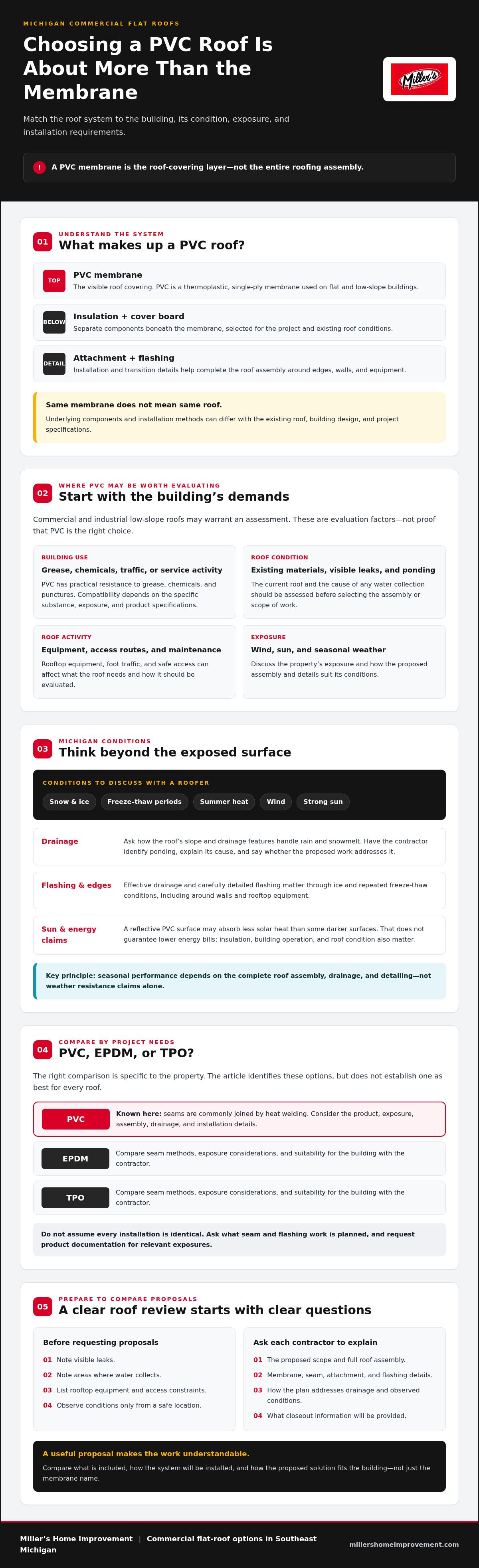
PVC is a single-ply membrane roofing system used on flat and low-slope buildings. In PVC flat roofing Michigan projects, the membrane is the visible roof covering, but it’s only one part of the finished roof. A PVC membrane is the roof-covering layer, not the entire roofing assembly; insulation, cover board, attachment, and flashing complete the system according to project specifications.
That distinction matters when comparing proposals. Two roofs with PVC membranes may have different underlying components and installation methods because of the existing roof, building design, and project requirements. For readers new to roof construction, this overview of roofing provides general background on roof functions and materials.
What makes a PVC membrane different from other flat-roof materials?
PVC is a thermoplastic material supplied as a roofing membrane. Its seams are commonly joined using heat welding, which fuses the membrane edges together. Details vary by system and project, so ask the contractor to describe the planned seam and flashing work rather than assuming every PVC installation is identical.
The membrane is also distinct from the components beneath and around it. Insulation, cover board, attachment method, and flashing are separate parts of the assembly. Their selection affects how the complete system is designed for the specific roof.
Which Michigan buildings might warrant a PVC evaluation?
Commercial and industrial buildings with low-slope roof areas may be candidates for a PVC assessment. Building activity can affect the evaluation. For example, a roof exposed to grease or chemicals raises different material questions from one with limited rooftop activity. Equipment, access routes, drainage, and exposure also matter.
These conditions are reasons to investigate, not proof that PVC is the right answer. The roof’s design and condition, building use, and proposed assembly all need review. A qualified contractor should assess the property before recommending a system. Miller's Home Improvement serves Southeast Michigan with commercial PVC, EPDM, and Torch Down flat-roof options, giving building owners alternatives to discuss against their project needs.
How PVC Flat Roofing Performs Through Michigan’s Seasonal Conditions
Michigan roofs face snow, ice, thawing periods, summer heat, wind, and strong sun. Each condition tests more than the exposed membrane. Water needs a reliable path to drains and edges, flashing must manage transitions around walls and equipment, and the full roof assembly must suit the building. Michigan’s seasonal shifts make it essential to assess the complete roof assembly, not just the membrane’s weather resistance.
A PVC membrane’s reflective surface may absorb less solar heat than some darker surfaces. That characteristic doesn’t guarantee lower energy bills. Results depend on insulation, building operation, and the roof’s overall condition. For PVC flat roofing Michigan properties, assess the system and its actual exposure rather than relying on broad performance promises.
What Michigan weather should a property owner discuss with a roofer?
Ask how the roof’s slope and drainage features handle rain and snowmelt, and whether there are areas where water collects. Ponding can leave roof areas wet for extended periods. The contractor should identify its cause and explain whether the proposed work addresses it. Ice and repeated freeze-thaw conditions also make effective drainage and carefully detailed flashing important.
Discuss wind exposure, rooftop equipment, and safe access for inspection and maintenance. The International Code Council’s code requirements for roof assemblies offer general background on roof protection and flashing. Confirm which current requirements apply to your Michigan project. A membrane doesn’t eliminate the need to monitor roof conditions.
How do rooftop activities affect PVC suitability?
Restaurant exhaust, grease, chemicals, foot traffic, and service equipment can create different demands from those on a roof with little activity. Resistance to grease or chemicals depends on the specific substance, exposure, and membrane specifications. Ask the contractor to identify likely contact areas and confirm compatibility using documentation for the product being proposed.
Clarify how workers will reach and service rooftop equipment without damaging the roof, and how flashing around penetrations will be handled. Maintenance access matters. A site assessment can connect these operating conditions to the proposed roof details instead of treating membrane selection as a stand-alone decision.
For a project-specific discussion of PVC and other commercial flat-roof options, talk with a Southeast Michigan roofing contractor about your building’s exposure, drainage, and rooftop use.
PVC vs. EPDM and TPO: Compare Michigan Flat-Roof Options by Project Needs
PVC, EPDM, and TPO are all used on low-slope roofs, but a useful comparison starts with the building’s needs, not a blanket claim that one membrane is superior. Seam methods, exposure considerations, and system components can differ, and product specifications vary. For more context on PVC membrane characteristics, review the PVC roofing manufacturing industry standards alongside the product documentation included with a proposal.
| System | Typical seam approach | Exposure considerations | Evaluation question |
|---|---|---|---|
| PVC | Seams are commonly heat-welded. | Assess actual grease or chemical contact, foot traffic, and reflectivity priorities. | Do the product specifications address the building’s documented exposures? |
| EPDM | Seams commonly use seam tape or adhesive, depending on the system. | Consider roof layout, penetrations, maintenance access, and proposed detailing. | How will seams, flashing, and transitions be handled on this roof? |
| TPO | Seams are commonly heat-welded. | Review rooftop activity, drainage, and the specifications of the proposed membrane. | How does the proposed assembly meet the project’s requirements? |
This comparison is a starting point, not a universal specification. System construction and product details vary, so compare proposals that address the same roof conditions and scope. For broader planning considerations, see this commercial roof replacement guide for Macomb County.
When might PVC’s characteristics matter more to a facility?
PVC may merit closer evaluation where documented rooftop conditions include grease or certain chemicals, or where a reflective surface and heat-welded seams are priorities. These are factors to investigate, not automatic reasons to select PVC. Ask the contractor to match the proposed membrane’s specifications to the substances, equipment, and activity on your roof.
What should be compared before choosing EPDM, TPO, or PVC?
Compare the full assembly, seam and flashing details, drainage plan, and approach to maintenance access. Ask each contractor to explain how the recommended system responds to the same conditions, including roof penetrations, rooftop equipment, and chemical exposure. Comparing the same conditions and scope makes differences between proposals easier to identify than comparing material names alone.
Torch Down is another distinct flat-roof system, not a membrane category in this comparison. Miller's Home Improvement offers commercial PVC, EPDM, and Torch Down roofing in Southeast Michigan. Its Michigan Torch Down roofing guide provides context about that separate option.
How to Evaluate a PVC Roofing Proposal for a Michigan Property
A useful proposal should make clear what work is included, how the roof assembly will be built, and which conditions could change the scope. For PVC flat roofing Michigan projects, compare details line by line rather than judging a bid by membrane type or total alone. Use this sequence to prepare:
- Document concerns. From a safe location, note visible leaks or interior water stains, areas where water appears to collect, rooftop equipment, and access constraints. Don’t walk on a roof or enter an unsafe area to gather information.
- Request an assessment. Ask the contractor to review the roof’s condition and explain what they can determine about the existing surface and assembly. Share your observations and details about how the building is used.
- Compare the written scope. Check whether each proposal identifies the membrane, insulation or cover board work, attachment method, flashing, drainage work, and any tear-off or other included work.
- Clarify details. Ask how the plan addresses seams, penetrations, edges, transitions, rooftop equipment, and any substrate or insulation concerns. Request written explanations of exclusions and who is responsible for each item.
- Review closeout. Before work begins, ask what project records you’ll receive at completion. Get warranty terms and maintenance responsibilities in writing, including any conditions or limits.
Compare the membrane, full assembly, attachment, flashing, drainage, exclusions, warranty terms, and maintenance responsibilities in every proposal.
What installation details should a commercial PVC proposal explain?
Look for a clear description of how the work will handle seams, roof edges, penetrations, wall transitions, and equipment supports. The proposal should also explain the drainage plan and how identified issues with the existing surface, substrate, or insulation will be addressed. If a specification is unclear, ask for the product or assembly details in writing. Don’t assume that a phrase such as “complete installation” explains what is included.
How can Michigan property owners compare contractors responsibly?
Confirm the contractor’s licensing and insurance status, and ask who will supervise the work and serve as your point of contact. Request relevant project references and a written scope you can compare with other bids. Don’t assume a contractor holds a particular certification; ask directly and verify any claim. If manufacturer requirements or project-specific approvals apply, request documentation explaining how they’ll be met.
For a discussion of your commercial roof’s needs and available flat-roof options, contact Miller's Home Improvement about your roofing project.
Choosing PVC Flat Roofing in Detroit and Southeast Michigan: Your Next Steps
Choosing PVC starts with the building, not the membrane label. Consider how the roof is used, its current condition, Michigan weather exposure, proposed system details, and the maintenance the property can support. A site-specific assessment is needed to determine whether PVC fits. Another system may better suit the roof’s conditions or operating needs.
Before the assessment, gather any available roof age or project records and note leak or repair history. List rooftop equipment, operational exposures, access needs, and maintenance constraints. These details help a contractor understand the building and explain how PVC compares with relevant alternatives.
What information should you prepare before a roof evaluation?
Bring records if available, but don’t delay a conversation if they’re missing. Describe where leaks have appeared, any past repairs, and how the roof is used. Prepare questions about the proposed material and assembly, installation scope, project coordination, and warranty terms. Clear answers help you understand what’s included and what responsibilities remain after the work.
When should you request a PVC roofing assessment in Southeast Michigan?
Consider an assessment when planning a replacement or comparing options for a low-slope commercial roof. Ask the contractor to explain PVC alongside alternatives based on your property’s actual condition, exposure, and use. Miller’s Home Improvement serves Southeast Michigan with PVC, EPDM, and Torch Down roofing. The company reports more than 25 years of owner experience and 13 years in business, and states that it is licensed and insured.
Those details can inform your contractor review, but the proposed scope and its fit for your building still deserve careful consideration. For a discussion of PVC flat roofing Michigan options, visit the Miller’s Home Improvement website to discuss an assessment for your property. There’s no need to settle on a system before the roof’s specific requirements are understood.
Make Your Next Roofing Decision With Confidence
PVC may be a practical option for some Michigan flat roofs, but the right choice depends on the building’s use, roof condition, weather exposure, and complete assembly. Compare proposals by their scope, drainage and flashing details, and maintenance responsibilities, not by membrane name alone. A site-specific review can help clarify whether PVC, EPDM, or another flat-roof system fits your property.
For PVC flat roofing Michigan projects, Miller’s Home Improvement offers commercial PVC, EPDM, and Torch Down roofing in Southeast Michigan. The company reports more than 25 years of owner experience and 13 years in business, and is licensed and insured. Discuss the building’s needs and review the proposed scope before making a decision.
Bring your roof history, known concerns, and questions about materials and installation details to the conversation. Contact Miller’s Home Improvement to discuss your Michigan flat-roof project. A clear assessment is a practical first step toward choosing a system with confidence.
Frequently Asked Questions
Is PVC flat roofing a good choice for Michigan weather?
PVC can be considered for Michigan roofs, but whether it’s a good choice depends on the building and the complete roof assembly. Snow, ice, freeze-thaw cycles, summer heat, and wind make drainage, flashing, attachment, and installation quality important. For PVC flat roofing Michigan properties, ask a contractor to assess the specific roof, its exposure, and building use before recommending a membrane.
How long does a PVC flat roof last in Michigan?
There isn’t one reliable service-life figure for every PVC roof in Michigan. Longevity depends on the membrane and full assembly, installation quality, roof drainage, exposure, building activity, and ongoing maintenance. Ask contractors what service-life assumptions apply to the specific system they propose, and request written warranty terms without treating a warranty period as a guaranteed lifespan. Regular inspection can help identify developing concerns before they worsen.
What is the difference between PVC, EPDM, and TPO roofing?
PVC and TPO are thermoplastic single-ply membranes, and their seams are commonly heat-welded. EPDM is a rubber roofing membrane, with seams commonly joined using tape or adhesive, depending on the system. Product specifications and assembly details vary. Compare the materials by the building’s exposures, proposed insulation and attachment, flashing details, drainage plan, and maintenance needs rather than assuming one option is best for every Detroit-area roof.
Can PVC roofing handle ponding water?
PVC shouldn’t be treated as a fix for ponding water. The roof’s slope, drainage paths, drains, and low areas need assessment, because standing water may point to a design, drainage, or structural concern. Ask the contractor to identify why water collects and whether the proposal addresses the cause. The membrane choice alone doesn’t remove the need for a sound drainage plan and ongoing roof checks.
Is PVC roofing suitable for a restaurant or industrial building?
PVC may be worth evaluating for a restaurant or industrial roof, particularly where grease or chemical exposure is a concern. Suitability depends on the specific substances, how often they contact the roof, and the membrane’s product specifications. Document exhaust outlets, equipment, foot traffic, and service access, then ask the contractor to verify material compatibility using product documentation. Don’t assume every PVC membrane performs identically under every exposure.
What should a PVC roofing proposal include?
A clear proposal should identify the membrane and full assembly, attachment method, and work involving seams, flashing, edges, penetrations, and drainage. It should explain how identified substrate or insulation concerns will be handled and list exclusions or owner responsibilities. Ask for warranty terms and maintenance requirements in writing, along with any project-specific product or manufacturer requirements. These details make proposals easier to compare than the membrane name alone.
Can a PVC roof be installed over an existing flat roof?
Possibly, but a roof overlay isn’t appropriate for every building. The existing roof’s condition, trapped moisture, compatibility with the proposed assembly, and other project requirements must be assessed before deciding whether the old roof can remain. Ask the contractor to explain the findings and whether removal is included or excluded in the scope. A site-specific review is needed to determine the appropriate approach for a Detroit property.


