
Choosing a roof overlay to save money today might be the most expensive mistake you ever make for your Michigan home. You’re likely looking at your aging shingles and wondering if a quick second layer is a smart shortcut or a structural gamble. It’s natural to want to avoid the mess of a full replacement, especially when the surface looks mostly fine. This guide clears the confusion by comparing a roof tear off vs overlay Michigan homeowners face in 2026, focusing on what actually protects your property during a heavy lake-effect snowstorm.
We understand the anxiety that comes with a major investment like a new roof. You want the peace of mind that comes from knowing your family is safe under a structure that won’t buckle under heavy snow loads or hide growing rot. You'll discover the critical differences between these two methods, including how the latest building codes affect your options. We will preview the long-term impacts on your home's structural integrity and resale value, ensuring you have the facts to make a choice that lasts twenty years or more.
Key Takeaways
- Learn why stripping a roof down to the deck is the only way to identify hidden rot and ensure a solid foundation for your home.
- Navigate the legal landscape of a roof tear off vs overlay Michigan homeowners must follow, including the state's strict two-layer limit for shingles.
- Understand how a full tear-off allows for the installation of essential ice and water shields that protect against harsh Michigan winters.
- Evaluate the long-term financial impact of each method, focusing on how your choice affects your home's resale value and structural lifespan.
- Use a simple five-point framework to determine if your current roof deck can safely support a second layer or if a fresh start is necessary.
Comparing Roof Tear Off vs. Overlay in Michigan's Climate
Michigan weather is notoriously hard on roofing materials. From high summer humidity to heavy lake-effect snow, your home's exterior takes a constant beating. When it's time for a replacement, the debate over roof tear off vs overlay Michigan homeowners face usually centers on immediate savings versus long-term security. In 2026, local homeowners are increasingly choosing full replacements to maximize energy efficiency and ensure their homes can handle the weight of a typical winter.
A major factor often overlooked is how multiple shingle layers interact with Michigan's freeze-thaw cycles. An overlay can trap heat in the attic, which leads to uneven roof temperatures. This imbalance is a primary cause of ice damming in Southeast Michigan. When ice builds up at the eaves, water backs up under the shingles, causing leaks that are nearly impossible to track through two layers of material.
What is a Full Roof Tear-Off?
A full tear-off represents the "clean slate" approach to roofing. We remove every existing layer of shingles and underlayment until the wooden deck is completely exposed. This is the only reliable way to inspect the structural integrity of your home. By stripping the roof, we can identify hidden rot, mold, or sagging plywood that would otherwise remain buried. This process also includes replacing essential components like flashing, drip edges, and modern underlayment to create a cohesive, watertight system.
What is a Roof Overlay (Recover)?
A roof overlay involves "nailing over" your current shingles with a new layer of asphalt shingles. While this method reduces initial labor and disposal costs, it introduces significant structural liabilities. Michigan building codes strictly permit a maximum of two layers on any structure. If you already have two layers, a full tear-off is your only legal option. Even if a second layer is allowed, the added weight is a concern. A second layer adds thousands of pounds to your roof's load. When a heavy Michigan snowstorm hits, that extra weight can stress rafters and compromise the safety of your entire home.
The Full Roof Tear-Off: Why Stripping to the Deck is the Michigan Standard
A roof is only as strong as the wood beneath it. When debating a roof tear off vs overlay Michigan homeowners should look past the surface to the decking. A full tear-off isn't just a demolition phase; it's a diagnostic tool. By stripping the system down to the clean wood, we expose the true health of your home's structure. This transparency is vital because old shingles can mask significant problems like mold growth or structural decay for years. A seasoned master craftsman understands that a fresh start is the only way to guarantee the integrity of the entire system.
The Critical Deck Inspection Process
Expert roofers know that a deck inspection is the foundation of a high-quality project. We look for "soft spots" where moisture has compromised the plywood or delaminated sheets that have lost their internal bonding. These damaged areas prevent nails from seating properly, which makes your roof vulnerable to shingles blowing off during high winds. At Miller's Home Improvement, we treat the deck as the most important part of the job. We ensure every sheet is securely fastened to the rafters and replace any compromised wood to restore the deck's strength. You can schedule a professional assessment to get an honest look at your roof's foundation.
Upgrading Protective Layers
The transition from a tear-off to a new installation allows for superior materials that an overlay simply can't accommodate. We replace outdated, brittle felt paper with high-performance synthetic underlayment. This modern material provides better tear resistance and a more reliable secondary water barrier. We also install new corrosion-resistant flashing in valleys and around chimneys to prevent leaks at the roof's most vulnerable points.
An Ice and Water Shield is a self-adhering membrane that creates a watertight seal around nails and penetrations to prevent leaks from melting snow and ice dams. Per the 2021 Michigan Residential Code, this protection must extend at least 24 inches inside the exterior wall line. This layer works with improved attic ventilation to regulate temperatures and prevent moisture buildup. Proper airflow keeps the roof deck cold in the winter, which is the best defense against ice dams. This comprehensive approach ensures your rafters can handle the massive weight of snow during a Detroit winter without the risk of structural failure.
The Real Cost of a Roof Overlay: Short-Term Savings vs. Structural Liability
While the lower initial price of an overlay is tempting, it often masks a series of long-term financial risks. When choosing a roof tear off vs overlay Michigan homeowners often find that the 30-40% upfront savings on labor and disposal fees disappears when they face premature failure. You're effectively trading a decade of roof life for a smaller check today. Even worse, when that double-layered roof finally fails, you'll be charged significantly more for the labor required to strip both layers away during the next replacement.
Michigan Regulations and Permit Requirements
Local building departments in Southeast Michigan, including Detroit, maintain strict oversight on residential roofing projects. The Michigan Residential Code, which follows the 2021 International Building Code, permits a maximum of two layers of roofing materials on any structure. If a contractor suggests adding a third layer, they're asking you to violate state law. This isn't just about avoiding a fine from a city inspector. If you have an illegal third layer, your homeowner's insurance policy may be voided in the event of a storm damage claim. Carriers often refuse to pay for structural collapses or leaks if the roof was not installed to code.
Thermal Bridging and Ice Dam Risks
The science of heat entrapment is the silent killer of overlay roofs. When you nail new shingles over old ones, you create a thick blanket that traps attic heat. This causes the top layer to "cook" from both sides, which significantly reduces the lifespan of the asphalt. While a full replacement typically lasts 25-30 years, an overlay often fails after just 15-20 years because the shingles become brittle and lose their granules prematurely.
This heat retention also fuels Michigan's biggest winter threat: ice dams. The extra mass from the old shingles prevents the roof deck from cooling down. This warmth melts the bottom layer of snow, which then refreezes at the cold gutter line. Because an overlay prevents the installation of a proper ice and water shield directly on the wood deck, that backed-up water finds the path of least resistance through your ceiling. Most shingle manufacturers also recognize these risks. They'll often reduce or even void their long-term warranties if their products are installed as an overlay rather than a clean-slate replacement.
A 5-Point Decision Framework for Southeast Michigan Homeowners
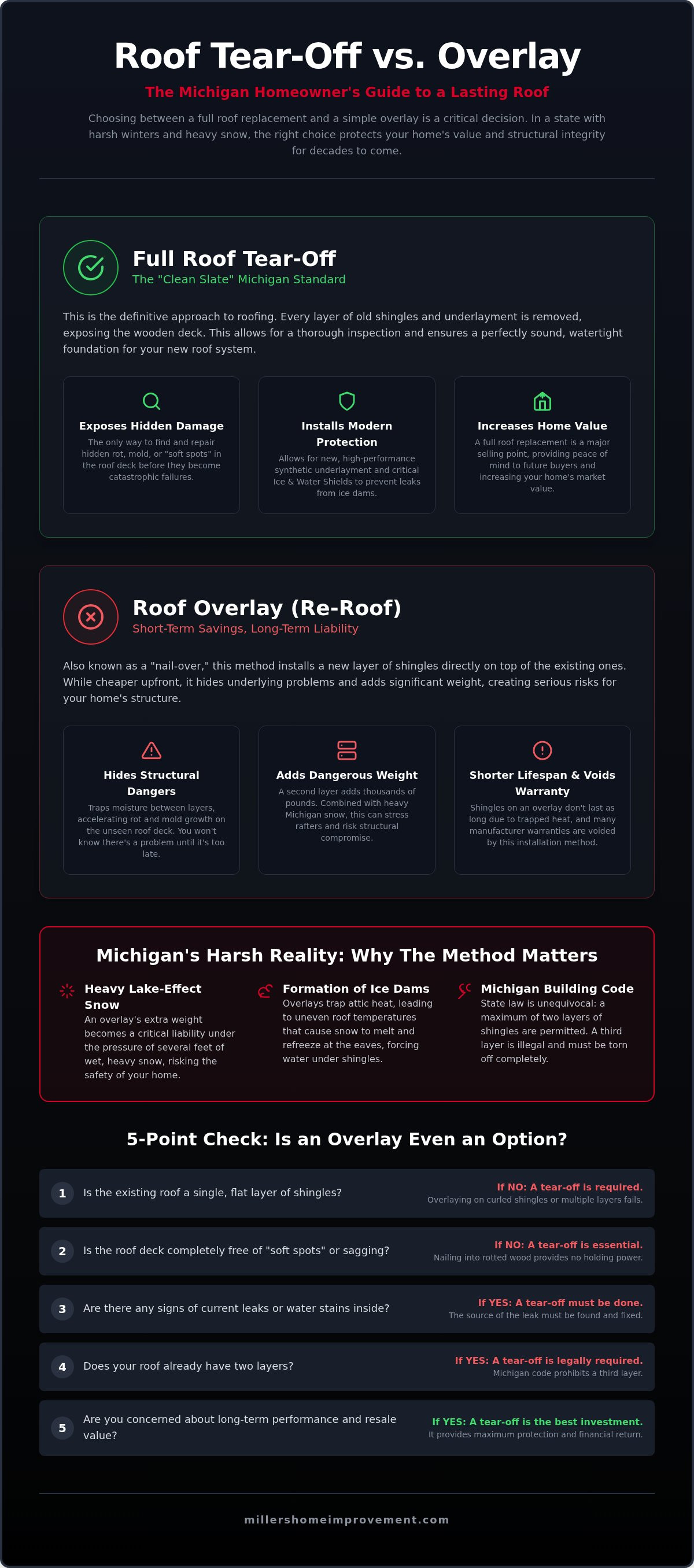
Deciding between a roof tear off vs overlay Michigan homeowners often feel pressured by the immediate price difference. However, a disciplined approach involves looking at your home as a long-term asset rather than a series of quick fixes. A roof is a complex system, and its failure can lead to catastrophic interior damage. Use this five-point framework to evaluate your specific situation before signing a contract.
- Evaluate the Deck: If your roof is over 20 years old, the plywood underneath has likely faced decades of moisture stress. A tear-off is the only way to ensure your foundation is solid.
- Check Existing Layers: Michigan law is clear. You cannot have more than two layers of shingles on a residential structure. If you already have two, the decision is made for you by state code.
- Consider Your Timeline: Are you planning to stay in your home for 20 years or more? A full replacement offers the best return on investment and long-term peace of mind.
- Calculate Total Ownership: Factor in the shorter lifespan of an overlay and the increased cost of removing two layers of debris during the next replacement.
- Get a Professional Opinion: A licensed contractor can perform a core sample to see exactly what is happening beneath the surface shingles.
When an Overlay Might Actually Work
There are rare instances where an overlay is a viable path. If your current roof has only a single layer of shingles, the surface is perfectly flat, and you have confirmed there are absolutely no leaks or deck rot, an overlay can serve as a budget-friendly bridge. This is sometimes used in short-term property management scenarios where a temporary fix is required. However, Miller's Home Improvement usually advises against this for residential properties. The risk of trapping moisture or exceeding weight limits during a heavy Southeast Michigan snowstorm often outweighs the initial savings.
The Impact on Home Resale Value
If you plan to sell your home in the next few years, an overlay can actually hurt your bottom line. Detroit home inspectors are trained to spot double-layered roofs immediately. When a buyer sees two layers, they know they will be responsible for a more expensive, double-layer tear-off in the future. This discovery often leads to "repair credits" or lower offers during final negotiations. A fresh, single-layer roof provides superior curb appeal and signals to buyers that the home has been meticulously maintained. To ensure your investment adds real value to your property, you can contact us for a free in-home estimate and a detailed structural review.
Expert Installation: Why Your Choice of Contractor Matters More Than the Method
The debate of roof tear off vs overlay Michigan homeowners face often misses a critical variable: the hands doing the work. A high-quality installation requires more than just following a manual. It demands the intuition of a seasoned master craftsman who understands how Michigan's specific humidity and temperature swings affect different materials. With over 25 years of owner experience in the local industry, we've seen the aftermath of budget installations that failed within five years. Choosing a contractor with deep local roots ensures your roof is built to withstand the unique pressures of the Great Lakes climate.
A professional tear-off is also the most reliable path when dealing with insurance claims for storm damage. When we strip the roof to the deck, we can document the full extent of the damage for your adjuster. This transparency ensures you receive the full coverage you're entitled to, rather than a partial settlement that misses hidden structural issues. An overlay often obscures this evidence, which makes it harder to prove the deck itself requires repair after a major storm.
The Miller’s Home Improvement Difference
Our brand is built on a foundation of professional assurance and quiet confidence. We approach every project with a commitment to meticulousness. Our team uses a disciplined process to protect your landscaping, siding, and property during the demolition phase. We don't just dump shingles; we manage the site like a professional construction project. This integrity extends to our materials and our leadership. Every major roofing project benefits from direct owner involvement. This ensures the high standards we've built over two decades are met on every ridge and valley of your home. We treat your property with the same respect we would show our own neighbors.
Final Steps to a Secure Roof
Your journey toward a stable, 20-year roof begins with an honest conversation. During your free in-home estimate, we perform a thorough assessment of your current system. We look at ventilation, flashing, and the visible condition of the deck from the attic. You'll receive a detailed estimate that breaks down the project timeline and material specifications. We believe in transparency over high-pressure sales. Our goal is to provide you with the education needed to make a decision that protects your family and your property value. You can secure your home with a professional roofing estimate from Miller's today to start your project with confidence. We're ready to help you navigate the complexities of local building codes and material choices to ensure your home remains a safe, dry sanctuary for years to come.
Investing in Your Home’s Long-Term Stability
Choosing between a roof tear off vs overlay Michigan involves more than just comparing two initial quotes; it's a decision about the future safety and structural integrity of your property. A full tear-off provides the only certain way to verify your deck’s health and ensure you meet the strict two-layer limit set by the Michigan Residential Code. While an overlay might offer a temporary financial reprieve, the long-term protection against ice dams and the significant boost to your home's resale value make a complete replacement the superior investment for most Southeast Michigan families.
At Miller’s Home Improvement, we bring 25+ years of owner experience to every project. As a fully licensed and insured Michigan contractor specializing in storm damage and insurance restoration, we prioritize the integrity of your roof above all else. We're here to guide you through the process with transparency and professional pride. You can Request Your Free Michigan Roofing Estimate Today to ensure your home remains protected against whatever the next winter brings. Your home deserves a foundation that lasts, and we're ready to build it for you.
Frequently Asked Questions
Can I put a second layer of shingles on my roof in Michigan?
Yes, you can install a second layer if your home currently has only one layer of shingles. Michigan building codes permit a maximum of two layers on residential structures. However, we recommend a full replacement to ensure the underlying wood is healthy. If your roof already has two layers, the law requires a complete removal before any new materials are installed to prevent excessive weight on your rafters.
How much does a roof tear-off cost compared to an overlay?
A full tear-off typically costs more than an overlay because it requires additional labor for demolition and fees for debris disposal. While an overlay might save you 30% to 40% on your initial bill, it's often a poor financial move. You'll likely pay more in the long run because the shingles fail sooner and you'll eventually pay to have two layers removed instead of one.
Will an overlay void my shingle manufacturer's warranty?
It is very likely to impact your coverage. Many shingle manufacturers reduce their warranty periods or void certain protections when their products are installed as an overlay. This happens because double layers trap excessive heat, which causes the asphalt to "cook" and become brittle. When choosing between a roof tear off vs overlay Michigan homeowners should check specific manufacturer guidelines to ensure their investment remains fully protected by a valid warranty.
How many layers of shingles are allowed on a house in Detroit?
In Detroit and throughout Southeast Michigan, the residential code strictly limits homes to two layers of roofing. Building inspectors enforce this rule during the permitting process to protect structural integrity. Attempting to install a third layer is a code violation that can lead to fines, failed inspections, and potential issues with your homeowner's insurance policy if you ever need to file a claim for storm damage.
Does a roof overlay cause more ice dams in Michigan winters?
Overlays are a primary contributor to ice damming in our local climate. The extra thickness traps attic heat, which melts the bottom layer of snow on your roof. This water then refreezes at the colder eaves. Because an overlay prevents the installation of a self-adhering ice and water shield directly onto the wooden deck, this trapped water easily leaks into your home's interior walls and ceilings.
How long does a full roof tear-off take for a standard Michigan home?
For a standard home in Southeast Michigan, a professional crew can usually complete a full tear-off and replacement in one to two days. Larger or more complex roofs might require a third day. This timeline includes the careful removal of old shingles, a thorough deck inspection, and the installation of modern underlayment and flashing. We prioritize a disciplined schedule to minimize the time your home is exposed to the elements.
Is it better to tear off or shingle over if I plan to sell my house soon?
Tearing off is the smarter choice for resale value. Local home inspectors will document a double-layered roof in their reports, which often makes buyers nervous about future replacement costs. A buyer knows they'll eventually face a more expensive "double tear-off" bill. By investing in a full replacement now, you provide a clean inspection report and a transferable warranty, which can help justify a higher asking price for your property.
Can a roof overlay hide structural damage or wood rot?
An overlay effectively masks serious issues like delaminated plywood, mold, and wood rot. These problems stay hidden beneath the new shingles until they cause visible sagging or interior leaks. A full tear-off is the only way for a master craftsman to inspect the deck's integrity. We identify and replace compromised wood to ensure your new shingles have a solid foundation that can support heavy snow loads during a typical winter.


