
A simple patch is rarely enough to fix a leaking flat roof in a climate as demanding as ours. In Michigan, torch down roof repair is a constant battle against thermal expansion, where success depends on achieving a perfect molecular bond at the seams rather than just applying a topical sealant. You've likely felt the frustration of seeing ponding water after a heavy storm or discovered recurring leaks that seem to defy basic repairs. It's natural to feel some anxiety about the fire risks associated with torch-applied systems or to worry that a small leak might signal the end of your roof's lifespan.
We understand that your property is a significant investment that deserves meticulous care and professional oversight. This guide will help you identify common failure points, understand the latest Michigan building codes regarding insulation and ice shields, and master the maintenance required to keep your flat roof watertight. You'll gain the clarity needed to decide between a targeted repair and a full replacement, ensuring you find a licensed contractor who treats your home with the respect it deserves. We'll walk through the technical details of modified bitumen and the specific steps necessary to protect your Michigan property from the elements for years to come.
Key Takeaways
- Understand the technical differences between APP and SBS membranes to ensure your repair matches the specific needs of Michigan’s freeze-thaw cycles.
- Master the "25% Rule" to evaluate whether a targeted repair or a complete replacement is the most cost-effective path for your flat roof.
- Implement a bi-annual maintenance schedule to clear drainage systems and prevent the ponding water that often leads to seam failure.
- Learn why professional heat-fusion is the only reliable method for a lasting torch down roof repair Michigan, moving beyond temporary topical patches.
- Gain peace of mind by understanding how to choose a licensed contractor who prioritizes safety and follows the latest state building code requirements.
What is Torch Down Roofing and Why Does it Fail in Michigan?
Torch down roofing, technically known as modified bitumen, consists of asphalt layers reinforced with polyester or fiberglass. This material is a specialized evolution of Asphalt roll roofing, designed to provide a durable, watertight seal for flat or low-slope structures. It typically comes in two-layer or three-layer systems. A base sheet is installed first, followed by a cap sheet that is fused to the surface using a propane torch. While this creates a robust membrane, the system's integrity depends entirely on the quality of those heat-welded seams and the skill of the installer.
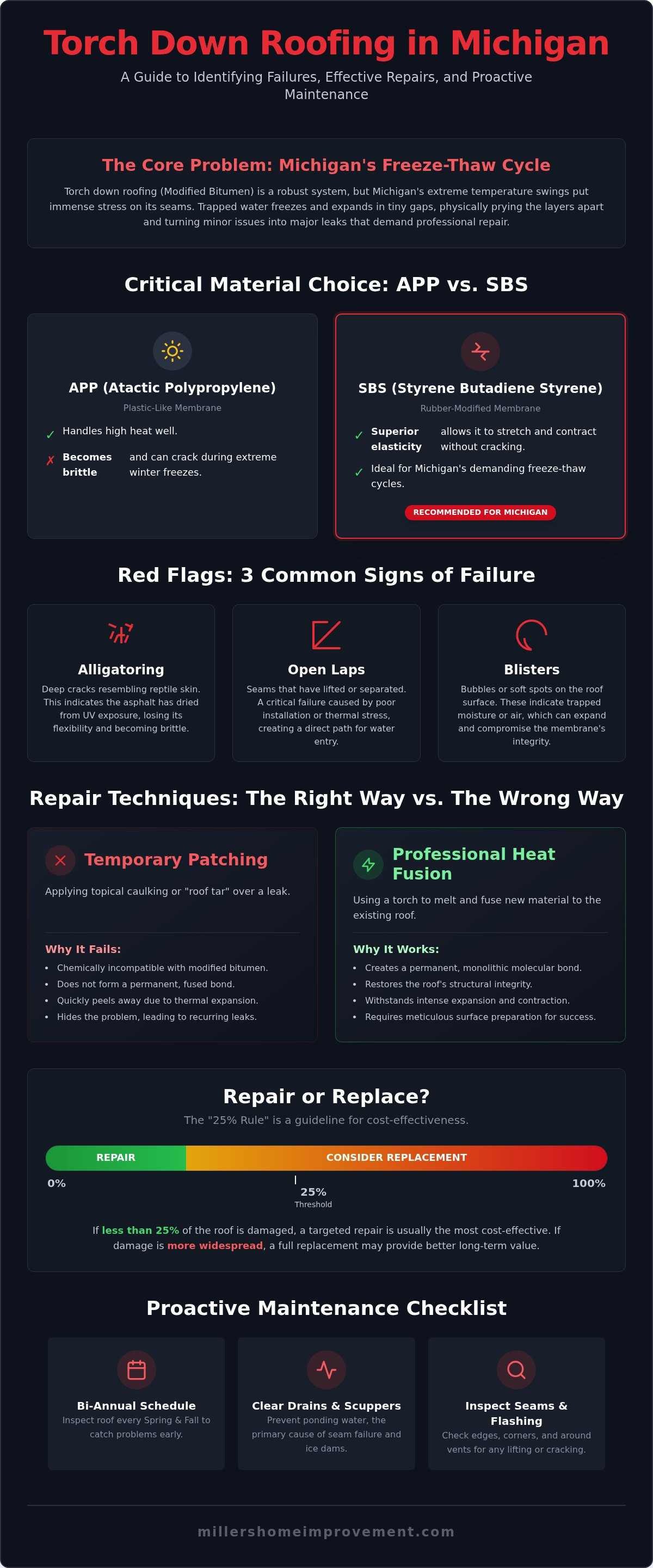
In Michigan, the choice between APP (Atactic Polypropylene) and SBS (Styrene Butadiene Styrene) is critical. APP membranes are more plastic-like and handle high heat well, but they can become brittle during our extreme winter freezes. SBS membranes are modified with rubber, offering superior elasticity that allows the roof to stretch and contract without cracking. For a long-lasting torch down roof repair Michigan property owners must ensure the repair material matches the existing system's chemistry. If the materials aren't compatible, the new patch won't achieve a permanent molecular bond.
The primary enemy of these roofs is UV degradation. Without a granulated surface or a reflective coating, the sun's rays break down the bitumen over time. Once the oils in the asphalt evaporate, the membrane loses its flexibility. This leads to "alligatoring," where the surface develops deep cracks that eventually allow moisture to reach the underlying roof deck.
The Impact of the Michigan Freeze-Thaw Cycle
Michigan winters subject flat roofs to intense physical stress. When temperatures swing 40 degrees in a single day, the membrane expands and contracts rapidly. This movement puts immense pressure on the seams. Ice dams are also a significant threat. They form when snow melts and refreezes at the roof's edge, forcing standing water into any microscopic gap in the membrane laps. Ponding water is particularly dangerous here. Unlike in warmer states, standing water on a Michigan roof will freeze and expand, physically prying the bitumen layers apart and widening existing leaks.
Common Signs Your Torch Down Roof Needs Professional Repair
Identifying issues early can prevent a minor leak from becoming a structural disaster. A professional torch down roof repair Michigan specialist will look for these specific red flags during an inspection:
- Alligatoring: A pattern of deep cracks that look like reptile skin. This indicates the bitumen has dried out and the roof is nearing the end of its functional life.
- Open Laps: Seams that have lifted or separated. This is often caused by poor initial installation or excessive thermal movement that has broken the original heat bond.
- Blisters: Bubbles or soft spots in the membrane. These usually indicate that moisture was trapped under the layer during installation or has seeped in through a nearby puncture.
Professional Torch Down Repair Techniques: Beyond the Patch
Professional torch down roof repair Michigan is a technical process that goes far beyond simply covering a leak. It requires a "fusion" approach, where a propane torch is used to carefully melt the bitumen on both the existing membrane and the new repair material. When done correctly, these two surfaces become a single, monolithic sheet. This molecular bond is the only way to ensure the repair withstands the intense expansion and contraction cycles common in the Detroit area. It's about restoring the structural integrity of the roof, not just hiding a problem.
Surface preparation is the most overlooked step in this process. You can't achieve a proper weld on a dirty or oxidized roof. We meticulously scrub the area to remove dust, loose granules, and biological growth before any heat is applied. Using topical caulking or standard "roof tar" is a common mistake that leads to recurring failures. These materials aren't chemically compatible with modified bitumen and will quickly peel away when the roof shifts. If you're dealing with complex leaks around HVAC units or parapet walls, a professional inspection can determine if the flashing needs a full heat-welded replacement rather than a temporary fix.
Heat-Welded Seam Repair vs. Cold-Applied Adhesives
While high-quality cold-process cements have their place for minor maintenance, they rarely match the longevity of a heat-welded seam. To verify a successful torch application, we look for a consistent "bleed-out" of roughly 1/4 to 1/2 inch at the edge of the seam. This indicates the bitumen has fully liquified and fused into the base layer. Safety is our absolute priority during this phase. Because this work involves open flames, following strict Fire Safety Rules And Practices is essential. This includes maintaining a dedicated fire watch after the work is completed and carrying specialized insurance that covers torch-applied operations.
Restoring the Protective Granule Layer
The asphalt in your roof is vulnerable to Michigan's summer sun. UV rays cause the essential oils to evaporate, leading to the brittle cracking discussed earlier. When we perform a repair, we don't leave the bitumen exposed. We heat the surface of the new patch and carefully embed matching granules into the softened material. This shields the repair from solar damage. For roofs that are aging but still structurally sound, we often suggest applying specialized reflective coatings. These coatings act as a shield against UV damage and can significantly extend the life of your repair by keeping the membrane cooler during peak July heat.
Repair vs. Replacement: Evaluating Your Michigan Flat Roof
Deciding whether to invest in a professional torch down roof repair Michigan or commit to a full replacement is a pivotal moment for any property owner. We use a professional standard known as the 25% Rule to guide this decision. If the cost of a single repair project exceeds one-quarter of the total replacement value, the investment in a patch becomes mathematically unsound. Most modified bitumen systems have a functional lifespan of 15 to 20 years. If your roof is approaching that 15-year mark, recurring repairs often act as a temporary bandage on a systemic failure that will eventually require a more comprehensive solution.
We perform thorough moisture testing to evaluate the condition of the underlying insulation and the roof deck itself. In Detroit commercial buildings, recurring leaks can compromise structural steel or wood decking, leading to safety hazards and increased liability. If the deck remains sound but the membrane shows signs of age, we assess the total area of failure. When more than 25% of the roof surface is compromised by blisters, open seams, or alligatoring, the integrity of the entire system is likely gone. In these cases, we prioritize transparency, helping you understand why a replacement offers better long-term value than a series of expensive, short-term fixes.
When a Professional Repair is the Right Choice
Professional repairs are ideal for addressing isolated damage, such as punctures from fallen debris or accidental tears caused by mechanical contractors working on HVAC units. If the roof is less than 10 years old and the seams are generally healthy, a targeted heat-fusion repair can effectively restore the watertight seal. This is an excellent, budget-conscious way to secure another 3 to 5 years of service life from a system that is otherwise in good condition. We focus on these high-value restorations when the core of the roof remains flexible and the insulation is dry.
Signs That a Full Roof Tear-Off is Unavoidable
A full roof tear-off becomes mandatory when we identify widespread delamination. This occurs when the membrane is no longer bonded to the substrate, making it impossible to achieve a reliable seal with a simple patch. Saturated insulation is another deal-breaker. If the roof feels "spongy" underfoot, moisture is trapped within the system, which will inevitably lead to mold growth and deck rot. Michigan building code also provides a hard limit: buildings with two or more existing roof layers must have the materials stripped to the deck before a new installation. If your property already has two layers, a third "recover" layer is not a legal or professional option.
Proactive Maintenance to Prevent Costly Torch Down Repairs
Maintaining a flat roof in the Great Lakes State requires a disciplined, seasonal approach. We recommend bi-annual inspections, specifically in the spring after the final thaw and in the late fall before the first heavy snow. These transition periods are when your roof is most vulnerable. A spring inspection identifies any seam separations caused by winter ice expansion, while a fall check ensures the system is prepared for the weight of Michigan's upcoming snow loads. By catching minor issues early, you can avoid the need for a complex torch down roof repair Michigan project in the middle of a blizzard.
Managing snow is a unique challenge for Michigan property owners. While torch down roofing is incredibly durable, it isn't indestructible. If you must remove heavy snow to prevent structural strain, never use metal shovels or sharp tools that can puncture the membrane. It's best to leave a thin layer of snow as a buffer rather than scraping the bitumen bare. Additionally, be mindful of foot traffic. Mechanical contractors servicing rooftop HVAC units often inadvertently drop tools or drag heavy panels across the surface. We suggest installing designated walk pads in high-traffic areas to protect the integrity of the cap sheet.
The Critical Role of Proper Drainage
Clogged drainage systems are the primary cause of premature flat roof failure. When scuppers and drains are blocked by leaves or debris, water begins to "pond," or sit for more than 48 hours. This standing water puts constant hydrostatic pressure on the seams. Over time, this pressure forces moisture into the bitumen layers, leading to the delamination we discussed earlier. To prevent this, we often install crickets or tapered insulation. These are slight slopes that redirect water toward the primary drains, ensuring the surface dries quickly. You should also watch for "clover-leafing," which is a pattern of debris buildup that indicates your drain is struggling to keep up with heavy Michigan rains. If you notice water lingering on your roof long after a storm has passed, it’s time to schedule a professional maintenance assessment to correct the pitch before the membrane rots.
A Checklist for Michigan Property Owners
A proactive owner is the best defense against catastrophic leaks. Use this simple checklist during your bi-annual walk-through to monitor the health of your modified bitumen system:
- Inspect all seams: Look for any signs of lifting or "fish-mouths" where the torch bond might be weakening.
- Evaluate metal flashing: Check the edges where the roof meets the walls. Look for rust, loose fasteners, or any separation between the metal and the bitumen.
- Monitor granule loss: Check your gutters and downspout exits. A heavy accumulation of granules indicates that the protective UV layer is thinning and the asphalt is becoming exposed.
Expert Torch Down Services in Southeast Michigan: The Miller’s Advantage
Miller's Home Improvement brings over 25 years of owner experience to every project in the Detroit roofing market. This longevity is essential when dealing with specialized systems like modified bitumen. We've spent decades refining our techniques, ensuring that every torch down roof repair Michigan property owners entrust to us is executed with precision. Our approach is defined by a commitment to the "Seasoned Master Craftsman" philosophy. We don't believe in shortcuts or temporary fixes that will peel away after the first frost. Instead, we focus on restoring the molecular bond of your roof’s membrane, treating every seam with the technical integrity it deserves.
Being a licensed and insured Michigan contractor is more than just a legal requirement for us. It is a promise of stability and accountability to our neighbors in Southeast Michigan. Local roots matter because roofing is not a one-time transaction; it is a long-term commitment to property protection. When you work with a local expert, you gain the security of knowing your warranty support is just a phone call away. We take pride in our reputation and prioritize the safety of your property above all else, ensuring that your flat roof remains a reliable shield against the elements.
Serving Detroit, Macomb County, and Beyond
Our team is deeply familiar with the specific challenges posed by the Michigan climate. We understand how the freeze-thaw cycles described earlier in this guide can ravage a poorly maintained flat roof. This local expertise allows us to navigate building codes and insurance requirements with quiet confidence. If your building has sustained wind or hail damage, we offer professional guidance on storm damage restorations to help you navigate the insurance claim process. We provide the professional assurance you need to feel confident in the longevity of your investment, regardless of the complexity of the project.
Get Started with a Professional Assessment
Transparency is at the core of the Miller’s Advantage. When you contact us for a free estimate, you won't encounter high-pressure sales tactics or vague jargon. You'll receive a straightforward, honest assessment of your roof’s condition. We take a no-nonsense approach to problem-solving, identifying whether a targeted repair or a full replacement is the most responsible choice for your budget. We provide the technical detail you need to make an informed decision without feeling overwhelmed. Schedule your free torch down roof inspection today.
Securing Your Flat Roof Against the Michigan Elements
Maintaining a watertight flat roof in our climate requires more than just occasional attention; it demands a technical understanding of how modified bitumen responds to severe temperature swings. By prioritizing bi-annual inspections and addressing seam failures with professional heat-fusion techniques, you can significantly extend the life of your membrane. Utilizing the "25% Rule" ensures you make financially sound decisions when choosing between a targeted repair and a full replacement.
Miller's Home Improvement brings over 25 years of roofing expertise to the Detroit area. As a fully licensed and insured Michigan contractor, we are specialists in flat roof restoration and repair. We focus on the technical details that preserve the integrity of your property, providing the professional assurance you need for a lasting torch down roof repair Michigan solution. We believe in transparency and honest assessments that prioritize your home's safety above all else.
Request Your Free Torch Down Roof Estimate from Miller’s Home Improvement
Taking the right steps today prevents costly structural damage tomorrow. We're ready to help you protect your investment with seasoned craftsmanship and reliable local service.
Frequently Asked Questions
How long does a torch down roof repair typically last?
A professional repair can last between five and ten years, often matching the remaining lifespan of the surrounding membrane. The longevity depends on the technician's ability to achieve a molecular fusion at the seams. If the repair is merely a topical patch, it will likely fail within a single Michigan winter. We focus on restoring the integrity of the bitumen to ensure the fix stays watertight through multiple freeze-thaw cycles.
Is it safe to use a torch for roof repairs on a residential home?
It is safe when performed by a licensed contractor who follows strict fire watch protocols and carries specific insurance for open-flame operations. We maintain a dedicated fire watch for at least one hour after the torch work is completed to ensure the substrate is cool and safe. Homeowners should never attempt this themselves. Professional oversight mitigates risks and provides the stability needed for a successful residential installation.
Can you put a new torch down roof over an old one in Michigan?
You can install a new layer over an existing one only if the building currently has just a single layer of roofing. Michigan building codes strictly prohibit having more than two layers of roofing on any structure. If your property already has two layers, the law requires a complete tear-off to the deck. This regulation ensures the structural load remains within safe limits for Michigan's heavy snow accumulations.
What is the difference between APP and SBS torch down membranes?
The main difference lies in the modifiers used to create the bitumen. APP membranes are modified with plastic, making them tough but prone to becoming brittle in sub-zero temperatures. SBS membranes use rubber modifiers, which provide the superior elasticity required for Michigan's extreme climate. For a long-lasting torch down roof repair Michigan property owners should almost always prioritize SBS materials to ensure the patch remains flexible during winter.
How much does torch down roof repair cost in the Detroit area?
The cost of a repair project is determined by several factors including the total square footage of the damage and the complexity of the flashing. Accessibility and the condition of the underlying insulation also play a significant role in the final investment. While we provide free estimates to give you an accurate figure, we avoid generic pricing because every flat roof has unique drainage and structural requirements.
Why is my flat roof ponding water after it rains?
Ponding water usually indicates a failure in the roof's drainage system or a lack of proper slope. This can be caused by clogged scuppers, debris buildup around drains, or structural sagging in the roof deck. In our climate, standing water is a serious threat because it expands when it freezes. This physical expansion can pry the seams of your membrane apart, leading to deep structural leaks.
Does insurance cover torch down roof repair after a Michigan storm?
Most insurance policies cover repairs for sudden and accidental damage caused by Michigan storms, such as hail strikes or fallen tree limbs. However, coverage usually excludes issues caused by age, UV degradation, or a lack of routine maintenance. We recommend reviewing your specific policy and working with a contractor who can provide a detailed assessment of the damage to assist with your claim documentation and restoration needs.
Can I repair a torch down roof myself using products from a hardware store?
Hardware store products are generally temporary solutions that fail to create a permanent bond with modified bitumen. These topical mastics and tapes don't fuse with the existing asphalt; instead, they sit on the surface and eventually peel away. A reliable torch down roof repair Michigan requires specialized propane equipment and the expertise to heat-weld the layers together. DIY attempts often lead to more expensive professional corrections later.


